multiple pieces fit together such that the puzzle does not fall apart
and presents a challenge to disassemble and re-assemble.
Use the links in the panel below to jump to a section of interest.
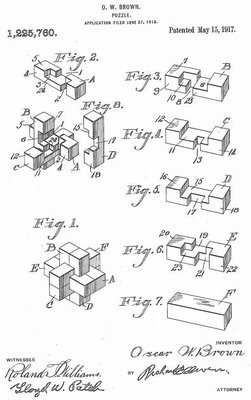
Brown’s 1917 Patent
filed June 1916
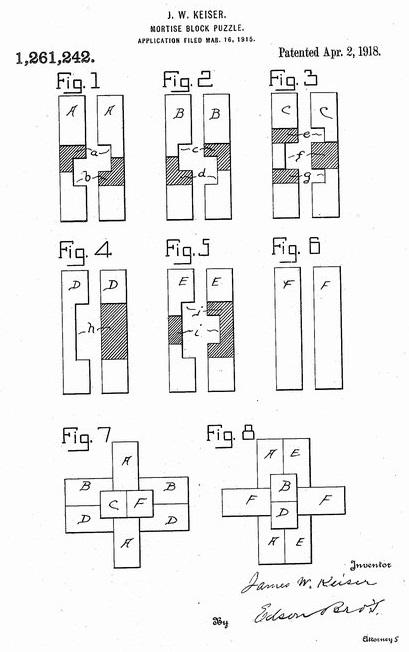
Keiser’s 1918 Patent
filed March 1915
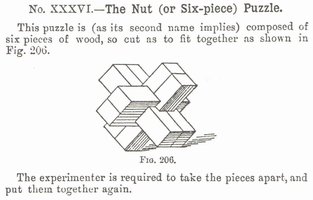
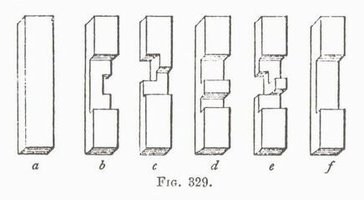
Hoffmann’s “Nut” Puzzle (1893)
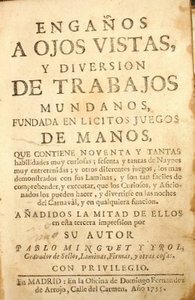
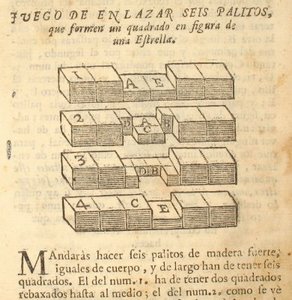
Minguet y Irol’s Burr (1755)
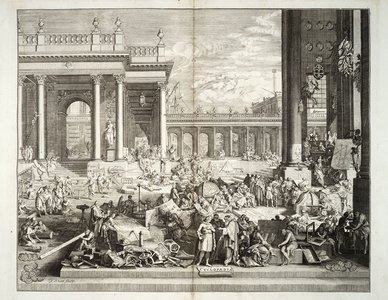
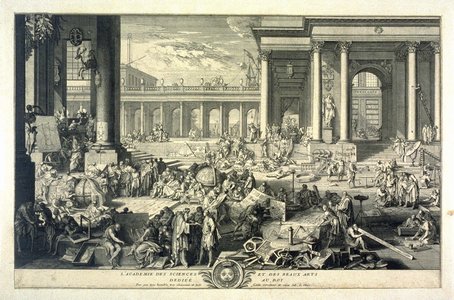
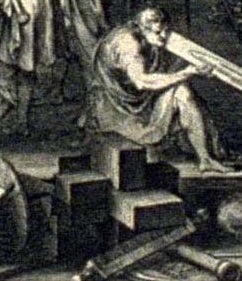
Stewart Coffin discusses the six-piece burr in chapter 7, and reports that Jerry Slocum’s New Findings on the History of the Six Piece Burr
traces the six-piece burr back to Germany in 1698.
See the 1728
Cyclopedia of Ephraim Chambers
(online at the
University of Wisconsin Digital Collection; additional commentary at
www.cyclopedia.org). You can see a six-piece burr in the lower left area of the
frontispiece by John Sturt (above on the left),
which is a modified and left-to-right inverted copy of a
1698 engraving
entitled “L’Acad閙ie des Sciences et des Beaux Arts” by S閎astien Leclerc (or Le Clerc) (above on the right, detail at left).
University of Oxford.
It is also noted in David Singmaster’s
Sources in Recreational Mathematics.
Leclerc Burr 1698
I admit that, early on, I didn’t like burr puzzles. But as I read more about them, and tried various designs,
my appreciation for them grew.
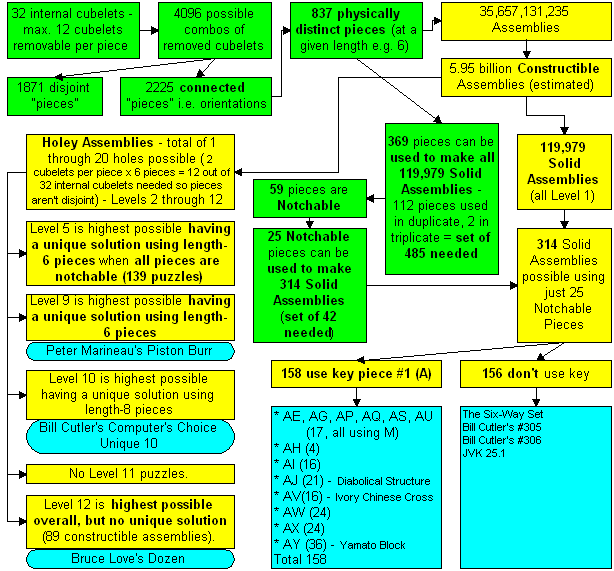
I put together the diagram below to try to summarize and organize some of the facts
I learned about this category of puzzle.
Check out a nice writeup on how to go about solving 6-piece burrs, written by Guillaume Largounez,
over at the
Puzzle Place Wiki.
The cubies behind cubies 256 and 512 can be removed, too,
and have
respective
values 1024 and 2048.
Such pieces appear infrequently.
    +----+----+----+----+----+----+
   /    / 16 / 32 / 64 / 128/    /|
  +    +----+----+----+----+    + |
 /    /  1 /  2 /  4 /  8 /    /  +
+----+----+----+----+----+----+   |
|    |    |    |    |    |    |   |
|    |    |    |    |    |    |   +
+    +----+----+----+----+    +  /
|         |    |    |         | +
|      a  | 256| 512|  b      |/
+----+----+----+----+----+----+
When trying to identify an arbitrary piece, rotate it about its long axis(and maybe flip it end-for-end)
until you find an orientation where
the cubies marked ‘a’ and ‘b’
and the cubies behind them are present.
Sometimes a piece could be assigned more than one number –
use the smaller
number.
This entails orienting it so that cubies 1024 and 2048 are present if possible.
    +----+----+----+----+----+----+
   /                             /|
  +                             + |
 /                             /  +
+----+----+----+----+----+----+   |
|                             |   |
|                             |   +
+                             +  /
|                             | +
|                             |/
+----+----+----+----+----+----+
The Key
    +----+    +----+----+----+----+
   /    /|   /                   /|
  +    + |  +                   + |
 /    /  +-/                   /  +
+----+  / +----+----+----+----+   |
|    | +  |                   |   |
|    |/   |                   |   +
+    +----+                   +  /
|                             | +
|                             |/
+----+----+----+----+----+----+
Local Mail
    +----+----+    +----+----+----+
   /         /|   /              /|
  +         + |  +              + |
 /         /  +-/              /  +
+----+----+  / +----+----+----+   |
|         | +  |              |   |
|         |/   |              |   +
+         +----+              +  /
|                             | +
|                             |/
+----+----+----+----+----+----+
Out of Town Mail
    +----+         +----+----+----+
   /    /|        /              /|
  +    + |       +              + |
 /    /  +----+-/              /  +
+----+  /      +----+----+----+   |
|    | +       |              |   |
|    |/        |              |   +
+    +----+----+              +  /
|                             | +
|                             |/
+----+----+----+----+----+----+
The Side Tray
    +----+----+         +----+----+
   /         /|        /         /|
  +         + |       +         + |
 /         /  +---+--/         /  +
+----+----+  /      +----+----+   |
|         | +       |         |   |
|         |/        |         |   +
+         +----+----+         +  /
|                             | +
|                             |/
+----+----+----+----+----+----+
The Half-Tray
    +----+              +----+----+
   /    /|             /         /|
  +    + |            +         + |
 /    /  +----+---+--/         /  +
+----+  /           +----+----+   |
|    | +            |         |   |
|    |/             |         |   +
+    +----+----+----+         +  /
|                             | +
|                             |/
+----+----+----+----+----+----+
The Three-Quarters Tray
    +----+                   +----+
   /    /|                  /    /|
  +    + |                 +    + |
 /    /  +----+----+----+-/    /  +
+----+  /                +----+   |
|    | +                 |    |   |
|    |/                  |    |   +
+    +----+----+----+----+    +  /
|                             | +
|                             |/
+----+----+----+----+----+----+
The Tray
    +----+    +----+    +----+----+
   /    /|   /    /|   /         /|
  +    + |  +    + |  +         + |
 /    /  +-/    /  +-/         /  +
+----+  / +----+  / +----+----+   |
|    | +  |    | +  |         |   |
|    |/   |    |/   |         |   +
+    +----+    +----+         +  /
|                             | +
|                             |/
+----+----+----+----+----+----+
The Mailbox
    +----+    +----+----+    +----+
   /    /|   /         /|   /    /|
  +    + |  +         + |  +    + |
 /    /  +-/         /  +-/    /  +
+----+  / +----+----+  / +----+   |
|    | +  |         | +  |    |   |
|    |/   |         |/   |    |   +
+    +----+         +----+    +  /
|                             | +
|                             |/
+----+----+----+----+----+----+
The Toaster
    +----+         +----+    +----+
   /    /|        /    /|   /    /|
  +    + |       +    + |  +    + |
 /    /  +----+-/    /  +-/    /  +
+----+  /      +----+  / +----+   |
|    | +       |    | +  |    |   |
|    |/        |    |/   |    |   +
+    +----+----+    +----+    +  /
|                             | +
|                             |/
+----+----+----+----+----+----+
The (Bottle) Opener
    +----+----+         +----+----+
   /         /|        /         /|
  +         + |       +         + |
 /         /  +----+-/         /  +
+----+----+  /      +----+----+   |
|         | +----+--|         |   |
|         | |       |         |   +
+         + |       +         +  /
|         | +----+--|         | +
|         |/        |         |/
+----+----+         +----+----+
The Barbells
    +----+    +----+----+    +----+
   /    /|   /         /|   /    /|
  +    + |  +----+----+ |  +    + |
 /    /  +--|         | +-/    /  +
+----+  /   |         |/ +----+   |
|    | +    +         +  |    |   |
|    |/    /|        /   |    |   +
+    +----+ |       +----+    +  /
|         | +----+--|         | +
|         |/        |         |/
+----+----+         +----+----+
The Tongue
    +----+                   +----+
   /    /|                  /    /|
  +    + |                 +    + |
 /    /  +----+----+----+-/    /  +
+----+  /                +----+   |
|    | +    +----+----+  |    |   |
|    |/    /|        /   |    |   +
+    +----+ |       +----+    +  /
|         | +----+--|         | +
|         |/        |         |/
+----+----+         +----+----+
The Y
    +----+----+----+    +----+----+
   /              /|   /         /|
  +         +----+ |  +         + |
 /         /|    | +-/         /  +
+----+----+ |    |/ +----+----+   |
|         | +    +--|         |   |
|         | |       |         |   +
+         + |       +         +  /
|         | +----+--|         | +
|         |/        |         |/
+----+----+         +----+----+
    +----+----+    +----+----+----+
   /         /|   /              /|
  +         + |  +----+         + |
 /         /  +--|   /         /  +
+----+----+  /   |  +----+----+   |
|         | +----+  |         |   |
|         | |       |         |   +
+         + |       +         +  /
|         | +----+--|         | +
|         |/        |         |/
+----+----+         +----+----+
    +----+    +----+----+----+----+
   /    /|   /                   /|
  +    + |  +----+----+         + |
 /    /  +--|        /         /  +
+----+  /   |       +----+----+   |
|    | +    +       |         |   |
|    |/    /|       |         |   +
+    +----+ |       +         +  /
|         | +----+--|         | +
|         |/        |         |/
+----+----+         +----+----+
    +----+----+----+----+    +----+
   /                   /|   /    /|
  +         +----+----+ |  +    + |
 /         /|         | +-/    /  +
+----+----+ |         |/ +----+   |
|         | +         +  |    |   |
|         | |        /   |    |   +
+         + |       +----+    +  /
|         | +----+--|         | +
|         |/        |         |/
+----+----+         +----+----+
    +----+         +----+----+----+
   /    /|        /              /|
  +    + |       +----+         + |
 /    /  +----+--|   /         /  +
+----+  /        |  +----+----+   |
|    | +    +----+  |         |   |
|    |/    /|       |         |   +
+    +----+ |       +         +  /
|         | +----+--|         | +
|         |/        |         |/
+----+----+         +----+----+
    +----+----+----+         +----+
   /              /|        /    /|
  +         +----+ |       +    + |
 /         /|    | +----+-/    /  +
+----+----+ |    |/      +----+   |
|         | +    +----+  |    |   |
|         | |        /   |    |   +
+         + |       +----+    +  /
|         | +----+--|         | +
|         |/        |         |/
+----+----+         +----+----+
    +----+    +----+    +----+----+
   /    /|   /    /|   /         /|
  +    + |  +----+ |  +         + |
 /    /  +--|    | +-/         /  +
+----+  /   |    |/ +----+----+   |
|    | +    +    +--|         |   |
|    |/    /|       |         |   +
+    +----+ |       +         +  /
|         | +----+--|         | +
|         |/        |         |/
+----+----+         +----+----+
    +----+----+    +----+    +----+
   /         /|   /    /|   /    /|
  +         + |  +----+ |  +    + |
 /         /  +--|    | +-/    /  +
+----+----+  /   |    |/ +----+   |
|         | +----+    +  |    |   |
|         | |        /   |    |   +
+         + |       +----+    +  /
|         | +----+--|         | +
|         |/        |         |/
+----+----+         +----+----+
    +----+              +----+----+
   /    /|             /         /|
  +    + |            +         + |
 /    /  +----+----+-/         /  +
+----+  /           +----+----+   |
|    | +    +----+--|         |   |
|    |/    /|       |         |   +
+    +----+ |       +         +  /
|         | +----+--|         | +
|         |/        |         |/
+----+----+         +----+----+
    +----+----+              +----+
   /         /|             /    /|
  +         + |            +    + |
 /         /  +----+----+-/    /  +
+----+----+  /           +----+   |
|         | +----+----+  |    |   |
|         | |        /   |    |   +
+         + |       +----+    +  /
|         | +----+--|         | +
|         |/        |         |/
+----+----+         +----+----+
    +----+         +----+    +----+
   /    /|        /    /|   /    /|
  +    + |       +----+ |  +    + |
 /    /  +-------|    | +-/    /  +
+----+  /        |    |/ +----+   |
|    | +    +----+    +  |    |   |
|    |/    /|        /   |    |   +
+    +----+ |       +----+    +  /
|         | +----+--|         | +
|         |/        |         |/
+----+----+         +----+----+
    +----+    +----+         +----+
   /    /|   /    /|        /    /|
  +    + |  +----+ |       +    + |
 /    /  +--|    | +----+-/    /  +
+----+  /   |    |/      +----+   |
|    | +    +    +----+  |    |   |
|    |/    /|        /   |    |   +
+    +----+ |       +----+    +  /
|         | +----+--|         | +
|         |/        |         |/
+----+----+         +----+----+
    +----+    +----+----+----+----+
   /    /|   /                   /|
  +    + |  +----+              + |
 /    /  +--|   /              /  +
+----+  /   |  +----+----+----+   |
|    | +    +--|              |   |
|    |/        |              |   +
+    +----+----+              +  /
|                             | +
|                             |/
+----+----+----+----+----+----+
Filipiak #67
    +----+         +----+----+----+
   /    /|        /              /|
  +    + |       +----+         + |
 /    /  +----+--|   /         /  +
+----+  /        |  +----+----+   |
|    | +         +--|         |   |
|    |/             |         |   +
+    +----+----+----+         +  /
|                             | +
|                             |/
+----+----+----+----+----+----+
Triple Slide
    +----+         +----+----+----+
   /    /|        /              /|
  +    + |       +    +----+    + |
 /    /  +----+-/    /|   /    /  +
+----+  /      +----+ |  +----+   |
|    | +       |    | +--|    |   |
|    |/        |    |/   |    |   +
+    +----+----+    +----+    +  /
|                             | +
|                             |/
+----+----+----+----+----+----+
UBS.1
    +----+         +----+----+----+
   /    /|        /              /|
  +    + |       +----+----+    + |
 /    /  +----+--|        /    /  +
+----+  /        |       +----+   |
|    | +         +----+--|    |   |
|    |/                  |    |   +
+    +----+----+----+----+    +  /
|                             | +
|                             |/
+----+----+----+----+----+----+
UBS.24
    +----+----+----+    +----+----+
   /              /|   /         /|
  +    +----+----+ |  +         + |
 /    /|         | +-/         /  +
+----+ |         |/ +----+----+   |
|    | +----+----+  |         |   |
|    |/             |         |   +
+    +----+----+----+         +  /
|                             | +
|                             |/
+----+----+----+----+----+----+
Interrupted Slide
    +----+    +----+    +----+----+
   /    /|   /    /|   /         /|
  +    + |  +----+ |  +         + |
 /    /  +--|    | +-/         /  +
+----+  /   |    |/ +----+----+   |
|    | +    +----+  |         |   |
|    |/             |         |   +
+    +----+----+----+         +  /
|                             | +
|                             |/
+----+----+----+----+----+----+
Piston, Hordern,
Dozen, BB31-10-40
    +----+    +----+    +----+----+
   /    /|   /    /|   /         /|
  +    + |  +    + |  +----+    + |
 /    /  +-/    /  +--|   /    /  +
+----+  / +----+  /   |  +----+   |
|    | +  |    | +    +--|    |   |
|    |/   |    |/        |    |   +
+    +----+    +----+----+    +  /
|                             | +
|                             |/
+----+----+----+----+----+----+
Triple Slide
    +----+----+         +----+----+
   /         /|        /         /|
  +         +----+    +----+    + |
 /              /|----|   /    /  +
+----+----+----+ |    |  +----+   |
|              | +    +--|    |   |
|              |/        |    |   +
+              +----+----+    +  /
|                             | +
|                             |/
+----+----+----+----+----+----+
BCL6000
    +----+----+         +----+----+
   /         /|        /         /|
  +    +----+ |       +----+    + |
 /    /|    | +-------|   /    /  +
+----+ |    |/        |  +----+   |
|    | +----+         +--|    |   |
|    |/                  |    |   +
+    +----+----+----+----+    +  /
|                             | +
|                             |/
+----+----+----+----+----+----+
Interrupted Slide
    +----+              +----+----+
   /    /|             /         /|
  +    + |       +----+----+    + |
 /    /  +----+-/    /|   /    /  +
+----+  /      +----+ |  +----+   |
|    | +       |    | +--|    |   |
|    |/        |    |/   |    |   +
+    +----+----+    +----+    +  /
|                             | +
|                             |/
+----+----+----+----+----+----+
UBS.22
    +----+              +----+----+
   /    /|             /         /|
  +    + |  +----+    +----+    + |
 /    /  +-/    /|----|   /    /  +
+----+  / +----+ |    |  +----+   |
|    | +  |    | +    +--|    |   |
|    |/   |    |/        |    |   +
+    +----+    +----+----+    +  /
|                             | +
|                             |/
+----+----+----+----+----+----+
STC#36
    +----+    +----+         +----+
   /    /|   /    /|        /    /|
  +    + |  +----+ |  +----+    + |
 /    /  +--|    | +-/         /  +
+----+  /   |    |/ +----+----+   |
|    | +    +----+  |         |   |
|    |/             |         |   +
+    +----+----+----+         +  /
|                             | +
|                             |/
+----+----+----+----+----+----+
Eight is Enough
    +----+              +----+----+
   /    /|             /         /|
  +    + |            +----+    + |
 /    /  +------------|   /    /  +
+----+  /             |  +----+   |
|    | +              +--|    |   |
|    |/                  |    |   +
+    +----+----+----+----+    +  /
|                             | +
|                             |/
+----+----+----+----+----+----+
Hedgehog, Kaldeway,
UBS.15
    +----+----+              +----+
   /         /|             /    /|
  +    +----+ |            +    + |
 /    /|    | +----+----+-/    /  +
+----+ |    |/           +----+   |
|    | +----+            |    |   |
|    |/                  |    |   +
+    +----+----+----+----+    +  /
|                             | +
|                             |/
+----+----+----+----+----+----+
Avenger (pc. #4)
    +----+    +----+----+    +----+
   /    /|   /         /|   /    /|
  +    + |  +----+    + |  +    + |
 /    /  +--|   /    /  +-/    /  +
+----+  /   |  +----+  / +----+   |
|    | +    +--|    | +  |    |   |
|    |/        |    |/   |    |   +
+    +----+----+    +----+    +  /
|                             | +
|                             |/
+----+----+----+----+----+----+
Triple Slide
    +----+    +----+----+    +----+
   /    /|   /         /|   /    /|
  +    + |  +----+----+ |  +    + |
 /    /  +--|         | +-/    /  +
+----+  /   |         |/ +----+   |
|    | +    +----+----+  |    |   |
|    |/                  |    |   +
+    +----+----+----+----+    +  /
|                             | +
|                             |/
+----+----+----+----+----+----+
(many)
    +----+         +----+    +----+
   /    /|        /    /|   /    /|
  +    + |       +----+ |  +    + |
 /    /  +----+--|    | +-/    /  +
+----+  /        |    |/ +----+   |
|    | +         +----+  |    |   |
|    |/                  |    |   +
+    +----+----+----+----+    +  /
|                             | +
|                             |/
+----+----+----+----+----+----+
#G, UBS.17
    +----+    +----+         +----+
   /    /|   /    /|        /    /|
  +    + |  +----+ |       +    + |
 /    /  +--|    | +----+-/    /  +
+----+  /   |    |/      +----+   |
|    | +    +----+       |    |   |
|    |/                  |    |   +
+    +----+----+----+----+    +  /
|                             | +
|                             |/
+----+----+----+----+----+----+
JVK, Millable 5.4,
UBS.14
    +----+----+----+    +----+----+
   /              /|   /         /|
  +         +----+ |  +         + |
 /         /|    | +-/         /  +
+----+----+ |    |/ +----+----+   |
|         | +    +  |         |   |
|         | |   /   |         |   +
+         + |  +----+         +  /
|         | +--|              | +
|         |/   |              |/
+----+----+    +----+----+----+
IPL5S.39 1
    +----+----+    +----+----+----+
   /         /|   /              /|
  +         + |  +----+         + |
 /         /  +--|   /         /  +
+----+----+  /   |  +----+----+   |
|         | +    +  |         |   |
|         |/    /|  |         |   +
+         +----+ |  +         +  /
|              | +--|         | +
|              |/   |         |/
+----+----+----+    +----+----+
BC-L5N,
IPL5S.45 1
    +----+    +----+    +----+----+
   /    /|   /    /|   /         /|
  +    + |  +----+ |  +         + |
 /    /  +--|    | +-/         /  +
+----+  /   |    |/ +----+----+   |
|    | +    +    +  |         |   |
|    |/    /|   /   |         |   +
+    +----+ |  +----+         +  /
|         | +--|              | +
|         |/   |              |/
+----+----+    +----+----+----+
IPL5S.25 2
    +----+----+    +----+    +----+
   /         /|   /    /|   /    /|
  +         + |  +----+ |  +    + |
 /         /  +--|    | +-/    /  +
+----+----+  /   |    |/ +----+   |
|         | +    +    +  |    |   |
|         |/    /|   /   |    |   +
+         +----+ |  +----+    +  /
|              | +--|         | +
|              |/   |         |/
+----+----+----+    +----+----+
IPL5S.33 1
    +----+              +----+----+
   /    /|             /         /|
  +    + |            +         + |
 /    /  +----+----+-/         /  +
+----+  /           +----+----+   |
|    | +    +----+  |         |   |
|    |/    /|   /   |         |   +
+    +----+ |  +----+         +  /
|         | +--|              | +
|         |/   |              |/
+----+----+    +----+----+----+
IPL5S.21 1
    +----+----+              +----+
   /         /|             /    /|
  +         + |            +    + |
 /         /  +----+----+-/    /  +
+----+----+  /           +----+   |
|         | +    +----+  |    |   |
|         |/    /|   /   |    |   +
+         +----+ |  +----+    +  /
|              | +--|         | +
|              |/   |         |/
+----+----+----+    +----+----+
IPL5S.05 1
    +----+    +----+----+    +----+
   /    /|   /         /|   /    /|
  +    + |  +         + |  +    + |
 /    /  +-/         /  +-/    /  +
+----+  / +----+----+  / +----+   |
|    | +  |         | +  |    |   |
|    |/   |         |/   |    |   +
+    +----+----+    +----+    +  /
|         | +--|              | +
|         |/   |              |/
+----+----+    +----+----+----+
UBS.2
    +----+    +----+----+    +----+
   /    /|   /         /|   /    /|
  +    + |  +----+    + |  +    + |
 /    /  +--|   /    /  +-/    /  +
+----+  /   |  +----+  / +----+   |
|    | +    +  |    | +  |    |   |
|    |/    /|  |    |/   |    |   +
+    +----+ |  +    +----+    +  /
|         | +--|              | +
|         |/   |              |/
+----+----+    +----+----+----+
(many), UBS.23,
IPL5S.53 1
    +----+    +----+----+    +----+
   /    /|   /         /|   /    /|
  +    + |  +    +----+ |  +    + |
 /    /  +-/    /|    | +-/    /  +
+----+  / +----+ |    |/ +----+   |
|    | +  |    | +    +  |    |   |
|    |/   |    | |   /   |    |   +
+    +----+    + |  +----+    +  /
|              | +--|         | +
|              |/   |         |/
+----+----+----+    +----+----+
IPL5S.40 1
    +----+    +----+----+    +----+
   /    /|   /         /|   /    /|
  +    + |  +    +----+ |  +    + |
 /    /  +-/    /|    | +-/    /  +
+----+  / +----+ |    |/ +----+   |
|    | +  |    | +----+  |    |   |
|    |/   |    |/        |    |   +
+    +----+----+----+----+    +  /
|         | +--|              | +
|         |/   |              |/
+----+----+    +----+----+----+
UBS.3
    +----+    +----+----+    +----+
   /    /|   /         /|   /    /|
  +    + |  +----+----+ |  +    + |
 /    /  +--|         | +-/    /  +
+----+  /   |         |/ +----+   |
|    | +    +    +----+  |    |   |
|    |/    /|   /        |    |   +
+    +----+ |  +----+----+    +  /
|         | +--|              | +
|         |/   |              |/
+----+----+    +----+----+----+
UBS.20
    +----+         +----+    +----+
   /    /|        /    /|   /    /|
  +    + |  +----+    + |  +    + |
 /    /  +-/         /  +-/    /  +
+----+  / +----+----+  / +----+   |
|    | +  |         | +  |    |   |
|    |/   |         |/   |    |   +
+    +----+----+    +----+    +  /
|         | +--|              | +
|         |/   |              |/
+----+----+    +----+----+----+
UBS.4
    +----+         +----+    +----+
   /    /|        /    /|   /    /|
  +    + |       +    + |  +    + |
 /    /  +----+-/    /  +-/    /  +
+----+  /      +----+  / +----+   |
|    | +    +--|    | +  |    |   |
|    |/    /|  |    |/   |    |   +
+    +----+ |  +    +----+    +  /
|         | +--|              | +
|         |/   |              |/
+----+----+    +----+----+----+
UBS.18, IPL5S.49 1
    +----+    +----+         +----+
   /    /|   /    /|        /    /|
  +    + |  +    + |       +    + |
 /    /  +-/    /  +----+-/    /  +
+----+  / +----+  /      +----+   |
|    | +  |    | +----+  |    |   |
|    |/   |    | |   /   |    |   +
+    +----+    + |  +----+    +  /
|              | +--|         | +
|              |/   |         |/
+----+----+----+    +----+----+
IPL5S.10 1
    +----+         +----+    +----+
   /    /|        /    /|   /    /|
  +    + |       +----+ |  +    + |
 /    /  +----+--|    | +-/    /  +
+----+  /        |    |/ +----+   |
|    | +    +----+----+  |    |   |
|    |/    /|   /        |    |   +
+    +----+ |  +----+----+    +  /
|         | +--|              | +
|         |/   |              |/
+----+----+    +----+----+----+
Interrupted Slide,
UBS.12
    +----+    +----+         +----+
   /    /|   /    /|        /    /|
  +    + |  +----+ |       +    + |
 /    /  +--|    | +----+-/    /  +
+----+  /   |    |/      +----+   |
|    | +    +----+----+  |    |   |
|    |/         /|   /   |    |   +
+    +----+----+ |  +----+    +  /
|              | +--|         | +
|              |/   |         |/
+----+----+----+    +----+----+
BCL6000, #G
    +----+----+----+         +----+
   /              /|        /    /|
  +         +----+ |       +    + |
 /         /|    | +----+-/    /  +
+----+----+ |    |/      +----+   |
|         | +    +       |    |   |
|         | |   /        |    |   +
+         + |  +----+----+    +  /
|         | +--|              | +
|         |/   |              |/
+----+----+    +----+----+----+
Tenyo Brother,
IPL5S.24 1
    +----+         +----+----+----+
   /    /|        /              /|
  +    + |       +----+         + |
 /    /  +----+--|   /         /  +
+----+  /        |  +----+----+   |
|    | +         +  |         |   |
|    |/         /|  |         |   +
+    +----+----+ |  +         +  /
|              | +--|         | +
|              |/   |         |/
+----+----+----+    +----+----+
IPL5S.34 1
    +----+----+----+         +----+
   /              /|        /    /|
  +    +----+----+ |       +    + |
 /    /|         | +----+-/    /  +
+----+ |         |/      +----+   |
|    | +----+    +       |    |   |
|    |/    /|   /        |    |   +
+    +----+ |  +----+----+    +  /
|         | +--|              | +
|         |/   |              |/
+----+----+    +----+----+----+
Brown’s
    +----+         +----+----+----+
   /    /|        /              /|
  +    + |       +----+----+    + |
 /    /  +----+--|        /    /  +
+----+  /        |       +----+   |
|    | +         +    +--|    |   |
|    |/         /|   /   |    |   +
+    +----+----+ |  +----+    +  /
|              | +--|         | +
|              |/   |         |/
+----+----+----+    +----+----+
D. Kriz II
    +----+    +----+         +----+
   /    /|   /    /|        /    /|
  +    + |  +    +----+    +    + |
 /    /  +-/         /|-+-/    /  +
+----+  / +----+----+ |  +----+   |
|    | +  |         | +  |    |   |
|    |/   |         |/   |    |   +
+    +----+----+    +----+    +  /
|         | +--|              | +
|         |/   |              |/
+----+----+    +----+----+----+
UBS.26
    +----+    +----+         +----+
   /    /|   /    /|        /    /|
  +    + |  +----+----+    +    + |
 /    /  +--|   /    /|-+-/    /  +
+----+  /   |  +----+ |  +----+   |
|    | +    +  |    | +  |    |   |
|    |/    /|  |    |/   |    |   +
+    +----+ |  +    +----+    +  /
|         | +--|              | +
|         |/   |              |/
+----+----+    +----+----+----+
Prog. Nightmare,
UBS.21
    +----+         +----+    +----+
   /    /|        /    /|   /    /|
  +    + |  +----+----+ |  +    + |
 /    /  +-/    /|    | +-/    /  +
+----+  / +----+ |    |/ +----+   |
|    | +  |    | +    +  |    |   |
|    |/   |    | |   /   |    |   +
+    +----+    + |  +----+    +  /
|              | +--|         | +
|              |/   |         |/
+----+----+----+    +----+----+
BC-CCU10, Mega-6
    +----+    +----+         +----+
   /    /|   /    /|        /    /|
  +    + |  +    + |       +    + |
 /    /  +-/    /  +----+-/    /  +
+----+  / +----+  /      +----+   |
|    | +  |    | +       |    |   |
|    |/   |    |/        |    |   +
+    +----+----+----+----+    +  /
|         | +--|              | +
|         |/   |              |/
+----+----+    +----+----+----+
UBS.16
    +----+    +----+         +----+
   /    /|   /    /|        /    /|
  +    + |  +----+ |       +    + |
 /    /  +--|    | +----+-/    /  +
+----+  /   |    |/      +----+   |
|    | +    +    +       |    |   |
|    |/    /|   /        |    |   +
+    +----+ |  +----+----+    +  /
|         | +--|              | +
|         |/   |              |/
+----+----+    +----+----+----+
UBS.13, IPL5S.23 3
    +----+         +----+    +----+
   /    /|        /    /|   /    /|
  +    + |       +----+ |  +    + |
 /    /  +----+--|    | +-/    /  +
+----+  /        |    |/ +----+   |
|    | +         +    +  |    |   |
|    |/         /|   /   |    |   +
+    +----+----+ |  +----+    +  /
|              | +--|         | +
|              |/   |         |/
+----+----+----+    +----+----+
(many), IPL5S.32 2
    +----+----+              +----+
   /         /|             /    /|
  +         + |            +    + |
 /         /  +----+----+-/    /  +
+----+----+  /           +----+   |
|         | +----+       |    |   |
|         | |   /        |    |   +
+         + |  +----+----+    +  /
|         | +--|              | +
|         |/   |              |/
+----+----+    +----+----+----+
IPL5S.20 1
    +----+              +----+----+
   /    /|             /         /|
  +    + |            +         + |
 /    /  +----+----+-/         /  +
+----+  /           +----+----+   |
|    | +         +--|         |   |
|    |/         /|  |         |   +
+    +----+----+ |  +         +  /
|              | +--|         | +
|              |/   |         |/
+----+----+----+    +----+----+
IPL5S.06 1
    +----+                   +----+
   /    /|                  /    /|
  +    +----+    +----+----+    + |
 /         /|-+-/              /  +
+----+----+ |  +----+----+----+   |
|         | +--|              |   |
|         | |  |              |   +
+         + |  +              +  /
|         | +--|              | +
|         |/   |              |/
+----+----+    +----+----+----+
BC-CC5H
    +----+                   +----+
   /    /|                  /    /|
  +    +----+----+    +----+    + |
 /              /|-+-/         /  +
+----+----+----+ |  +----+----+   |
|              | +--|         |   |
|              | |  |         |   +
+              + |  +         +  /
|              | +--|         | +
|              |/   |         |/
+----+----+----+    +----+----+
Prog. Nightmare
    +----+                   +----+
   /    /|                  /    /|
  +    + |  +----+----+    +    + |
 /    /  +-/         /|-+-/    /  +
+----+  / +----+----+ |  +----+   |
|    | +  |         | +  |    |   |
|    |/   |         |/   |    |   +
+    +----+----+    +----+    +  /
|         | +--|              | +
|         |/   |              |/
+----+----+    +----+----+----+
UBS.19
    +----+                   +----+
   /    /|                  /    /|
  +    + |       +----+    +    + |
 /    /  +----+-/    /|-+-/    /  +
+----+  /      +----+ |  +----+   |
|    | +    +--|    | +  |    |   |
|    |/    /|  |    |/   |    |   +
+    +----+ |  +    +----+    +  /
|         | +--|              | +
|         |/   |              |/
+----+----+    +----+----+----+
UBS.11
    +----+                   +----+
   /    /|                  /    /|
  +    +----+              +    + |
 /         /|-+----+----+-/    /  +
+----+----+ |            +----+   |
|         | +----+       |    |   |
|         | |   /        |    |   +
+         + |  +----+----+    +  /
|         | +--|              | +
|         |/   |              |/
+----+----+    +----+----+----+
Interrupted Slide,
#D, F#73
    +----+                   +----+
   /    /|                  /    /|
  +    + |            +----+    + |
 /    /  +----+----+-/         /  +
+----+  /           +----+----+   |
|    | +         +--|         |   |
|    |/         /|  |         |   +
+    +----+----+ |  +         +  /
|              | +--|         | +
|              |/   |         |/
+----+----+----+    +----+----+
Baffling, Brother
    +----+                   +----+
   /    /|                  /    /|
  +    + |                 +    + |
 /    /  +----+----+----+-/    /  +
+----+  /                +----+   |
|    | +    +----+       |    |   |
|    |/    /|   /        |    |   +
+    +----+ |  +----+----+    +  /
|         | +--|              | +
|         |/   |              |/
+----+----+    +----+----+----+
(many), UBS.8,
IPL5S.19 1
    +----+                   +----+
   /    /|                  /    /|
  +    + |                 +    + |
 /    /  +----+----+----+-/    /  +
+----+  /                +----+   |
|    | +         +----+  |    |   |
|    |/         /|   /   |    |   +
+    +----+----+ |  +----+    +  /
|              | +--|         | +
|              |/   |         |/
+----+----+----+    +----+----+
(many),
IPL5S.04 1
    +----+         +----+----+----+
   /    /|        /              /|
  +    + |       +              + |
 /    /  +----+-/              /  +
+----+  /      +----+----+----+   |
|    | +       |              |   |
|    |/        |              |   +
+    +----+----+----+         +  /
|              | +--|         | +
|              |/   |         |/
+----+----+----+    +----+----+
Tenyo Brother
    +----+----+         +----+----+
   /         /|        /         /|
  +    +----+ |       +----+    + |
 /    /|    | +----+--|   /    /  +
+----+ |    |/        |  +----+   |
|    | +----+    +----+--|    |   |
|    |/         /|   /   |    |   +
+    +----+----+ |  +----+    +  /
|              | +--|         | +
|              |/   |         |/
+----+----+----+    +----+----+
BC-CCU10
    +----+    +----+----+----+----+
   /    /|   /                   /|
  +    + |  +----+----+----+    + |
 /    /  +--|             /    /  +
+----+  /   |            +----+   |
|    | +    +         +--|    |   |
|    |/    /|        /   |    |   +
+    +----+ |       +----+    +  /
|         | +----+--|         | +
|         |/        |         |/
+----+----+         +----+----+
Brown’s
    +----+         +----+----+----+
   /    /|        /              /|
  +    + |       +              + |
 /    /  +----+-/              /  +
+----+  /      +----+----+----+   |
|    | +    +--|              |   |
|    |/    /|  |              |   +
+    +----+ |  +----+         +  /
|         | +----+--|         | +
|         |/        |         |/
+----+----+         +----+----+
STC#36
    +----+         +----+----+----+
   /    /|        /              /|
  +    + |       +----+----+    + |
 /    /  +----+--|        /    /  +
+----+  /        |       +----+   |
|    | +    +----+    +--|    |   |
|    |/    /|        /   |    |   +
+    +----+ |       +----+    +  /
|         | +----+--|         | +
|         |/        |         |/
+----+----+         +----+----+
Brown’s, G4
    +----+----+----+         +----+
   /              /|        /    /|
  +    +----+----+ |       +    + |
 /    /|         | +----+-/    /  +
+----+ |         |/      +----+   |
|    | +----+    +----+  |    |   |
|    |/    /|        /   |    |   +
+    +----+ |       +----+    +  /
|         | +----+--|         | +
|         |/        |         |/
+----+----+         +----+----+
D. Kriz II, Enigma, #G
    +----+----+         +----+----+
   /         /|        /         /|
  +    +----+ |       +----+    + |
 /    /|    | +----+--|   /    /  +
+----+ |    |/        |  +----+   |
|    | +----+----+----+--|    |   |
|    |/    /|        /   |    |   +
+    +----+ |       +----+    +  /
|         | +----+--|         | +
|         |/        |         |/
+----+----+         +----+----+
Dubois/Gaby
    +----+              +----+----+
   /    /|             /         /|
  +    +----+    +----+         + |
 /         /|-+-/              /  +
+----+----+ |  +----+----+----+   |
|         | +--|              |   |
|         | |  |              |   +
+         + |  +----+         +  /
|         | +----+--|         | +
|         |/        |         |/
+----+----+         +----+----+
BC-CCU10
    +----+              +----+----+
   /    /|             /         /|
  +    + |            +----+    + |
 /    /  +----+----+--|   /    /  +
+----+  /             |  +----+   |
|    | +    +----+----+--|    |   |
|    |/    /|        /   |    |   +
+    +----+ |       +----+    +  /
|         | +----+--|         | +
|         |/        |         |/
+----+----+         +----+----+
Avenger (pc. #2)
    +----+----+              +----+
   /         /|             /    /|
  +    +----+ |            +    + |
 /    /|    | +----+----+-/    /  +
+----+ |    |/           +----+   |
|    | +----+----+----+  |    |   |
|    |/    /|        /   |    |   +
+    +----+ |       +----+    +  /
|         | +----+--|         | +
|         |/        |         |/
+----+----+         +----+----+
(many)
    +----+----+----+----+    +----+
   /                   /|   /    /|
  +              +----+ |  +    + |
 /              /|    | +-/    /  +
+----+----+----+ |    |/ +----+   |
|              | +    +  |    |   |
|              |/    /   |    |   +
+         +----+    +----+    +  /
|         | +----+--|         | +
|         |/        |         |/
+----+----+         +----+----+
Tenyo Brother
    +----+    +----+----+    +----+
   /    /|   /         /|   /    /|
  +    + |  +         + |  +    + |
 /    /  +-/         /  +-/    /  +
+----+  / +----+----+  / +----+   |
|    | +  |         | +  |    |   |
|    |/   |         |/   |    |   +
+    +----+----+----+----+    +  /
|         | +----+--|         | +
|         |/        |         |/
+----+----+         +----+----+
Piston
    +----+    +----+----+    +----+
   /    /|   /         /|   /    /|
  +    + |  +    +----+ |  +    + |
 /    /  +-/    /|    | +-/    /  +
+----+  / +----+ |    |/ +----+   |
|    | +  |    | +    +  |    |   |
|    |/   |    |/    /   |    |   +
+    +----+----+    +----+    +  /
|         | +----+--|         | +
|         |/        |         |/
+----+----+         +----+----+
BC-CC5H
    +----+    +----+----+    +----+
   /    /|   /         /|   /    /|
  +    +----+----+----+ |  +    + |
 /         /|         | +-/    /  +
+----+----+ |         |/ +----+   |
|         | +         +  |    |   |
|         | |        /   |    |   +
+         + |       +----+    +  /
|         | +----+--|         | +
|         |/        |         |/
+----+----+         +----+----+
Tenyo Brother
    +----+         +----+    +----+
   /    /|        /    /|   /    /|
  +    + |       +    + |  +    + |
 /    /  +----+-/    /  +-/    /  +
+----+  /      +----+  / +----+   |
|    | +    +--|    | +  |    |   |
|    |/    /|  |    |/   |    |   +
+    +----+ |  +----+----+    +  /
|         | +----+--|         | +
|         |/        |         |/
+----+----+         +----+----+
Prog. Nightmare,
BC-CC4H
    +----+    +----+         +----+
   /    /|   /    /|        /    /|
  +    + |  +    + |       +    + |
 /    /  +-/    /  +----+-/    /  +
+----+  / +----+  /      +----+   |
|    | +  |    | +----+  |    |   |
|    |/   |    |/    /   |    |   +
+    +----+----+    +----+    +  /
|         | +----+--|         | +
|         |/        |         |/
+----+----+         +----+----+
Interrupted Slide
    +----+    +----+         +----+
   /    /|   /    /|        /    /|
  +    + |  +----+ |  +----+    + |
 /    /  +--|    | +-/         /  +
+----+  /   |    |/ +----+----+   |
|    | +    +    +--|         |   |
|    |/    /|       |         |   +
+    +----+ |       +         +  /
|         | +----+--|         | +
|         |/        |         |/
+----+----+         +----+----+
Avenger (pc. #7)
    +----+----+              +----+
   /         /|             /    /|
  +    +----+ |  +----+----+    + |
 /    /|    | +-/              /  +
+----+ |    |/ +----+----+----+   |
|    | +----+--|              |   |
|    |/    /|  |              |   +
+    +----+ |  +----+         +  /
|         | +----+--|         | +
|         |/        |         |/
+----+----+         +----+----+
Baffling
    +----+                   +----+
   /    /|                  /    /|
  +    +----+         +----+    + |
 /         /|-+----+-/         /  +
+----+----+ |       +----+----+   |
|         | +----+--|         |   |
|         | |       |         |   +
+         + |       +         +  /
|         | +----+--|         | +
|         |/        |         |/
+----+----+         +----+----+
(many)
    +----+                   +----+
   /    /|                  /    /|
  +    + |            +----+    + |
 /    /  +----+----+-/         /  +
+----+  /           +----+----+   |
|    | +    +----+--|         |   |
|    |/    /|       |         |   +
+    +----+ |       +         +  /
|         | +----+--|         | +
|         |/        |         |/
+----+----+         +----+----+
Tenyo Brother
    +----+                   +----+
   /    /|                  /    /|
  +    +----+----+         +    + |
 /              /|-+----+-/    /  +
+----+----+----+ |       +----+   |
|              | +----+  |    |   |
|              |/    /   |    |   +
+         +----+    +----+    +  /
|         | +----+--|         | +
|         |/        |         |/
+----+----+         +----+----+
Prog. Nightmare
    +----+                   +----+
   /    /|                  /    /|
  +    +----+              +    + |
 /         /|-+----+----+-/    /  +
+----+----+ |            +----+   |
|         | +----+----+  |    |   |
|         | |        /   |    |   +
+         + |       +----+    +  /
|         | +----+--|         | +
|         |/        |         |/
+----+----+         +----+----+
Teufelsknoten
Schlüsselanhänger
    +----+----+----+----+    +----+
   /                   /|   /    /|
  +              +----+ |  +    + |
 /              /|    | +-/    /  +
+----+----+----+ |    |/ +----+   |
|              | +    +  |    |   |
|              |/|   /   |    |   +
+         +----+ |  +----+    +  /
|         | +    +--|         | +
|         |/        |         |/
+----+----+         +----+----+
Avenger (pc. #9),
IPL5S.38 1
    +----+    +----+----+----+----+
   /    /|   /                   /|
  +    + |  +----+              + |
 /    /  +--|   /              /  +
+----+  /   |  +----+----+----+   |
|    | +    +  |              |   |
|    |/    /|  |              |   +
+    +----+ |  +----+         +  /
|         | +----+  |         | +
|         |/        |         |/
+----+----+         +----+----+
IPL5S.44 1
    +----+    +----+----+----+----+
   /    /|   /                   /|
  +    + |  +----+              + |
 /    /  +--|   /              /  +
+----+  /   |  +----+----+----+   |
|    | +    +  |              |   |
|    |/    /|  |              |   +
+    +----+ |  +              +  /
|         | +--|              | +
|         |/   |              |/
+----+----+    +----+----+----+
    +----+----+----+----+    +----+
   /                   /|   /    /|
  +              +----+ |  +    + |
 /              /|    | +-/    /  +
+----+----+----+ |    |/ +----+   |
|              | +    +  |    |   |
|              | |   /   |    |   +
+              + |  +----+    +  /
|              | +--|         | +
|              |/   |         |/
+----+----+----+    +----+----+
    +----+----+    +----+----+----+
   /         /|   /              /|
  +         + |  +              + |
 /         /  +-/              /  +
+----+----+  / +----+----+----+   |
|         | +--|              |   |
|         | |  |              |   +
+         + |  +              +  /
|         | +--|              | +
|         |/   |              |/
+----+----+    +----+----+----+
    +----+         +----+----+----+
   /    /|        /              /|
  +    + |       +              + |
 /    /  +----+-/              /  +
+----+  /      +----+----+----+   |
|    | +    +--|              |   |
|    |/    /|  |              |   +
+    +----+ |  +              +  /
|         | +--|              | +
|         |/   |              |/
+----+----+    +----+----+----+
    +----+----+----+         +----+
   /              /|        /    /|
  +              + |       +    + |
 /              /  +----+-/    /  +
+----+----+----+  /      +----+   |
|              | +----+  |    |   |
|              | |   /   |    |   +
+              + |  +----+    +  /
|              | +--|         | +
|              |/   |         |/
+----+----+----+    +----+----+
    +----+----+----+----+    +----+
   /                   /|   /    /|
  +         +----+    + |  +    + |
 /         /|   /    /  +-/    /  +
+----+----+ |  +----+  / +----+   |
|         | +  |    | +  |    |   |
|         | |  |    |/   |    |   +
+         + |  +    +----+    +  /
|         | +--|              | +
|         |/   |              |/
+----+----+    +----+----+----+
    +----+    +----+----+----+----+
   /    /|   /                   /|
  +    + |  +    +----+         + |
 /    /  +-/    /|   /         /  +
+----+  / +----+ |  +----+----+   |
|    | +  |    | +  |         |   |
|    |/   |    | |  |         |   +
+    +----+    + |  +         +  /
|              | +--|         | +
|              |/   |         |/
+----+----+----+    +----+----+
    +----+----+    +----+    +----+
   /         /|   /    /|   /    /|
  +         + |  +    + |  +    + |
 /         /  +-/    /  +-/    /  +
+----+----+  / +----+  / +----+   |
|         | +--|    | +  |    |   |
|         | |  |    |/   |    |   +
+         + |  +    +----+    +  /
|         | +--|              | +
|         |/   |              |/
+----+----+    +----+----+----+
    +----+    +----+    +----+----+
   /    /|   /    /|   /         /|
  +    + |  +    + |  +         + |
 /    /  +-/    /  +-/         /  +
+----+  / +----+  / +----+----+   |
|    | +  |    | +--|         |   |
|    |/   |    | |  |         |   +
+    +----+    + |  +         +  /
|              | +--|         | +
|              |/   |         |/
+----+----+----+    +----+----+
    +----+----+----+----+    +----+
   /                   /|   /    /|
  +                   + |  +    + |
 /                   /  +-/    /  +
+----+----+----+----+  / +----+   |
|                   | +  |    |   |
|                   |/   |    |   +
+         +----+    +----+    +  /
|         | +  |              | +
|         |/   |              |/
+----+----+    +----+----+----+
    +----+----+----+----+    +----+
   /                   /|   /    /|
  +         +----+    + |  +    + |
 /         /|   /    /  +-/    /  +
+----+----+ |  +----+  / +----+   |
|         | +--|    | +  |    |   |
|         |   +|    |/   |    |   +
+         +  / +    +----+    +  /
|         | +  |              | +
|         |/   |              |/
+----+----+    +----+----+----+
    +----+    +----+----+----+----+
   /    /|   /                   /|
  +    + |  +    +----+         + |
 /    /  +-/    /|   /         /  +
+----+  / +----+ |  +----+----+   |
|    | +  |    | +--|         |   |
|    |/   |    |   +|         |   +
+    +----+    +  / +         +  /
|              | +  |         | +
|              |/   |         |/
+----+----+----+    +----+----+
    +----+----+    +----+    +----+
   /         /|   /    /|   /    /|
  +         +----+    + |  +    + |
 /                   /  +-/    /  +
+----+----+----+----+  / +----+   |
|                   | +  |    |   |
|                   |/   |    |   +
+         +----+    +----+    +  /
|         | +  |              | +
|         |/   |              |/
+----+----+    +----+----+----+
    +----+----+----+----+    +----+
   /                   /|   /    /|
  +         +----+----+ |  +    + |
 /         /|         | +-/    /  +
+----+----+ |         |/ +----+   |
|         | +----+    +  |    |   |
|         |   +  |   /   |    |   +
+         +  /   |  +----+    +  /
|         | +    +--|         | +
|         |/        |         |/
+----+----+         +----+----+
    +----+    +----+----+----+----+
   /    /|   /                   /|
  +    + |  +----+----+         + |
 /    /  +--|        /         /  +
+----+  /   |       +----+----+   |
|    | +    +    +--|         |   |
|    |/    /|    | +|         |   +
+    +----+ |    |/ +         +  /
|         | +----+  |         | +
|         |/        |         |/
+----+----+         +----+----+
    +----+    +----+----+    +----+
   /    /|   /         /|   /    /|
  +    + |  +----+----+ |  +    + |
 /    /  +--|         | +-/    /  +
+----+  /   |         |/ +----+   |
|    | +    +----+----+  |    |   |
|    |/                  |    |   +
+    +----+----+----+----+    +  /
|                             | +
|                             |/
+----+----+----+----+----+----+
    +----+    +----+    +----+----+
   /    /|   /    /|   /         /|
  +    + |  +----+ |  +         + |
 /    /  +--|    | +-/         /  +
+----+  /   |    |/ +----+----+   |
|    | +    +----+  |         |   |
|    |/             |         |   +
+    +----+----+----+         +  /
|                             | +
|                             |/
+----+----+----+----+----+----+
    +----+              +----+----+
   /    /|             /         /|
  +    + |  +----+    +         + |
 /    /  +-/    /|-+-/         /  +
+----+  / +----+ |  +----+----+   |
|    | +  |    | +  |         |   |
|    |/   |    |/   |         |   +
+    +----+    +----+         +  /
|                             | +
|                             |/
+----+----+----+----+----+----+
    +----+         +----+    +----+
   /    /|        /    /|   /    /|
  +    + |       +----+ |  +    + |
 /    /  +----+--|    | +-/    /  +
+----+  /        |    |/ +----+   |
|    | +         +----+  |    |   |
|    |/                  |    |   +
+    +----+----+----+----+    +  /
|                             | +
|                             |/
+----+----+----+----+----+----+
    +----+    +----+         +----+
   /    /|   /    /|        /    /|
  +    + |  +----+ |       +    + |
 /    /  +--|    | +----+-/    /  +
+----+  /   |    |/      +----+   |
|    | +    +----+       |    |   |
|    |/                  |    |   +
+    +----+----+----+----+    +  /
|                             | +
|                             |/
+----+----+----+----+----+----+
    +----+----+----+----+    +----+
   /                   /|   /    /|
  +         +----+----+ |  +    + |
 /         /|         | +-/    /  +
+----+----+ |         |/ +----+   |
|         | +    +----+  |    |   |
|         | |   /        |    |   +
+         + |  +----+----+    +  /
|         | +--|              | +
|         |/   |              |/
+----+----+    +----+----+----+
    +----+    +----+----+----+----+
   /    /|   /                   /|
  +    + |  +----+----+         + |
 /    /  +--|        /         /  +
+----+  /   |       +----+----+   |
|    | +    +----+  |         |   |
|    |/         /|  |         |   +
+    +----+----+ |  +         +  /
|              | +--|         | +
|              |/   |         |/
+----+----+----+    +----+----+
    +----+    +----+----+    +----+
   /    /|   /         /|   /    /|
  +    + |  +----+----+ |  +    + |
 /    /  +--|         | +-/    /  +
+----+  /   |         |/ +----+   |
|    | +    +    +----+  |    |   |
|    |/    /|   /        |    |   +
+    +----+ |  +----+----+    +  /
|         | +--|              | +
|         |/   |              |/
+----+----+    +----+----+----+
    +----+    +----+----+    +----+
   /    /|   /         /|   /    /|
  +    + |  +----+----+ |  +    + |
 /    /  +--|         | +-/    /  +
+----+  /   |         |/ +----+   |
|    | +    +----+    +  |    |   |
|    |/         /|   /   |    |   +
+    +----+----+ |  +----+    +  /
|              | +--|         | +
|              |/   |         |/
+----+----+----+    +----+----+
    +----+----+    +----+    +----+
   /         /|   /    /|   /    /|
  +         + |  +----+ |  +    + |
 /         /  +--|    | +-/    /  +
+----+----+  /   |    |/ +----+   |
|         | +----+----+  |    |   |
|         | |   /        |    |   +
+         + |  +----+----+    +  /
|         | +--|              | +
|         |/   |              |/
+----+----+    +----+----+----+
    +----+    +----+    +----+----+
   /    /|   /    /|   /         /|
  +    + |  +----+ |  +         + |
 /    /  +--|    | +-/         /  +
+----+  /   |    |/ +----+----+   |
|    | +    +----+--|         |   |
|    |/         /|  |         |   +
+    +----+----+ |  +         +  /
|              | +--|         | +
|              |/   |         |/
+----+----+----+    +----+----+
    +----+         +----+    +----+
   /    /|        /    /|   /    /|
  +    + |       +----+ |  +    + |
 /    /  +----+--|    | +-/    /  +
+----+  /        |    |/ +----+   |
|    | +    +----+----+  |    |   |
|    |/    /|   /        |    |   +
+    +----+ |  +----+----+    +  /
|         | +--|              | +
|         |/   |              |/
+----+----+    +----+----+----+
    +----+    +----+         +----+
   /    /|   /    /|        /    /|
  +    + |  +----+ |       +    + |
 /    /  +--|    | +----+-/    /  +
+----+  /   |    |/      +----+   |
|    | +    +----+----+  |    |   |
|    |/         /|   /   |    |   +
+    +----+----+ |  +----+    +  /
|              | +--|         | +
|              |/   |         |/
+----+----+----+    +----+----+
    +----+----+              +----+
   /         /|             /    /|
  +         + |  +----+    +    + |
 /         /  +-/    /|-+-/    /  +
+----+----+  / +----+ |  +----+   |
|         | +--|    | +  |    |   |
|         | |  |    |/   |    |   +
+         + |  +    +----+    +  /
|         | +--|              | +
|         |/   |              |/
+----+----+    +----+----+----+
    +----+              +----+----+
   /    /|             /         /|
  +    + |  +----+    +         + |
 /    /  +-/    /|-+-/         /  +
+----+  / +----+ |  +----+----+   |
|    | +  |    | +--|         |   |
|    |/   |    | |  |         |   +
+    +----+    + |  +         +  /
|              | +--|         | +
|              |/   |         |/
+----+----+----+    +----+----+
    +----+                   +----+
   /    /|                  /    /|
  +    + |       +----+    +    + |
 /    /  +----+-/    /|-+-/    /  +
+----+  /      +----+ |  +----+   |
|    | +    +--|    | +  |    |   |
|    |/    /|  |    |/   |    |   +
+    +----+ |  +    +----+    +  /
|         | +--|              | +
|         |/   |              |/
+----+----+    +----+----+----+
    +----+                   +----+
   /    /|                  /    /|
  +    + |  +----+         +    + |
 /    /  +-/    /|-+----+-/    /  +
+----+  / +----+ |       +----+   |
|    | +  |    | +----+  |    |   |
|    |/   |    | |   /   |    |   +
+    +----+    + |  +----+    +  /
|              | +--|         | +
|              |/   |         |/
+----+----+----+    +----+----+
    +----+----+----+----+    +----+
   /                   /|   /    /|
  +         +----+----+ |  +    + |
 /         /|         | +-/    /  +
+----+----+ |         |/ +----+   |
|         | +----+----+  |    |   |
|         |   + /        |    |   +
+         +  / +----+----+    +  /
|         | +  |              | +
|         |/   |              |/
+----+----+    +----+----+----+
    +----+----+              +----+
   /         /|             /    /|
  +         +----+----+    +    + |
 /                   /|-+-/    /  +
+----+----+----+----+ |  +----+   |
|                   | +  |    |   |
|                   |/   |    |   +
+         +----+    +----+    +  /
|         | +  |              | +
|         |/   |              |/
+----+----+    +----+----+----+
    +----+----+----+----+----+----+
   /                             /|
  +                             + |
 /                             /  +
+----+----+----+----+----+----+   |
|                             |   |
|                             |   +
+                             +  /
|                             | +
|                             |/
+----+----+----+----+----+----+
The Key
    +----+                   +----+
   /    /|                  /    /|
  +    + |                 +    + |
 /    /  +----+----+----+-/    /  +
+----+  /                +----+   |
|    | +                 |    |   |
|    |/                  |    |   +
+    +----+----+----+----+    +  /
|                             | +
|                             |/
+----+----+----+----+----+----+
The Tray
    +----+                   +----+
   /    /|                  /    /|
  +    + |                 +    + |
 /    /  +----+----+----+-/    /  +
+----+  /                +----+   |
|    | +                 |    |   |
|    |/                  |    |   +
+    +----+----+----+----+    +  /
|                             | +
|                             |/
+----+----+----+----+----+----+
The Tray
    +----+                   +----+
   /    /|                  /    /|
  +    + |                 +    + |
 /    /  +----+----+----+-/    /  +
+----+  /                +----+   |
|    | +                 |    |   |
|    |/                  |    |   +
+    +----+----+----+----+    +  /
|                             | +
|                             |/
+----+----+----+----+----+----+
The Tray
    +----+    +----+----+    +----+
   /    /|   /         /|   /    /|
  +    + |  +----+----+ |  +    + |
 /    /  +--|         | +-/    /  +
+----+  /   |         |/ +----+   |
|    | +    +         +  |    |   |
|    |/    /|        /   |    |   +
+    +----+ |       +----+    +  /
|         | +----+--|         | +
|         |/        |         |/
+----+----+         +----+----+
The Tongue
    +----+    +----+----+    +----+
   /    /|   /         /|   /    /|
  +    + |  +----+----+ |  +    + |
 /    /  +--|         | +-/    /  +
+----+  /   |         |/ +----+   |
|    | +    +         +  |    |   |
|    |/    /|        /   |    |   +
+    +----+ |       +----+    +  /
|         | +----+--|         | +
|         |/        |         |/
+----+----+         +----+----+
The Tongue
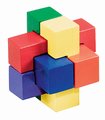
The pieces include: 1, 3×256, and 2×928 (AJ-VV-JJ or ALLXXX).
The colorful burr from “Melissa & Doug” uses this set.
It is very easy to construct – in fact this is possibly the easiest of all 6-piece burrs.
Charpente Diabolique
(the Diabolical Structure) – I finally obtained an example.
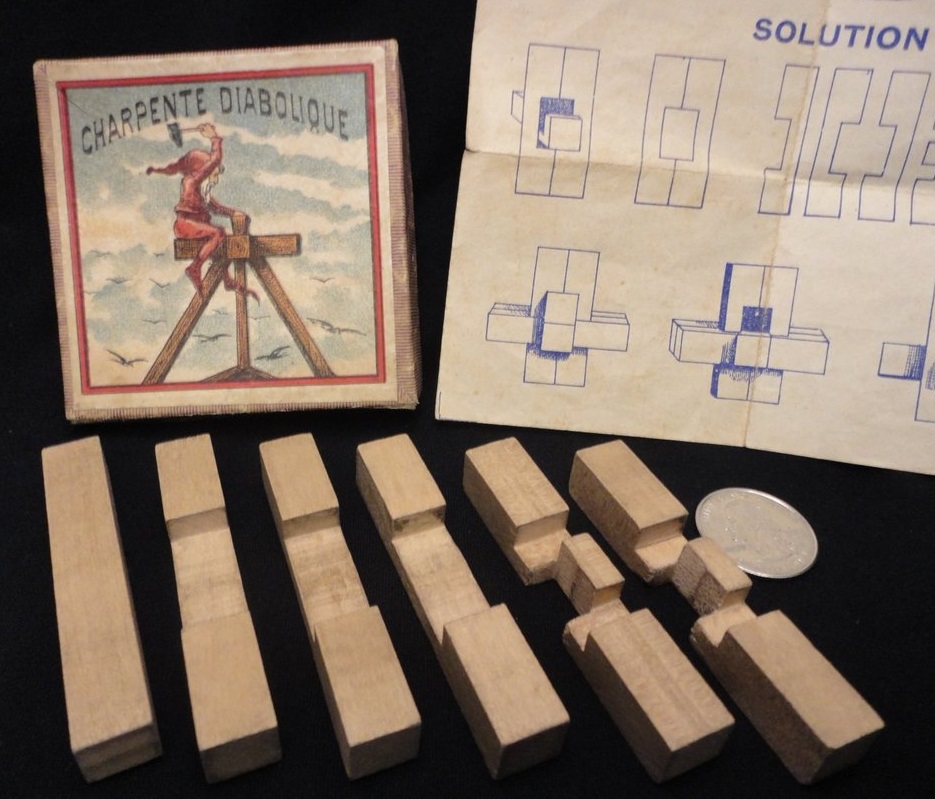
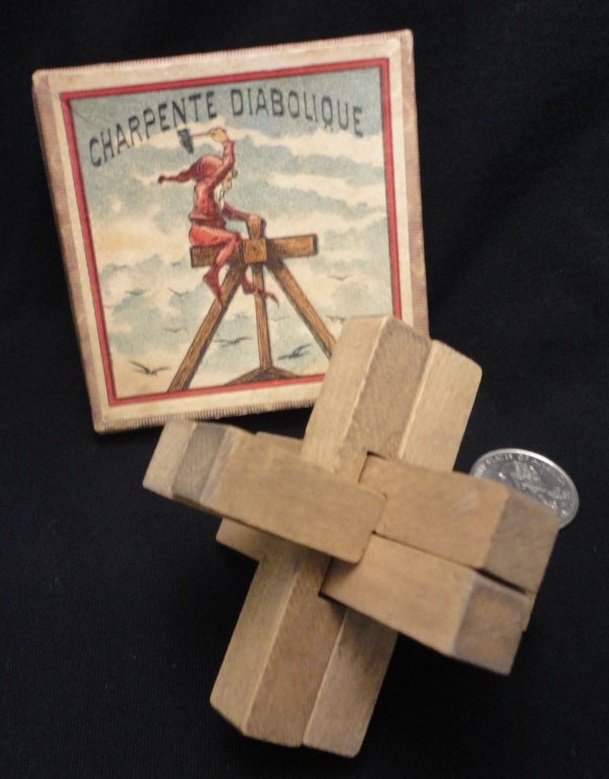
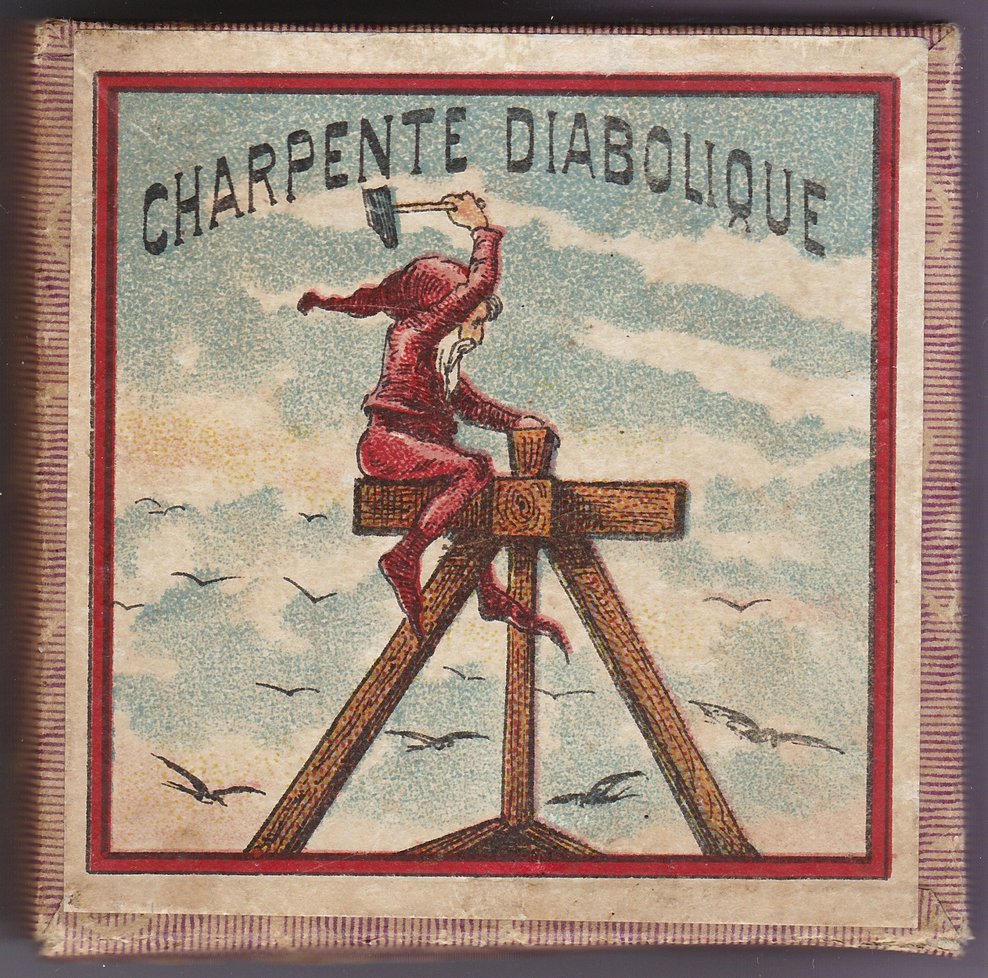
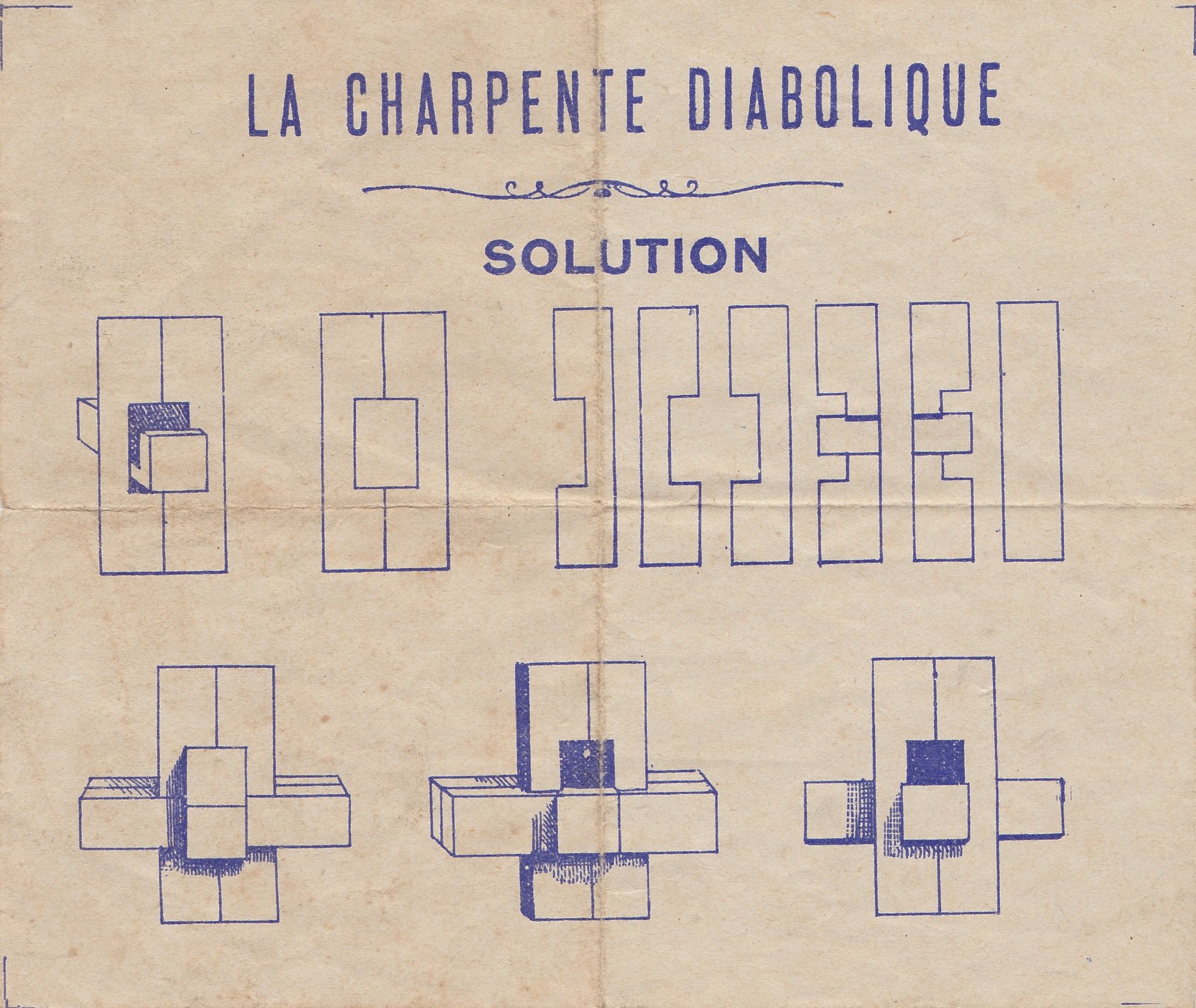
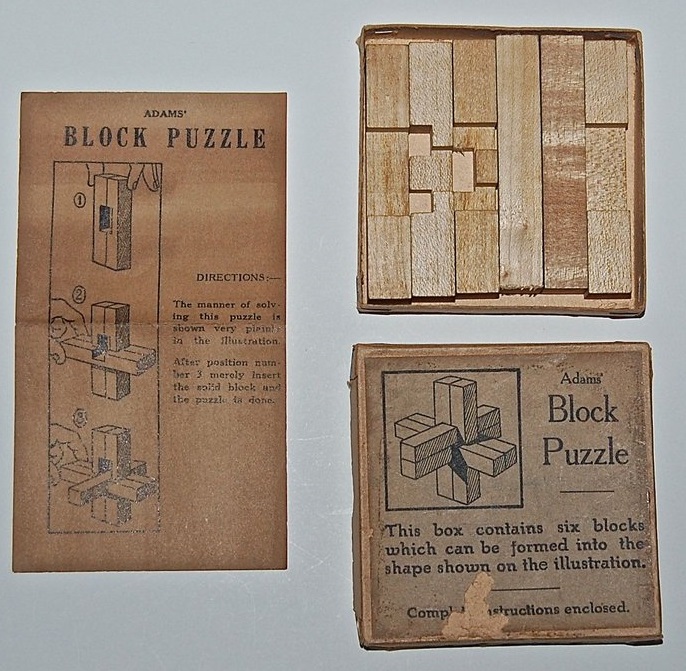
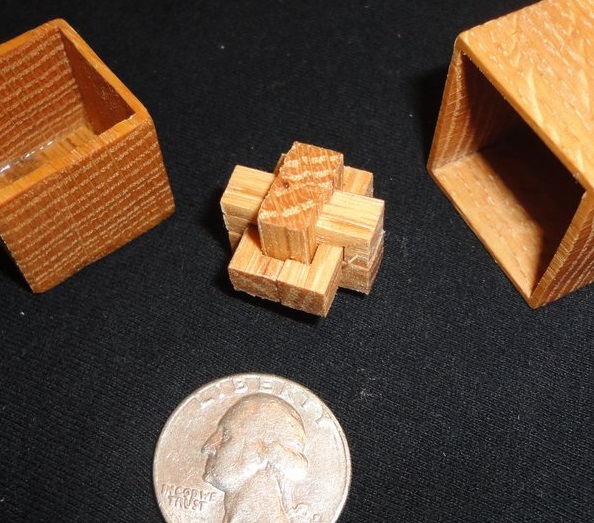
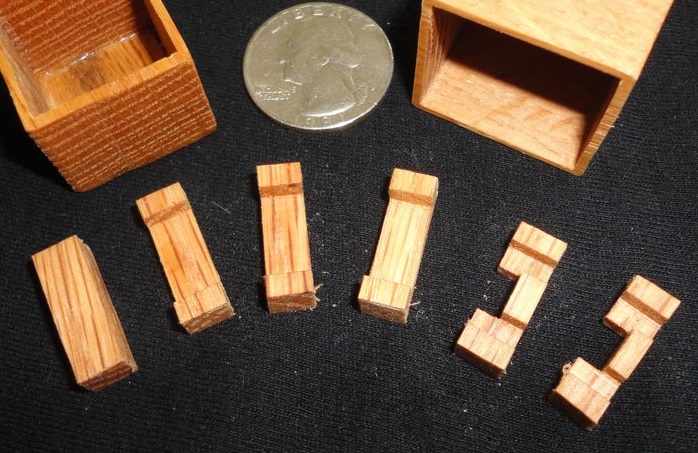
Additional examples – the Adams Block Puzzle (which I do not own), and a Micro Burr in its own small box –
made by John Polhemus, sold via his wife’s Etsy store
Silly Sheila Designs.
    +----+----+----+----+----+----+
   /                             /|
  +                             + |
 /                             /  +
+----+----+----+----+----+----+   |
|                             |   |
|                             |   +
+                             +  /
|                             | +
|                             |/
+----+----+----+----+----+----+
The Key
    +----+                   +----+
   /    /|                  /    /|
  +    + |                 +    + |
 /    /  +----+----+----+-/    /  +
+----+  /                +----+   |
|    | +                 |    |   |
|    |/                  |    |   +
+    +----+----+----+----+    +  /
|                             | +
|                             |/
+----+----+----+----+----+----+
The Tray
    +----+         +----+----+----+
   /    /|        /              /|
  +    + |       +----+         + |
 /    /  +----+--|   /         /  +
+----+  /        |  +----+----+   |
|    | +    +----+  |         |   |
|    |/    /|       |         |   +
+    +----+ |       +         +  /
|         | +----+--|         | +
|         |/        |         |/
+----+----+         +----+----+
The
    +----+----+----+         +----+
   /              /|        /    /|
  +         +----+ |       +    + |
 /         /|    | +----+-/    /  +
+----+----+ |    |/      +----+   |
|         | +    +----+  |    |   |
|         | |        /   |    |   +
+         + |       +----+    +  /
|         | +----+--|         | +
|         |/        |         |/
+----+----+         +----+----+
Offsets
    +----+    +----+----+    +----+
   /    /|   /         /|   /    /|
  +    + |  +----+----+ |  +    + |
 /    /  +--|         | +-/    /  +
+----+  /   |         |/ +----+   |
|    | +    +         +  |    |   |
|    |/    /|        /   |    |   +
+    +----+ |       +----+    +  /
|         | +----+--|         | +
|         |/        |         |/
+----+----+         +----+----+
The Tongue
    +----+                   +----+
   /    /|                  /    /|
  +    + |                 +    + |
 /    /  +----+----+----+-/    /  +
+----+  /                +----+   |
|    | +    +----+----+  |    |   |
|    |/    /|        /   |    |   +
+    +----+ |       +----+    +  /
|         | +----+--|         | +
|         |/        |         |/
+----+----+         +----+----+
The Y
This set of pieces has been used often, and has appeared in ivory.
Jurg von Kaenel refers to this as “the well-known one.”
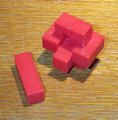
This small plastic red burr is one of my older puzzles – I don’t recall where I got it.
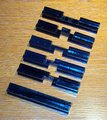
Licorice Stix – Reiss (1974)
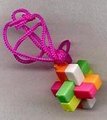
This is a small plastic burr pendant, made in China.
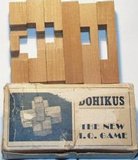
This set also appeared as “Dohikus.” (I don’t have this.)
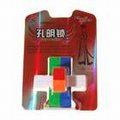
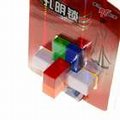
Kaiyue
Kong Ming Lock
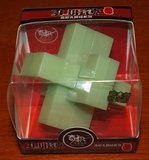
Another plastic version from China.
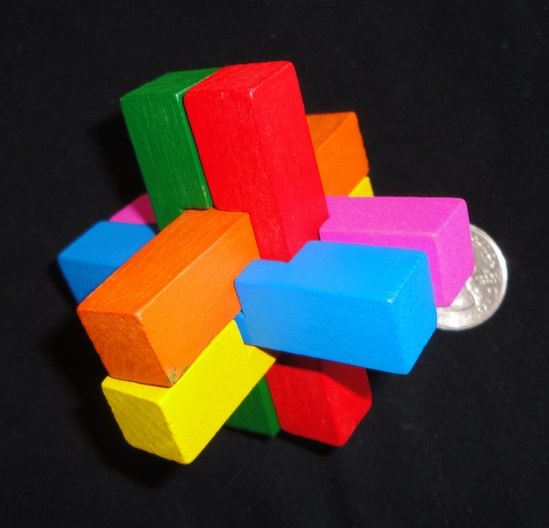
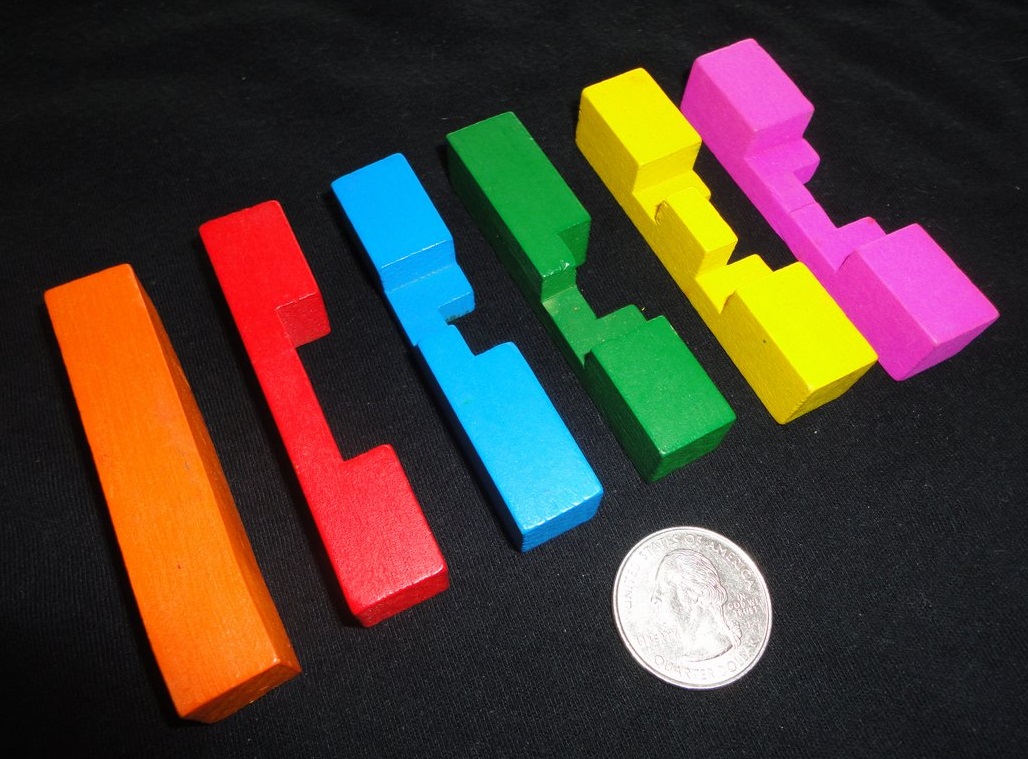
A colorful wooden version, from China.
    +----+         +----+----+----+
   /    /|        /              /|
  +    + |       +              + |
 /    /  +----+-/              /  +
+----+  /      +----+----+----+   |
|    | +       |              |   |
|    |/        |              |   +
+    +----+----+              +  /
|                             | +
|                             |/
+----+----+----+----+----+----+
The Side Tray
    +----+    +----+----+----+----+
   /    /|   /                   /|
  +    + |  +----+----+         + |
 /    /  +--|        /         /  +
+----+  /   |       +----+----+   |
|    | +    +       |         |   |
|    |/    /|       |         |   +
+    +----+ |       +         +  /
|         | +----+--|         | +
|         |/        |         |/
+----+----+         +----+----+
The
    +----+----+----+----+    +----+
   /                   /|   /    /|
  +         +----+----+ |  +    + |
 /         /|         | +-/    /  +
+----+----+ |         |/ +----+   |
|         | +         +  |    |   |
|         | |        /   |    |   +
+         + |       +----+    +  /
|         | +----+--|         | +
|         |/        |         |/
+----+----+         +----+----+
Walls
    +----+         +----+----+----+
   /    /|        /              /|
  +    + |       +----+         + |
 /    /  +----+--|   /         /  +
+----+  /        |  +----+----+   |
|    | +    +----+  |         |   |
|    |/    /|       |         |   +
+    +----+ |       +         +  /
|         | +----+--|         | +
|         |/        |         |/
+----+----+         +----+----+
The
    +----+----+----+         +----+
   /              /|        /    /|
  +         +----+ |       +    + |
 /         /|    | +----+-/    /  +
+----+----+ |    |/      +----+   |
|         | +    +----+  |    |   |
|         | |        /   |    |   +
+         + |       +----+    +  /
|         | +----+--|         | +
|         |/        |         |/
+----+----+         +----+----+
Offsets
    +----+                   +----+
   /    /|                  /    /|
  +    + |                 +    + |
 /    /  +----+----+----+-/    /  +
+----+  /                +----+   |
|    | +    +----+----+  |    |   |
|    |/    /|        /   |    |   +
+    +----+ |       +----+    +  /
|         | +----+--|         | +
|         |/        |         |/
+----+----+         +----+----+
The Y
This is the only notchable, voidless set
that can be put together six different ways.
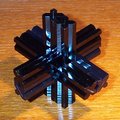
I got this aluminum burr called “Rainbow” from Bits and Pieces – it came in a nice black drawstring pouch.
It was designed by Paul Eibe.
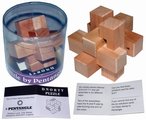
This is DNORTY from Pentangle. The name derives from the bold piece letters given in my table above:
52 (D), 911 (N), 975 (O), 792 (R), 824 (T), 1024 (Y).
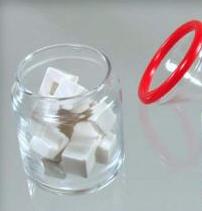
This is a Toyo Glass puzzle called “Tongari Kun and Roppongi.”
Not only is there a burr, but it must be assembled inside
the glass container. The mouth is too small to pass the burr in fully assembled form.
Remember, there are 6 different ways to construct this burr – you must find one that permits construction within
the container!
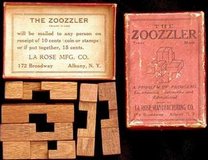
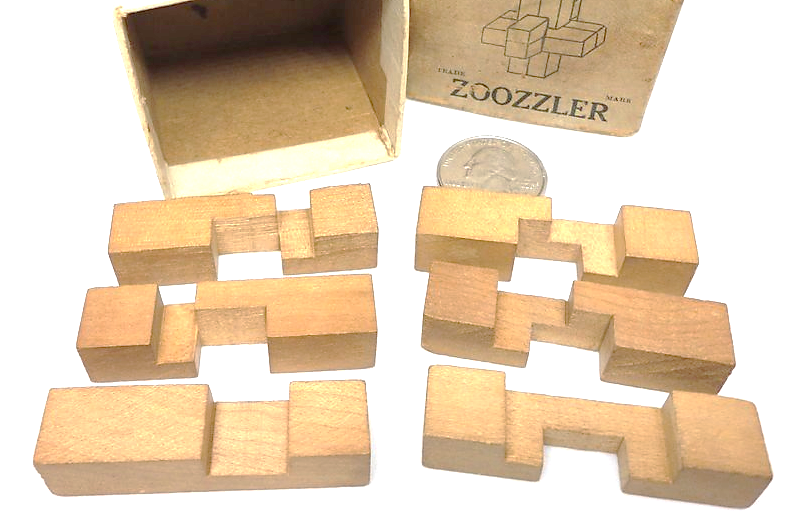
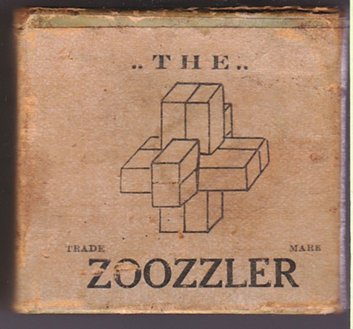
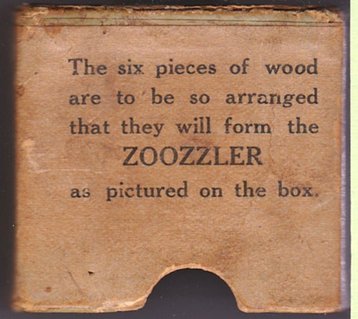
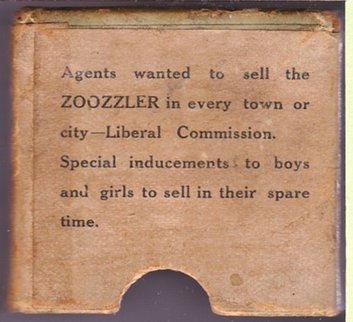
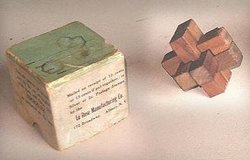 This set was sold some time ago (perhaps prior to 1900) as The ZOOZZLER.
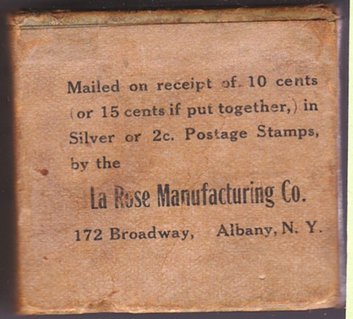
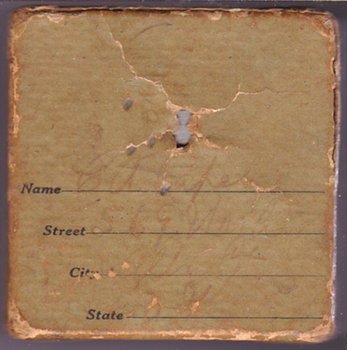
If you look carefully at the inside of the box lid shown in the photo on the left,
you’ll see the Zoozzler came from the
La Rose Manufacturing Company of Albany, N.Y. In December 2008 I was contacted by Pete Brady, who discovered a Zoozzler in the back of an old desk,
and after assembling it,
did a Google search on it and found my website.
Pete’s copy is shown on the right. Pete, who is now in his 70’s (and still solving burr puzzles!) tells me that his grandfather was
Anthime F. La Rose,
who was born in 1842 in a small town near Montreal, and who died in 1920.
Anthime was raised in French Canada and eventually emigrated to Albany, where
he established his factory at 172 Broadway
and made, among other things like the Zoozzler, furniture, and
phone booths for Western Electric.
There is no evidence of any patent, though the box does carry the words “Trade Mark” –
Pete believes that Anthime produced the Zoozzler in his well-equipped factory.
The box says, “Agents wanted to sell the ZOOZZLER in every town or city – liberal commission.
Special inducements to boys and girls to sell in their spare time.”
No phone number appears on any of the packaging, so it may be that the Zoozzler was produced prior to 1900. Pete says his grandfather was married twice.
After his first wife died, Anthime married Julia, who was born in 1863 and died in 1945,
and in 1899 had a daughter, Katharine, who was Pete’s mother. Thanks for the info, Pete, and for allowing me to share it!
I find this kind of historical background adds a lot to my enjoyment of puzzles.
It is not always easy to feel any connection to our distant ancestors, but a puzzle can
be a tangible link to the past.
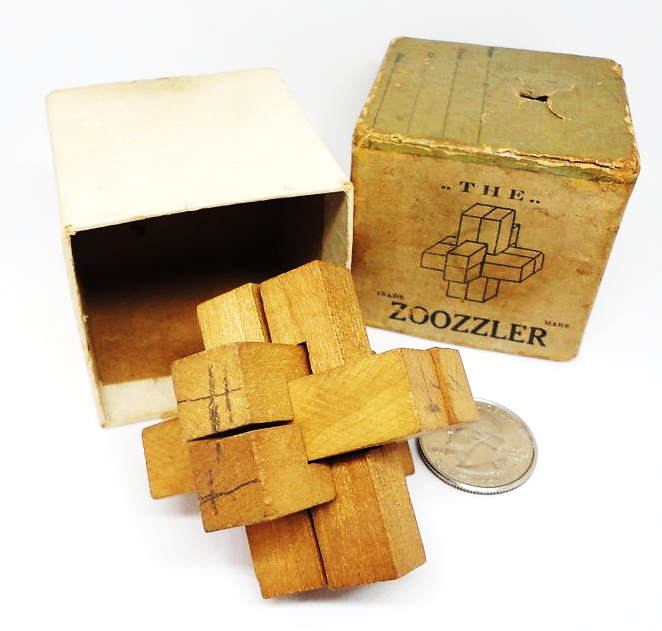
“What sits in the notch of piece #52, and then which piece is opposite #52?”
I found the following:
- left offset 824, right wall 911 – this seems like it fits together, but is in fact not constructible.
This is a good illustration of what is meant by an apparent assembly.
- left offset 824, right offset 975 – two 3-pc halves slide together
- right offset 975, left offset 824 – mirror of the above
- right wall 911, left offset 824
- right wall 911, left wall 792
- left wall 792, right offset 975
- left wall 792, right wall 911
    +----+----+----+----+----+----+
   /                             /|
  +                             + |
 /                             /  +
+----+----+----+----+----+----+   |
|                             |   |
|                             |   +
+                             +  /
|                             | +
|                             |/
+----+----+----+----+----+----+
The Key
    +----+         +----+    +----+
   /    /|        /    /|   /    /|
  +    + |       +    + |  +    + |
 /    /  +----+-/    /  +-/    /  +
+----+  /      +----+  / +----+   |
|    | +       |    | +  |    |   |
|    |/        |    |/   |    |   +
+    +----+----+    +----+    +  /
|                             | +
|                             |/
+----+----+----+----+----+----+
The (Bottle) Opener
    +----+         +----+----+----+
   /    /|        /              /|
  +    + |       +----+         + |
 /    /  +----+--|   /         /  +
+----+  /        |  +----+----+   |
|    | +    +----+  |         |   |
|    |/    /|       |         |   +
+    +----+ |       +         +  /
|         | +----+--|         | +
|         |/        |         |/
+----+----+         +----+----+
The
    +----+----+----+         +----+
   /              /|        /    /|
  +         +----+ |       +    + |
 /         /|    | +----+-/    /  +
+----+----+ |    |/      +----+   |
|         | +    +----+  |    |   |
|         | |        /   |    |   +
+         + |       +----+    +  /
|         | +----+--|         | +
|         |/        |         |/
+----+----+         +----+----+
Offsets
    +----+                   +----+
   /    /|                  /    /|
  +    + |                 +    + |
 /    /  +----+----+----+-/    /  +
+----+  /                +----+   |
|    | +    +----+----+  |    |   |
|    |/    /|        /   |    |   +
+    +----+ |       +----+    +  /
|         | +----+--|         | +
|         |/        |         |/
+----+----+         +----+----+
The Y
    +----+                   +----+
   /    /|                  /    /|
  +    + |                 +    + |
 /    /  +----+----+----+-/    /  +
+----+  /                +----+   |
|    | +    +----+----+  |    |   |
|    |/    /|        /   |    |   +
+    +----+ |       +----+    +  /
|         | +----+--|         | +
|         |/        |         |/
+----+----+         +----+----+
The Y
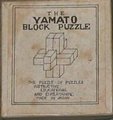
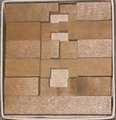
The vintage Japanese Yamato Block Puzzle.
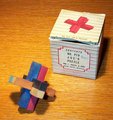
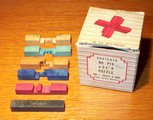
This is “No. P19 Joe’s Puzzle” from Wm. F. Drueke & Sons of Grand Rapids Michigan.
There is no date on the box but it seems fairly old.
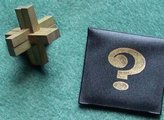
This is a small brass burr, called the “Ultimate Puzzle,” made for Chadwick Miller and dated 1969.
It came with a small black case with a question mark on the front.
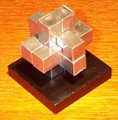
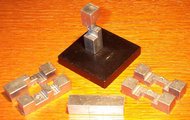
In this aluminum burr, piece 824 is fixed to the base.
I think this came from B&P.
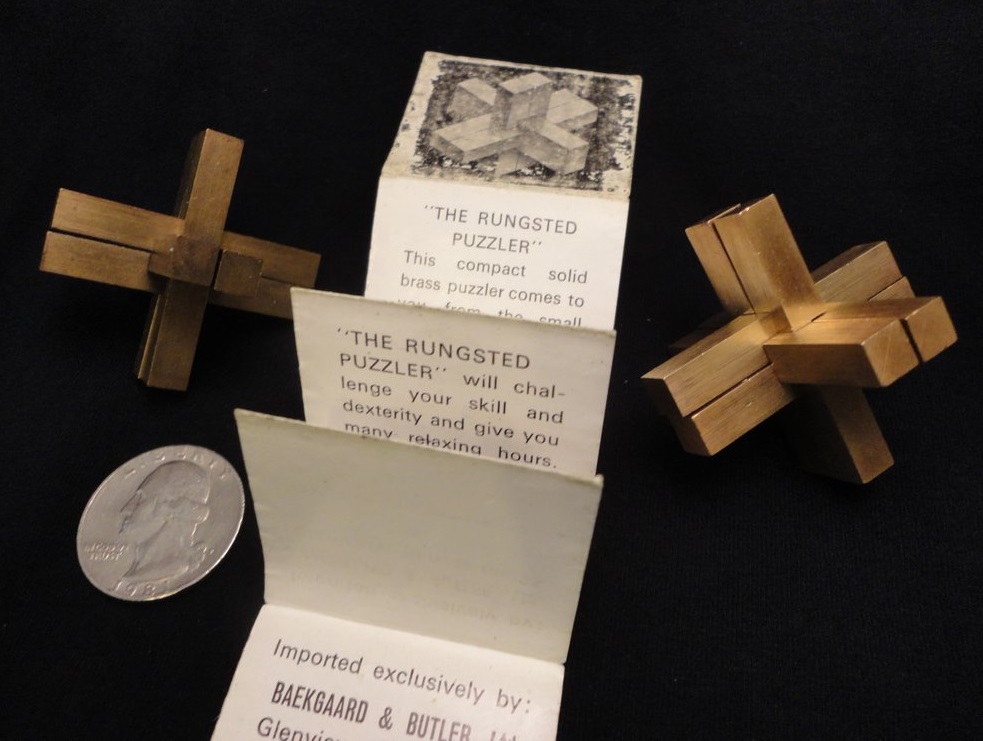

The Rungsted Puzzler – two instances of a small brass burr
with instruction sheet. Made in Denmark.
The Yamato Block pieces { 1, 188, 824/975, 1024×2 }
The same small brass burr was sold by Chadwick Miller as the Ultimate Puzzle,
and they used a similar question mark symbol.
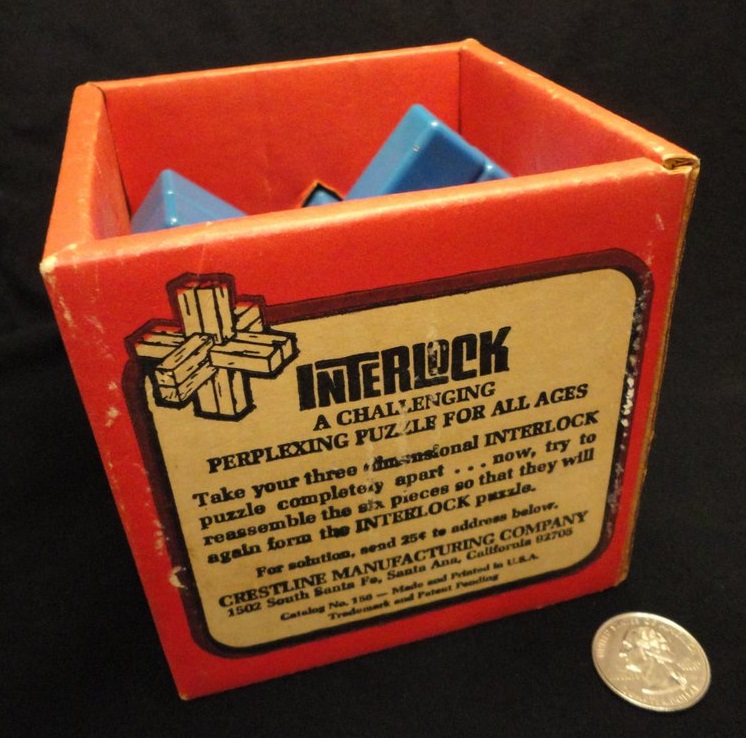
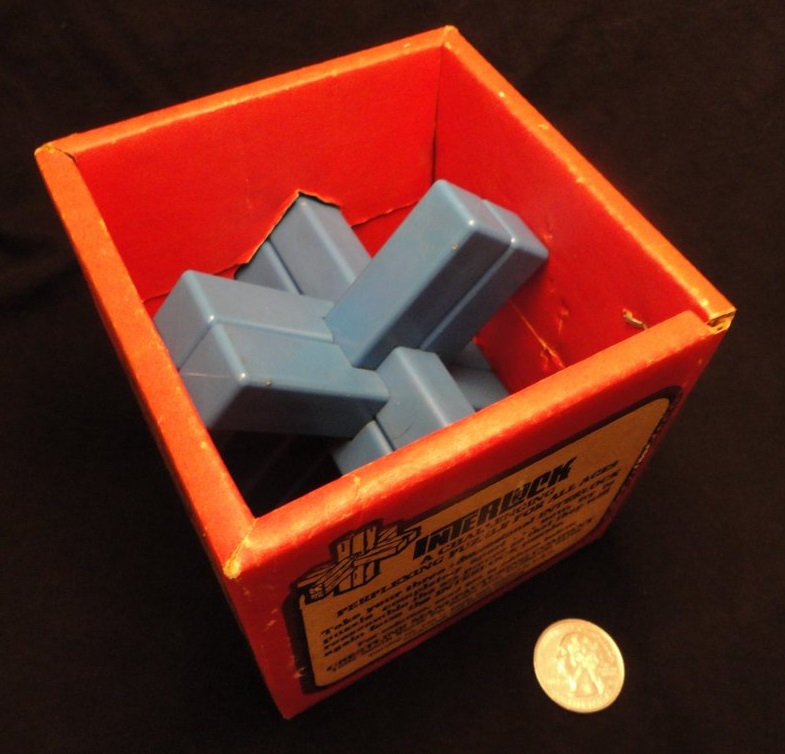
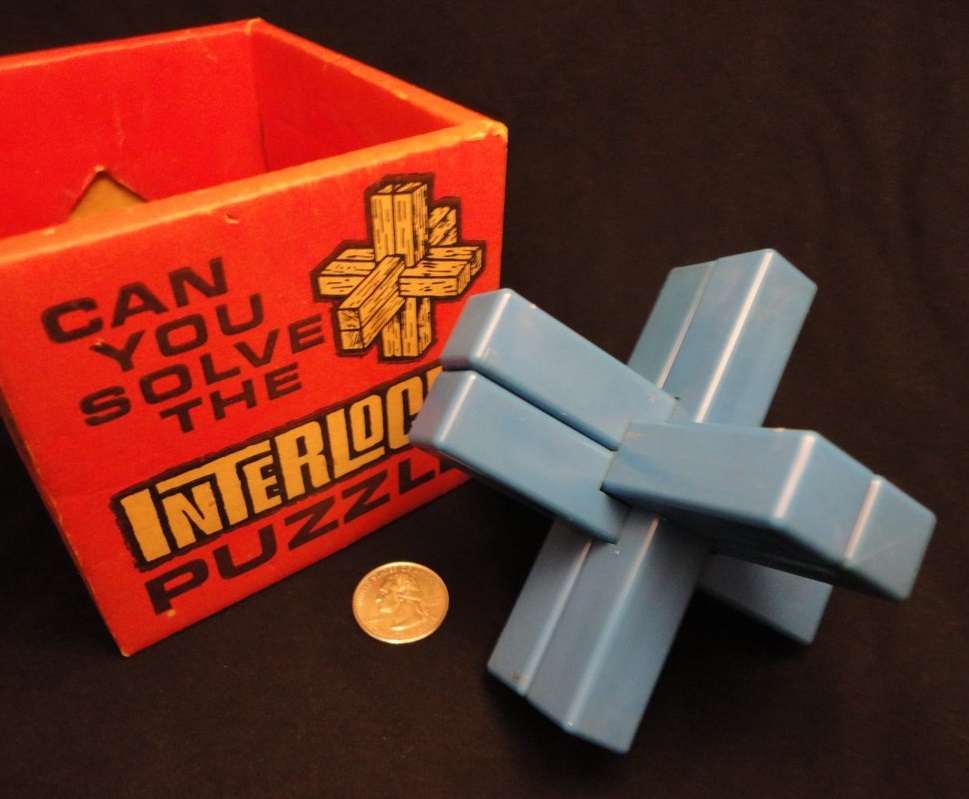
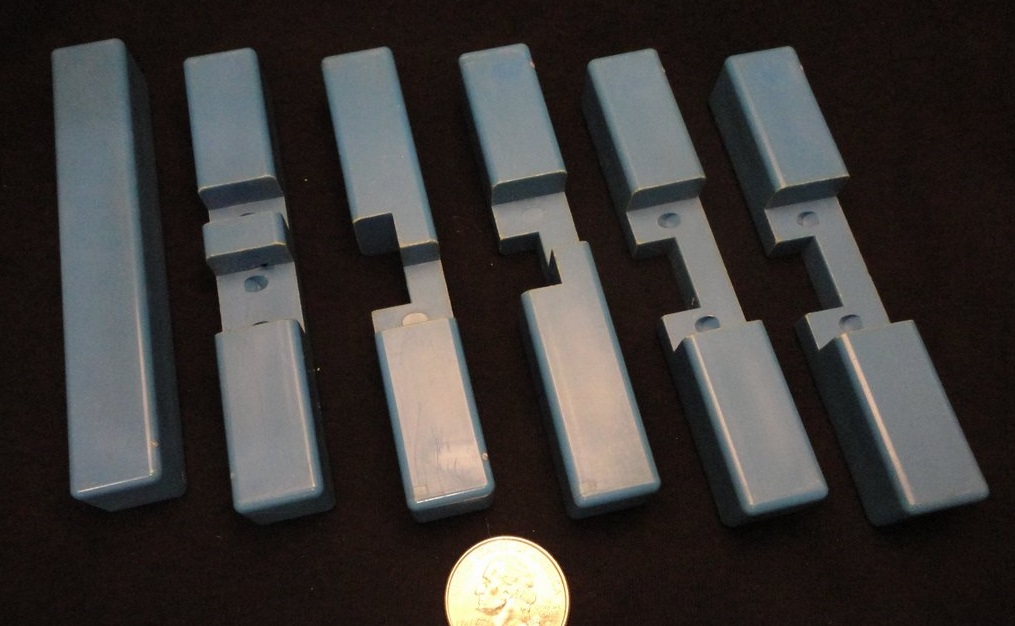
Interlock – a vintage puzzle from Crestline
No year on the box.
This is a large example of the Yamato Block set of pieces { 1, 188, 824/975, 2x 1024 }.
    +----+    +----+    +----+----+
   /    /|   /    /|   /         /|
  +    + |  +----+ |  +         + |
 /    /  +--|    | +-/         /  +
+----+  /   |    |/ +----+----+   |
|    | +    +----+  |         |   |
|    |/             |         |   +
+    +----+----+----+         +  /
|                             | +
|                             |/
+----+----+----+----+----+----+
    +----+                   +----+
   /    /|                  /    /|
  +    + |                 +    + |
 /    /  +----+----+----+-/    /  +
+----+  /                +----+   |
|    | +    +----+       |    |   |
|    |/    /|   /        |    |   +
+    +----+ |  +----+----+    +  /
|         | +--|              | +
|         |/   |              |/
+----+----+    +----+----+----+
    +----+         +----+    +----+
   /    /|        /    /|   /    /|
  +    + |       +----+ |  +    + |
 /    /  +----+--|    | +-/    /  +
+----+  /        |    |/ +----+   |
|    | +         +    +  |    |   |
|    |/         /|   /   |    |   +
+    +----+----+ |  +----+    +  /
|              | +--|         | +
|              |/   |         |/
+----+----+----+    +----+----+
    +----+         +----+    +----+
   /    /|        /    /|   /    /|
  +    + |       +----+ |  +    + |
 /    /  +-------|    | +-/    /  +
+----+  /        |    |/ +----+   |
|    | +    +----+    +  |    |   |
|    |/    /|        /   |    |   +
+    +----+ |       +----+    +  /
|         | +----+--|         | +
|         |/        |         |/
+----+----+         +----+----+
    +----+    +----+         +----+
   /    /|   /    /|        /    /|
  +    + |  +----+ |       +    + |
 /    /  +--|    | +----+-/    /  +
+----+  /   |    |/      +----+   |
|    | +    +    +----+  |    |   |
|    |/    /|        /   |    |   +
+    +----+ |       +----+    +  /
|         | +----+--|         | +
|         |/        |         |/
+----+----+         +----+----+
    +----+----+              +----+
   /         /|             /    /|
  +    +----+ |            +    + |
 /    /|    | +----+----+-/    /  +
+----+ |    |/           +----+   |
|    | +----+----+----+  |    |   |
|    |/    /|        /   |    |   +
+    +----+ |       +----+    +  /
|         | +----+--|         | +
|         |/        |         |/
+----+----+         +----+----+
Bill Cutler,
and made from Maple by
Jerry McFarland.
This burr is special because it is the only burr at the highest level, 12.
Unfortunately the solution is not unique –
there are 89 ways to put these pieces together, and most of them don’t achieve level 12.
Note that there are no other level 12 burrs (for any length stick), and no level 11 burrs at all.
    +----+    +----+    +----+----+
   /    /|   /    /|   /         /|
  +    + |  +----+ |  +         + |
 /    /  +--|    | +-/         /  +
+----+  /   |    |/ +----+----+   |
|    | +    +----+  |         |   |
|    |/             |         |   +
+    +----+----+----+         +  /
|                             | +
|                             |/
+----+----+----+----+----+----+
    +----+                   +----+
   /    /|                  /    /|
  +    + |                 +    + |
 /    /  +----+----+----+-/    /  +
+----+  /                +----+   |
|    | +    +----+       |    |   |
|    |/    /|   /        |    |   +
+    +----+ |  +----+----+    +  /
|         | +--|              | +
|         |/   |              |/
+----+----+    +----+----+----+
    +----+                   +----+
   /    /|                  /    /|
  +    + |                 +    + |
 /    /  +----+----+----+-/    /  +
+----+  /                +----+   |
|    | +         +----+  |    |   |
|    |/         /|   /   |    |   +
+    +----+----+ |  +----+    +  /
|              | +--|         | +
|              |/   |         |/
+----+----+----+    +----+----+
    +----+    +----+----+    +----+
   /    /|   /         /|   /    /|
  +    + |  +         + |  +    + |
 /    /  +-/         /  +-/    /  +
+----+  / +----+----+  / +----+   |
|    | +  |         | +  |    |   |
|    |/   |         |/   |    |   +
+    +----+----+----+----+    +  /
|         | +----+--|         | +
|         |/        |         |/
+----+----+         +----+----+
    +----+----+              +----+
   /         /|             /    /|
  +    +----+ |            +    + |
 /    /|    | +----+----+-/    /  +
+----+ |    |/           +----+   |
|    | +----+----+----+  |    |   |
|    |/    /|        /   |    |   +
+    +----+ |       +----+    +  /
|         | +----+--|         | +
|         |/        |         |/
+----+----+         +----+----+
    +----+----+              +----+
   /         /|             /    /|
  +    +----+ |            +    + |
 /    /|    | +----+----+-/    /  +
+----+ |    |/           +----+   |
|    | +----+----+----+  |    |   |
|    |/    /|        /   |    |   +
+    +----+ |       +----+    +  /
|         | +----+--|         | +
|         |/        |         |/
+----+----+         +----+----+
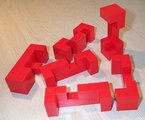
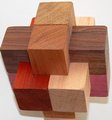
large number of times pieces must be moved back and forth during the solution.
This burr is special because it achieves the highest level possible for length-6 pieces, level 9
(i.e. it requires 9 moves to release the first piece), and the solution is unique –
it has no other solutions at lower levels. I made an example from Lego.
I also bought a version made from six exotic woods, by Thomas Moeller.
It is quite large – each piece measures 1.5″ x 1.5″ x 4.5″.
Check Bill Cutler’s site for availability.
    +----+----+         +----+----+
   /         /|        /         /|
  +    +----+ |       +----+    + |
 /    /|    | +----+--|   /    /  +
+----+ |    |/        |  +----+   |
|    | +----+    +----+--|    |   |
|    |/         /|   /   |    |   +
+    +----+----+ |  +----+    +  /
|              | +--|         | +
|              |/   |         |/
+----+----+----+    +----+----+
    +----+         +----+    +----+
   /    /|        /    /|   /    /|
  +    + |  +----+----+ |  +    + |
 /    /  +-/    /|    | +-/    /  +
+----+  / +----+ |    |/ +----+   |
|    | +  |    | +    +  |    |   |
|    |/   |    | |   /   |    |   +
+    +----+    + |  +----+    +  /
|              | +--|         | +
|              |/   |         |/
+----+----+----+    +----+----+
    +----+                   +----+
   /    /|                  /    /|
  +    + |                 +    + |
 /    /  +----+----+----+-/    /  +
+----+  /                +----+   |
|    | +         +----+  |    |   |
|    |/         /|   /   |    |   +
+    +----+----+ |  +----+    +  /
|              | +--|         | +
|              |/   |         |/
+----+----+----+    +----+----+
    +----+              +----+----+
   /    /|             /         /|
  +    +----+    +----+         + |
 /         /|-+-/              /  +
+----+----+ |  +----+----+----+   |
|         | +--|              |   |
|         | |  |              |   +
+         + |  +----+         +  /
|         | +----+--|         | +
|         |/        |         |/
+----+----+         +----+----+
    +----+                   +----+
   /    /|                  /    /|
  +    +----+         +----+    + |
 /         /|-+----+-/         /  +
+----+----+ |       +----+----+   |
|         | +----+--|         |   |
|         | |       |         |   +
+         + |       +         +  /
|         | +----+--|         | +
|         |/        |         |/
+----+----+         +----+----+
    +----+                   +----+
   /    /|                  /    /|
  +    + |                 +    + |
 /    /  +----+----+----+-/    /  +
+----+  /                +----+   |
|    | +    +----+----+  |    |   |
|    |/    /|        /   |    |   +
+    +----+ |       +----+    +  /
|         | +----+--|         | +
|         |/        |         |/
+----+----+         +----+----+
The Y
Computer’s Choice Unique 10 burr.
I don’t know who the craftsman is – I bought it as part of a group of hand-made puzzles.
This burr is special because it is one of 18 burrs that have a unique level 10 solution, the highest level
achievable for six-piece burrs with unique solutions.
The pieces must be length-8, however, not length-6.
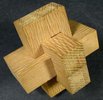
    +----+         +----+----+----+
   /    /|        /              /|
  +    + |       +              + |
 /    /  +----+-/              /  +
+----+  /      +----+----+----+   |
|    | +       |              |   |
|    |/        |              |   +
+    +----+----+              +  /
|                             | +
|                             |/
+----+----+----+----+----+----+
The Side Tray
    +----+----+    +----+----+----+
   /         /|   /              /|
  +         + |  +----+         + |
 /         /  +--|   /         /  +
+----+----+  /   |  +----+----+   |
|         | +----+  |         |   |
|         | |       |         |   +
+         + |       +         +  /
|         | +----+--|         | +
|         |/        |         |/
+----+----+         +----+----+
Left Notched Half-Tray
    +----+    +----+----+----+----+
   /    /|   /                   /|
  +    + |  +----+----+         + |
 /    /  +--|        /         /  +
+----+  /   |       +----+----+   |
|    | +    +       |         |   |
|    |/    /|       |         |   +
+    +----+ |       +         +  /
|         | +----+--|         | +
|         |/        |         |/
+----+----+         +----+----+
Left Wall
    +----+         +----+    +----+
   /    /|        /    /|   /    /|
  +    + |       +----+ |  +    + |
 /    /  +-------|    | +-/    /  +
+----+  /        |    |/ +----+   |
|    | +    +----+    +  |    |   |
|    |/    /|        /   |    |   +
+    +----+ |       +----+    +  /
|         | +----+--|         | +
|         |/        |         |/
+----+----+         +----+----+
The
    +----+    +----+         +----+
   /    /|   /    /|        /    /|
  +    + |  +----+ |       +    + |
 /    /  +--|    | +----+-/    /  +
+----+  /   |    |/      +----+   |
|    | +    +    +----+  |    |   |
|    |/    /|        /   |    |   +
+    +----+ |       +----+    +  /
|         | +----+--|         | +
|         |/        |         |/
+----+----+         +----+----+
Fingers
    +----+----+----+         +----+
   /              /|        /    /|
  +         +----+ |       +    + |
 /         /|    | +----+-/    /  +
+----+----+ |    |/      +----+   |
|         | +    +----+  |    |   |
|         | |        /   |    |   +
+         + |       +----+    +  /
|         | +----+--|         | +
|         |/        |         |/
+----+----+         +----+----+
Right Offset
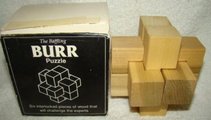
there is no other information on the box.
This has pieces numbers 52, 615, 792, 960/992, 975
and is Bill Cutler’s #305,
not Bill’s Baffling Burr, which has pieces 103, 760, 960/992, 996, 1024.
    +----+    +----+         +----+
   /    /|   /    /|        /    /|
  +    + |  +----+ |  +----+    + |
 /    /  +--|    | +-/         /  +
+----+  /   |    |/ +----+----+   |
|    | +    +----+  |         |   |
|    |/             |         |   +
+    +----+----+----+         +  /
|                             | +
|                             |/
+----+----+----+----+----+----+
    +----+    +----+----+    +----+
   /    /|   /         /|   /    /|
  +    + |  +----+    + |  +    + |
 /    /  +--|   /    /  +-/    /  +
+----+  /   |  +----+  / +----+   |
|    | +    +  |    | +  |    |   |
|    |/    /|  |    |/   |    |   +
+    +----+ |  +    +----+    +  /
|         | +--|              | +
|         |/   |              |/
+----+----+    +----+----+----+
    +----+----+              +----+
   /         /|             /    /|
  +         + |            +    + |
 /         /  +----+----+-/    /  +
+----+----+  /           +----+   |
|         | +    +----+  |    |   |
|         |/    /|   /   |    |   +
+         +----+ |  +----+    +  /
|              | +--|         | +
|              |/   |         |/
+----+----+----+    +----+----+
    +----+              +----+----+
   /    /|             /         /|
  +    + |            +----+    + |
 /    /  +----+----+--|   /    /  +
+----+  /             |  +----+   |
|    | +    +----+----+--|    |   |
|    |/    /|        /   |    |   +
+    +----+ |       +----+    +  /
|         | +----+--|         | +
|         |/        |         |/
+----+----+         +----+----+
    +----+         +----+    +----+
   /    /|        /    /|   /    /|
  +    + |       +----+ |  +    + |
 /    /  +-------|    | +-/    /  +
+----+  /        |    |/ +----+   |
|    | +    +----+    +  |    |   |
|    |/    /|        /   |    |   +
+    +----+ |       +----+    +  /
|         | +----+--|         | +
|         |/        |         |/
+----+----+         +----+----+
Right Finger
    +----+                   +----+
   /    /|                  /    /|
  +    + |                 +    + |
 /    /  +----+----+----+-/    /  +
+----+  /                +----+   |
|    | +    +----+----+  |    |   |
|    |/    /|        /   |    |   +
+    +----+ |       +----+    +  /
|         | +----+--|         | +
|         |/        |         |/
+----+----+         +----+----+
The Y
Eight is Enough designed by Bill Cutler and made by Jerry McFarland.
It was Bill’s IPP29 Exchange puzzle.
The pieces are length 8.
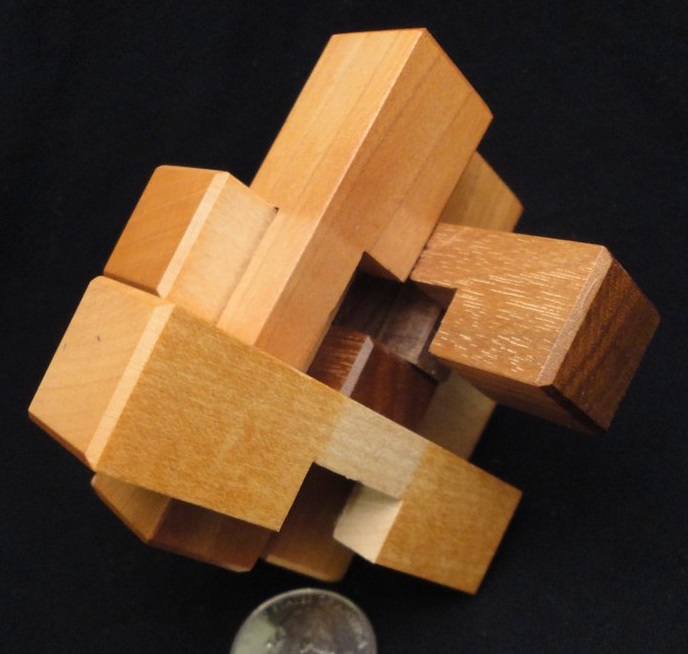
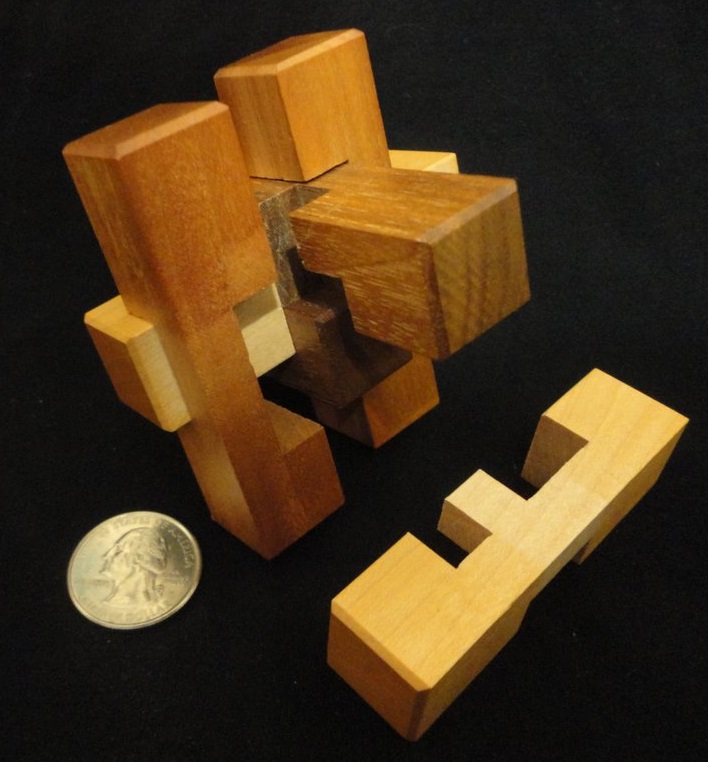
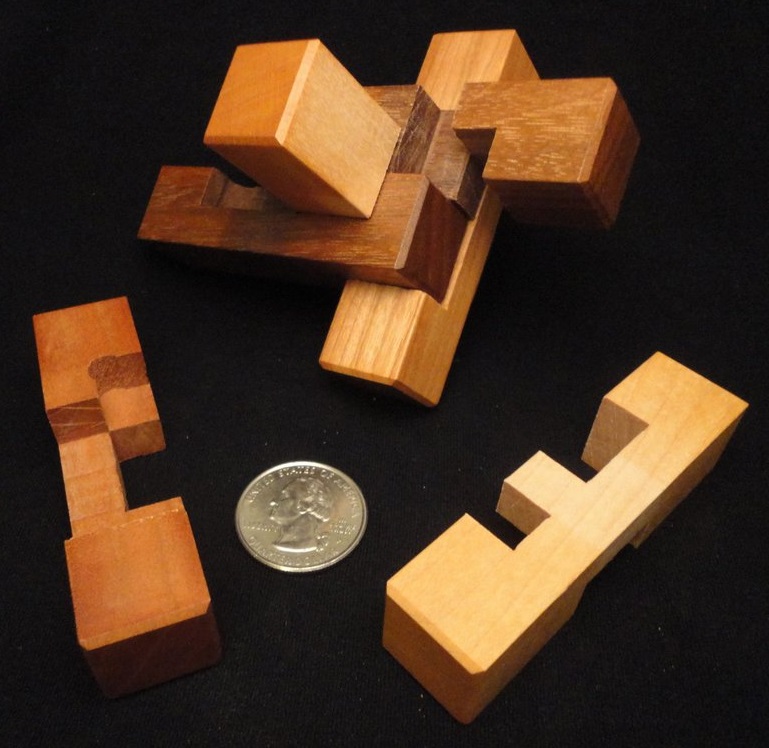
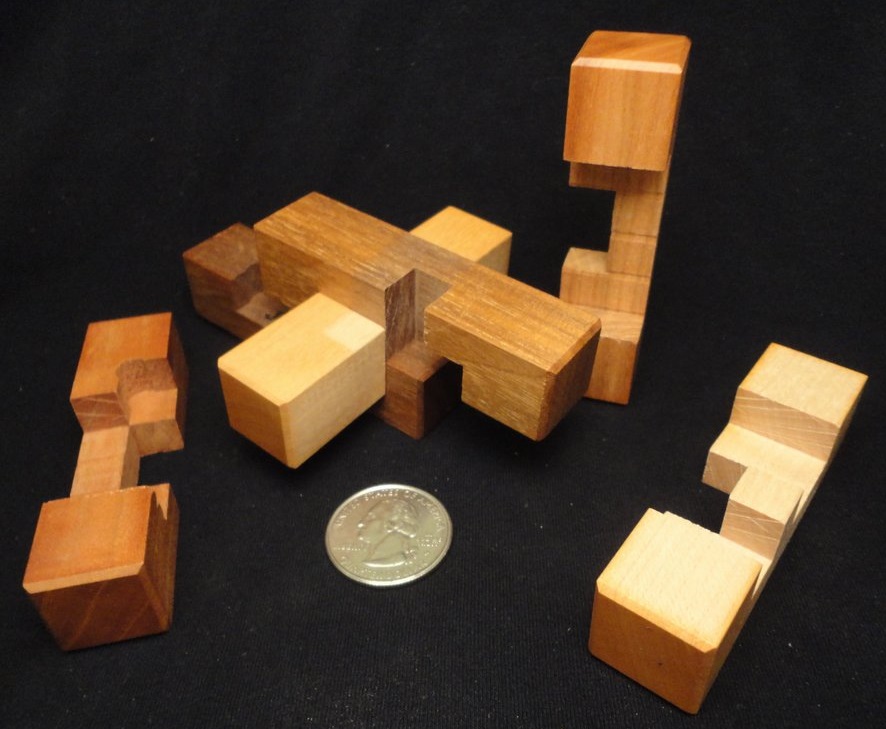
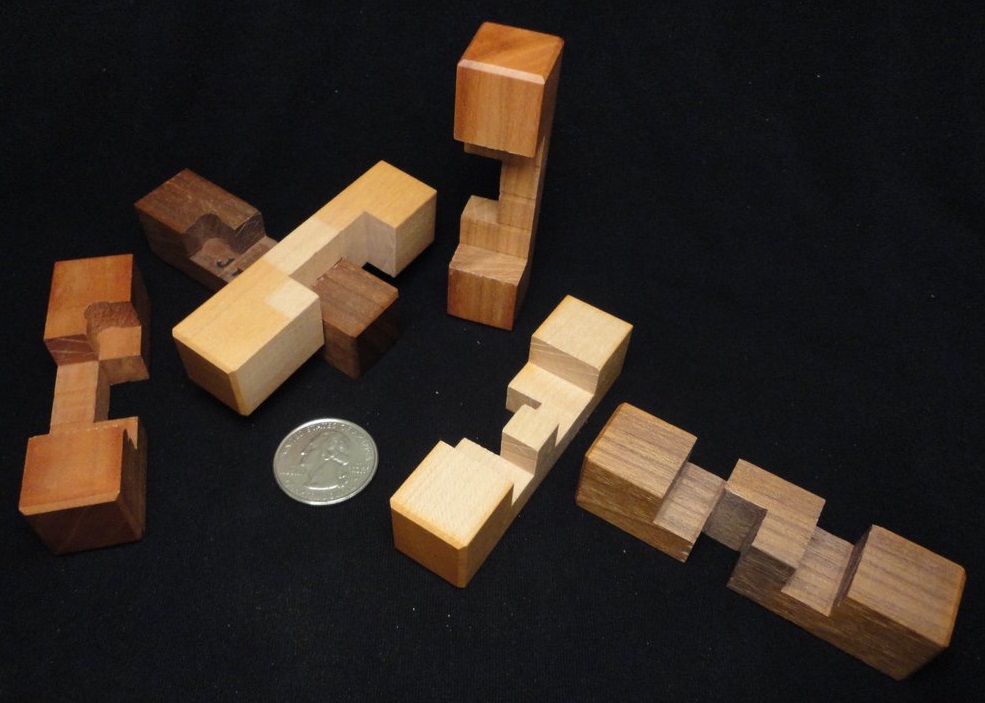
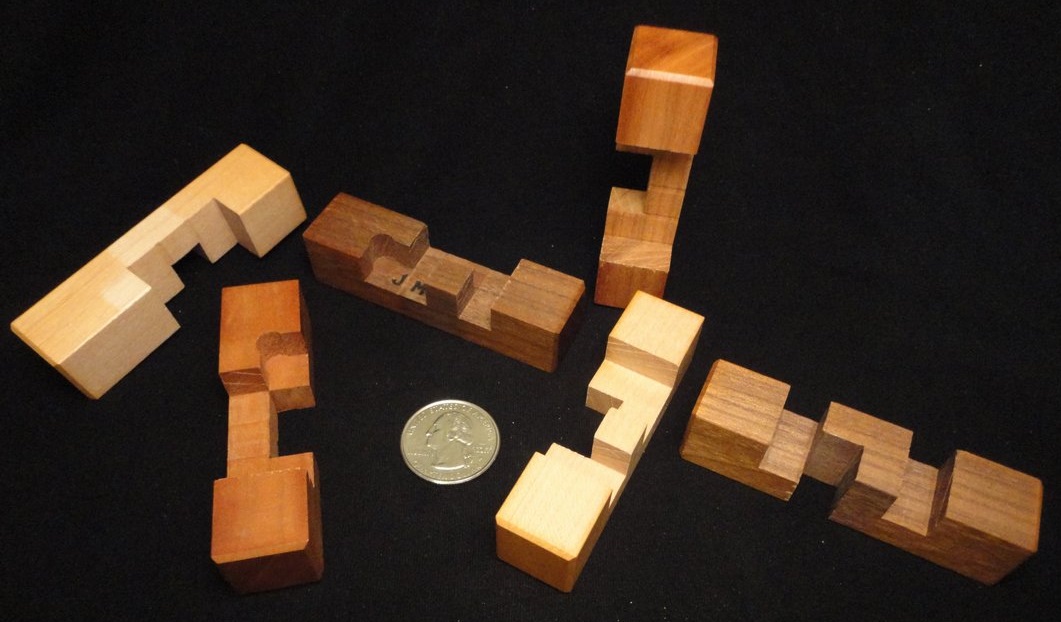
    +----+----+----+----+----+----+
   /                             /|
  +                             + |
 /                             /  +
+----+----+----+----+----+----+   |
|                             |   |
|                             |   +
+                             +  /
|                             | +
|                             |/
+----+----+----+----+----+----+
The Key
    +----+         +----+    +----+
   /    /|        /    /|   /    /|
  +    + |       +    + |  +    + |
 /    /  +----+-/    /  +-/    /  +
+----+  /      +----+  / +----+   |
|    | +       |    | +  |    |   |
|    |/        |    |/   |    |   +
+    +----+----+    +----+    +  /
|                             | +
|                             |/
+----+----+----+----+----+----+
The (Bottle) Opener
    +----+                   +----+
   /    /|                  /    /|
  +    + |                 +    + |
 /    /  +----+----+----+-/    /  +
+----+  /                +----+   |
|    | +                 |    |   |
|    |/                  |    |   +
+    +----+----+----+----+    +  /
|                             | +
|                             |/
+----+----+----+----+----+----+
The Tray
    +----+         +----+    +----+
   /    /|        /    /|   /    /|
  +    + |       +----+ |  +    + |
 /    /  +-------|    | +-/    /  +
+----+  /        |    |/ +----+   |
|    | +    +----+    +  |    |   |
|    |/    /|        /   |    |   +
+    +----+ |       +----+    +  /
|         | +----+--|         | +
|         |/        |         |/
+----+----+         +----+----+
Right Finger
    +----+----+----+         +----+
   /              /|        /    /|
  +         +----+ |       +    + |
 /         /|    | +----+-/    /  +
+----+----+ |    |/      +----+   |
|         | +    +----+  |    |   |
|         | |        /   |    |   +
+         + |       +----+    +  /
|         | +----+--|         | +
|         |/        |         |/
+----+----+         +----+----+
Right Offset
    +----+                   +----+
   /    /|                  /    /|
  +    + |                 +    + |
 /    /  +----+----+----+-/    /  +
+----+  /                +----+   |
|    | +    +----+----+  |    |   |
|    |/    /|        /   |    |   +
+    +----+ |       +----+    +  /
|         | +----+--|         | +
|         |/        |         |/
+----+----+         +----+----+
The Y
Toys From Times Past.
This has pieces 1, 188, 256, 960, 975, 1024 and is the same design shown in Hoffmann,
except Toys From Times Past has incorporated a
locking mechanism into the key piece.
    +----+              +----+----+
   /    /|             /         /|
  +    + |            +         + |
 /    /  +----+---+--/         /  +
+----+  /           +----+----+   |
|    | +            |         |   |
|    |/             |         |   +
+    +----+----+----+         +  /
|                             | +
|                             |/
+----+----+----+----+----+----+
The Three-Quarters Tray
    +----+    +----+----+    +----+
   /    /|   /         /|   /    /|
  +    + |  +----+----+ |  +    + |
 /    /  +--|         | +-/    /  +
+----+  /   |         |/ +----+   |
|    | +    +----+----+  |    |   |
|    |/                  |    |   +
+    +----+----+----+----+    +  /
|                             | +
|                             |/
+----+----+----+----+----+----+
+----+ +----+
/ /| / /|
+ + | + + |
/ / +----+----+----+-/ / +
+----+ / +----+ |
| | + | | |
| |/ | | +
+ +----+----+----+----+ + /
| | +
| |/
+----+----+----+----+----+----+
The Tray
+----+ +----+
/ /| / /|
+ + | + + |
/ / +----+----+----+-/ / +
+----+ / +----+ |
| | + +----+ | | |
| |/ /| / | | +
+ +----+ | +----+----+ + /
| | +--| | +
| |/ | |/
+----+----+ +----+----+----+
+----+----+ +----+----+
/ /| / /|
+ +----+ | +----+ + |
/ /| | +----+--| / / +
+----+ | |/ | +----+ |
| | +----+----+----+--| | |
| |/ /| / | | +
+ +----+ | +----+ + /
| | +----+--| | +
| |/ | |/
+----+----+ +----+----+
+----+ +----+ +----+
/ /| / /| / /|
+ + | +----+ | + + |
/ / +-------| | +-/ / +
+----+ / | |/ +----+ |
| | + +----+ + | | |
| |/ /| / | | +
+ +----+ | +----+ + /
| | +----+--| | +
| |/ | |/
+----+----+ +----+----+
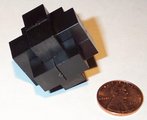
the Philippe Dubois/Gaby Games burr that requires 6 (or 7, depending on how you count) moves to release the first piece.
It is one of the “Fearsome Four.”
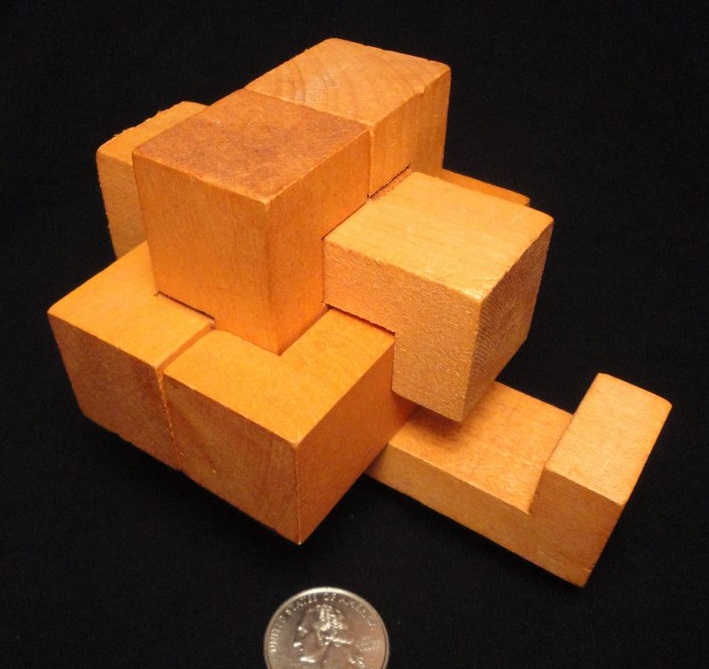
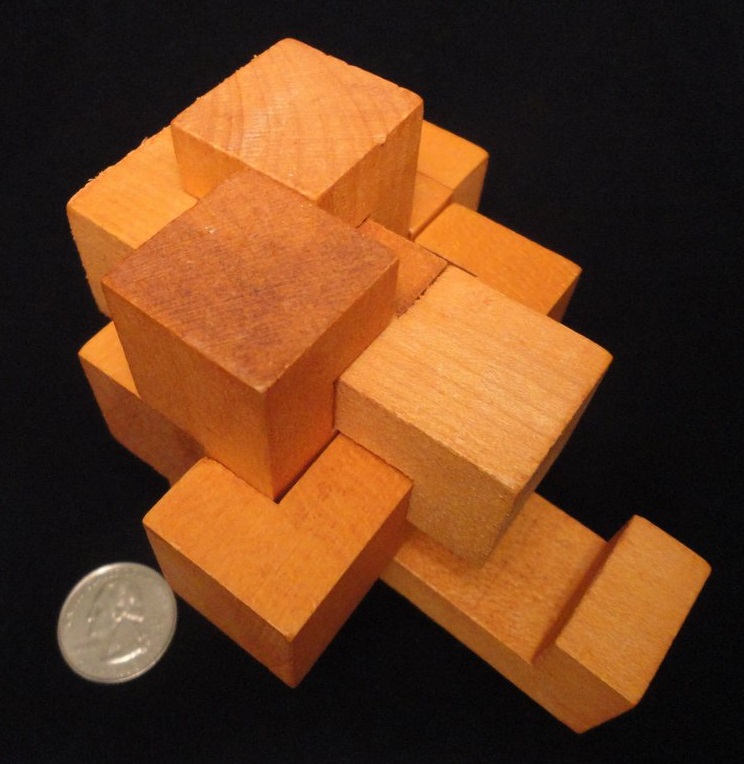
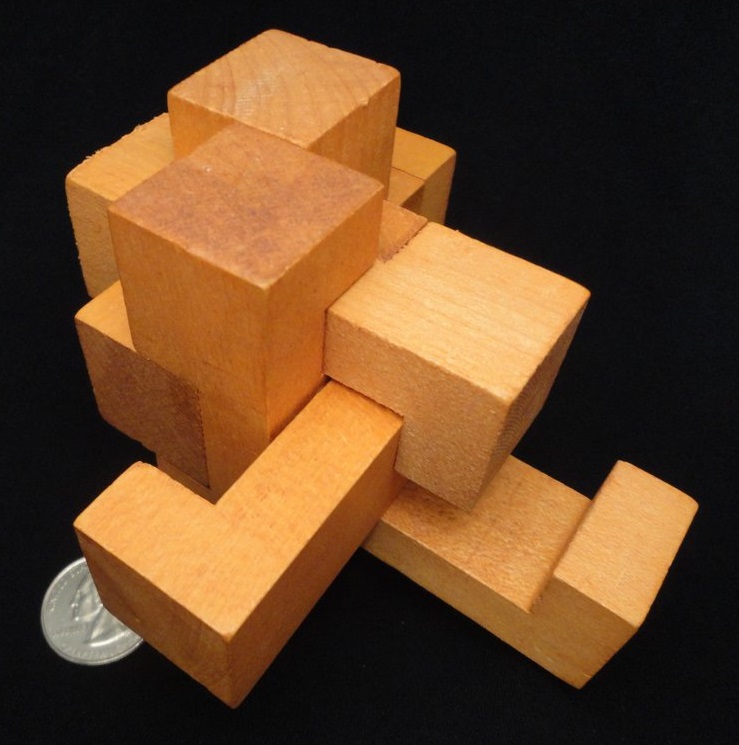
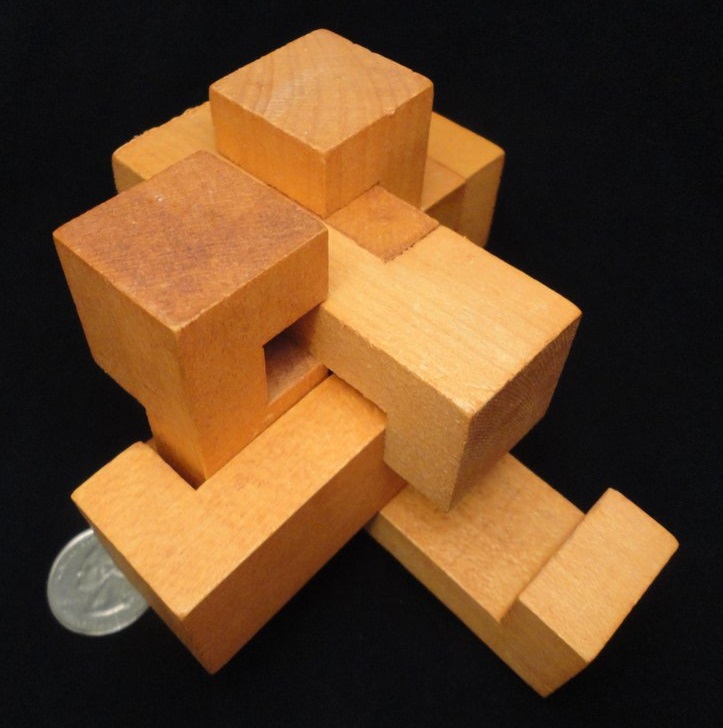
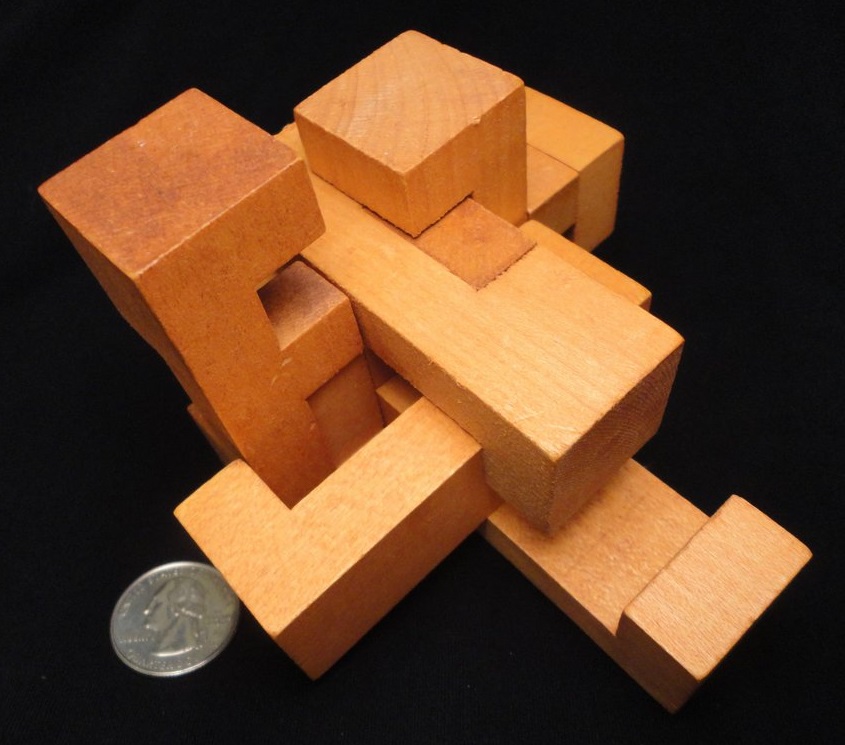
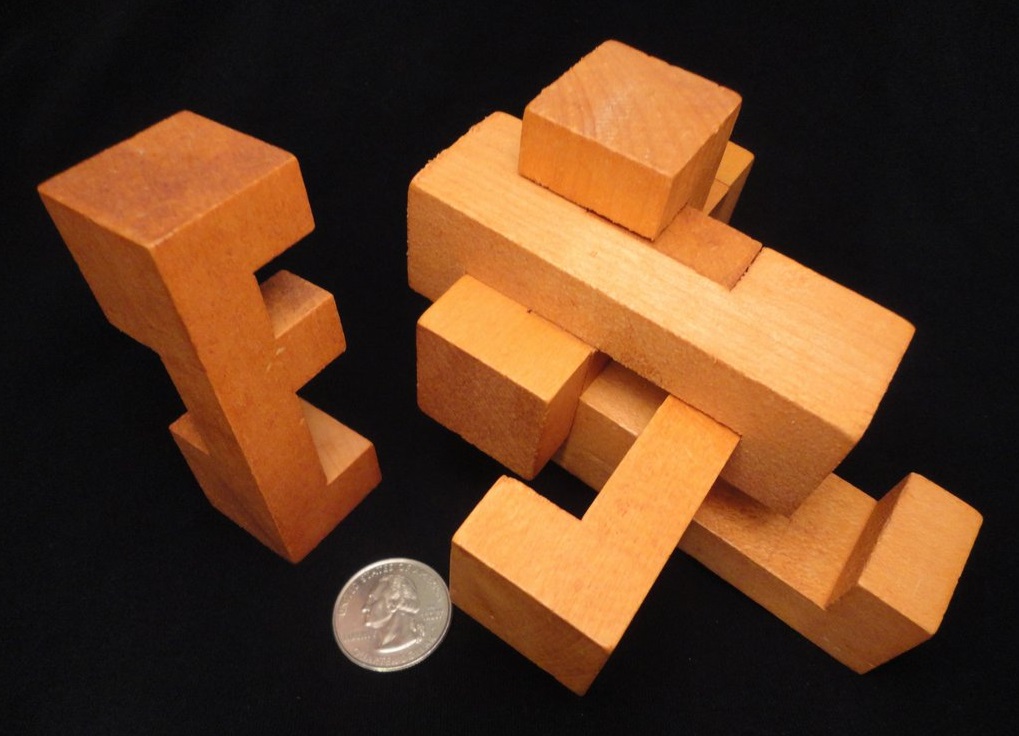
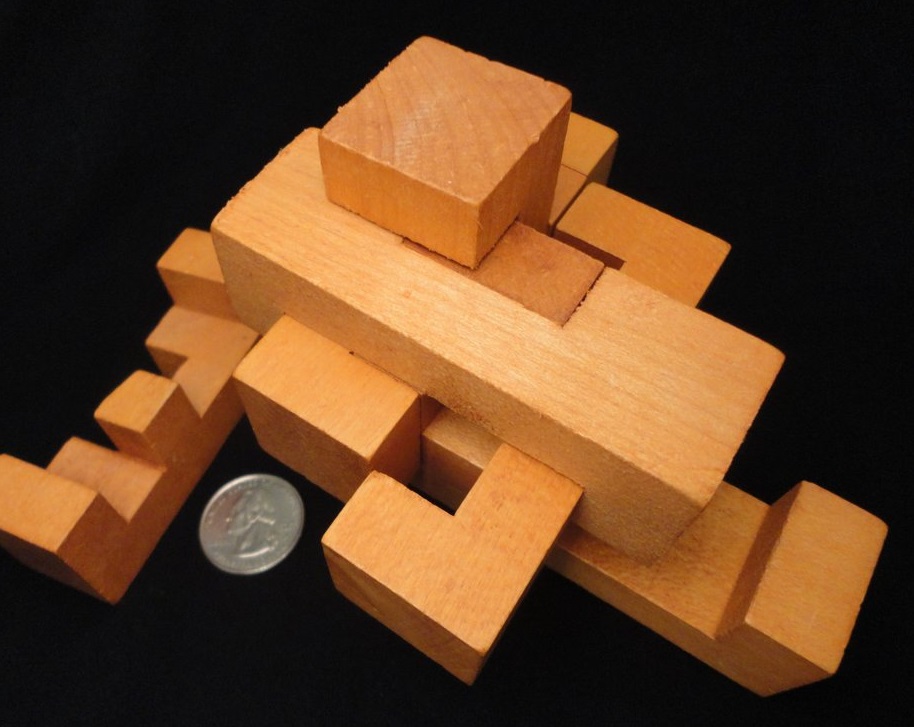
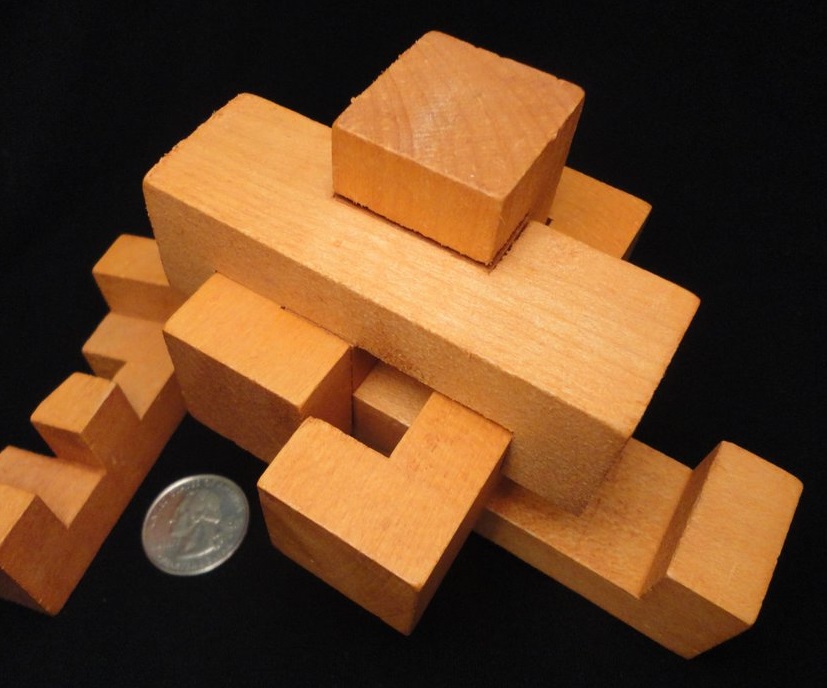
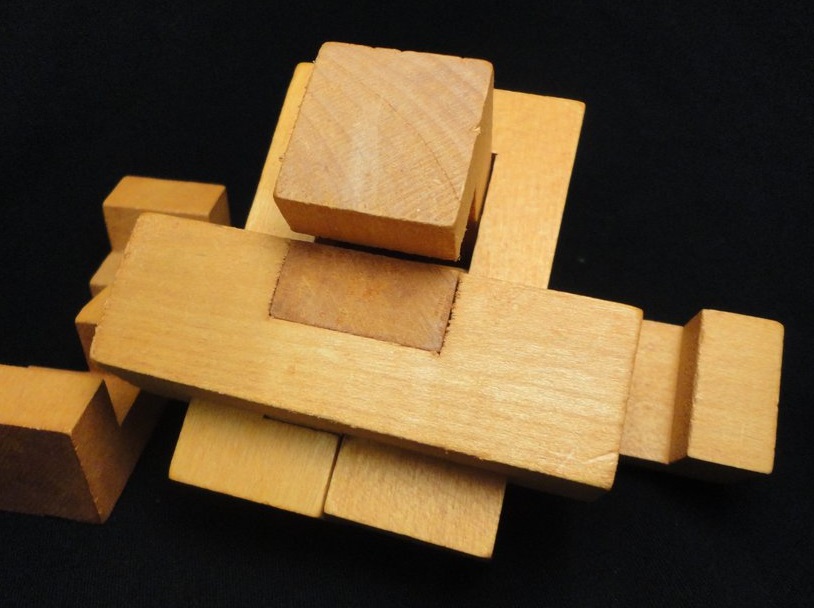
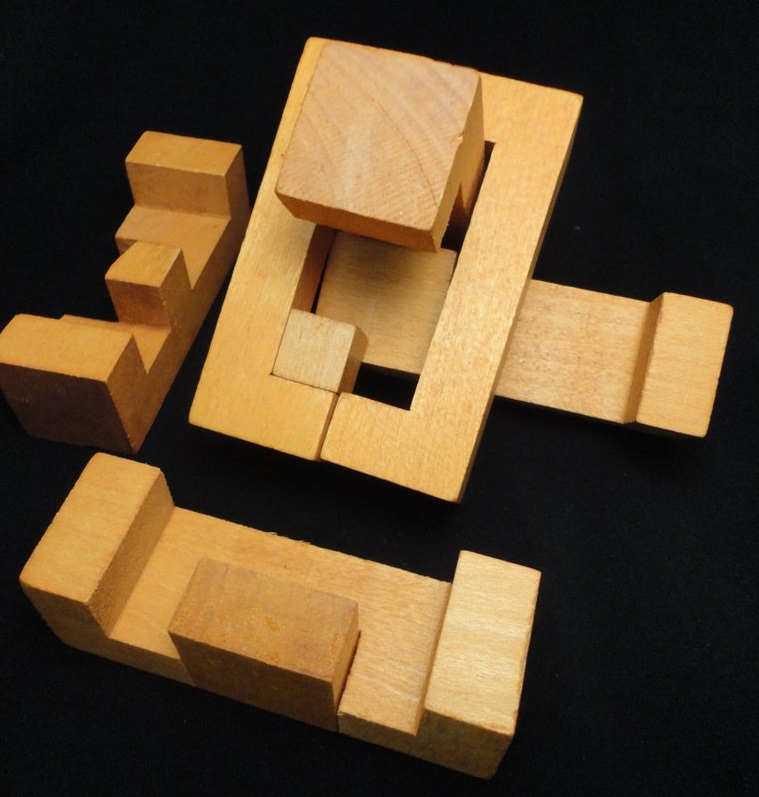
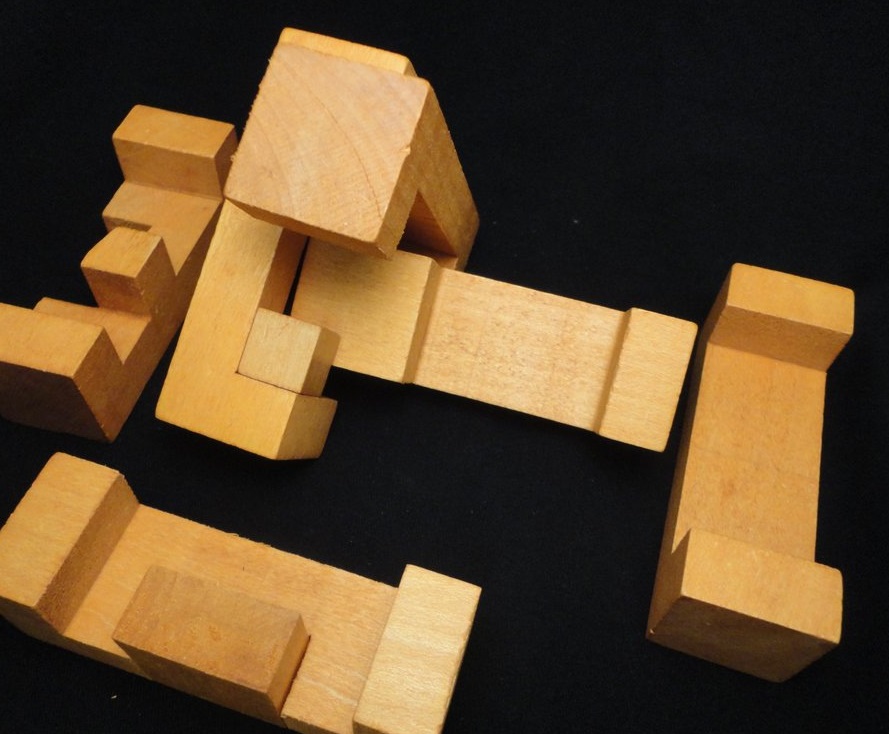
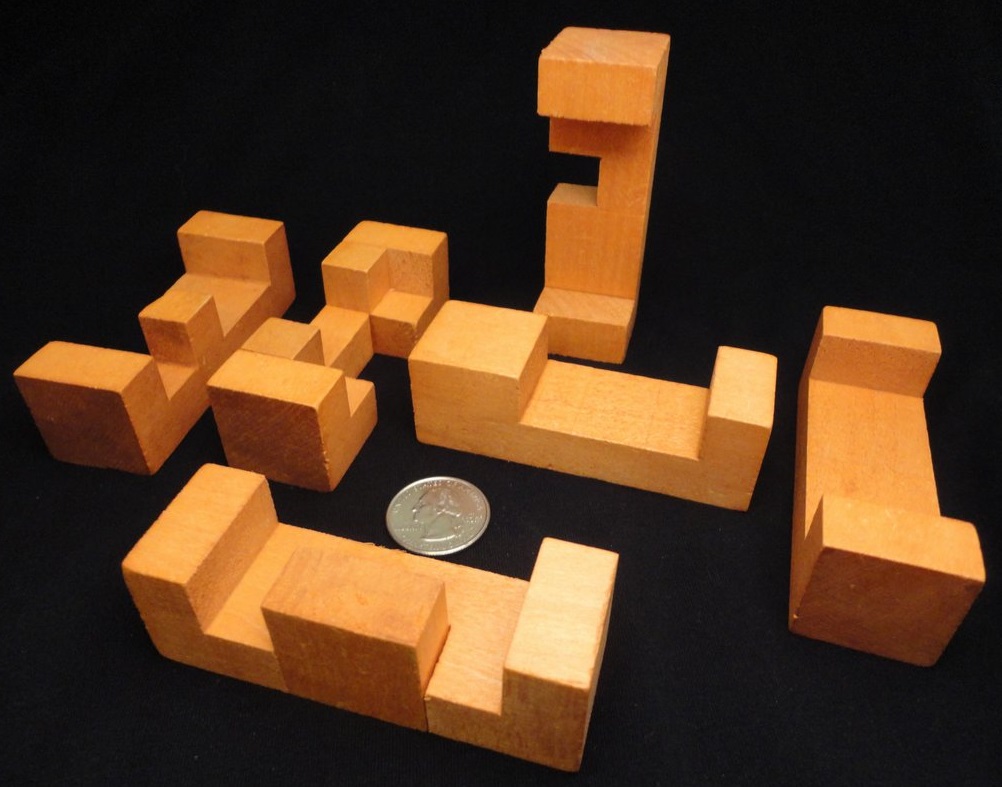
+----+----+----+ +----+
/ /| / /|
+ +----+ | + + |
/ /| | +----+-/ / +
+----+----+ | |/ +----+ |
| | + + | | |
| | | / | | +
+ + | +----+----+ + /
| | +--| | +
| |/ | |/
+----+----+ +----+----+----+
+----+ +----+----+----+
/ /| / /|
+ + | + + |
/ / +----+-/ / +
+----+ / +----+----+----+ |
| | + | | |
| |/ | | +
+ +----+----+----+ + /
| | +--| | +
| |/ | |/
+----+----+----+ +----+----+
+----+ +----+
/ /| / /|
+ + | +----+ + |
/ / +----+----+-/ / +
+----+ / +----+----+ |
| | + +--| | |
| |/ /| | | +
+ +----+----+ | + + /
| | +--| | +
| |/ | |/
+----+----+----+ +----+----+
+----+----+----+----+ +----+
/ /| / /|
+ +----+ | + + |
/ /| | +-/ / +
+----+----+----+ | |/ +----+ |
| | + + | | |
| |/ / | | +
+ +----+ +----+ + /
| | +----+--| | +
| |/ | |/
+----+----+ +----+----+
+----+ +----+----+ +----+
/ /| / /| / /|
+ +----+----+----+ | + + |
/ /| | +-/ / +
+----+----+ | |/ +----+ |
| | + + | | |
| | | / | | +
+ + | +----+ + /
| | +----+--| | +
| |/ | |/
+----+----+ +----+----+
+----+ +----+
/ /| / /|
+ + | +----+ + |
/ / +----+----+-/ / +
+----+ / +----+----+ |
| | + +----+--| | |
| |/ /| | | +
+ +----+ | + + /
| | +----+--| | +
| |/ | |/
+----+----+ +----+----+
It is number 4 in a “Family” of burrs – this one is called “Brother.”
This burr uses six general pieces: 463, 564, 760, 909, 927, 1016.
It has no holes, and comes apart in one move into two 3-piece halves. This might be #72 in Filipiak’s list
(c.f. Anthony S. Filipiak, 100 Puzzles – How to Make and Solve Them, 1942, p. 86).
+----+----+----+----+----+----+
/ /|
+ + |
/ / +
+----+----+----+----+----+----+ |
| | |
| | +
+ + /
| | +
| |/
+----+----+----+----+----+----+
The Key
+----+ +----+ +----+
/ /| / /| / /|
+ + | + + | + + |
/ / +----+-/ / +-/ / +
+----+ / +----+ / +----+ |
| | + | | + | | |
| |/ | |/ | | +
+ +----+----+ +----+ + /
| | +
| |/
+----+----+----+----+----+----+
The (Bottle) Opener
+----+ +----+
/ /| / /|
+ + | + + |
/ / +----+----+----+-/ / +
+----+ / +----+ |
| | + | | |
| |/ | | +
+ +----+----+----+----+ + /
| | +
| |/
+----+----+----+----+----+----+
The Tray
+----+----+----+----+ +----+
/ /| / /|
+ +----+----+ | + + |
/ /| | +-/ / +
+----+----+ | |/ +----+ |
| | + + | | |
| | | / | | +
+ + | +----+ + /
| | +----+--| | +
| |/ | |/
+----+----+ +----+----+
+----+ +----+
/ /| / /|
+ + | + + |
/ / +----+----+----+-/ / +
+----+ / +----+ |
| | + +----+----+ | | |
| |/ /| / | | +
+ +----+ | +----+ + /
| | +----+--| | +
| |/ | |/
+----+----+ +----+----+
The Y
+----+ +----+
/ /| / /|
+ + | + + |
/ / +----+----+----+-/ / +
+----+ / +----+ |
| | + +----+----+ | | |
| |/ /| / | | +
+ +----+ | +----+ + /
| | +----+--| | +
| |/ | |/
+----+----+ +----+----+
The Y
+----+ +----+----+----+
/ /| / /|
+ + | + + |
/ / +----+-/ / +
+----+ / +----+----+----+ |
| | + | | |
| |/ | | +
+ +----+----+ + /
| | +
| |/
+----+----+----+----+----+----+
The Side Tray
+----+----+ +----+----+
/ /| / /|
+ + | + + |
/ / +---+--/ / +
+----+----+ / +----+----+ |
| | + | | |
| |/ | | +
+ +----+----+ + /
| | +
| |/
+----+----+----+----+----+----+
The Half-Tray
+----+ +----+----+
/ /| / /|
+ + | + + |
/ / +----+---+--/ / +
+----+ / +----+----+ |
| | + | | |
| |/ | | +
+ +----+----+----+ + /
| | +
| |/
+----+----+----+----+----+----+
The Three-Quarters Tray
+----+ +----+----+ +----+
/ /| / /| / /|
+ + | +----+----+ | + + |
/ / +--| | +-/ / +
+----+ / | |/ +----+ |
| | + + + | | |
| |/ /| / | | +
+ +----+ | +----+ + /
| | +----+--| | +
| |/ | |/
+----+----+ +----+----+
The Tongue
+----+ +----+ +----+
/ /| / /| / /|
+ + | +----+ | + + |
/ / +-------| | +-/ / +
+----+ / | |/ +----+ |
| | + +----+ + | | |
| |/ /| / | | +
+ +----+ | +----+ + /
| | +----+--| | +
| |/ | |/
+----+----+ +----+----+
The
+----+ +----+ +----+
/ /| / /| / /|
+ + | +----+ | + + |
/ / +--| | +----+-/ / +
+----+ / | |/ +----+ |
| | + + +----+ | | |
| |/ /| / | | +
+ +----+ | +----+ + /
| | +----+--| | +
| |/ | |/
+----+----+ +----+----+
Fingers
It was designed by Kozy Kitajima.
The pieces include: 1, 52, 103, 120, 188, 256, 911, 928, 992, 960, and 2x 1024.
According to the instructions, there is only one way to build two burrs at once. The twelve pieces can also be combined to form a cube, with holes.
+----+----+----+----+----+----+
/ /|
+ + |
/ / +
+----+----+----+----+----+----+ |
| | |
| | +
+ + /
| | +
| |/
+----+----+----+----+----+----+
The Key
+----+ +----+ +----+
/ /| / /| / /|
+ + | + + | + + |
/ / +----+-/ / +-/ / +
+----+ / +----+ / +----+ |
| | + | | + | | |
| |/ | |/ | | +
+ +----+----+ +----+ + /
| | +
| |/
+----+----+----+----+----+----+
The (Bottle) Opener
+----+ +----+
/ /| / /|
+ + | + + |
/ / +----+----+----+-/ / +
+----+ / +----+ |
| | + +----+ | | |
| |/ /| / | | +
+ +----+ | +----+----+ + /
| | +--| | +
| |/ | |/
+----+----+ +----+----+----+
+----+ +----+----+----+
/ /| / /|
+ + | +----+----+ + |
/ / +----+--| / / +
+----+ / | +----+ |
| | + +----+ +--| | |
| |/ /| / | | +
+ +----+ | +----+ + /
| | +----+--| | +
| |/ | |/
+----+----+ +----+----+
+----+----+----+ +----+
/ /| / /|
+ +----+ | + + |
/ /| | +----+-/ / +
+----+----+ | |/ +----+ |
| | + +----+ | | |
| | | / | | +
+ + | +----+ + /
| | +----+--| | +
| |/ | |/
+----+----+ +----+----+
Offsets
+----+ +----+
/ /| / /|
+ + | + + |
/ / +----+----+----+-/ / +
+----+ / +----+ |
| | + +----+----+ | | |
| |/ /| / | | +
+ +----+ | +----+ + /
| | +----+--| | +
| |/ | |/
+----+----+ +----+----+
The Y
+----+----+----+----+----+----+
/ /|
+ + |
/ / +
+----+----+----+----+----+----+ |
| | |
| | +
+ + /
| | +
| |/
+----+----+----+----+----+----+
The Key
+----+ +----+ +----+
/ /| / /| / /|
+ + | + + | + + |
/ / +----+-/ / +-/ / +
+----+ / +----+ / +----+ |
| | + | | + | | |
| |/ | |/ | | +
+ +----+----+ +----+ + /
| | +
| |/
+----+----+----+----+----+----+
The (Bottle) Opener
+----+ +----+
/ /| / /|
+ + | + + |
/ / +----+----+----+-/ / +
+----+ / +----+ |
| | + +----+ | | |
| |/ /| / | | +
+ +----+----+ | +----+ + /
| | +--| | +
| |/ | |/
+----+----+----+ +----+----+
+----+----+----+ +----+
/ /| / /|
+ +----+----+ | + + |
/ /| | +----+-/ / +
+----+ | |/ +----+ |
| | +----+ +----+ | | |
| |/ /| / | | +
+ +----+ | +----+ + /
| | +----+--| | +
| |/ | |/
+----+----+ +----+----+
+----+ +----+----+----+
/ /| / /|
+ + | +----+ + |
/ / +----+--| / / +
+----+ / | +----+----+ |
| | + +----+ | | |
| |/ /| | | +
+ +----+ | + + /
| | +----+--| | +
| |/ | |/
+----+----+ +----+----+
Offsets
+----+ +----+
/ /| / /|
+ + | + + |
/ / +----+----+----+-/ / +
+----+ / +----+ |
| | + +----+----+ | | |
| |/ /| / | | +
+ +----+ | +----+ + /
| | +----+--| | +
| |/ | |/
+----+----+ +----+----+
The Y
At some point I saw it referred to as “G4,” also as “The Cross of Marseille.”
The pieces used are: 1, 188, 512, 832, 975, 1024.
The mirror images of the 3rd-5th can also be used: 1, 188, 768, 976, 824, 1024.
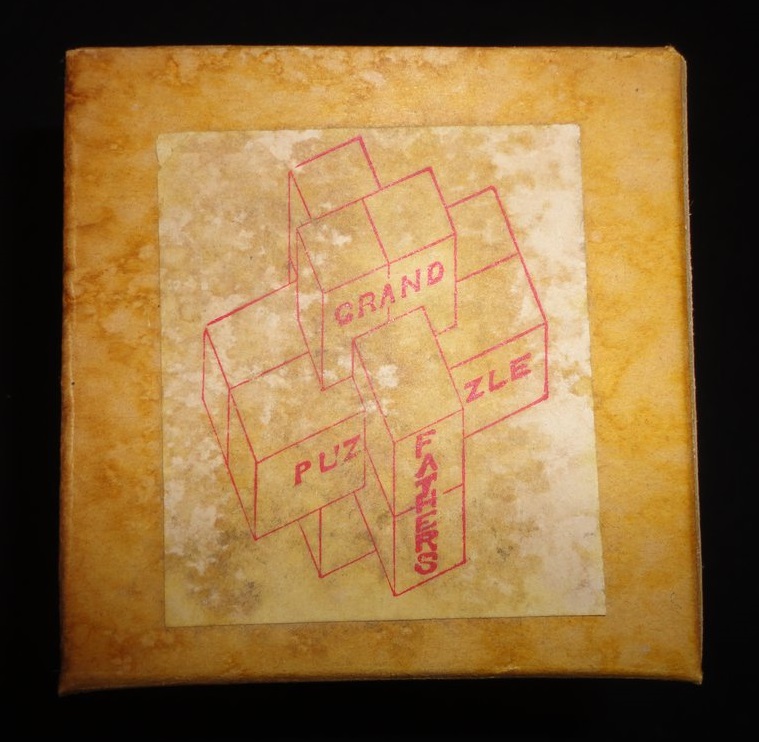
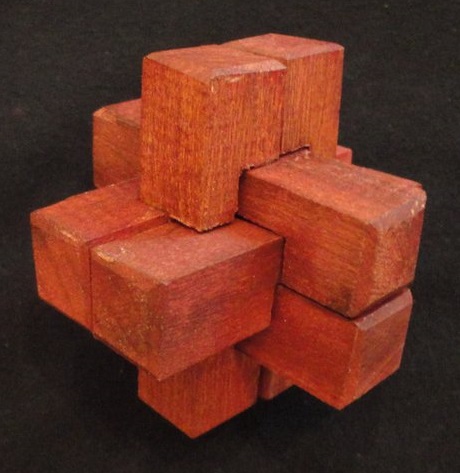
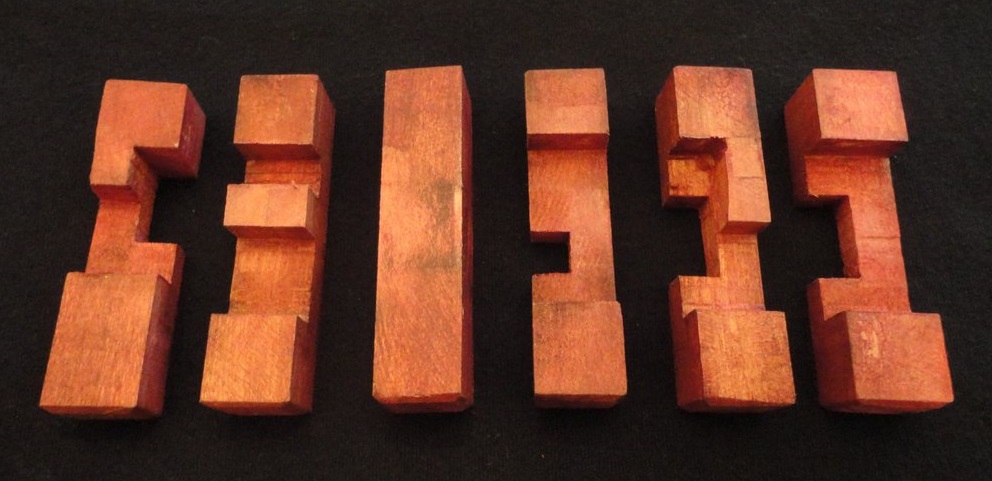
Grandfather’s Puzzle – a vintage wooden traditional six-piece burr.
No provenance – no other markings on the box or pieces.
The pieces are { 1, 188, 768, 824, 976, 1024 } – the “Cross of Marseille” set.
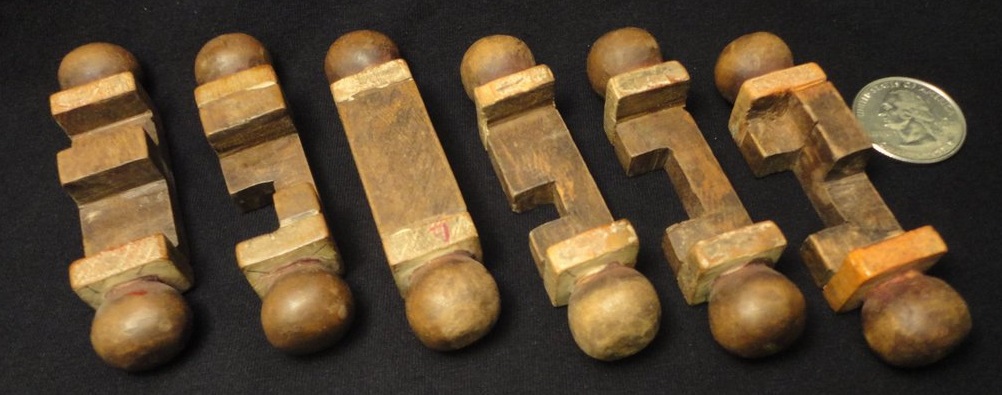
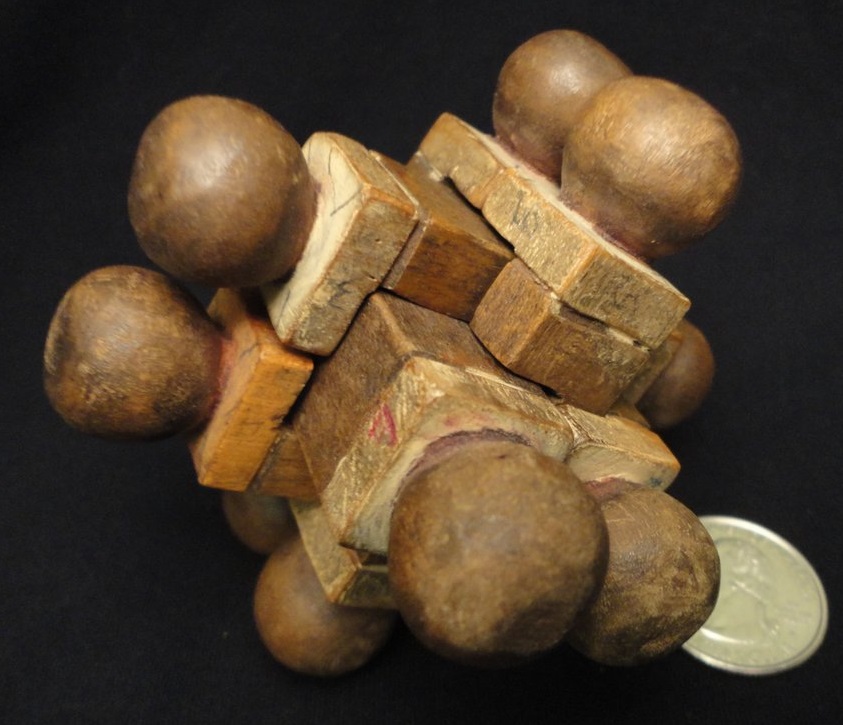
Here is a vintage hand-made version with knobs decorating the piece ends.
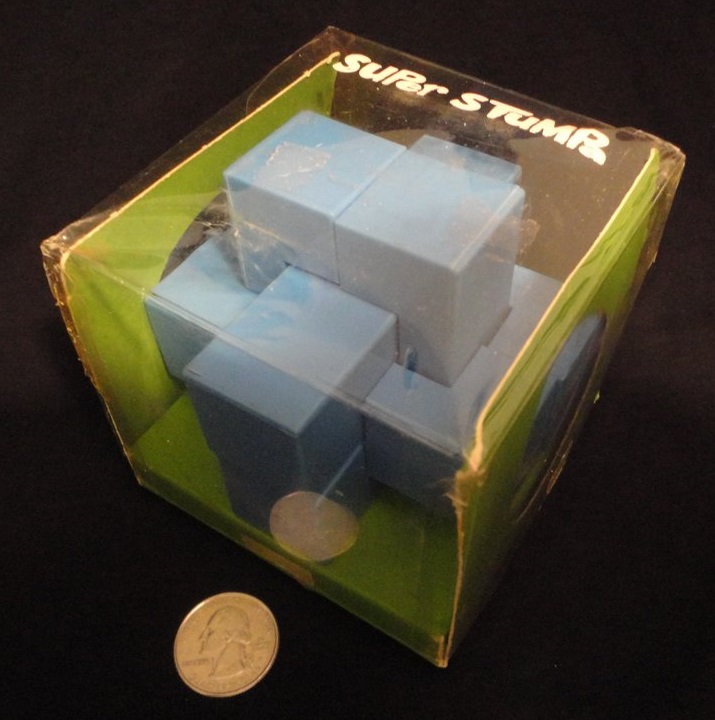
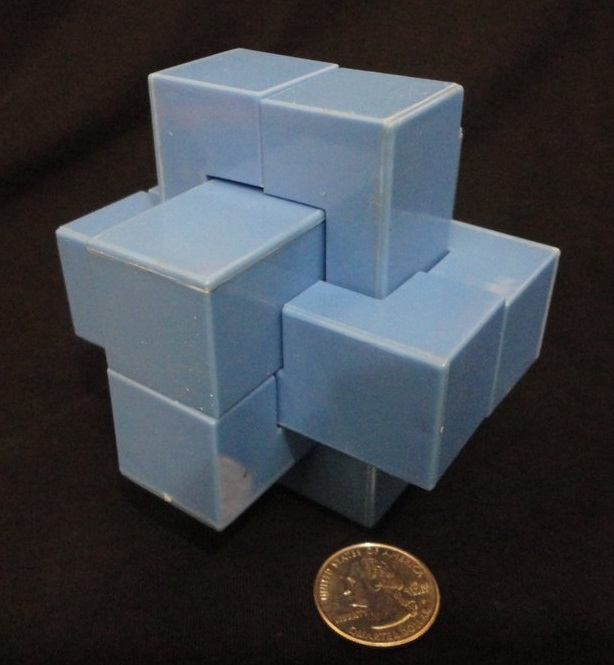
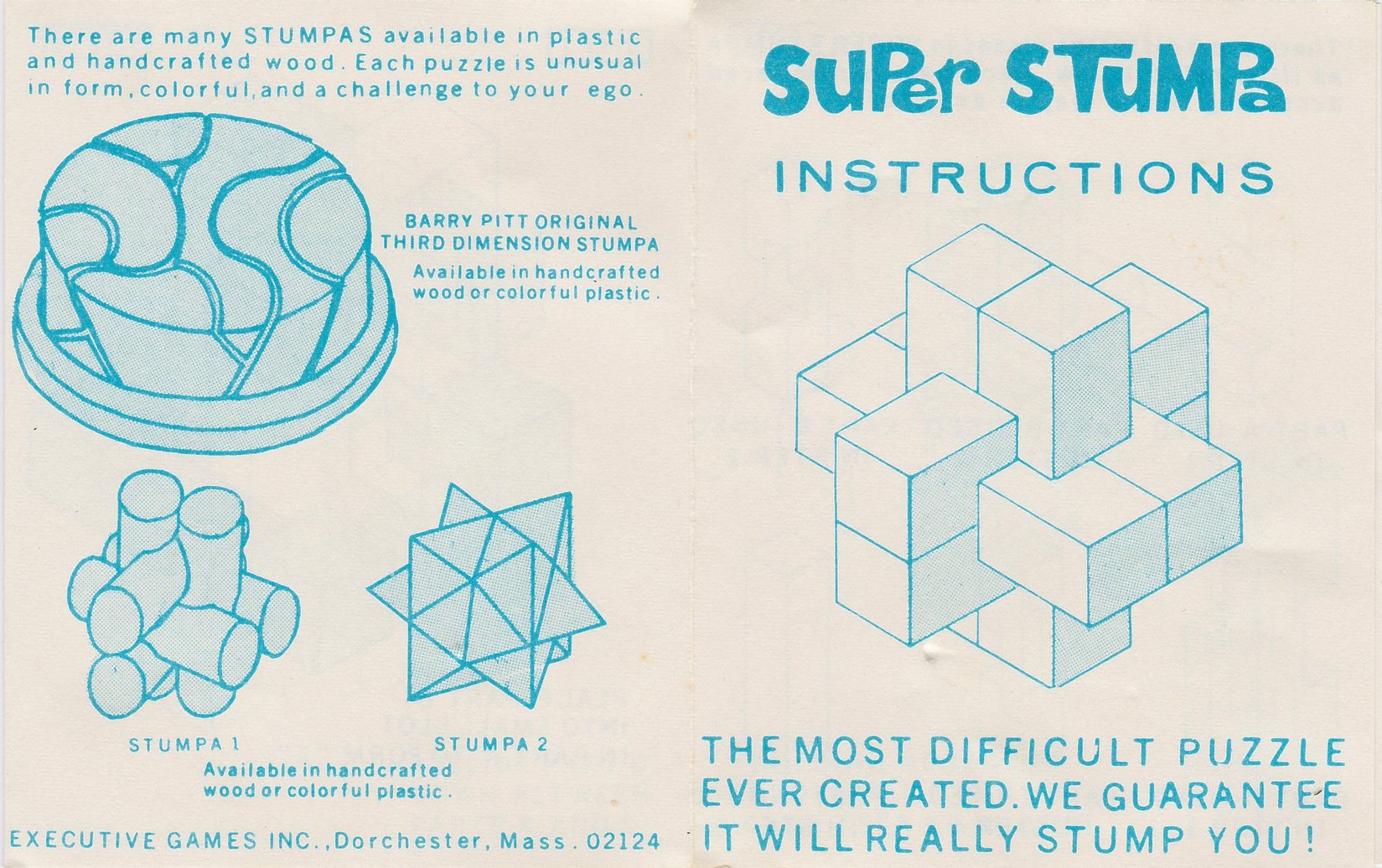
Super Stumpa – a vintage plastic six-piece burr from Executive Games.
The pieces are { 1, 188, 512, 832, 975, 1024 } – the “Cross of Marseille” set.
The instruction sheet mentions other interesting puzzles, including the
“Barry Pitt Original Third Dimension Stumpa” that resembles a Paracelsus Puzzle.
+----+----+ +----+
/ /| / /|
+ +----+ | + + |
/ /| | +----+----+-/ / +
+----+ | |/ +----+ |
| | +----+ | | |
| |/ | | +
+ +----+----+----+----+ + /
| | +
| |/
+----+----+----+----+----+----+
+----+ +----+
/ /| / /|
+ + | + + |
/ / +----+----+----+-/ / +
+----+ / +----+ |
| | + +----+ | | |
| |/ /| / | | +
+ +----+----+ | +----+ + /
| | +--| | +
| |/ | |/
+----+----+----+ +----+----+
+----+ +----+ +----+
/ /| / /| / /|
+ + | +----+ | + + |
/ / +-------| | +-/ / +
+----+ / | |/ +----+ |
| | + +----+ + | | |
| |/ /| / | | +
+ +----+ | +----+ + /
| | +----+--| | +
| |/ | |/
+----+----+ +----+----+
+----+ +----+ +----+
/ /| / /| / /|
+ + | +----+ | +----+ + |
/ / +--| | +-/ / +
+----+ / | |/ +----+----+ |
| | + + +--| | |
| |/ /| | | +
+ +----+ | + + /
| | +----+--| | +
| |/ | |/
+----+----+ +----+----+
+----+ +----+
/ /| / /|
+ + | + + |
/ / +----+----+----+-/ / +
+----+ / +----+ |
| | + +----+----+ | | |
| |/ /| / | | +
+ +----+ | +----+ + /
| | +----+--| | +
| |/ | |/
+----+----+ +----+----+
The Y
+----+----+----+----+ +----+
/ /| / /|
+ +----+ | + + |
/ /| | +-/ / +
+----+----+----+ | |/ +----+ |
| | + + | | |
| |/| / | | +
+ +----+ | +----+ + /
| | + +--| | +
| |/ | |/
+----+----+ +----+----+
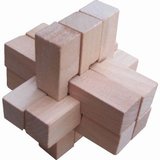
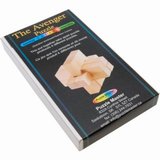
PuzzleMaster.ca.
It includes 9 length-10 pieces, one of which (their #1) is not traditionally notched.
Subsets of the pieces can be assembled into six-piece, seven-piece, eight-piece, and nine-piece burrs.
The pieces are:
+----+----+----+----+----+----+
/ /|
+ + |
/ / +
+----+----+----+----+----+----+ |
| | |
| | +
+ + /
| | +
| |/
+----+----+----+----+----+----+
The Key
+----+ +----+----+ +----+
/ /| / /| / /|
+ + | + + | + + |
/ / +-/ / +-/ / +
+----+ / +----+----+ / +----+ |
| | + | | + | | |
| |/ | |/ | | +
+ +----+ +----+ + /
| | +
| |/
+----+----+----+----+----+----+
The Toaster
+----+ +----+
/ /| / /|
+ + | + + |
/ / +----+----+----+-/ / +
+----+ / +----+ |
| | + | | |
| |/ | | +
+ +----+----+----+----+ + /
| | +
| |/
+----+----+----+----+----+----+
The Tray
+----+ +----+
/ /| / /|
+ + | + + |
/ / +----+----+----+-/ / +
+----+ / +----+ |
| | + | | |
| |/ | | +
+ +----+----+----+----+ + /
| | +
| |/
+----+----+----+----+----+----+
The Tray
+----+ +----+
/ /| / /|
+ + | + + |
/ / +----+----+----+-/ / +
+----+ / +----+ |
| | + +----+----+ | | |
| |/ /| / | | +
+ +----+ | +----+ + /
| | +----+--| | +
| |/ | |/
+----+----+ +----+----+
The Y
+----+ +----+
/ /| / /|
+ + | + + |
/ / +----+----+----+-/ / +
+----+ / +----+ |
| | + +----+----+ | | |
| |/ /| / | | +
+ +----+ | +----+ + /
| | +----+--| | +
| |/ | |/
+----+----+ +----+----+
The Y
Detroit, Michigan. (No date.)
Six metal pieces.
A very easy design.
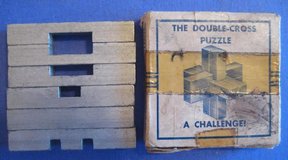
+----+ +----+----+ +----+
/ /| / /| / /|
+ + | +----+ + | + + |
/ / +--| / / +-/ / +
+----+ / | +----+ / +----+ |
| | + + | | + | | |
| |/ /| | |/ | | +
+ +----+ | + +----+ + /
| | +--| | +
| |/ | |/
+----+----+ +----+----+----+
+----+ +----+ +----+
/ /| / /| / /|
+ + | +----+ | + + |
/ / +--| | +----+-/ / +
+----+ / | |/ +----+ |
| | + + + | | |
| |/ /| / | | +
+ +----+ | +----+----+ + /
| | +--| | +
| |/ | |/
+----+----+ +----+----+----+
+----+ +----+
/ /| / /|
+ + | + + |
/ / +----+----+----+-/ / +
+----+ / +----+ |
| | + +----+ | | |
| |/ /| / | | +
+ +----+ | +----+----+ + /
| | +--| | +
| |/ | |/
+----+----+ +----+----+----+
+----+ +----+ +----+
/ /| / /| / /|
+ + | +----+ | + + |
/ / +----+--| | +-/ / +
+----+ / | |/ +----+ |
| | + + + | | |
| |/ /| / | | +
+ +----+----+ | +----+ + /
| | +--| | +
| |/ | |/
+----+----+----+ +----+----+
+----+ +----+ +----+
/ /| / /| / /|
+ + | +----+ | + + |
/ / +----+--| | +-/ / +
+----+ / | |/ +----+ |
| | + + + | | |
| |/ /| / | | +
+ +----+----+ | +----+ + /
| | +--| | +
| |/ | |/
+----+----+----+ +----+----+
+----+ +----+ +----+
/ /| / /| / /|
+ + | +----+ | + + |
/ / +-------| | +-/ / +
+----+ / | |/ +----+ |
| | + +----+ + | | |
| |/ /| / | | +
+ +----+ | +----+ + /
| | +----+--| | +
| |/ | |/
+----+----+ +----+----+
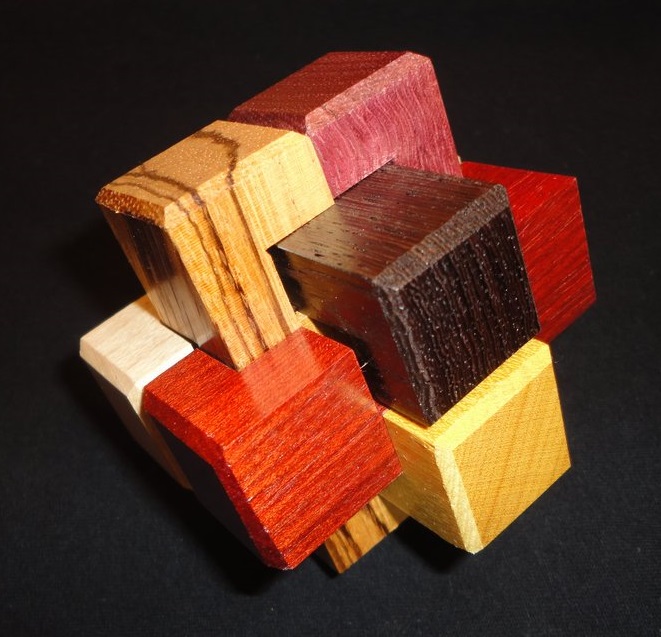
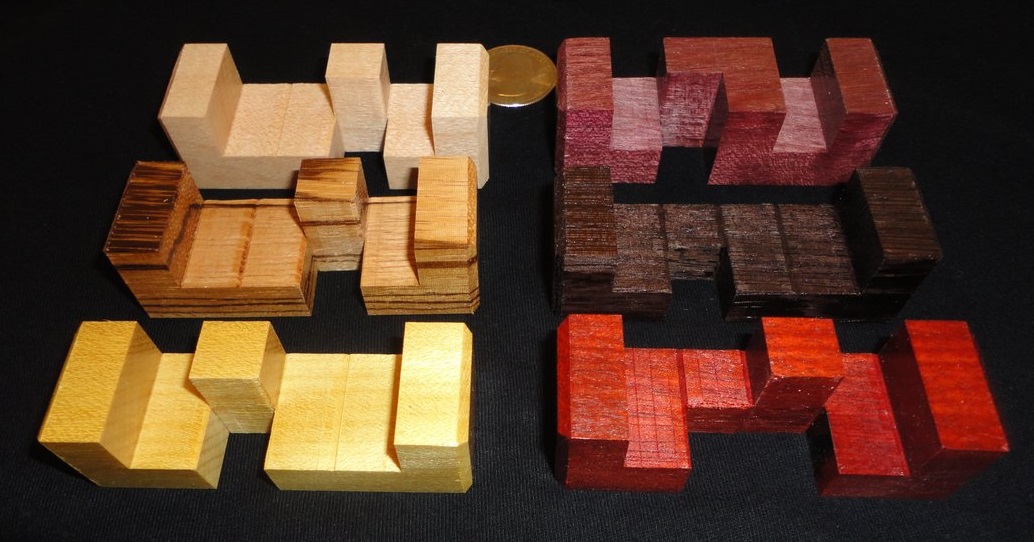
The 5-4 Burr – handmade by Artifactory in Oregon
An auction buy-it-now for $40 – the seller says they are the exclusive online distributor.
Nice exotic woods in a good size – but a very loose fit.
The woods are: wenge, yellowheart, maple, zebrawood, bloodwood, and purpleheart.
I took a chance on this since they didn’t show the pieces, and I am pleased since it turns out
this is an instance of David Winkler’s complex 5.4, which I didn’t have.
The pieces are { 412, 480, 512, 704×2, 960 }.
Here is a group of miscellaneous burrs I’ve accumulated.
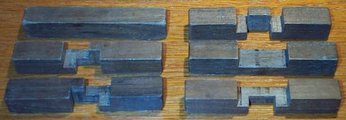
The light brown burr is perhaps the more difficult of this group, but we’ve seen it already –
its pieces are the familiar “Six Way” set: 52, 792/911, 824/975, 1024. The white and two (identical) dark brown burrs all employ the familiar “Chinese Cross” piece set: 1, 256, 824/975, 928, 1024.
If you have access to a 3D printer, your best bet as of this writing (May 2020) to obtain a burr piece set is to check out Aaron Siegel’s
Starter Burr Set,
and
Extensible Burr Set, both
at Thingiverse.
Aaron has also created
Puzzlecad – An OpenSCAD library for interlocking puzzles, and the
Printable Puzzle Project
at
puzzlehub.org, where you can find plans for many other mechanical puzzles, including designs by
Stewart Coffin, Yavuz Demirhan, Laszlo Molnar, Christoph Lohe, and Alfons Eyckmans.
I received this 3D printed set of 24 pieces (Starter + Expansion):
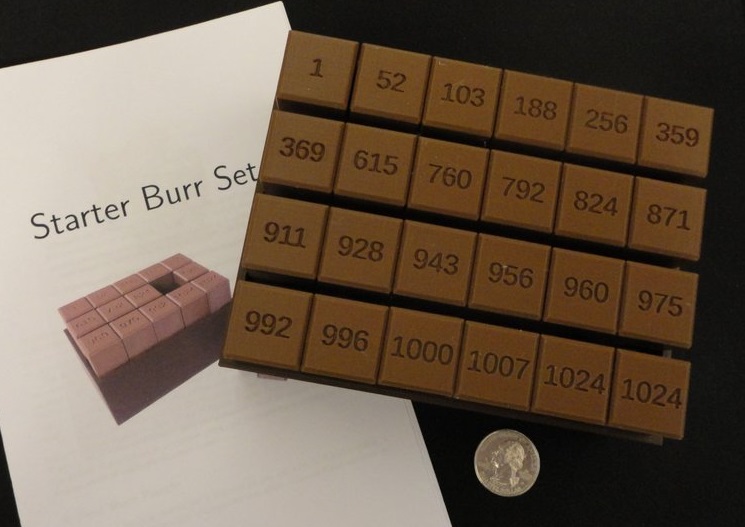
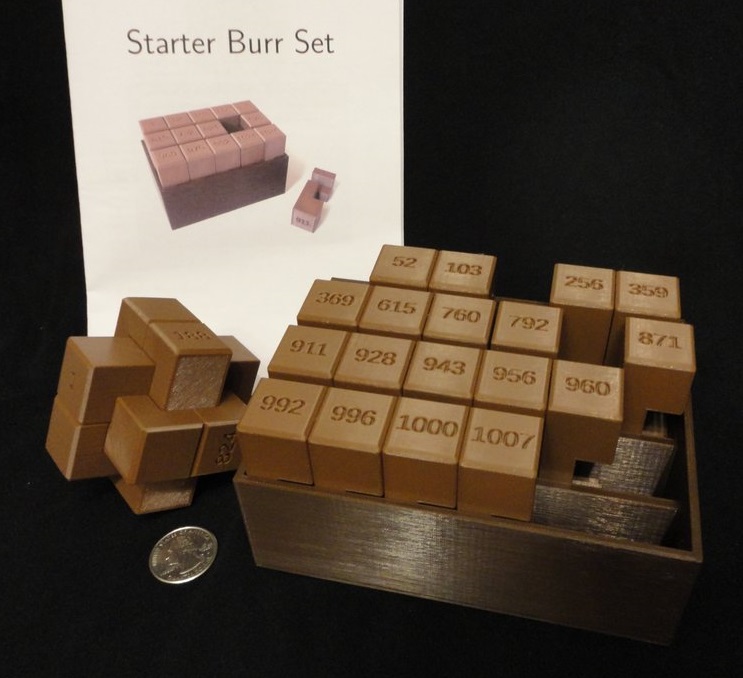
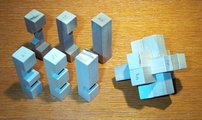
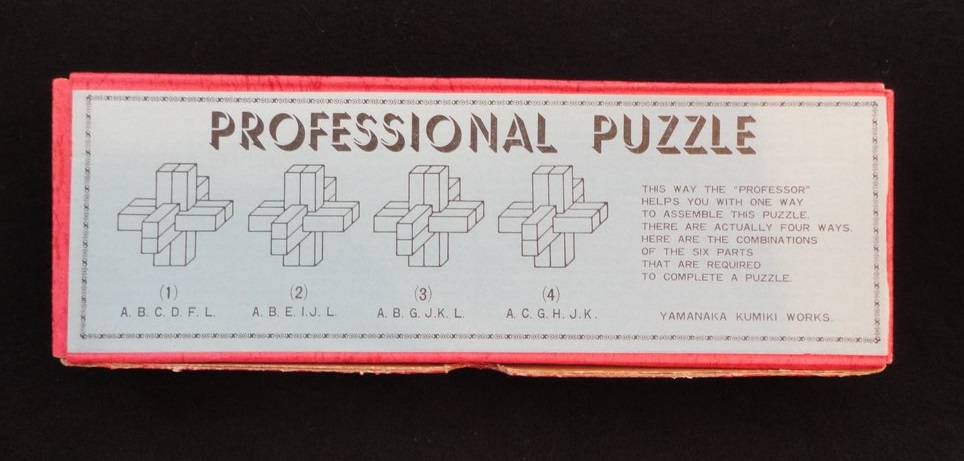
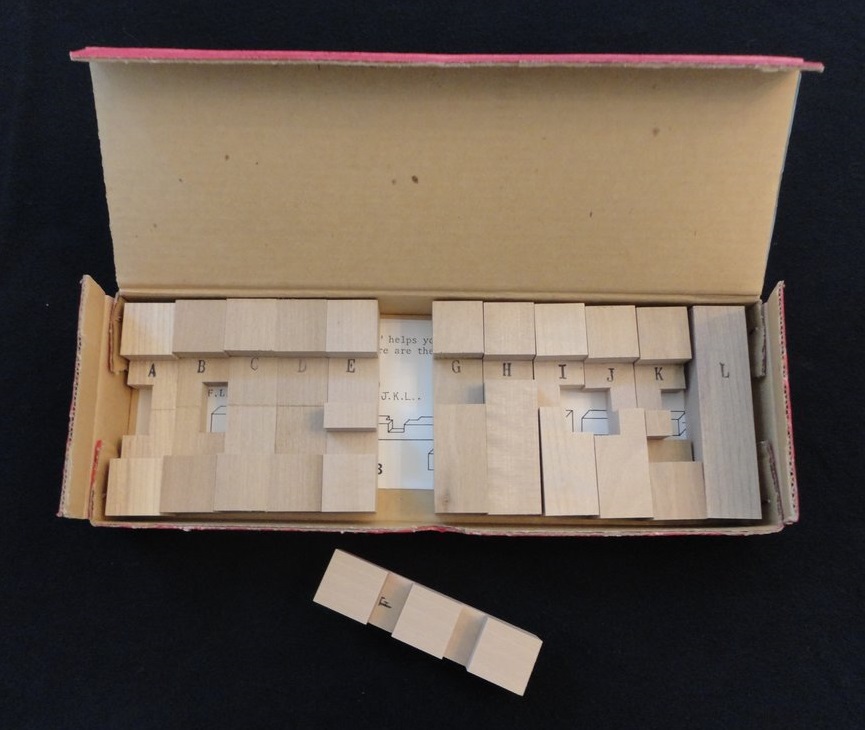 On the left is a “Professor” burr set from the Yamanaka Kumiki Works in Japan.
Its twelve length-8 pieces can be used to assemble at least four different traditional 6-piece burrs.
The set includes only notchable pieces:
, , ,
, ,
, .
Yamanaka also produced a set “No. 3505” called “Let’s Shap the Fascinating World!!” (sic).
That set includes almost the same 12 pieces as the Professional set, except instead of 18 and 52, the two pieces 512 and 832 appear.
The instructions provide four puzzles and the first two are identical to the Professional set’s.
The third is equal to “G4” { 1, 188, 512, 832, 975, 1024 }.
The fourth I hadn’t seen listed before: { 1, 188, 256, 512, 832, 992 }.
Here is another set produced by the Yamanaka Kumiki Works – four classic traditional six-piece burrs, colored black, yellow, green, and orange.
I had seen these in other collections and thought them long out of production, but I was able to purchase a new set on auction very reasonably.
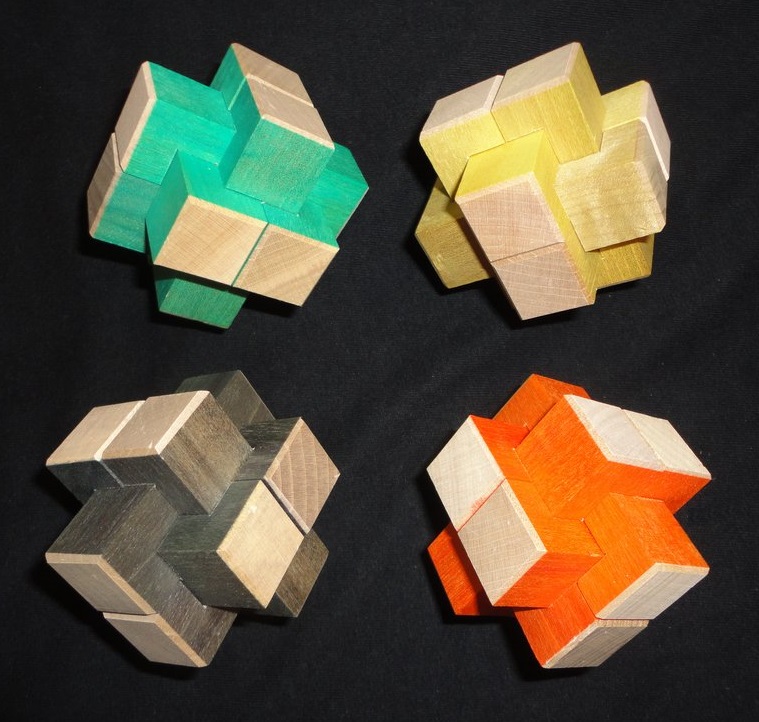
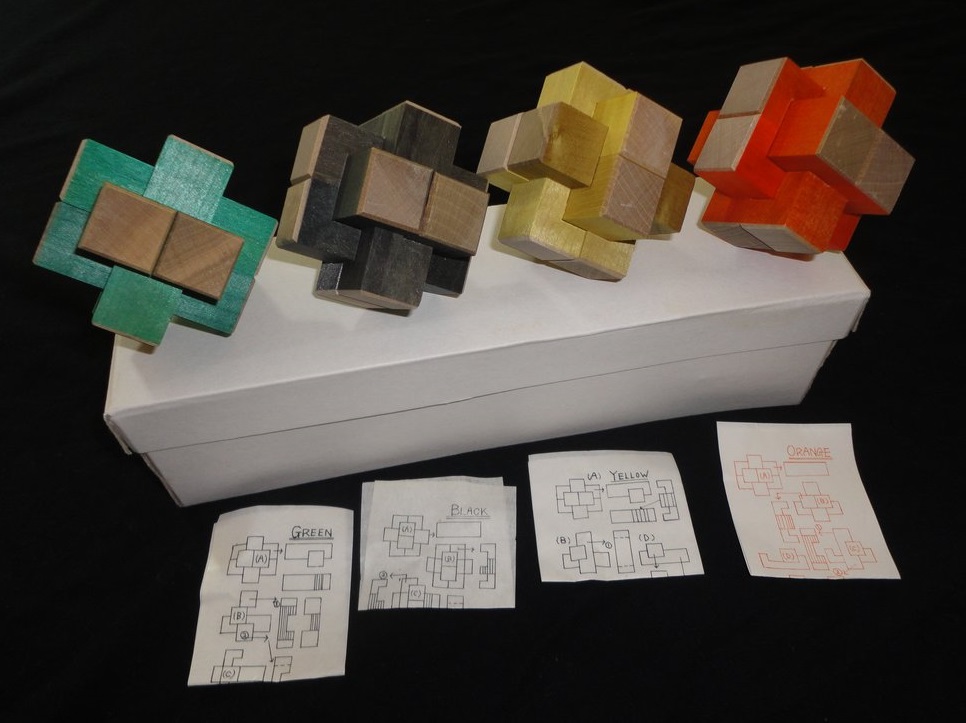
+----+----+----+----+----+----+
/ /|
+ + |
/ / +
+----+----+----+----+----+----+ |
| | |
| | +
+ + /
| | +
| |/
+----+----+----+----+----+----+
The Key
+----+ +----+ +----+
/ /| / /| / /|
+ + | + + | + + |
/ / +----+-/ / +-/ / +
+----+ / +----+ / +----+ |
| | + | | + | | |
| |/ | |/ | | +
+ +----+----+ +----+ + /
| | +
| |/
+----+----+----+----+----+----+
The (Bottle) Opener
+----+ +----+
/ /| / /|
+ + | + + |
/ / +----+----+----+-/ / +
+----+ / +----+ |
| | + | | |
| |/ | | +
+ +----+----+----+----+ + /
| | +
| |/
+----+----+----+----+----+----+
The Tray
+----+ +----+----+----+
/ /| / /|
+ + | +----+ + |
/ / +----+--| / / +
+----+ / | +----+----+ |
| | + +----+ | | |
| |/ /| | | +
+ +----+ | + + /
| | +----+--| | +
| |/ | |/
+----+----+ +----+----+
Left Offset
+----+ +----+ +----+
/ /| / /| / /|
+ + | +----+ | + + |
/ / +--| | +----+-/ / +
+----+ / | |/ +----+ |
| | + + +----+ | | |
| |/ /| / | | +
+ +----+ | +----+ + /
| | +----+--| | +
| |/ | |/
+----+----+ +----+----+
Left Finger
+----+ +----+
/ /| / /|
+ + | + + |
/ / +----+----+----+-/ / +
+----+ / +----+ |
| | + +----+----+ | | |
| |/ /| / | | +
+ +----+ | +----+ + /
| | +----+--| | +
| |/ | |/
+----+----+ +----+----+
The Y
+----+ +----+----+----+
/ /| / /|
+ + | + + |
/ / +----+-/ / +
+----+ / +----+----+----+ |
| | + | | |
| |/ | | +
+ +----+----+ + /
| | +
| |/
+----+----+----+----+----+----+
The Side Tray
+----+ +----+----+----+
/ /| / /|
+ + | + + |
/ / +----+-/ / +
+----+ / +----+----+----+ |
| | + | | |
| |/ | | +
+ +----+----+ + /
| | +
| |/
+----+----+----+----+----+----+
The Side Tray
+----+ +----+
/ /| / /|
+ + | + + |
/ / +----+----+----+-/ / +
+----+ / +----+ |
| | + | | |
| |/ | | +
+ +----+----+----+----+ + /
| | +
| |/
+----+----+----+----+----+----+
The Tray
+----+----+----+----+ +----+
/ /| / /|
+ +----+----+ | + + |
/ /| | +-/ / +
+----+----+ | |/ +----+ |
| | + + | | |
| | | / | | +
+ + | +----+ + /
| | +----+--| | +
| |/ | |/
+----+----+ +----+----+
Right Wall
+----+ +----+----+ +----+
/ /| / /| / /|
+ + | +----+----+ | + + |
/ / +--| | +-/ / +
+----+ / | |/ +----+ |
| | + + + | | |
| |/ /| / | | +
+ +----+ | +----+ + /
| | +----+--| | +
| |/ | |/
+----+----+ +----+----+
The Tongue
+----+ +----+
/ /| / /|
+ + | + + |
/ / +----+----+----+-/ / +
+----+ / +----+ |
| | + +----+----+ | | |
| |/ /| / | | +
+ +----+ | +----+ + /
| | +----+--| | +
| |/ | |/
+----+----+ +----+----+
The Y
+----+ +----+----+----+----+
/ /| / /|
+ + | + + |
/ / +-/ / +
+----+ / +----+----+----+----+ |
| | + | | |
| |/ | | +
+ +----+ + /
| | +
| |/
+----+----+----+----+----+----+
Local Mail
+----+ +----+----+----+
/ /| / /|
+ + | + + |
/ / +----+-/ / +
+----+ / +----+----+----+ |
| | + | | |
| |/ | | +
+ +----+----+ + /
| | +
| |/
+----+----+----+----+----+----+
The Side Tray
+----+----+ +----+----+
/ /| / /|
+ + | + + |
/ / +----+-/ / +
+----+----+ / +----+----+ |
| | +----+--| | |
| | | | | +
+ + | + + /
| | +----+--| | +
| |/ | |/
+----+----+ +----+----+
The Barbells
+----+ +----+----+ +----+
/ /| / /| / /|
+ + | +----+----+ | + + |
/ / +--| | +-/ / +
+----+ / | |/ +----+ |
| | + + + | | |
| |/ /| / | | +
+ +----+ | +----+ + /
| | +----+--| | +
| |/ | |/
+----+----+ +----+----+
The Tongue
+----+ +----+
/ /| / /|
+ + | + + |
/ / +----+----+----+-/ / +
+----+ / +----+ |
| | + +----+----+ | | |
| |/ /| / | | +
+ +----+ | +----+ + /
| | +----+--| | +
| |/ | |/
+----+----+ +----+----+
The Y
+----+ +----+
/ /| / /|
+ + | + + |
/ / +----+----+----+-/ / +
+----+ / +----+ |
| | + +----+----+ | | |
| |/ /| / | | +
+ +----+ | +----+ + /
| | +----+--| | +
| |/ | |/
+----+----+ +----+----+
The Y
+----+----+----+----+----+----+
/ /|
+ + |
/ / +
+----+----+----+----+----+----+ |
| | |
| | +
+ + /
| | +
| |/
+----+----+----+----+----+----+
The Key
+----+ +----+ +----+
/ /| / /| / /|
+ + | + + | + + |
/ / +----+-/ / +-/ / +
+----+ / +----+ / +----+ |
| | + | | + | | |
| |/ | |/ | | +
+ +----+----+ +----+ + /
| | +
| |/
+----+----+----+----+----+----+
The (Bottle) Opener
+----+----+ +----+----+
/ /| / /|
+ + | + + |
/ / +----+-/ / +
+----+----+ / +----+----+ |
| | +----+--| | |
| | | | | +
+ + | + + /
| | +----+--| | +
| |/ | |/
+----+----+ +----+----+
The Barbells
+----+ +----+----+ +----+
/ /| / /| / /|
+ + | +----+----+ | + + |
/ / +--| | +-/ / +
+----+ / | |/ +----+ |
| | + + + | | |
| |/ /| / | | +
+ +----+ | +----+ + /
| | +----+--| | +
| |/ | |/
+----+----+ +----+----+
The Tongue
+----+ +----+
/ /| / /|
+ + | + + |
/ / +----+----+----+-/ / +
+----+ / +----+ |
| | + +----+----+ | | |
| |/ /| / | | +
+ +----+ | +----+ + /
| | +----+--| | +
| |/ | |/
+----+----+ +----+----+
The Y
+----+ +----+
/ /| / /|
+ + | + + |
/ / +----+----+----+-/ / +
+----+ / +----+ |
| | + +----+----+ | | |
| |/ /| / | | +
+ +----+ | +----+ + /
| | +----+--| | +
| |/ | |/
+----+----+ +----+----+
The Y
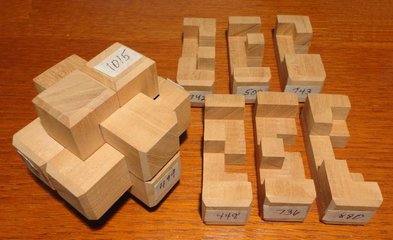
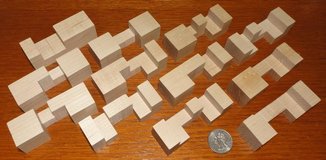
Colin Gaughran is a woodworker in Connecticut.
Colin can make any burr pieces, notchable, millable, or even general, using his CNC machine.
Colin has (so far) made 36 burr pieces for me,
including:
3, 52, 103 (x2), 160, 188, 256, 359/615, 448/736, 463, 499, 508, 512/768, 742, 743, 792, 824 (x2), 832, 871, 880, 888, 911, 926, 928, 943, 960/992, 975, 1007, 1015, 1024, and a 1024 with a rounded center cross-bar.
These pieces can be used to make many interesting burrs,
including Bill Cutler’s #306, CINTVY, FILTVY, and FGINOY. Here is Rob’s Burr No. 1, which has 3 solutions – one at level 3, and two at level 9:
{ 499, 736, 768, 943, 992, 1015 }
As far as I know, this is the first time this particular burr has been made!
Aaron Siegel kindly 3D printed the set of pieces to construct Rob’s Burr No. 1.
Aaron has devised a coloring scheme such that in one Level-9 solution each pair of like-colored pieces are parallel, in the other Level-9 solution one pair of colors are swapped, and in the Level-3 solution a different pair is swapped.
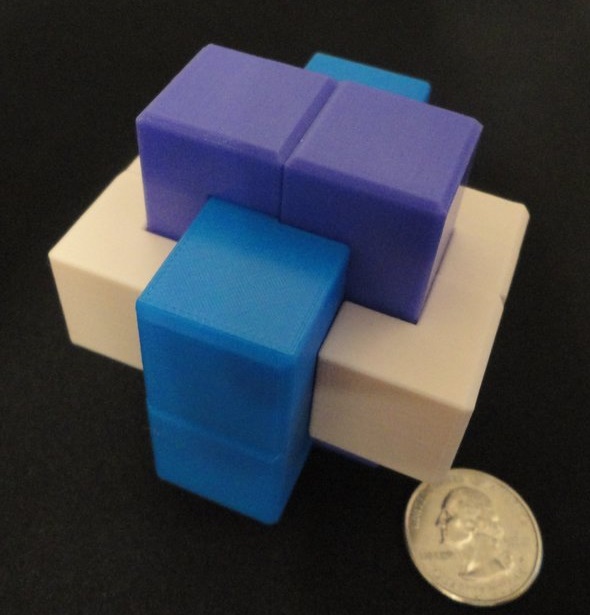
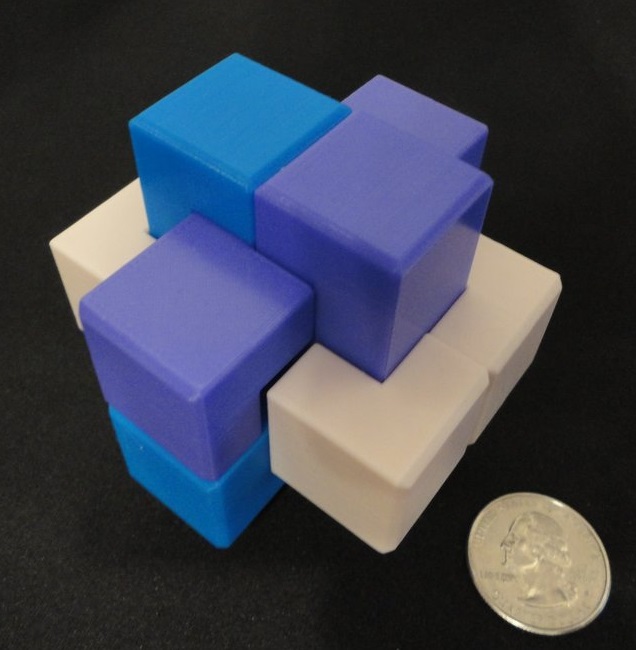
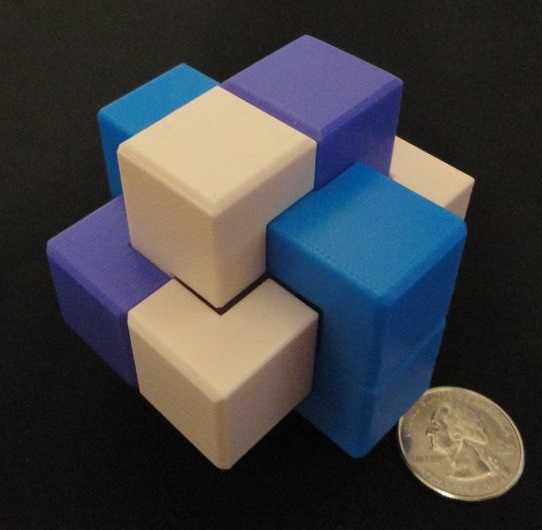
Thanks, Aaron!
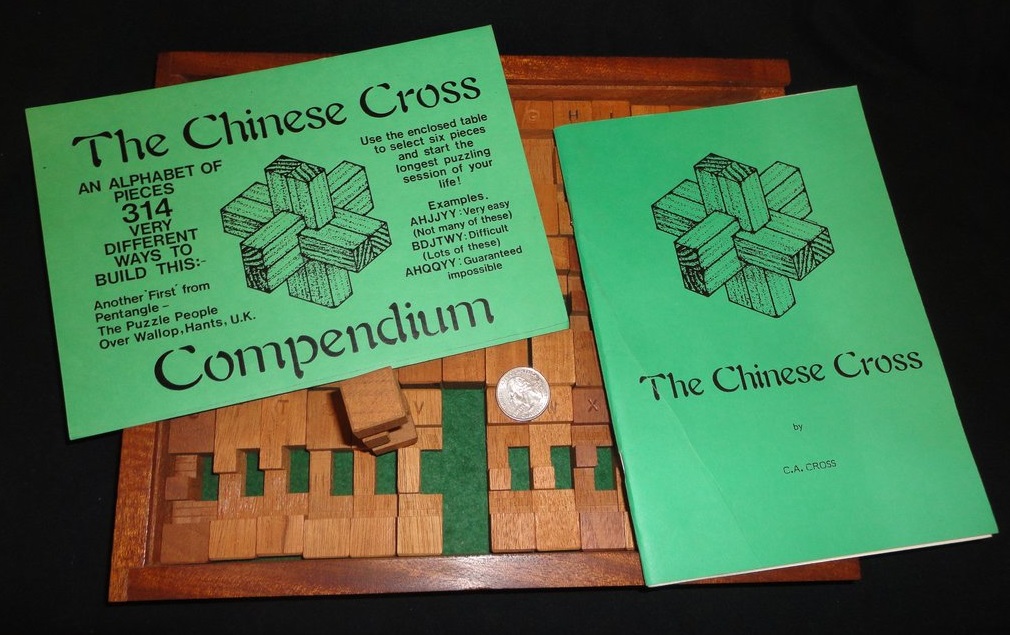
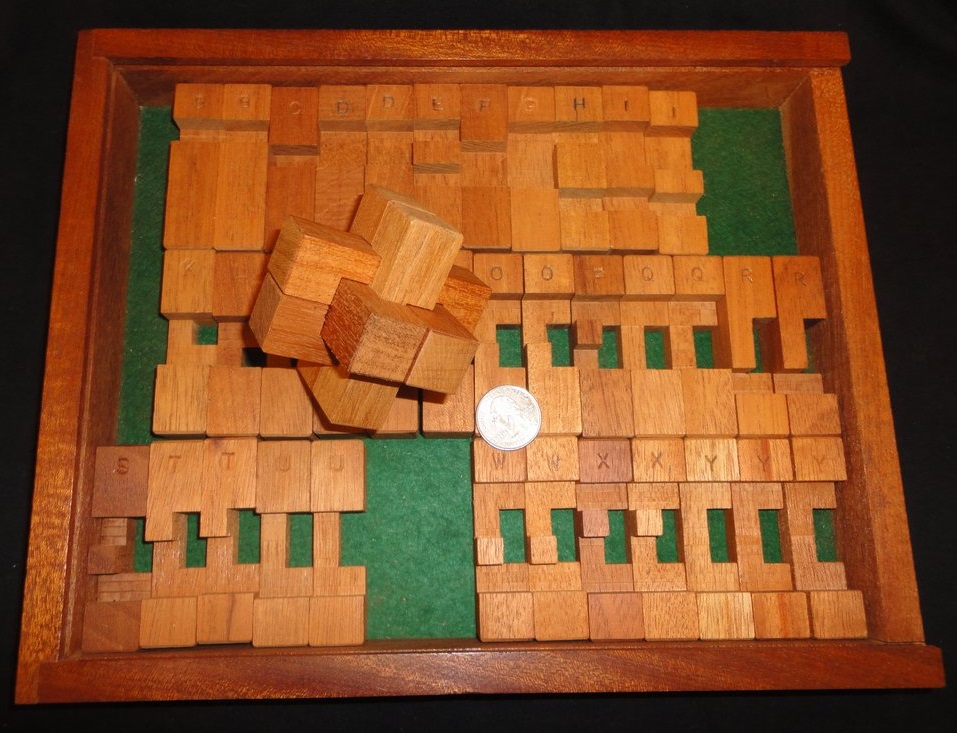
I finally managed to find the lovely Chinese Cross Compendium issued by Pentangle.
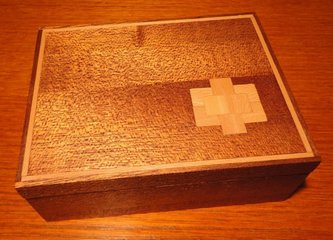
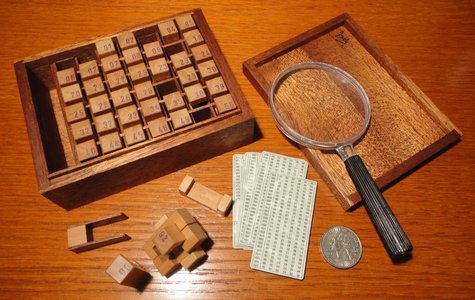 A Level-5 Burr Set in mahogany and plane woods, made by Jack Krijnen.
The attention to detail is superb!
This set provides 35 (42 including duplicates) out of the 837 possible traditional six-piece burr pieces, at length 6.
(The same as in a similar set made by Interlocking Puzzles ca. 2000,
shown on Jim Storer’s site.
The piece numbering employed by Krijnen, David Winkler’s scheme,
is also identical to that used for the IP set.)
The particular pieces are all notchable, and are those needed to build level-5 burrs.
The set includes a small pair of wooden tweezers with which one can extract pieces from the box.
The box is about 118mm x 90mm.
The pieces measure 3x1x1 cm.
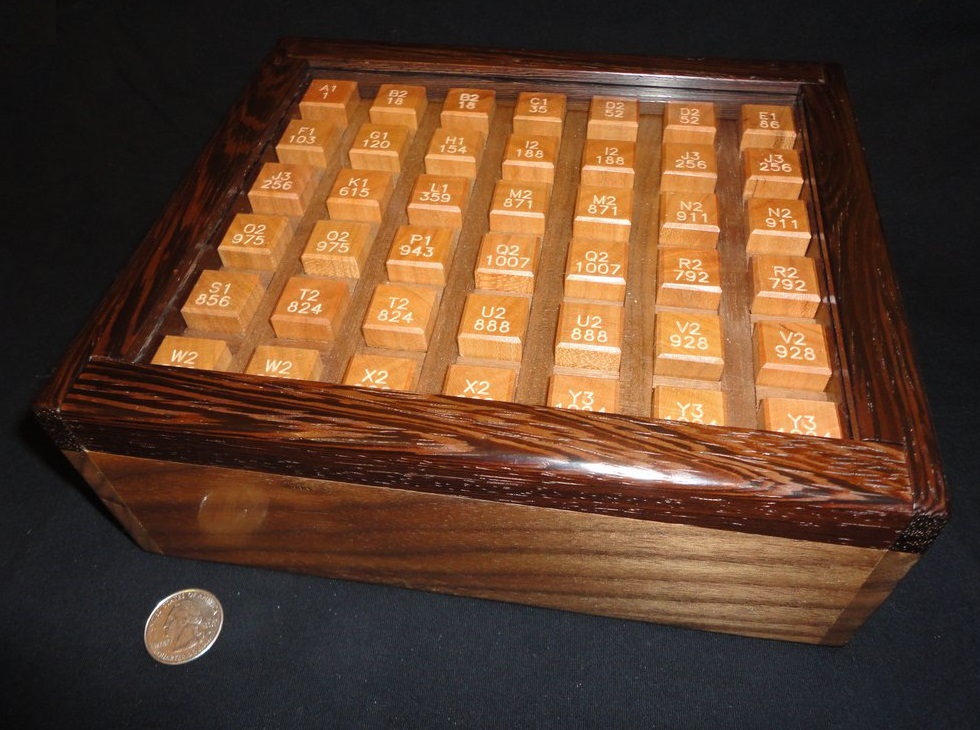
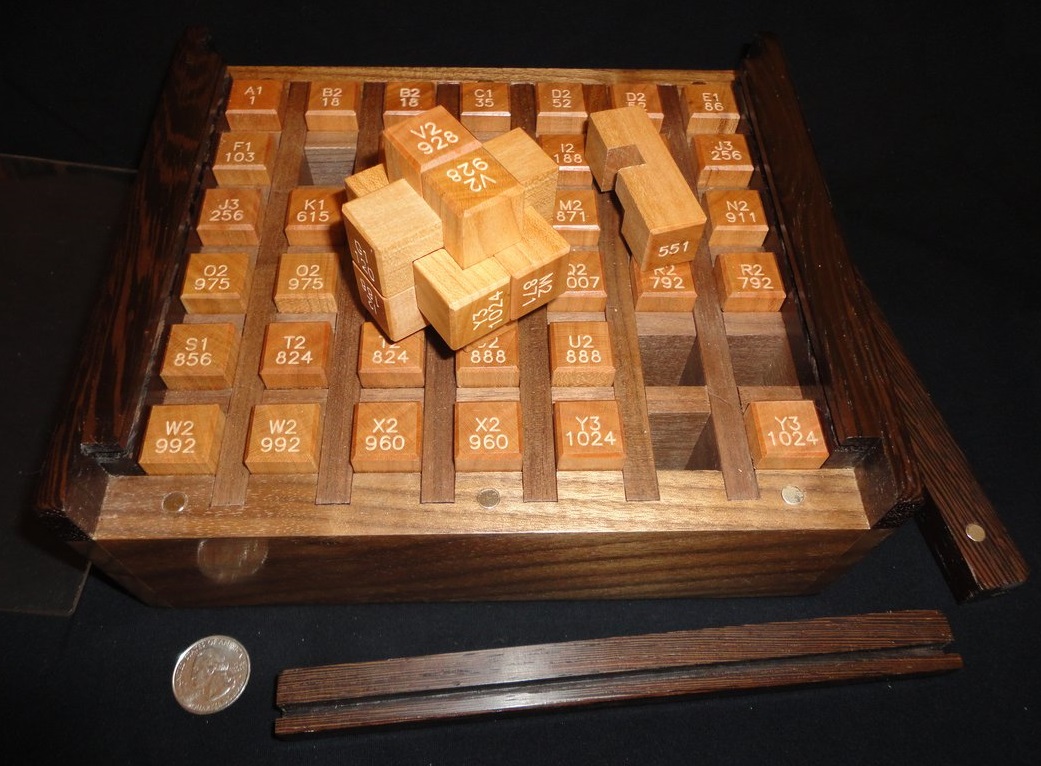
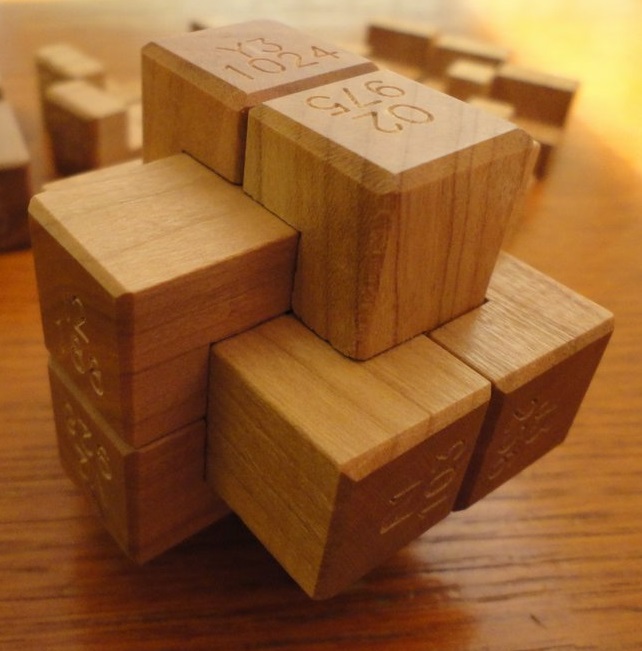
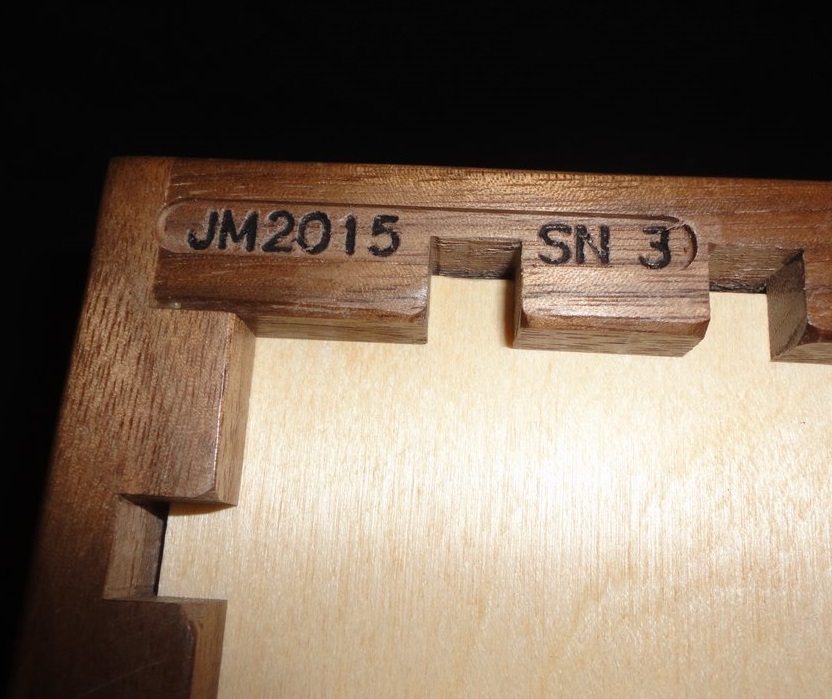
Caramel Case Burr Set – designed and made by Jerry McFarland
from Wenge, Walnut, Cherry, Acrylic, magnets, and Maple plywood.
I got serial number 3!
This contains the standard 42-piece set used to make 314 solid burrs
but because of the dimensional compliance of the pieces,
many many additional holey burrs can be made!
The pieces are engraved using the von Känel numbering system I advocate,
so it is quite easy to pull a needed selection from the beautiful case.
Doesn’t it look like a box of fine Caramel candies? Jerry’s wife thought it did, hence its name.
Also engraved on each piece is its “standard” letter ID as used in Pentangle’s set from the 1980’s
and the number of copies of the piece in the 42-piece set.
I love how the pieces are spaciously arranged and easy to extract or replace.
The acrylic top and unusual magnetic-closure Wenge edges are very elegant.
The tolerances in the case are so good that replaced pieces simply float down into place on a cushion of air!
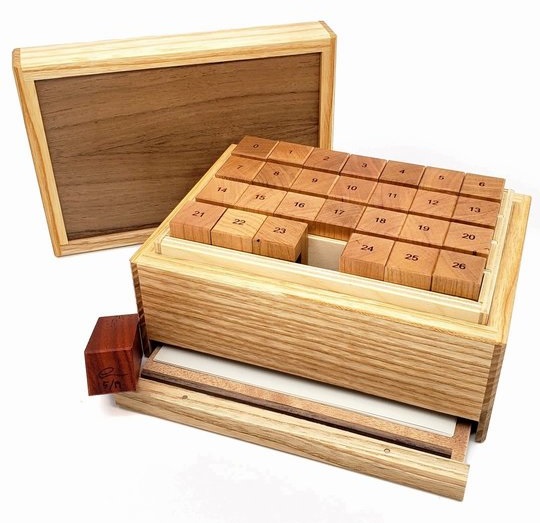
Penultimate Burr Set – with a trick opening box, made by Eric Fuller
from Ash and Cherry woods.
It isn’t as if I need another burr set…
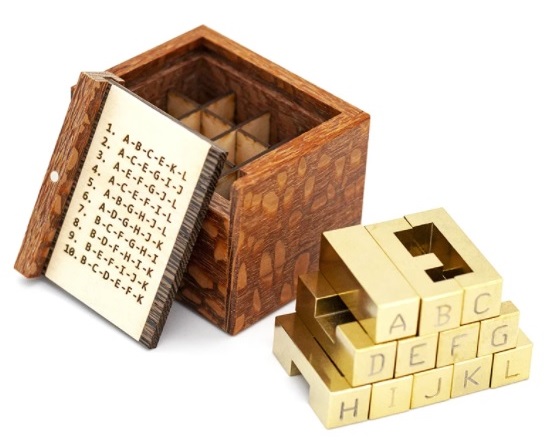
DDD Burr Set aka “Darryl’s Dense Dozen” – in brass, selection by Darryl Adams,
burrs machined by
Bryan Turner,
produced by and purchased from
CubicDissection.
The burr pieces have 6mm voxels, and are standard 2x2x6 prisms, so measure 12x12x36mm.
The 12 pieces included are:
The inside lid lists a set of ten puzzles.
With this piece set, Darryl says there are 530 possible puzzles (many of which are uninteresting), 24 of which are solid, and 42 puzzles with unique solutions.
2 through 6 had already appeared in my list. 7 through 10 do not use the key piece.
Using this set, 7 is the only 3-hole puzzle with a unique solution – it fits together in two 3-piece halves.
Using this set, 10 is the only level 2 with a unique solution.
The CubicDissection page links to a PDF giving more information.
Bryan has machined a set of all 59 notchable pieces and posted a photo I really like
where they
are arranged as in my burr piece tables:
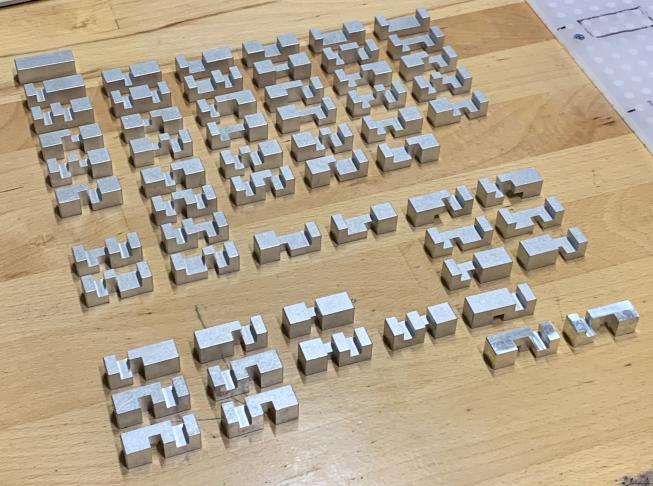
Other burr puzzle sets:
This is the Onietoiy 20pcs DIY Puzzle – a burr set from Onietoiy.
The set includes 16 traditional burr pieces of length 8, and four special pieces of length 16
which are used to assemble multi-burr constructs.
The instructions give 19 traditional 6-piece burrs which use the key piece, and 4 which use 52 rather than the key piece,
as well as several interesting larger structures to be made with the special long pieces.
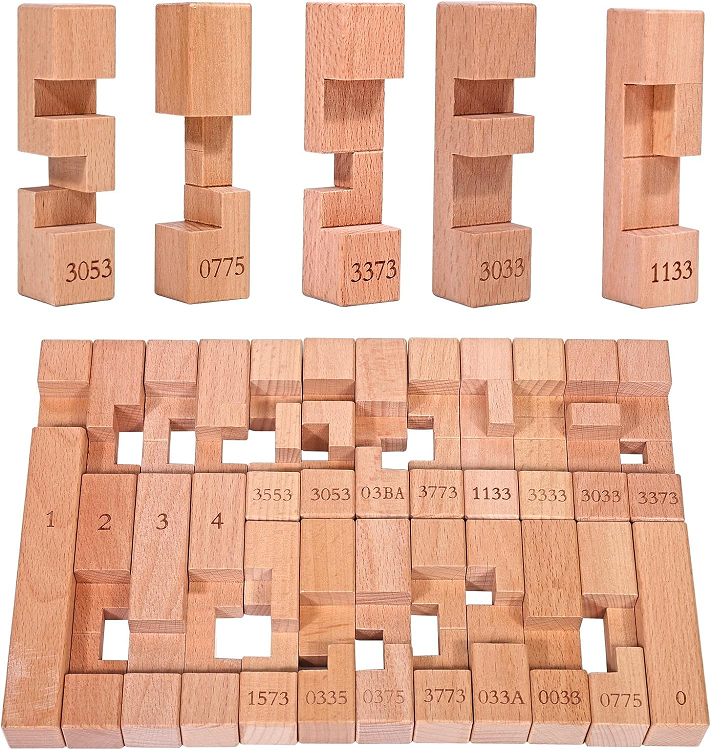
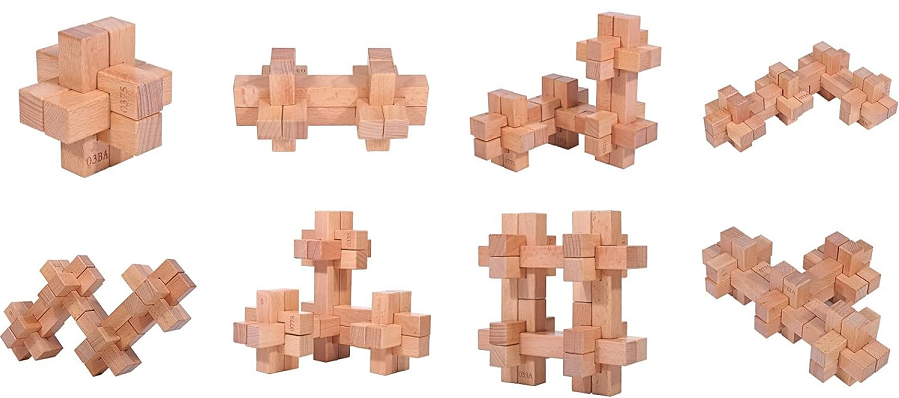
The pieces are identified with a strange numbering scheme – I map to my IDs in the table below:
Arthur L. Smith was a noted puzzle expert in the early 1900’s – he wrote an article on burr puzzles published in the March 1926 issue of Popular Science magazine.
Here is a link to the Google Books page.

Smith’s diagrams are very clear and there is no mistaking the identities of the pieces.
All of Smith’s pieces are among the 25 notchables used in solid burrs.
Smith describes 16 burrs that can be constructed from this set.
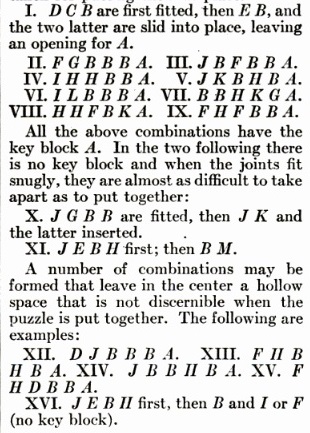
- 1. { 1, 911, 824/975, 1024×2 } W2
- 2. { 1, 103, 188, 1024×3 } F45
- 3. { 1, 52, 188, 1024×3 } W3, F4
- 4. { 1, 154, 256×2, 1024×2 } W5, F12
- 5. { 1, 52, 256, 928, 1024×2 } W6, F2
- 6. { 1, 154, 871, 1024×3 } W7, F42
- 7. { 1, 103, 256, 928, 1024×2 } W8, F28
- 8. { 1, 188, 256×2, 928, 1024 } F15
- 9. { 1, 188×2, 256 1024×2 } F24
- 10. { 52×2, 103, 928, 1024×2 } close to W9, F64 but both mistakenly substitute 871 instead of the correct 928.
I believe this is evidence that Wyatt cribbed from Smith! Wyatt’s pieces are the same set as Smith’s but lettered slightly differently, and his ‘K’ is 871, whereas Smith’s ‘K’ is 928. - 11. { 18, 52, 256, 911, 1024×2 } W10, F66
- 12. { 1, 52, 975, 1024×3 } W11
- 13. { 1, 188, 256×2, 1024×2 } W4, W12, F14
- 14. { 1, 52, 256, 1024×3 } W13, F1
- 15. { 1, 188, 256, 975, 1024×2 } W14
- 16. { 52, [154 or 188], 256, 911, 1024×2 } close to W15, F65 but both mistakenly substitute an extra 256 for the second 1024.
More evidence that Wyatt cribbed from Smith. In Wyatt’s slightly different lettering, he assigns ‘B’ to 256, whereas Smith’s ‘B’ is 1024. Note Smith’s description of the last few steps in assembling this puzzle: “then B and I or F (no key block).” Compare with Wyatt’s: “and B and I or F (no key).” Seems to me like Wyatt inadvertently copied this and failed to perform the necessary substitution to account for his relettering, where the needed 1024 is not ‘B’ but ‘F.’ Wyatt should have said:
“and F and I or M.”
In my table of puzzles below, I will .
Smith wrote several other articles on puzzles for Popular Science:
- On peg solitaire puzzles in
the May 1926 issue. - On sliding piece puzzles in
the July 1926 issue. - On the “Stomachion of Archimedes” in
the November 1926 issue. - On “A Square Peg in a Round Hole” in
the July 1927 issue. - On an interlocking cube in
the Sept 1927 issue. - On an interlocking puzzle box (trick bank) in
the July 1931 issue. - On a dovetail puzzle joint in
the Nov 1931 issue, and
the Mar 1932 issue. - On the 5×5 Magic Square in
the Feb 1932 issue. - On a “new form of the Chinese Cross puzzle” in
the May 1932 issue. - On a square dissection in
the Nov 1932 issue.

The book 100 Puzzles – How to Make and Solve Them, written by Anthony S. Filipiak,
was published in 1942 by A. S. Barnes and Company.
In his book, Filipiak includes a section on the “Six Piece Burr Puzzle,” beginning on page 79.
He says that though he has over a thousand mechanical and manipulative puzzles in his collection,
his favorite puzzle is the six piece burr.
“collected the world over by correspondence, travel, and research into ancient books of magic, tricks, games,
and puzzles.”
He admits “no doubt there are a few more to be added.” I have not reproduced all 73 designs here, but I . Several of the designs in his list of 73 puzzles, when I checked using Jurg’s applet, have no solution – maybe
the wrong pieces were listed,
or as noted below, the actual configuration of the pieces themselves are open to interpretation.
Or, perhaps Filipiak himself hadn’t bothered to actually construct all of the designs –
but that seems unlikely given his enthusiasm.
I cannot imagine that his editor could have checked the work, however!
NOTE – see info on Smith, above – I believe Filipiak copied from Wyatt, who mis-copied from Smith – this explains some of the errors.
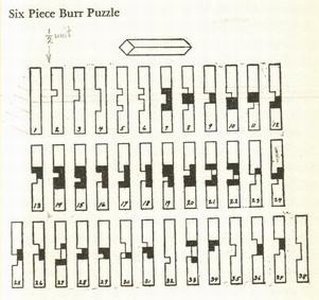
although his #32 might be my #35;
his #10 as drawn equals my #463, but that interpretation results in several of Filipiak’s designs having no solution – from its
position in his list it might be a mistaken drawing of my #911, the complement to its neighbor #11 which is my #792. Filipiak missed pieces #35 and #86, but there are only 3 uses of #35 among the 314 solid burrs, and few of #86.
He also missed the pair 856/943, but neither of those are used often, either. All of the pieces in his set are used in only 6 of his burrs!
The mirror pair is used only once, in his burr #63.
The pieces bear hand-pencilled numbers on their ends, ranging from 1 to 38, and there are 90 pieces.
Once I received the set, took inventory, and examined the piece shapes and numbering, it became evident that this is in fact a set of Filipiak’s pieces, using his numbering scheme. I wonder who made them, following Filipiak’s instructions? Whoever it was did a pretty accurate job.
There are only a few discrepancies:
- piece #18 is supposed to map to ID 1015, but is instead a copy of piece #9 which equals ID 871 (barbells)
- The two copies of piece #10 should map to ID 911, but they are offset so actually are 463 – this faithfully follows the error in Filipiak
- piece #24 is supposed to be 788, but is instead 280 which does not match the Filipiak diagram.
- piece #32 is the same as #2 – both map to 18 local mail
- the only copy of piece #35 (103 – the half tray) has a notch that is a bit too tight
- piece #37 should be 888, the mirror to piece #36 which is 1007 – but its notch is offset so it is not 888.
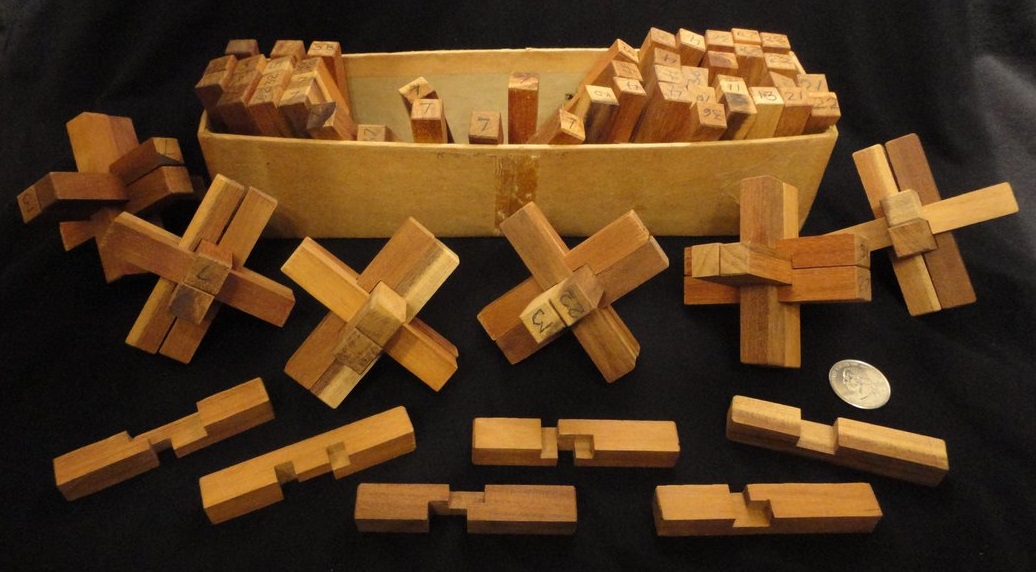
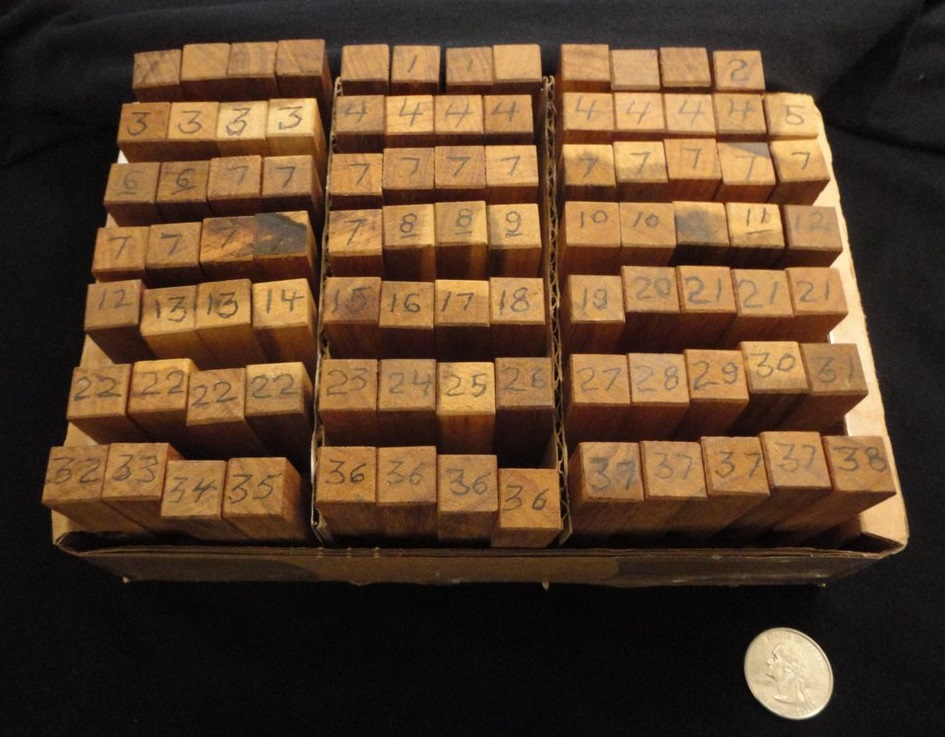
The seller obtained the set at a flea market in Virginia but unfortunately could say nothing else of its provenance. They were supplied in a crude oblong cardboard box, shown first above – I fashioned a slightly less crude and more convenient cardboard container for the set, with internal separators, shown next.
The pieces appear to be made from walnut. Each piece has a 1/2″ square cross section and is 3″ long, and notches are 1/4″ so these are length-12.
I am able to construct many burrs using this set, including the complexly-notched Tenyo Brother, since in effect a 463 is supplied.
Sadly, however, due to the flaws mentioned above, there are several among Filipiak’s 73 burrs that cannot be constructed using this set.
Still, it is cool to have come into possession of some past puzzler’s treasure – it must have taken quite some effort to craft all these pieces – chisel marks can be seen in the finely carved notches. I wonder how many other readers of Filipiak’s book actually went to the trouble to make the set of burr pieces for which he evinced so much enthusiasm?
This section gives a list of burrs to try
once you have a set (or can make your own pieces, for example from LiveCube or Lego).
I’ve included solid and holey designs.
There are several sources that give the full list of all 314 solid burrs that can be produced with the set of
42 notchable pieces, including Slocum and Botermans’ 1987 Puzzles Old and New.
That list of 314 puzzles contains multiple entries for a set of six pieces when that set can go together in different ways, so
there are not actually 314 unique six-piece sets.
I have folded all the sets represented by those 314 puzzles into my list.
I have tried to catalogue interesting puzzles I’ve run across and
give their names or designers when I know them.
The catalog below is ordered by piece number – with the six pieces sorted by number, lowest first.
Mirror pair pieces are listed together.
I have color-coded the pieces per my guide tables above, to try to make it easier to see how the designs may be related.
In the notes accompanying the puzzles I have used various colors to highlight particular puzzles as follows…
- Pieces
are from the table of additional pieces.
If a burr’s piece list does not contain any pieces highlighted like this, then
it (most likely) can be constructed using the set of 42 notchable pieces. - The pieces are used frequently and are specially highlighted.
-
(Bill gives lists of
“holey” burr designs,
andother burr designs on his site.)
-
You might use these to introduce a beginner or a child to this category.
Incidentally, Curfs, Coffin, and Cutler rate Cutler’s #306 as the most difficult of the notchable solid burrs. -
Ishino offers extensive analysis of
the six-piece burr (as well as many other puzzles), giving catalogues of pieces and of designs.
He lists many of the puzzles listed here, too.
Anyway, herewith my list, also “collected the world over!”
They’re just there to provide a count of the number of entries in my list.)
- – , ,
- – , ,
;
also U.S. Patent
1425107 – Levinson 1922. - –
(corrected) – substituting 824 for 992, as given in Filipiak, won’t work; B13S.1 - – , ,
- – –
the mirror of his #6. - – – 1 solution; compare to Wyatt #11
- –
1 soln. - –
– 2 solutions each. B13S.2 - – – an improvement on Wyatt #11, substituting
960 for a 1024 and thereby eliminating the single void. - – ,
- – the only use of piece #86 with the key #1 – requires piece #871 –
- – , ; An “anomaly” with “inside” cubies showing
- – , ,
,
“Chinese Puzzle E” - – – 3 solutions;
B13S.3 - – 3 solns.
- – See above – using 992 instead of a third 1024 eliminates the single internal void here.
- – 1 soln.
- – B13S.4 (1007)
- – – 3 solns.
- – – 1 solution
- – 1 soln. – I found this tricky for some reason.
- – 3 solns.
- – 1 soln.
- – 2 solns.
- – 2 solns.
- – 1 soln.
- – – 1 solution
- – 3 solns.
- – 2 solns.
- – 1 soln.
- – from
Peter Kaldeway’s site
- – Soviet Hedgehog
- – , , ,
.
.
Any burr using 2×1024 is easier than most – adding 2×256 makes it somewhat trivial.
“The Puzzle of Puzzles” – made in Japan;
See plans for Betelgeuse at www.craftsmanspace.com;
The Double-Cross Puzzle, issued by the General Engineering & Design Co. of
Detroit, Michigan. - –
- – , ,
- – , ;
also Coirligheile (“Gaelic Whorl”) or a Ghlasmhahaidh (“lock of scoffing”), from
The Games & Diversions of Argyleshire published in 1901. See diagram on p. 17 of the PDF and text on page 192 by the document’s numbering.
On display at the Pitt Rivers Museum – article and
photo at
Meople’s Magazine, 22 Oct 2010. - – ,
- –
- – , ,
, - – (solid) Yamanaka “Shap” 3505 set, No. 4
- – (solid) Kitajima #1 (use 911)
- – ,
Yamanaka Black set,
– 2 solns. – mirror of Hoffmann below - – ;
compare to Wyatt #14;
(1 unnecessary hole) - –
1 soln. - –
1 soln. - –
;
;
also sold as the
“Burr Puzzle” by Toys From Times Past. - – , ,
- –
“Dreveny Kriz II”
- –
Teufelsknoten Schlüsselanhänger - – Devil’s Knot, G4, Tommerknude,
“Chinese Puzzle B”
- –
HABA Teufelsknoten;
Puzzlemaster.ca
Enigma;also known as “Notched Sticks.”
The pieces are kind of the “mirror image” of the Devil’s Knot above –
pick either the left or right of each of the three twins: 512/768, 832/976, and 975/824.
I have seen this called
“The Cross of Marseille.”
Also see plans for Cassiopeia at
www.craftsmanspace.com. - – (solid) 1 soln.
- – (solid) 1 soln.
- –
, ,
. Easy. Also appeared as the “Locked Cross” from New Zealand.
Also see U.S. Patent
1350039 – Senyk 1920.
Louis Vuitton Le Pateki puzzle (maple, sycamore). - – ,
Yamanaka Orange set - – – 3 solutions
- – (solid) 1 soln.
- – (solid) 1 soln.
- –
- –
–
. - –
- – –
compare to Filipiak #17/18 and note how the 928+1024 pair replaces the 960/992 pair. - – –
1 soln. - – B13S.6 (use 911) – 1 soln.
- – and – BOTH no soln. – compare w/ B13S.6 & 7
- –
vintage small brown wooden burr I got from England; see plans for Andromeda atwww.craftsmanspace.com, where you can find several puzzle plans for woodworkers.
- – B13S.7 (use 911) – the “mirror image” of B13S.6
- – 1 soln.
- – Interlocking keychain puzzle burr from France. 1 soln.
- – 1 soln.
- – ;
, ;
“Chinese Puzzle G”;
Bell’s Maltese Cross keychain;
Russian “Admiral Makarov’s Puzzle”;
Misfit – advertising Phenyo-Caffein;
;
see U.S. Patent
1388710 –
Hime 1921, for these on a string. - – mirror of “Chinese Star”
- – – 2 solutions; B13S.5
- – 1 soln.
- – B13S.8
- – Saw this as the “Chinese Star.”
- – Triple Cross
- – ; no soln for this set, but compare to the “Chinese Star”
- – 1 soln.
- – 1 soln.
- – 2 solns.
- – A tricky solid burr I like
- – 1 soln.
- –
- – 1 soln.
- – mirror of the tricky solid burr I like
- – 2 solns.
- – 1 soln.
- – 1 soln.
- – , “Chinese Puzzle F” (use 792), ,
, if his #10 = 911, - – mirror of B13S.11 – 2 solns.
- – 1 soln.
- – 1 soln.
- – 2 solns.
- – 1 soln.
- – 1 soln.
- – 2 solns.
- – 1 soln.
- – B13S.9 (use 888)
- – B13S.10
- – 2 solns.
- – 1 soln.
- – 1 soln.
- – 1 soln.
- – 1 soln.
- – 1 soln.
- – 2 solns.
- – 1 soln.
- – 1 soln.
- – B13S.11
- – 1 soln.
- – .
- – compare to BC#3 – substitute either 888 or 1007 for one 256
- – – 1 solution
- – contrast with 18,35 below – this shows how 871 can be placed with its crossbar outboard (w/ 18) or inboard (w/ 35)
- – nice symmetry
- –
one of only 3 uses of piece #35 among the 314 solid burrs. - –
easy - –
use 888 or 1007 - – 4 apparent assemblies but only 1 solution. Not too tough.
- – , ,
, if his #10 = 911 - –
- –
use 888 or 1007 - –
use 888 or 1007 - –
mirror of Professional Puzzle set #4 - – 3 solns. 18+1024, 18+1007 (2 ways)
- – 18+1024 key, 2 solns.
- – 4 solns.
- – one of the more interesting solid assemblies featuring an 18+1024 “key” – 1 soln.
- – Yamanaka Green set
- – 3 solns. – all use 18+871 key – compare w/ 18,86 below
- – 3 solns. 18+1024, 18+888 (2 ways)
- – mirror image of “interesting” one above – 1 soln.
- – 4 solns.
- – one of only two uses of piece #86 without the key #1 among the 314 solid burrs.
- – 1 soln.
- – 2 solns.
- – 1 soln.
- – compare w/ 18,86 above
- – 1 soln.
- – 1 soln.
- – 1 soln.
- – 1 soln.
- – 1 soln.
- – 2 solns.
- – 1 soln.
- – 1 soln.
- – 1 soln.
- – 1 soln.
- – 1 soln.
- – 1 soln.
- – 2 solns.
- – 1 soln.
- – 1 soln.
- – 2 solns.
- – 1 soln.
- – two 871s! – 1 soln.
- –
– his only use of his piece #34 / my #20. - – the second of only 3 uses of piece #35 among the 314 solid burrs.
- – the third of only 3 uses of piece #35 among the 314 solid burrs, this set goes together 3 ways.
- – EFNOQY discussed by
- – EOOQYY – Simple Lock
- –
, –
NOTE – this set doesn’t work – it has too many interior cubes. Why did they both include it? - –
–
The answer to the question above – because Wyatt cribbed incorrectly from Smith!
Also, a large solid burr I played with at George Hart’s house. - –
(solid) 3 solns. - –
(solid) 1 soln. - –
- – Yamanaka Yellow set (911)
- –
1 soln. - –
1 soln. - –
1 soln. - –
3 solns. - –
1 soln. - –
3 solns. - –
1 soln. - –
3 solns. - – 2 solns.
- – 1 soln.
- – symmetric halves, no holes – contrast with B13S.12, which I think is harder
- – 1 soln.
- – 1 soln.
- – 1 soln.
- – 1 soln.
- – 1 soln.
- – 1 soln.
- – “Chinese Puzzle C” (3 solns.)
- – the 2nd of only two uses of piece #86 without the key #1 among the 314 solid burrs.
- –
– the least un-notchable 1-hole level 3 - – Kitajima #2 (no holes)
- – 2 solns.
- – 1 soln.
- – B13S.12 (no holes)
- – LNOPST – 3 assemblies, 1 solution;
rates this 5th hardest among the solid notchables.
Not too hard once you recognize it has (a) the L&P (52,928) “key,” (b) typical symmetric arrangement of N&O (960/992), and (c) T 871 used in its “inside out” mode. - – 1 soln.
- – 1 soln.
- – 1 soln.
- – 1 soln. (mirror of above)
- – ,
– no solution even if Filipiak’s #10 is 463 - – –
what meant to be. - – “Twisting Key Burr” from Wish. 3 solns.
- – 1 soln.
- – – 7 solutions
- – 2 solns.
- – –
assemble this inside a cubic cage. - – 1 soln.
- – 1 soln.
- – 1 soln.
- –
Gemani’s Double Bill
(combines Cutler’s 305 and 306) - – 1 soln.
- –
A nice 3×3 slide.
gamesandpuzzles.co.uk has it. - – 52+928 (DV or PL) makes a 2-piece key
- – 1 soln.
- –
–
Cutler, Coffin, and Curfs say this may be the most difficult notchable solid burr. - –
. 8 apparent assemblies, 6 solutions.
An old one sold as “The Zoozzler.” Also the vintage “Mikado.” B13S.13 - –
2 solns. - –
2 solns. - –
1 soln. - –
1 soln. - – Derwin Brown’s Unique Level 6
- –
- –
“Chinese Puzzle D” (1 soln.) - –
- –
- –
- –
– a level 3 design which uses piece #86. - – Edward Hordern’s modification to
Peter Marineau’s Piston Burr – 13 solutions, one at level 10 - – Bruce Love’s Dozen. The only burr at the highest level, 12.
There are 89 ways to put it together, but most of them don’t achieve level 12. - – Peter Marineau’s Piston Burr –
The highest level, 9, with a unique solution. - –
- –
–
Note: the notch in piece #256 (X) in my copy of the Wayne Daniel burr set is too short and prevents piece #975 (Q) from being removed,
so this one cannot be constructed using the set. - – LNRSXX – unique level-5 solution, discussed by
- – LLNSXX – unique level-5 solution, discussed by
- –
- – B13H.1
- –
- –
- –
– nice, 6 moves to free the 1st piece - – –
(a set of 42 does not have 2x 154)
Note: again, the problem with #256 in the Wayne Daniel set prevents this construction. - – KLMUYY can be made with the set of 42
- – KNOUXX – only multiple level-5 solutions
- –
Ricardo’s burr – brought to my attention via email. Single level 5.4 solution. - –
Also Arjeu CT757.
- –
- –
- – Tumult –
try to find the level 7 solution. - – –
uses only notchable pieces and has only one void – 4 solutions, one at level 2. - –
- –
Abad’s Level 5.7 Improved Burr - –
U.S. Patent
1542148 – Kramariuk 1925. - –
- –
- –
- –
Abad’s Level 9 Burr - – GLMQXY –
this one works like JVK 25.1 - – Old black Treen Burr seen on antiques site –
level 3, 2 solns. (assuming it uses pc #256 rather than 1) - – Ishino’s Notchable Unique Impossible Length 10 –
1 solution at length 8, none at length 10 - –
- –
Bill Cutler’s Eight is Enough - –
– use either of the Fingers 960/992, or 928. - – – one of 139 designs using
only notchable length-6 pieces and having a unique solution - –
and rates this the third hardest (UL4 #3) of the five level-4 puzzles with unique solutions
among the holey burrs constructible using the notchable pieces. - –
and rates this the second hardest (UL4 #2) of the five level-4 puzzles with unique solutions
among the holey burrs constructible using the notchable pieces.
This one works with the Wayne Daniel set and has nice dead-ends. - –
and rates this the fourth hardest (UL4 #4) of the five level-4 puzzles with unique solutions
among the holey burrs constructible using the notchable pieces. - –
– this gets his “beauty prize”
and rates fifth hardest (UL4 #5) of the five level-4 puzzles with unique solutions
among the holey burrs constructible using the notchable pieces.
Works with the Wayne Daniel set. - –
(Level 7 unique soln) –
of 2.5 billion 3-hole assemblies, 198 have level-7 solutions and of those 157 have unique solutions.
NOTE: I had previously listed piece 869, but Aaron Siegel pointed out to me that it is equivalent to 867, in this case via a 180 degree rotation about the z axis, then a 90 degree rotation towards you about the x axis. - –
Abad’s Level 4 Ambiguous Burr
(maybe try using 992 instead of 990?) - – –
you can sub. 856 (J) for 943 (I) – 156 apparent, 4 level 2.2 solns - –
– unique level 3 soln, 36 apparent –
may be the most difficult notchable holey burr - –
(Level 8 unique soln) –
of 4.7 billion 4-hole assemblies, 15 are level-8 and of those 13 have unique solutions.
NOTE: I had listed 737 as the lowest piece, but Aaron Siegel pointed out to me that 737 equals 369, via a transform of 180 about the z axis, then 90 degrees away from you about the x axis. - –
– 1 solution but 143 apparent assemblies, the most for length-6 notchable.
(All of these pieces are actually notchable.) - –
XSOHO Burr – use length-8 pieces
for a single level 4.6 solution - –
Level 5.3 “Big Burr” - –
- –
- –
Tenyo Brother; also , if his #10 = 463 - –
- –
Rob’s Burr No. 1, which has 3 solutions – one at level 3, and two at level 9 - –
MODIFIED by me - –
– requires a rotational move! (Use length-8 pieces.) - –
Lee Krasnow’s Burr – 1 soln. @ 4.6 - – Darryl Adams – single level-3 soln.
- –
(CCU10). Use length-8 pieces. - – Brian Young’s Mega Six (Mega 6, Mega-6, M6) – a derivative of Cutler’s CCU10,
also using length-8 pieces but having 20 assemblies instead of 7, yet still a single level 10 solution.
Maybe the hardest burr overall?
NOTE: In lieu of 883, I had previously listed piece 869, but Aaron Siegel pointed out to me that it is equivalent to 867, in this case via a 180 degree rotation about the z axis, then a 90 degree rotation towards you about the x axis.
Aaron also pointed out that 867 should instead be 883, which has the cubie at position 16 removed.
Seethe listing at Jim Storer’s site, showing pieces (PDF).
This revised piece set is also consistent with the description of M6 having one less cubie than CCU10 – piece 944 has one less cubie than 624. - –
– 3 solutions. - – B13H.2
- –
–
presented by Toyo as length-8 pieces which must be assembled inside a slotted glass cage. - –
and rates this the hardest (UL4 #1) of the five level-4 puzzles with unique solutions
among the holey burrs constructible using the notchable pieces.
+----+ / 1 /| +----+ | +----+ | | +----+-/ 2 /| | |/ 4 5+----+ | + + | | + | 3 / | | | | +----+----+ + | +--| 6 7 8 | + | |/ + +-|/-+----+ | | + 10 | 9 |/ +----+
Of the 314 solid puzzles that can be made with the 25 notachable pieces, there are 158 that use the key piece #1.
If you start with 6 Y pieces and make one key piece, you use up 10 of the 20 “floating” interior cubies.
The “core” shown here is then composed of the 10 interior cubies
that remain to be distributed among the other 5 pieces.
cubies labeled 4,5,6, and 7.
The other 5 pieces would start as instances of the “minimal” piece #1024 (Y), and acquire some share of
the 10 cubies of the core. Note that no single piece can have all 10 – this would result in a second key piece,
which some reflection should convince you
doesn’t work. I have chosen an arbitray orientation for the other 5 pieces, which I’ll call P1 through P5,
resulting in the particular core shape shown.
Other shapes are possible.
Imagine P1 through P5, oriented around the core as follows.
- P1 is vertical on the left; the 2-cubie notch of P1 fits on 1 and 3, and its “arms” face right.
- P2 is vertical on the right; the 2-cubie notch of P2 fits on 2 and 8, and its “arms” face left.
- P5 is horizontal, into the page below the key piece, and fits on 9 and 10, with its arms facing up.
- P3 is horizontal across the page in front, with the notch upwards and the arms facing the rear.
- P4 is horizontal across the page in the rear, with its notch upwards and its arms facing the front.
The following chart shows how the floating pieces might be distributed, converting P1 through P5 into pieces other than Y.
Note that cubies 1 and 3 must be allocated as a pair. (Why? Because if they are split up,
it results in some pieces which are not notachable.)
Likewise for the pairs 2 and 8, and 9 and 10.
(opp. key)
(6,7,9,10)
they would be hanging off in space unsupported. So, what’s wrong with this analysis? It gives an incomplete list of possible pieces for P5!
Missing are: E, G, Q, U, P, and S.
Why? It is a consequence of my original arbitrary orientation of the
Y pieces. P5 has access to two additional cubies on each end, provided two things happen:
- either P1 or P2 must be reversed so its notch is on the other side
- either P3 or P4 (but not both) must be piece M
(6,7,9,10)
equals
that results in internal corners again.
This is only possible due to the symmetric nature of piece M, which allows its crossbar to be fitted inboard of
where crossbars normally go. If you try this with my LiveCube pieces described above, some of the yellow “internal” cubies
of the M piece will show on the outside due to the necessary rotation. For puzzles using the key piece A, piece M can never appear more than once.
All require an M.
All are very easy.
- AH-YM-YY
- AI-VM-YY These are three solutions for the same pieces:
- AI-WM-YX
- AI-XM-WY
- AI-YM-WX
- AE-YM-YY
(There is only one AE since E uses 6 of 10 available floating cubies, and M the other 4,
demanding that all the rest be Y pieces.) - AG-VM-YY
- AG-WM-YX
- AG-XM-WY
- AG-YM-WX
- AQ-VM-QY
- AQ-WM-QX
- AQ-XM-OY
- AQ-YM-OX
- AU-VM-YU
- AU-WM-YT
- AU-XM-WU
- AU-YM-WT
- AP-WM-QY
- AP-YM-OY
- AS-XM-YU
- AS-YM-YT
One would assume, the more floating cubies used by P5, the fewer associated configurations. The fewest should occur when P5 = H, using 6 of the 10.
One might think the remaining 4 could be split as follows: 4/0/0/0, 3/1/0/0, 2/2/0/0, 2/1/1/0, 1/1/1/1.
However, P5 as H has used 4,5,6,7,9, and 10, leaving the pairs 1/3 and 2/8 which cannot be split.
This means only 4/0/0/0 and 2/2/0/0 are possible divisions.
We’ve already seen AH-YM-YY; the M uses the remaining 4, requiring 3 Y pieces. There are only 4 AH configurations, as follows.
- AH-YM-YY (4/0/0/0) – both pairs part of same horizontal piece M
(Note: making each pair part of a different horizontal piece P3=U and P4=U makes the burr impossible to construct!) - AH-YQ-JY (2/2/0/0) – one pair to a horizontal piece and one pair to a vertical piece
- AH-YU-YJ (2/2/0/0) – mirror image of above
- AH-YY-JJ (2/2/0/0) – both to vertical
1/3 and 2/8 still must be assigned as pairs, but 4 and 5 can be independently allocated to different pieces.
The possibilities: 6/0/0/0,
4/2/0/0,
4/1/1/0,
3/2/1/0,
2/2/2/0,
2/2/1/1. There are 16 AI configurations as follows:
- AI-QN-YY (4/2/0/0) both horizontals, 1/3 and 2/8 separated
- AI-QO-XY (3/2/1/0)
- AI-UR-YY mirror of QN
- AI-UT-YW (3/2/1/0)
- AI-VM-YY (4/2/0/0) both horizontals, 1/3 and 2/8 together in M
- AI-VQ-JY (2/2/2/0)
- AI-VU-YJ mirror of VQ
- AI-WM-YX (4/1/1/0)
- AI-WQ-JX (2/2/1/1)
- AI-XM-WY (4/1/1/0) mirror of WM
- AI-XU-WJ (2/2/1/1)
- AI-YF-YY (6/0/0/0) an anomaly with inside cubies showing
- AI-YM-WX (4/1/1/0) same pieces as WM-YX above
- AI-YN-JY (4/2/0/0)
- AI-YR-YJ (4/2/0/0) mirror of YN
- AI-YV-JJ (2/2/2/0)
1/3, 2/8, and 9/10, and 4 and 6. The 16 AV configurations:
- AV-QO-YT (3/3/2/0)
- AV-UT-OY mirror of QO
- AV-WK-QY (5/2/1/0)
- AV-WP-GY (4/3/1/0)
- AV-WT-QJ (3/2/2/1)
- AV-XL-YU (5/2/1/0) – a little tricky
- AV-XO-JU (3/2/2/1)
- AV-XS-YG (4/3/1/0)
- AV-XW-JG (4/2/1/1)
- AV-YK-OY (5/3/0/0)
- AV-YL-YT (5/3/0/0)
- AV-YO-JT (3/3/2/0)
- AV-YQ-DY (6/2/0/0)
- AV-YT-OJ (3/3/2/0) – very common design (red, licorice stix, pendant)
- AV-YU-YD (6/2/0/0)
- AV-YY-JD (6/2/0/0)
AJ (21), AW (24), AX (24), AY (36). And that leaves the 156 configurations that don’t use the key piece #1.
Designers have sought to create higher-level puzzles:
Level 166 is the highest at the time of this writing, October 2013.
The higher-level puzzles following Phoenix Cabracan are based off of it.
Guillaume says,
“Among the highest level burrs, Tiros (level 150), and Burrly Sane for Extreme Puzzlers (level 152) … are very similar. The 87 first moves are exactly identical (they are both variants of the Phoenix Cabracan).”
Phoenix Family Burr Set – designed by Jack Krijnen and Alfons Eyckmans and hand made by Jack Krijnen
from zebrano, birch and amouk for the pieces, with mahogany, hornbeam, and cedar for the box.
45 pieces can be assembled into at least 12 different but related high-level “traditional” 18-piece burrs,
including Supernova, Excelsior, Barones, Burrly Sane for Extreme Puzzlers, and Tiros.
Here is a table of the individual 18-piece burr puzzles I have obtained (or wish to show the pieces of):
This is the Sequential Star by Lee Krasnow.
I bought one from him at IPP26, where it won an Honorable Mention in the
Design Competition.
It is the “little brother” to his
Barcode Burr.
Lee has incorporated a sequential opening mechanism into the traditional diagonal star,
making this a much more interesting puzzle.
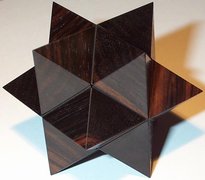
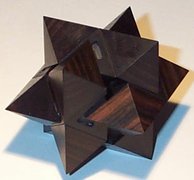
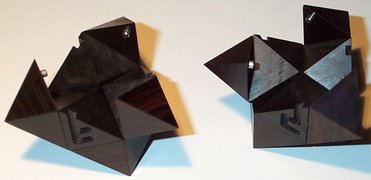
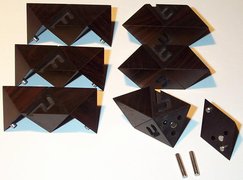
held together by 18-8 stainless steel alignment pins and strong neodymium magnets.
If undue pressure is applied to the puzzle in the wrong way, a piece can “burst” into its components –
but it is easily re-assembled with no harm done.
The end units are made of Macassar Ebony and are precision cut to beautifully sharp edges and points.
Lee hooked up a CNC feed to his sled and the cuts were made on his table saw under computer control.
The center units are made of a kitchen countertop material called
Richlite – a sort of plastic-infused paper,
which is climate-stable and machines nicely.
Each end unit contains a peg that rides in grooves cut in the center units of adjacent pieces.
The groove patterns are carefully contrived so as to dictate a particular sequence of moves through
which you must navigate the
six burr pieces in coordination, until the assembly finally can be slid apart into two 3-burr halves.
The grooves were cut using Lee’s CNC milling machine.
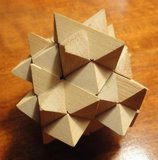
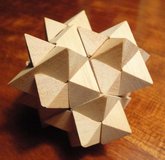
This is an enlarged construction related to the Diagonal Star,
called variously the Chestnut Burr,
the Asterisk, the
Snowflake, and the Gem Cut Puzzle.
It has 24 pieces.
The Chestnut Burr appears in Wyatt’s 1946 Wonders in Wood on page 36.
My copy is fairly small, and I do not know who the craftsman is.
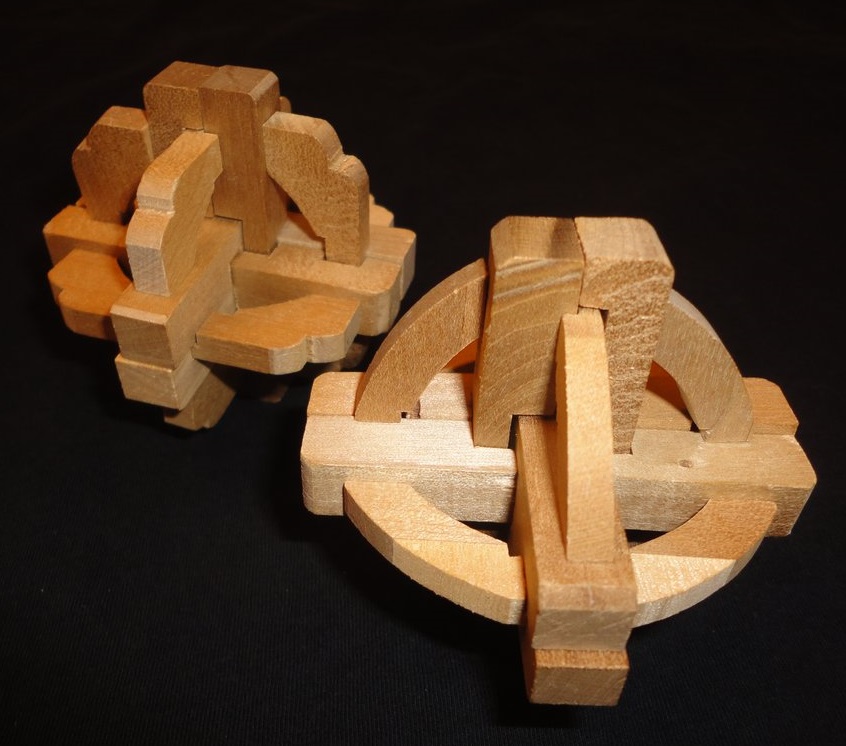
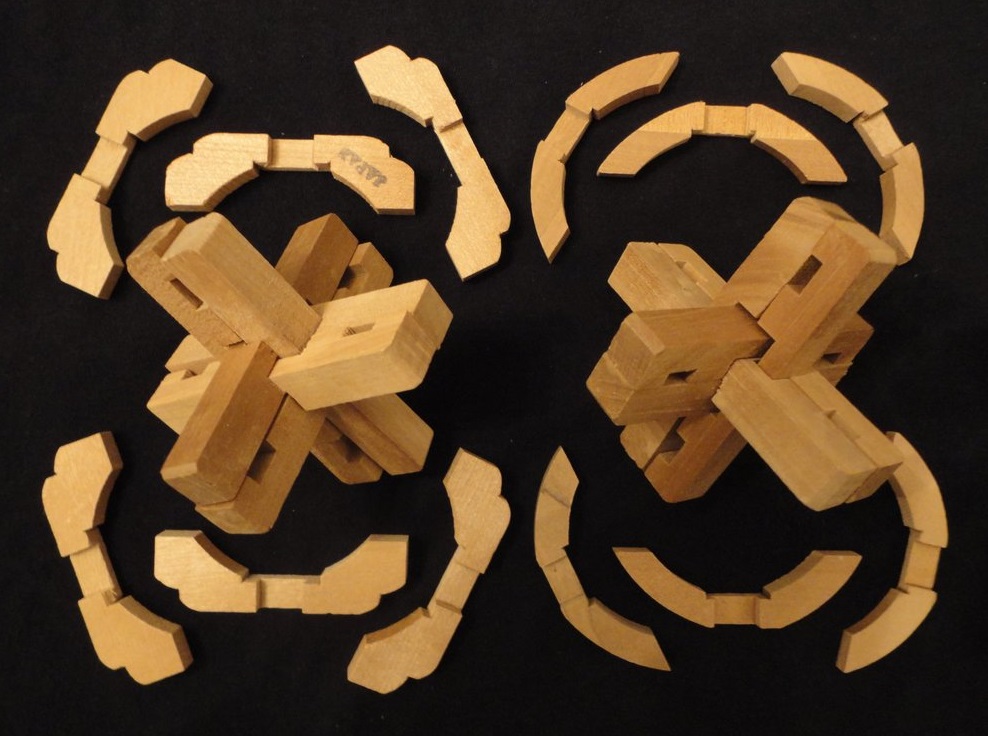
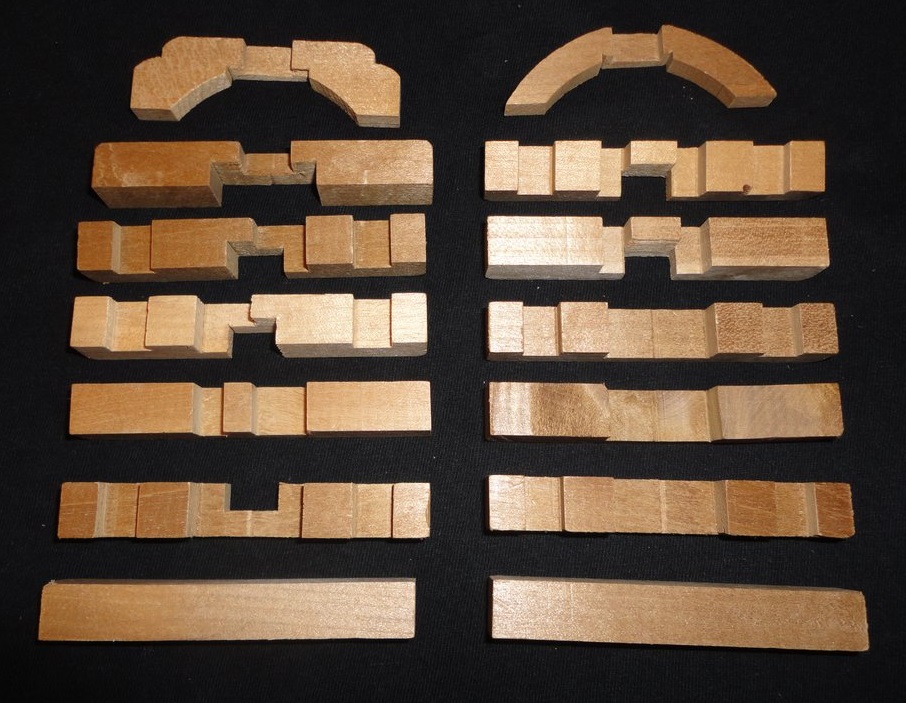
A vintage plastic example of the Kumiki interlocking Ball burr.
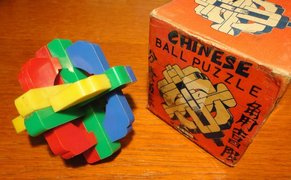
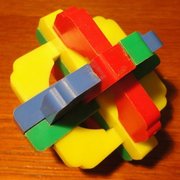
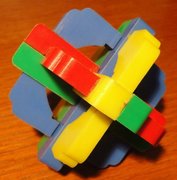
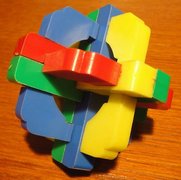
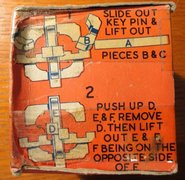
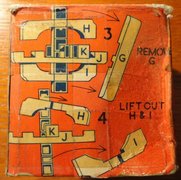
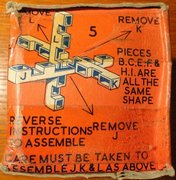
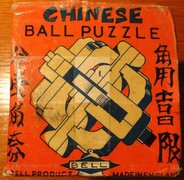
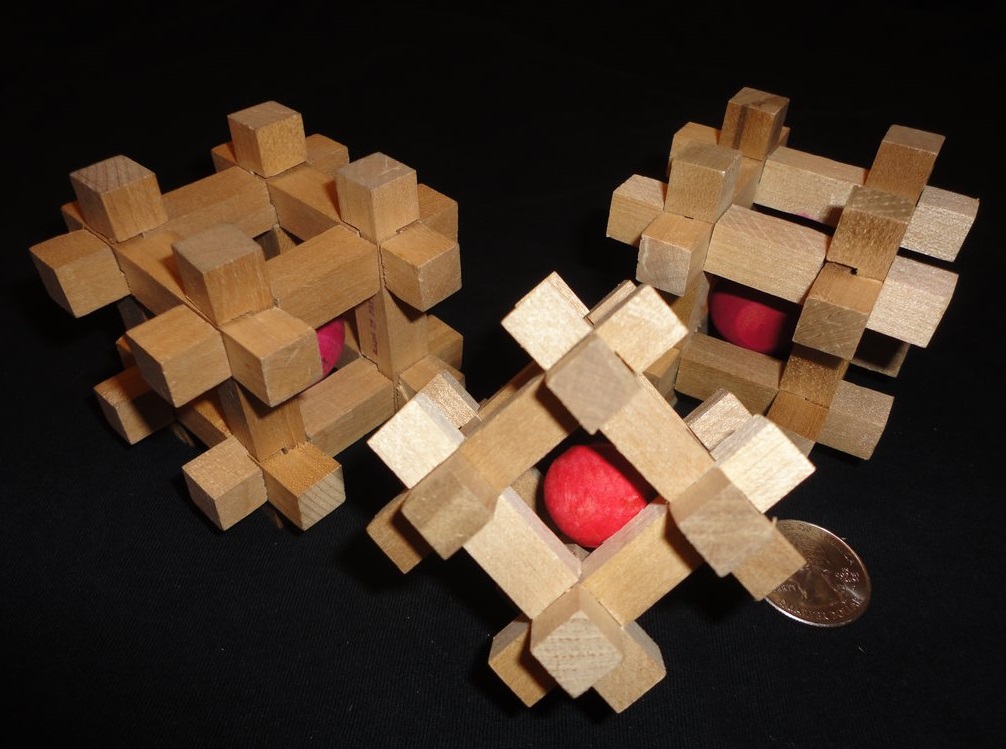
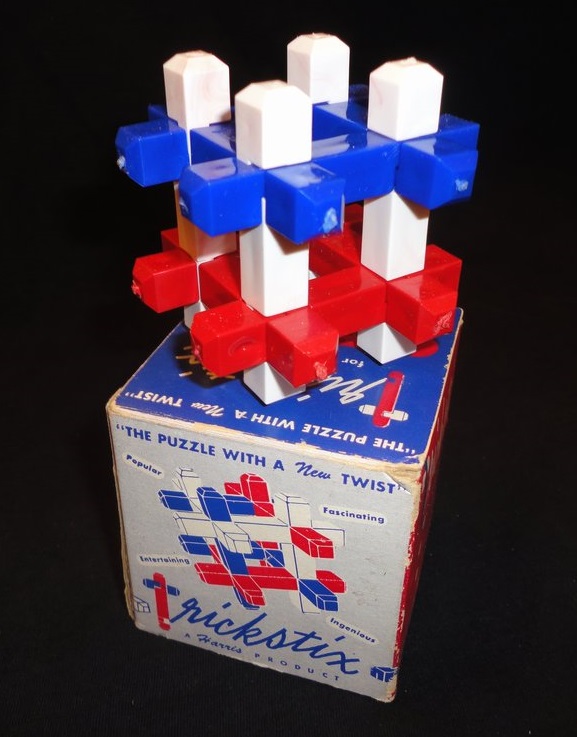
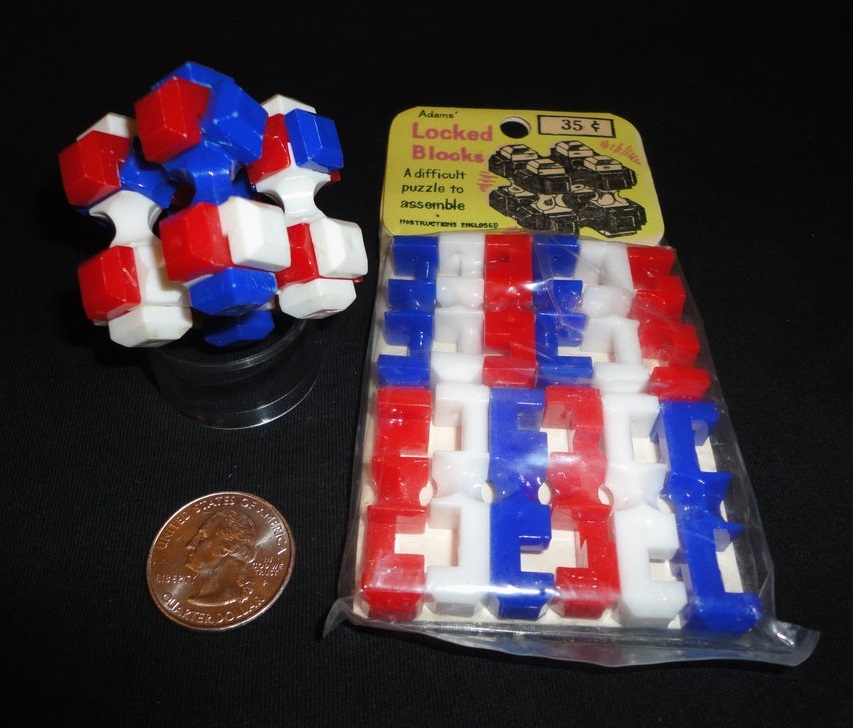
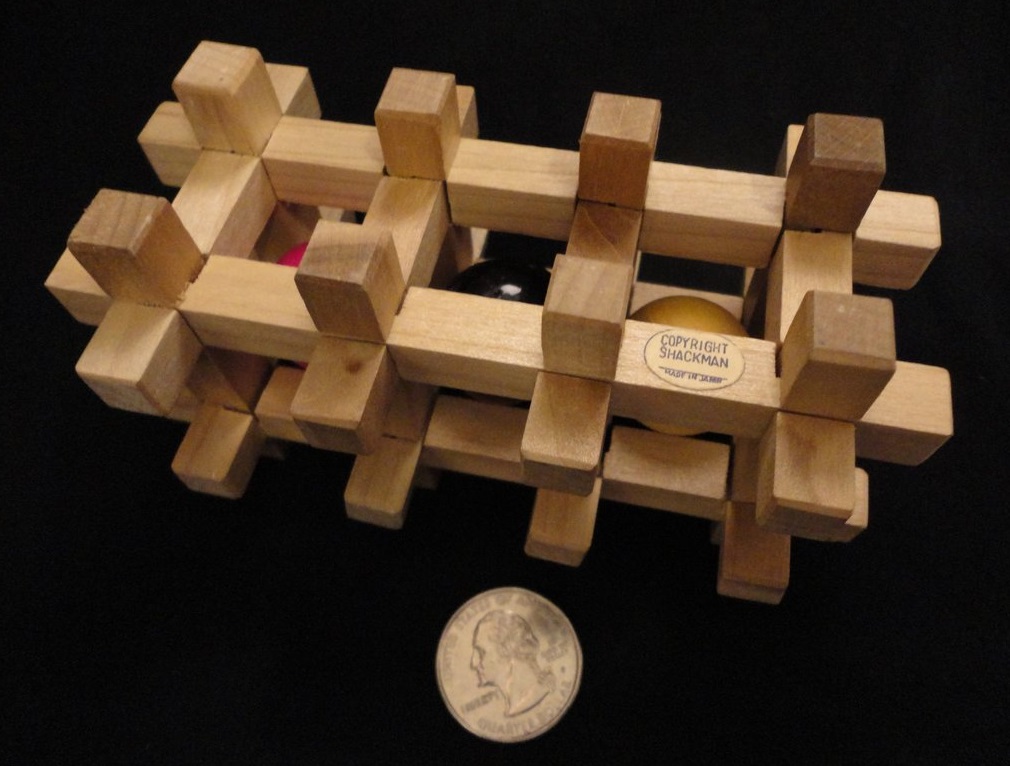
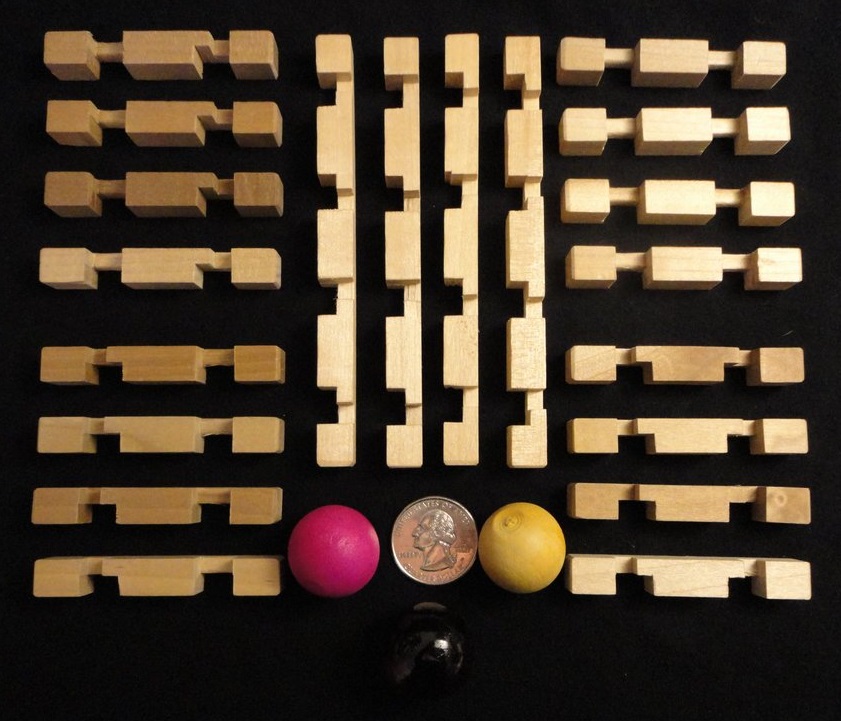
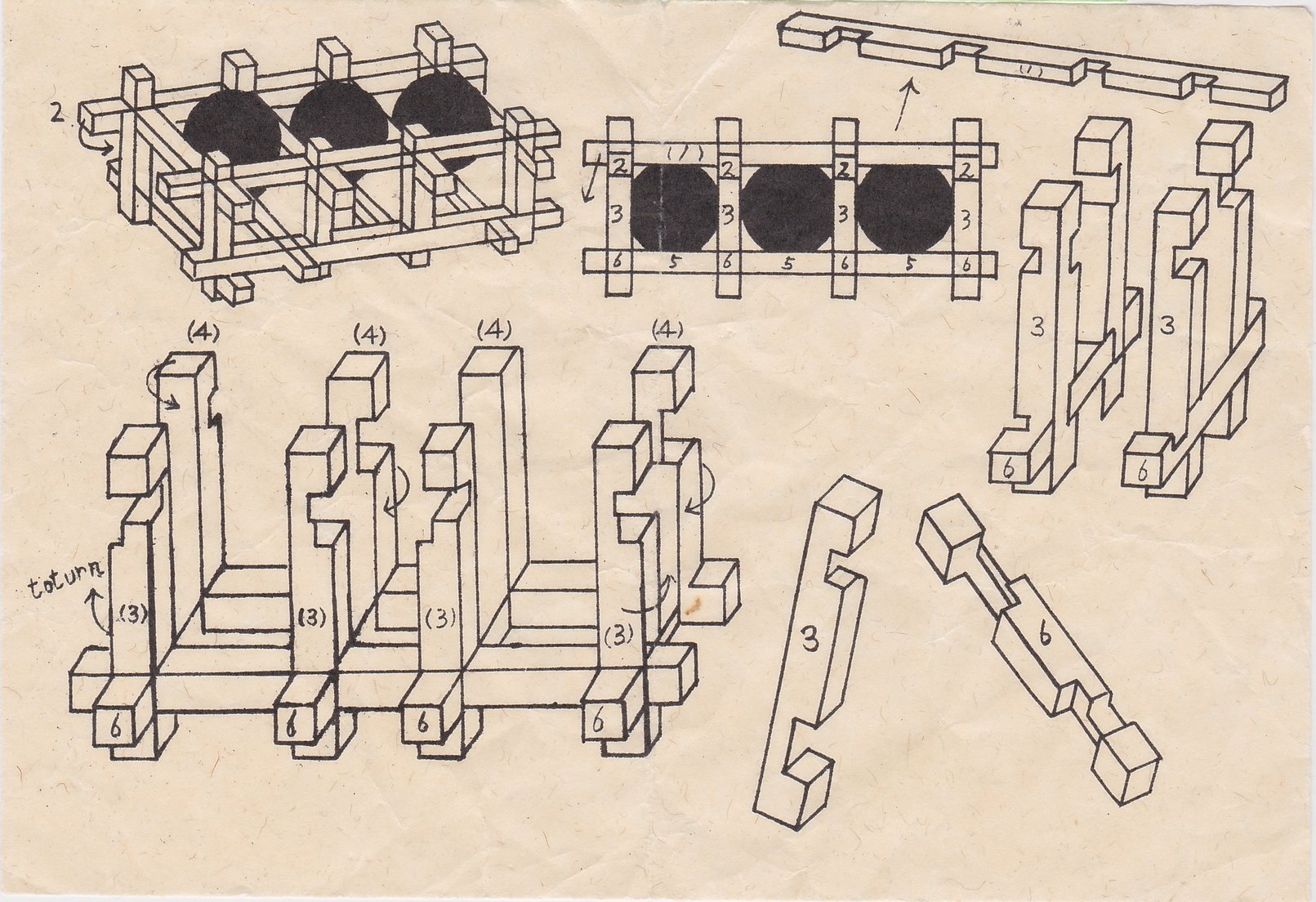
[134]
I finally found the five others
in what I now know is the Odd Ball series
issued by Norstar Toys Inc. of NY in 1970 (L to R, top to bottom):
Baseball, 8-Ball, Golf Ball, Basketball, Football, Bowling Ball.
Here are the pieces of the Football:
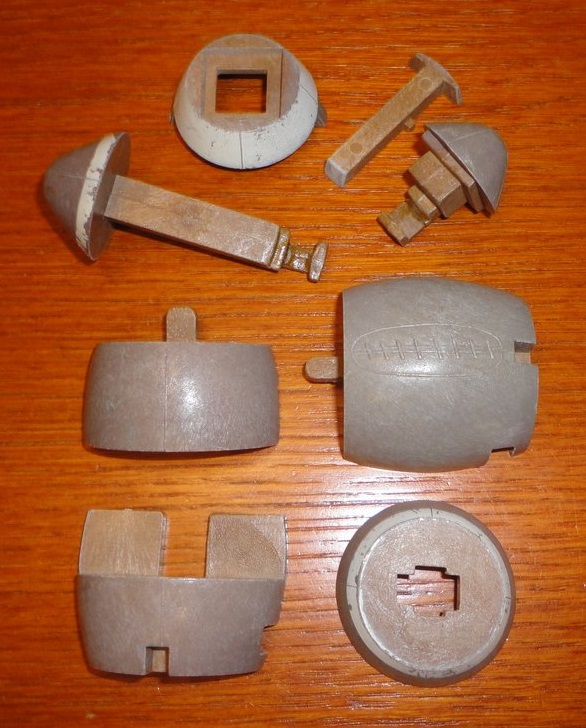
a plastic ball
a newer plastic ball
The “Gold Moon” I got in Japan
Terra-Toys
offers a series of four “3D Puzzle” animals in their Wildlife Conservation Collection, made in China from
woods claimed to be certified by the
Forest Stewardship Council.
I picked up a Polar Bear and a Panda.
Both have unusual opening tricks – not difficult, but distinct from the typical Kumiki-style animals.
There are also a Rhino and a Sea Turtle.
The Rhino is very similar to the Nanook Polar Bear.
Geo Australia offers the “KumiKube” puzzle.
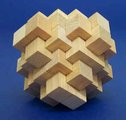
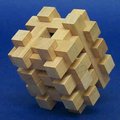
The Chuck puzzle, according to Slocum and Botermans in Puzzles Old and New on page 74,
was patented by Edward Nelson in 1897
(U.S. Patent
588705 – Nelson 1897).
The design was improved and developed by Ron Cook at
Pentangle Puzzles.
Pentangle offers a series of chuck puzzles – the simplest is the Baby Chuck with 6 pieces.
The Woodchuck (shown here) has 24 pieces, the Papa-chuck has 54, the Grandpapachuck has 96,
and the Great Grandpapachuck has 150. Pentangle’s Lunatic puzzle, also shown, is a close relative of the Chuck family. Richard Whiting’s website offers a
solution to the 24-piece Woodchuck.
(The knock-off versions are called “Crystal” puzzles but that is a misnomer.)
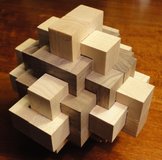
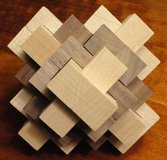
Here is a Chuck burr made from Maple and Walnut by
craftsman Colin Gaughran, who has a shop in Lyme, Connecticut.
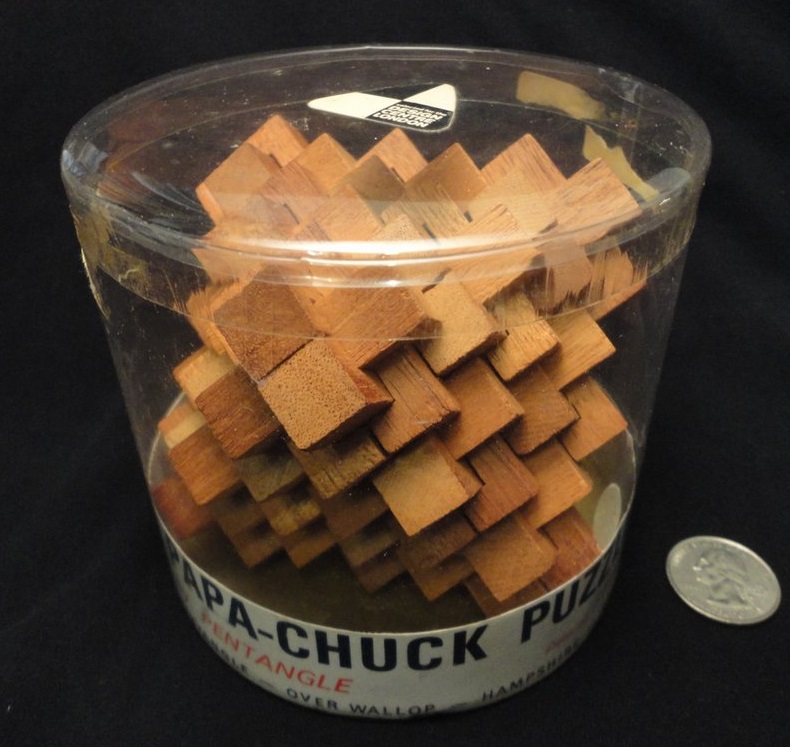
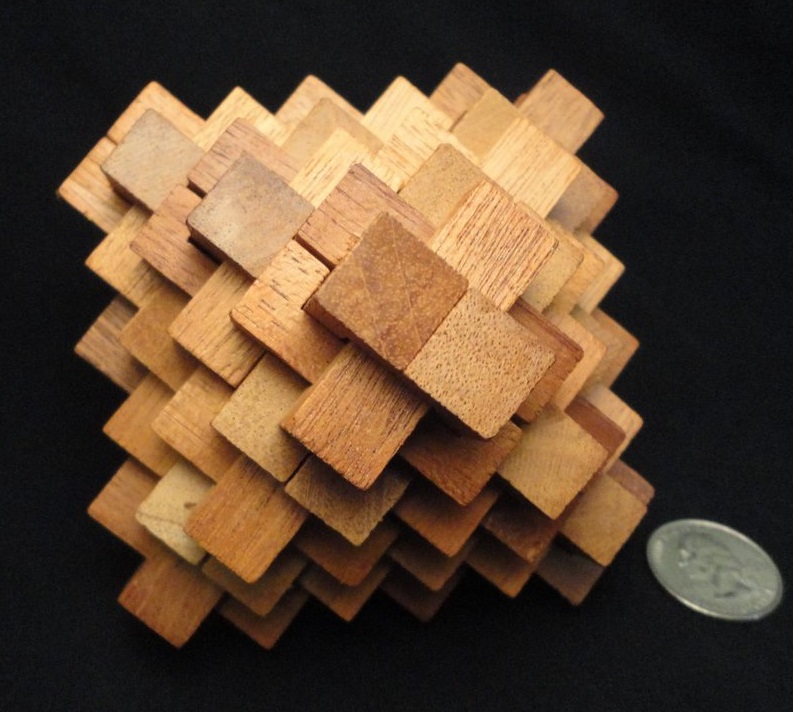
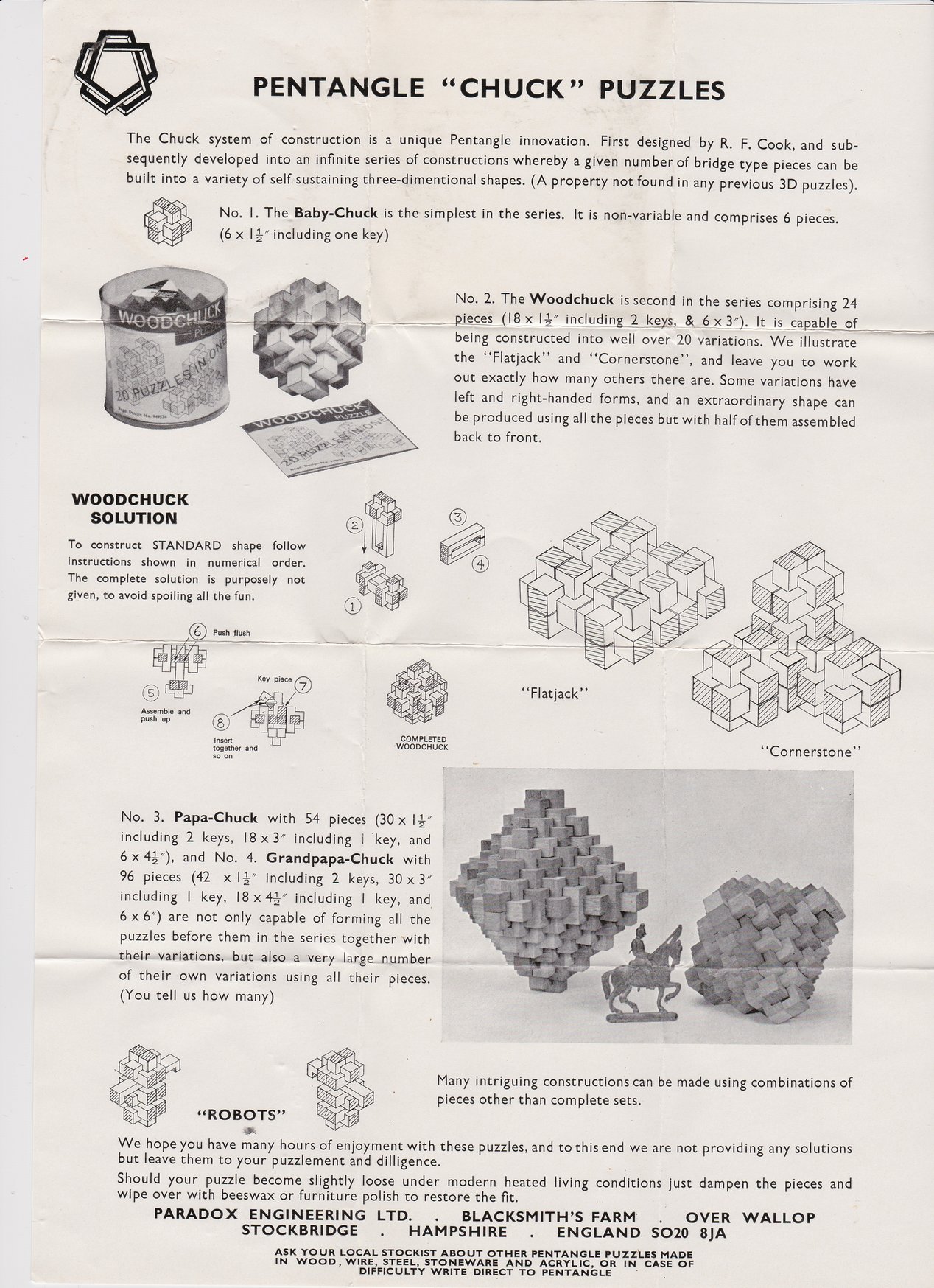
Papa Chuck – by Pentangle
Here is a Chuck burr in plastic, from Hungary.
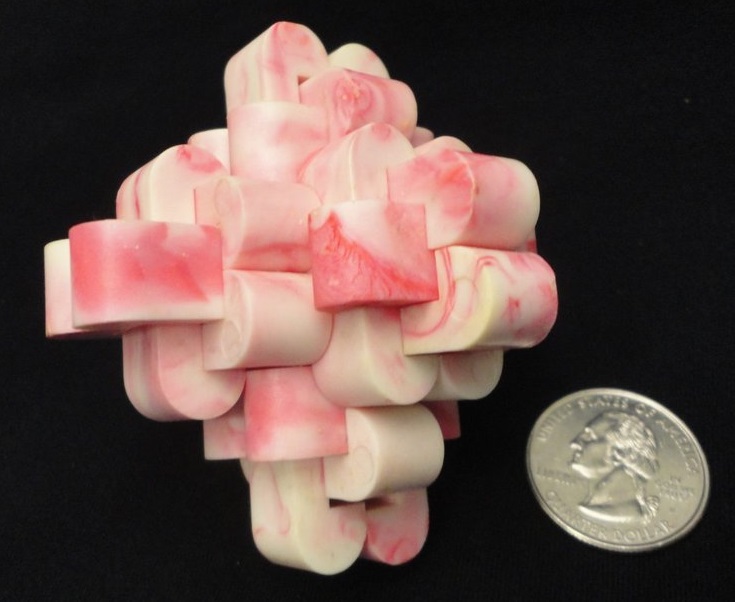
[7]
In this type of puzzle, several (usually all) of the pieces must be moved in a coordinated fashion
to achieve assembly or disassembly.
3-piece Heart Box – Bits and Pieces
Triple Decker – Bits and Pieces
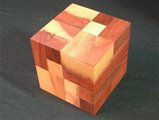
This is called
“Iwahiro’s Apparently Impossible Cube #1.”
It was designed by Hirokazu Iwasawa.
It was made by
Eric Fuller from Chakte Cok wood.
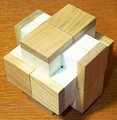
Duodeciburr
Designed and made by Vaclav Obsivac
Presented at IPP27 by Rick Eason
12 identical pieces
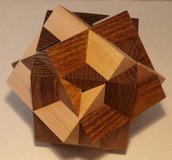
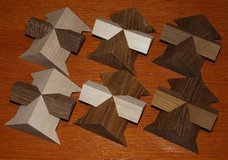
TriKubus by Rik Brouwer
Purchased from Bernhard Schweitzer
I no longer own this.
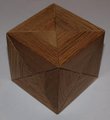
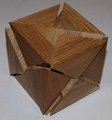
This is the Crystal Cube, designed by Bill Darrah.
Purchased from Bernhard Schweitzer at IPP 29 in SF.
I especially like this design because the pieces are not identical.
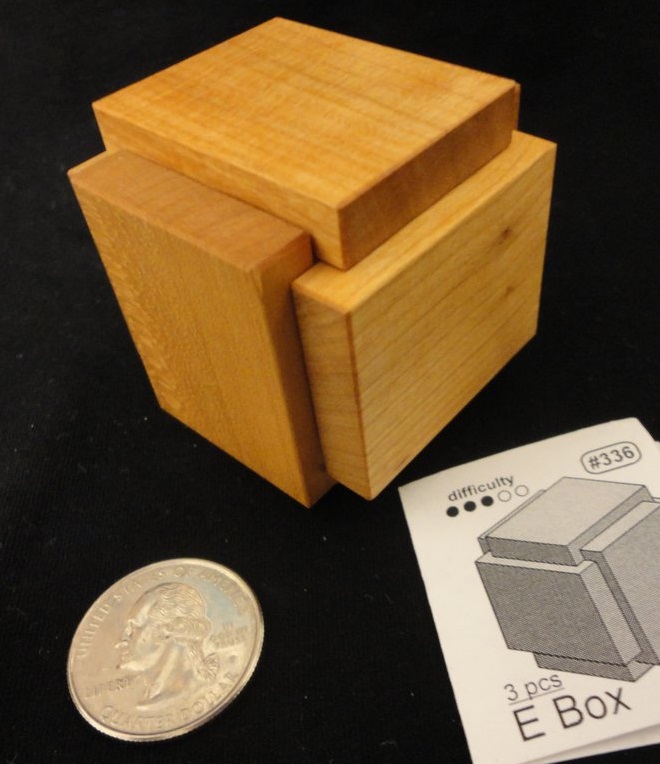
E-Box – Vinco
A nice little 3-piece coordinate motion puzzle.
Purchased from Tim Udall at NYPP 2016.
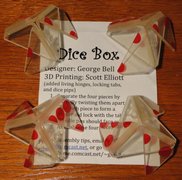
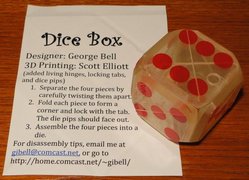
This is the Dice Box, designed by
George Bell
[S],
with input from
Scott Elliott, and printed by Scott.
It’s not overly difficult, but I think the printed live hinges are cool.
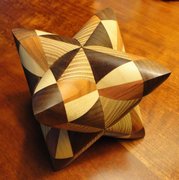
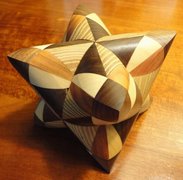
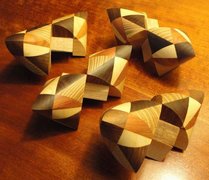
Obtained at IPP31 in Berlin,
here is a four-piece Dual Tetrahedron coordinate motion puzzle, beautifully crafted from Walnut, Acacia, Maple, and Plum, from
Vinco.
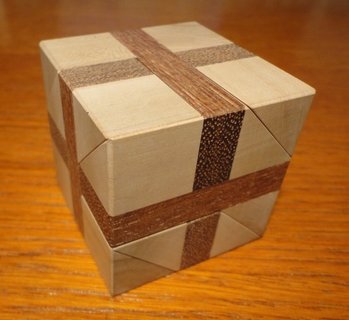
Little Slide Plank Cube – designed by Gregory Benedetti
Greg has achieved a very clever dissection of the cube into three similar but different pieces
that fit together with coordinate motion.
Precision made.
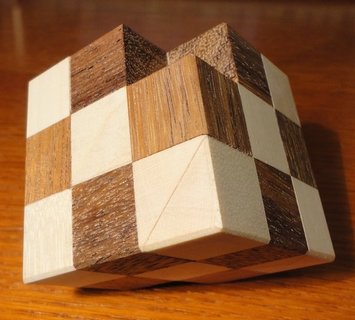
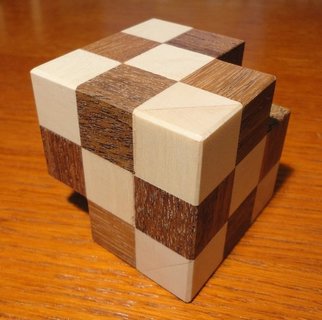
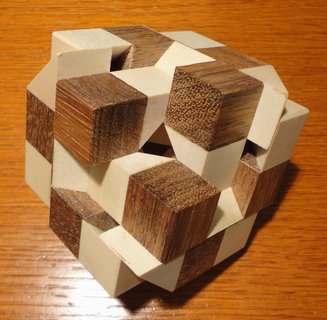
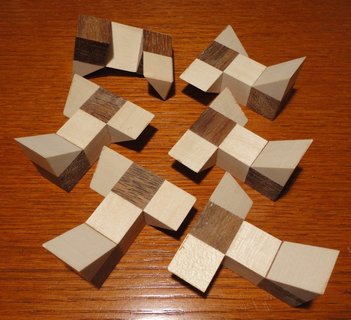
Six Piece Sliding Cube – designed by Gregory Benedetti
A coordinate motion puzzle using six similar pieces. Not easy to get started.
However, unlike many other coordinate motion puzzles,
putting it back together was actually pleasant rather than frustrating.
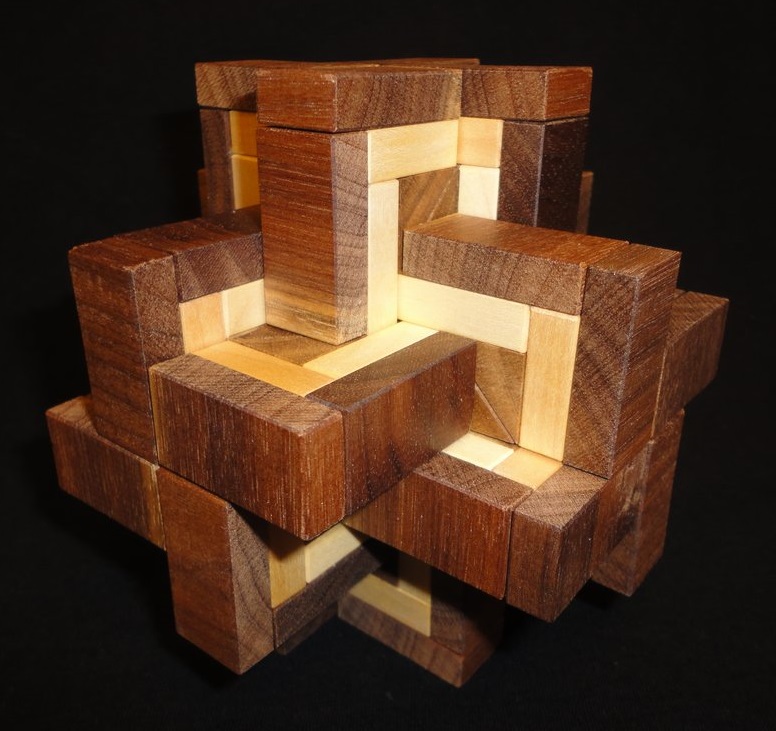
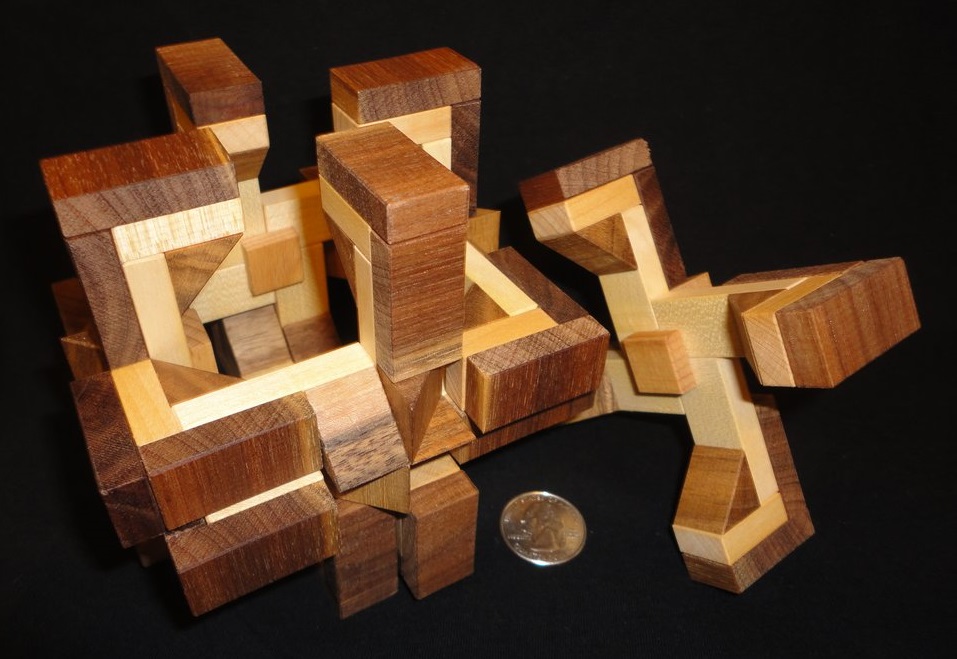
Viper Cross by Vinco.
Six piece coordinate motion puzzle.
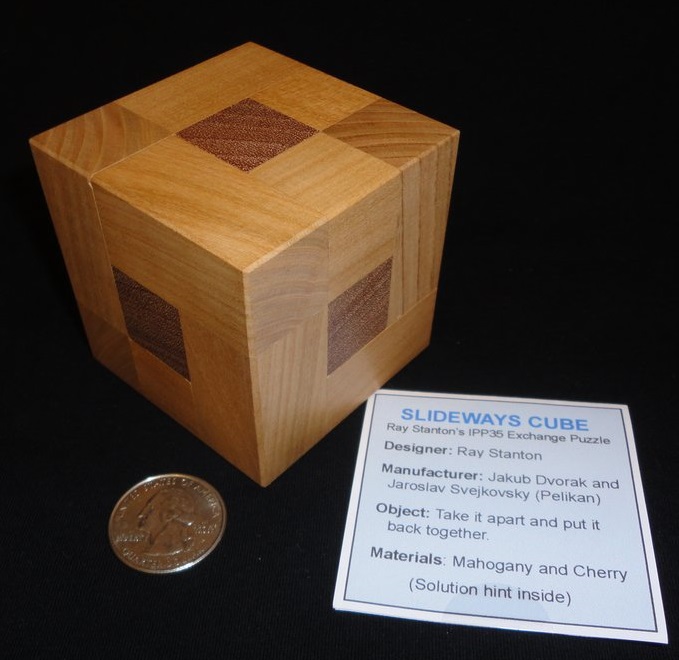
Slideways Cube – designed by Ray Stanton
made by Pelikan, exchanged by Ray at IPP35.
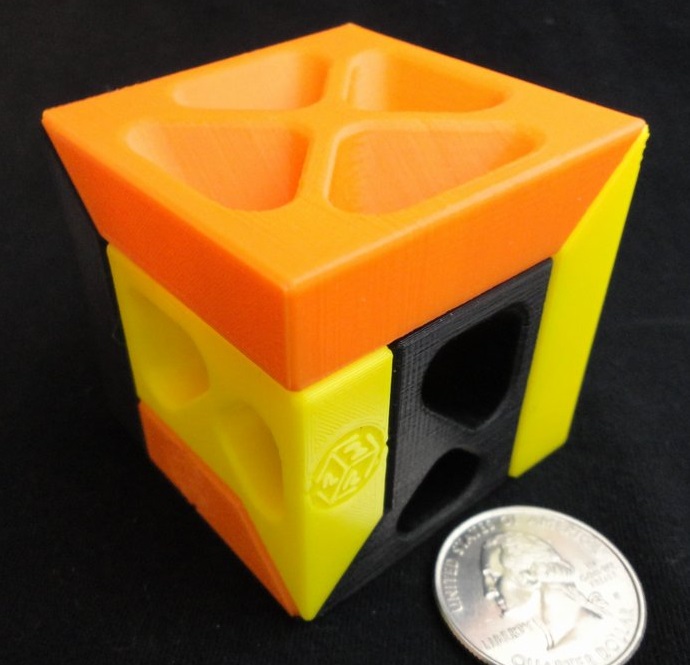
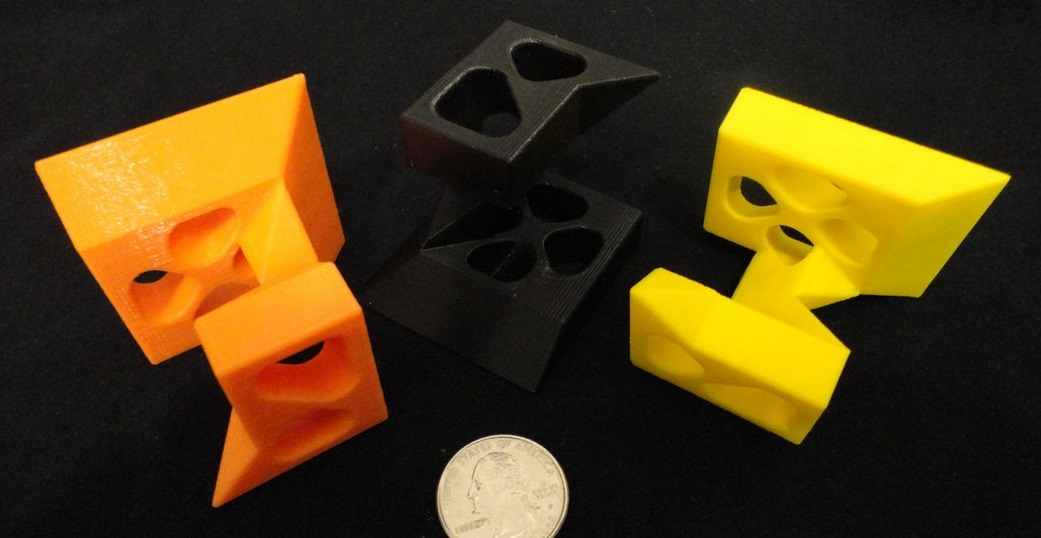
Slideways Cube – designed by Ray Stanton, made by and purchased from
Lee Krasnow.
The quality of Lee’s 3D prints are outstanding!
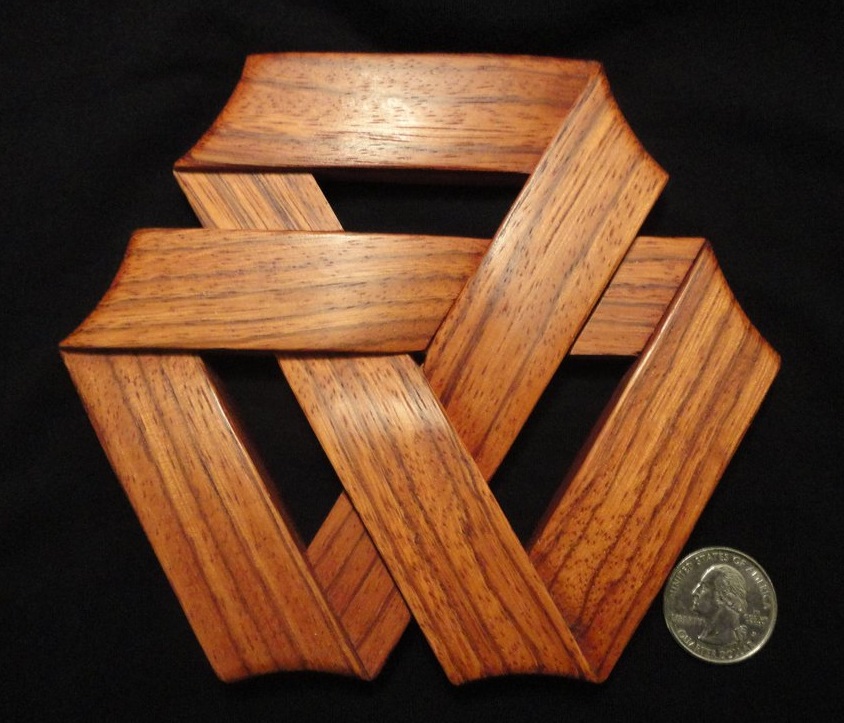
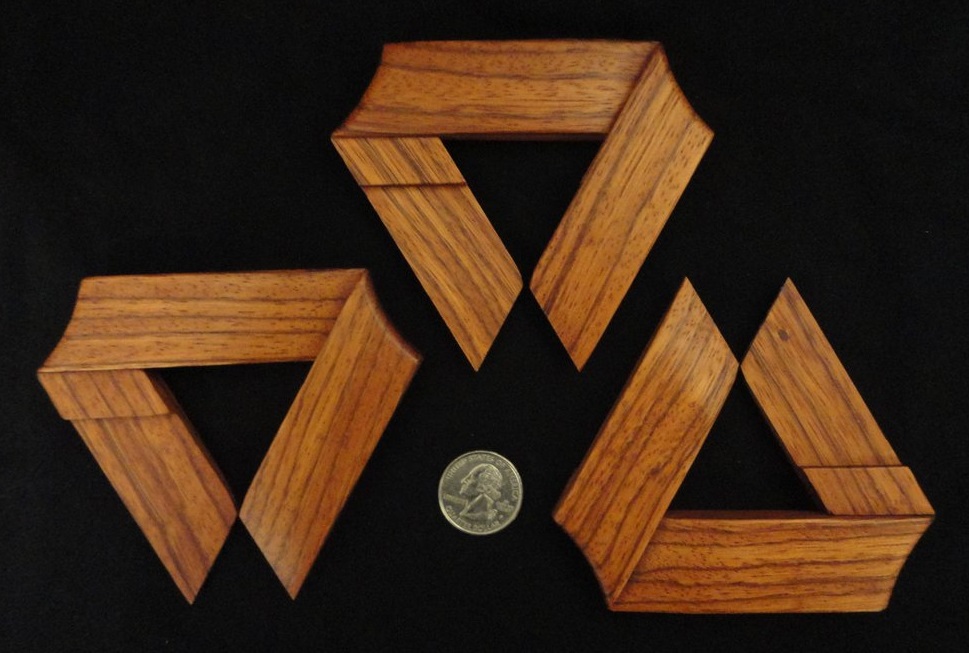
The Bow – A beautiful coordinate motion puzzle, made by Bill Sheckels
from red zebrawood. Expertly contoured and finished!
Check out Bill’s Etsy shop
Black Dog PuzzleWorks.
Ray kindly sent me an example – thanks, Ray!
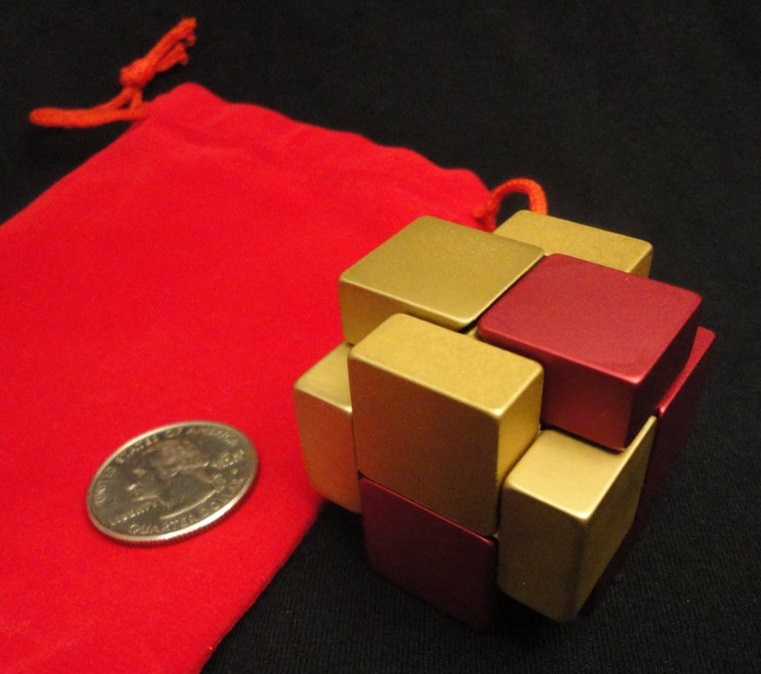
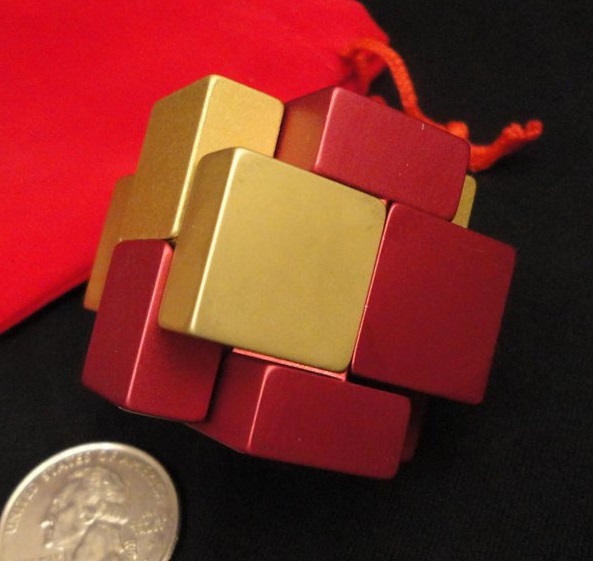
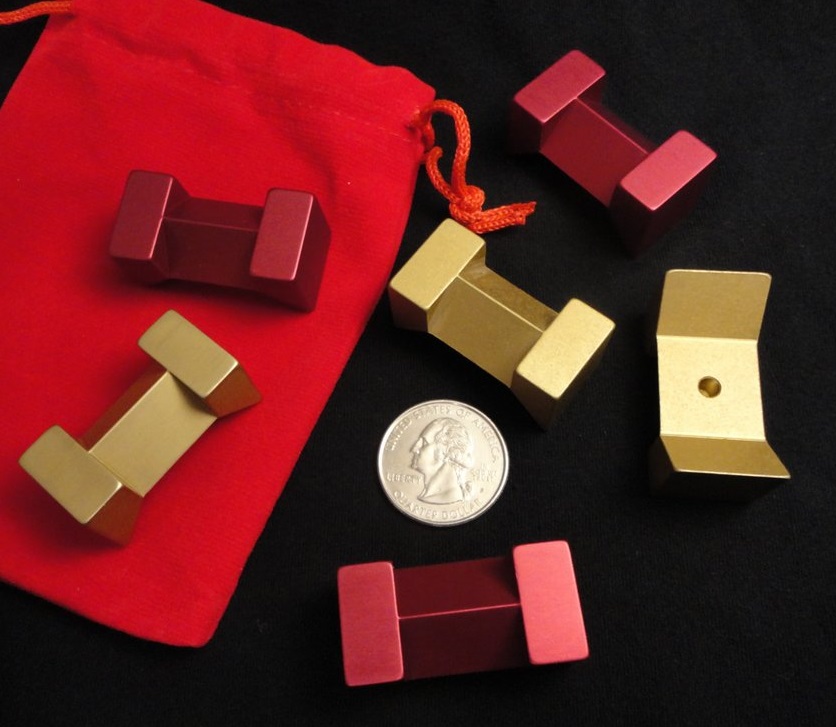
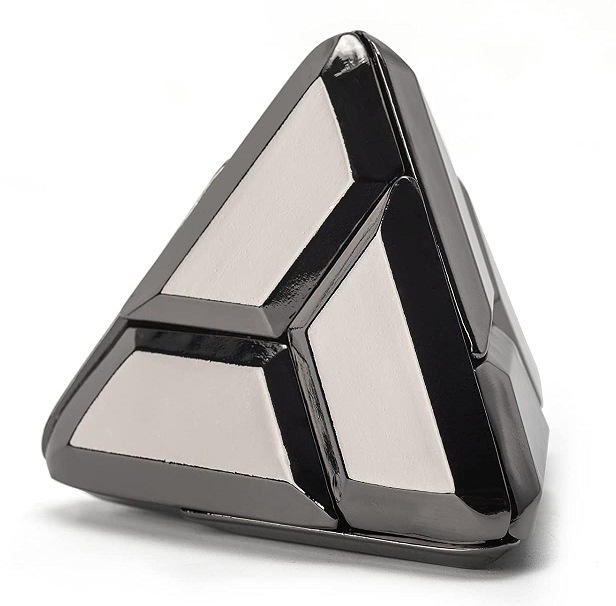
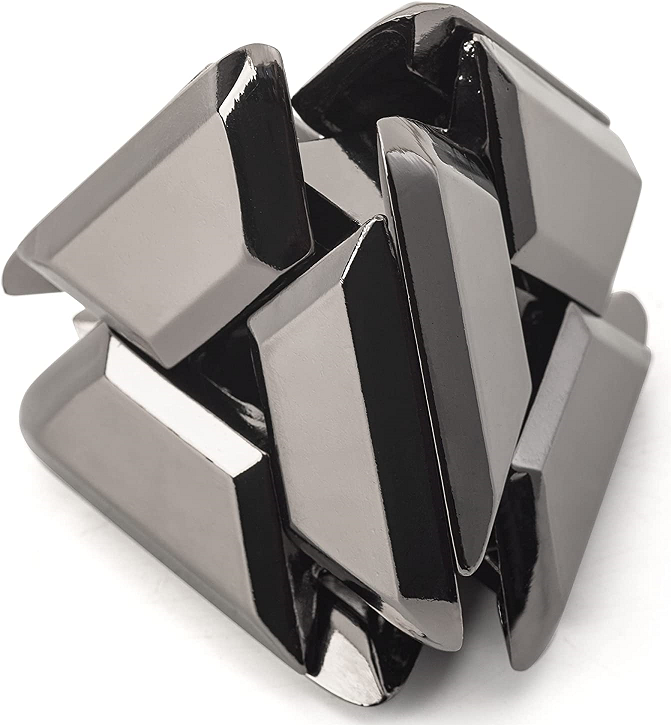

A metal four-piece coordinate-motion Tetrahdron puzzle, from a popular online shopping site.
This is a (probably unlicensed) copy of a design by Dr. Bruce Patterson.
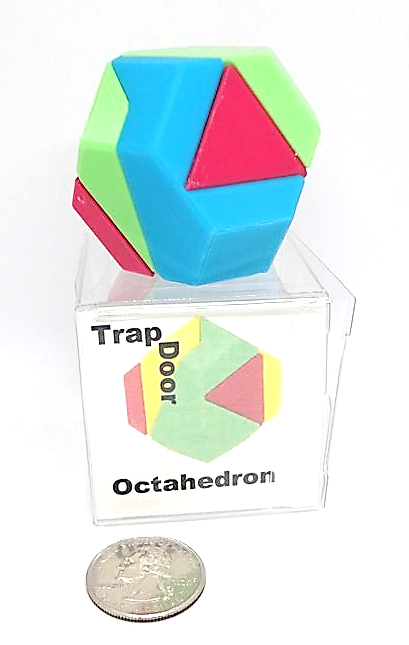
Trap Door Octahedron –
a three-piece coordinate motion puzzle, by George Bell.
Very tricky! Thanks!
This group usually has 4 or 6 pieces, interlocking inside a container.
Some have irregular pieces.
I created this “Caged Dancers” sub-group within Boxed/Caged Burrs, since there seem to be several puzzles where two pieces “dance” or wend their way past each other to be separated from or inserted into a single integral frame piece, and frankly they can blur together, so I wanted to keep track of the different examples. Note that there are other subcategories where either there are more than two “dancer” pieces, or the frame comprises more than a single piece.
I particularly like interlocking puzzles that can generate a decent but tractable level of complexity with a minimal number of pieces – and it seems I am not alone, as one member of this group, Identical Twins by Osanori Yamamoto, won the
IPP37 Design Competition Puzzlers’ Award.
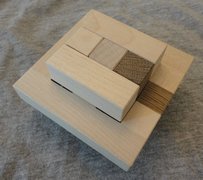
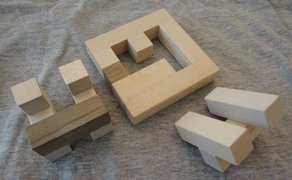
Double UT,
designed by Osanori Yamamoto 2011, made by the New Pelikan Workshop, exchanged by Abel Garcia at IPP32
PWBP 16.5
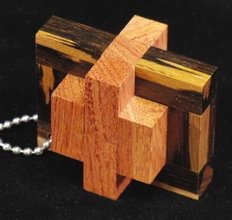
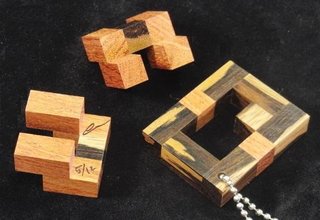
N-One – designed by Osanori Yamamoto
Three pieces, level 15.3
Made by Eric Fuller, in Jacaranda Pardo and Bubinga
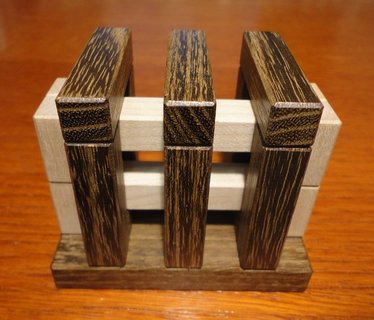
Columnata 2P3C – designed by Yavuz Demirhan 2012
PWBP 12.5
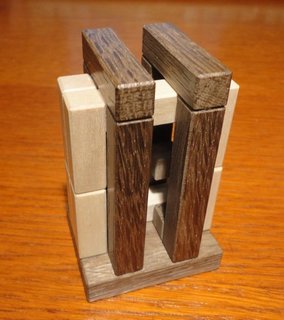
Pylon 2P2C – designed by Yavuz Demirhan 2013
A very satisfying puzzle that was more difficult for me the second time around!
PWBP 9.9
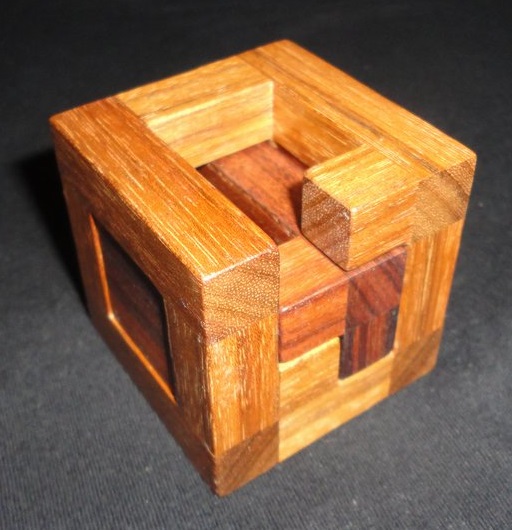
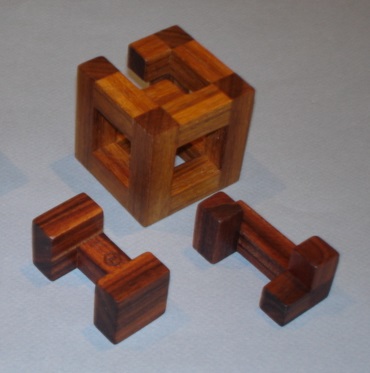
Petit Puzzle – designed by Osanori Yamamoto 2013,
made by Tom Lensch.
PWBP 11.2
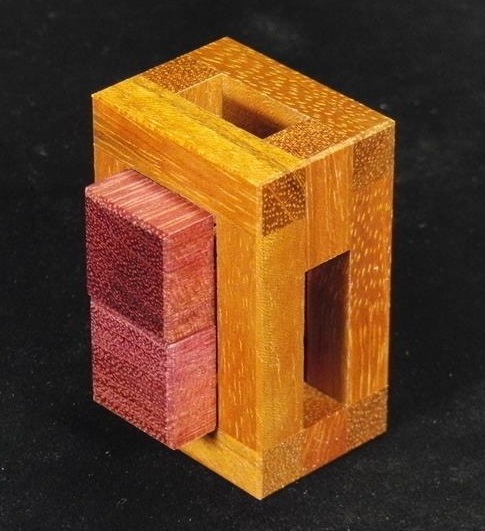
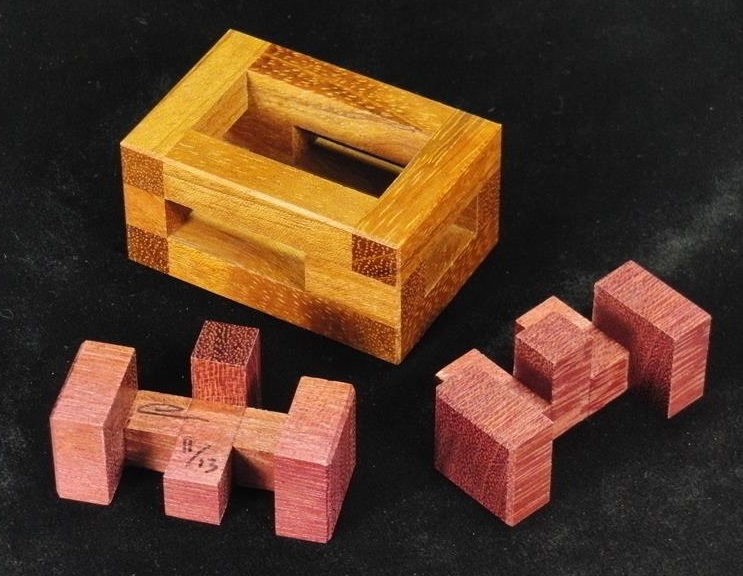
Pair Dance – designed by Osanori Yamamoto 2013
made by Eric Fuller from Jatoba and Purpleheart
PWBP 14
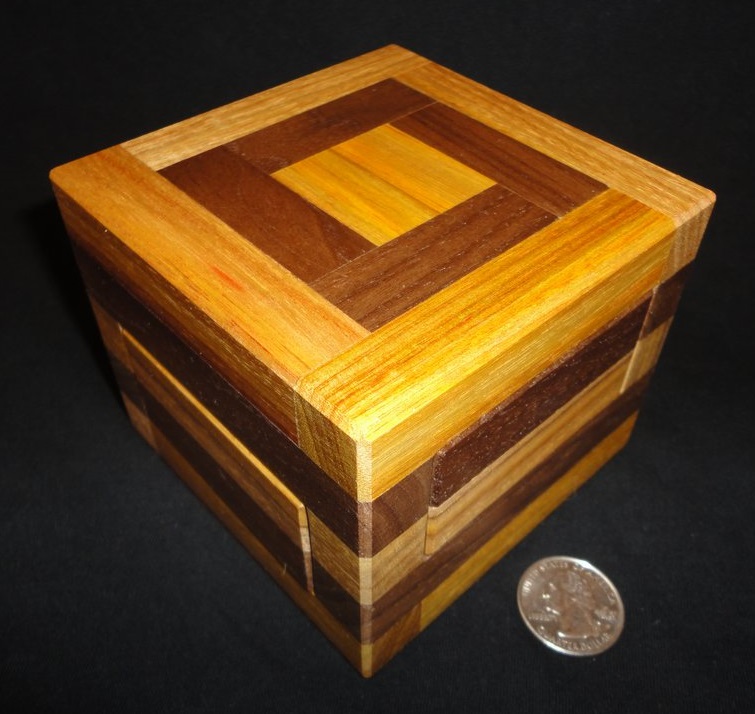
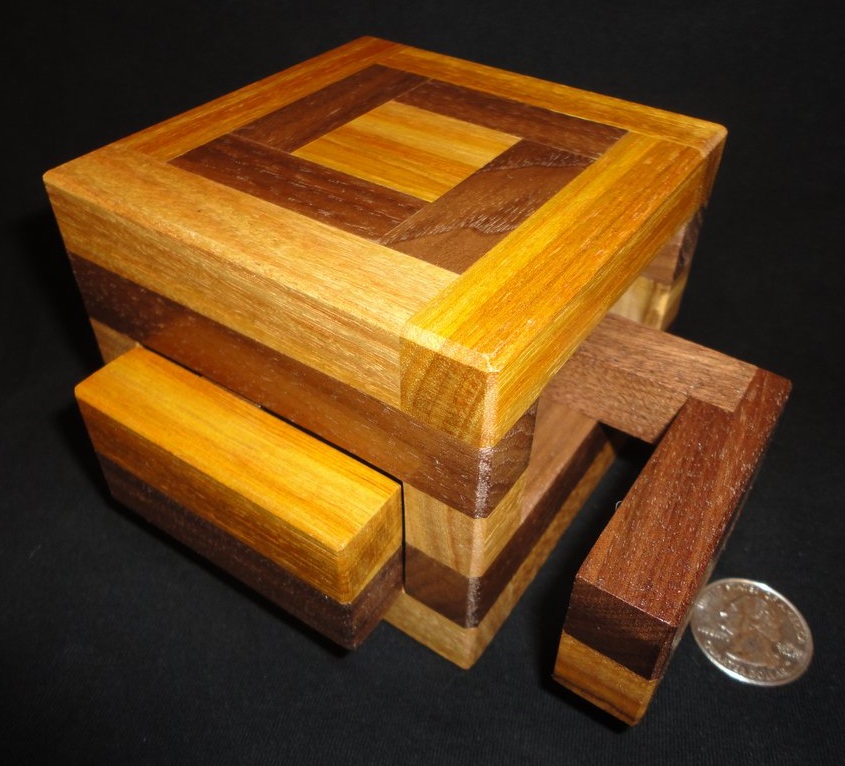
Just Two In Box designed by Stéphane Chomine 2013.
Two pieces and cage, made by Brian Menold from Canarywood and Walnut.
PWBP 11.7
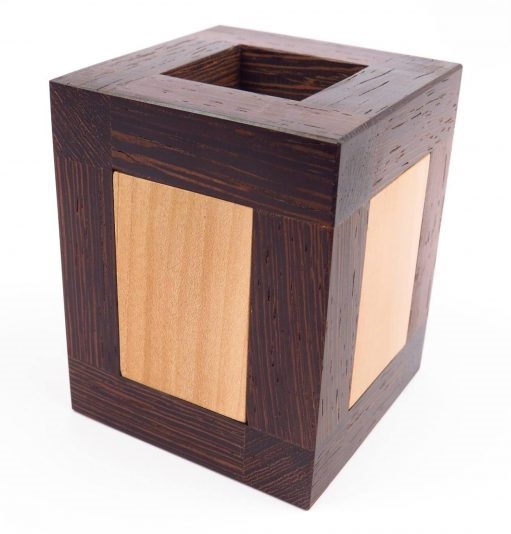
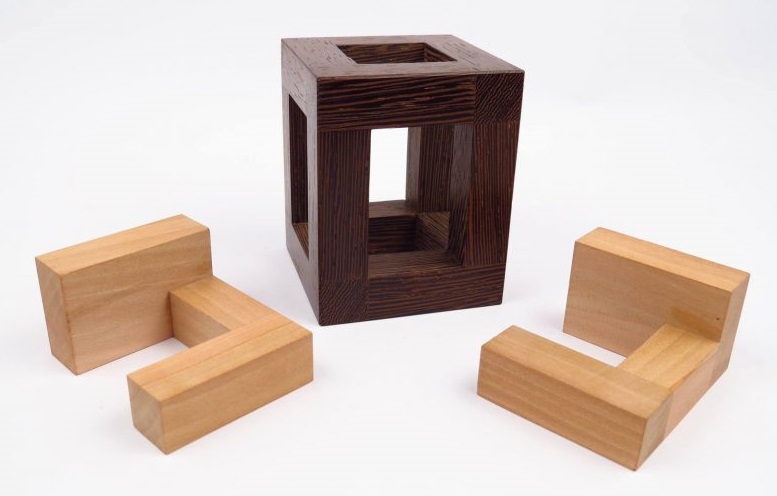
Identical Twins – designed by Osanori Yamamoto 2016 –
made by
Pelikan from Wenge and Apple
PWBP 6.2 w/ rotation
Winner of the Puzzlers’ Award at the
IPP37 Design Competition
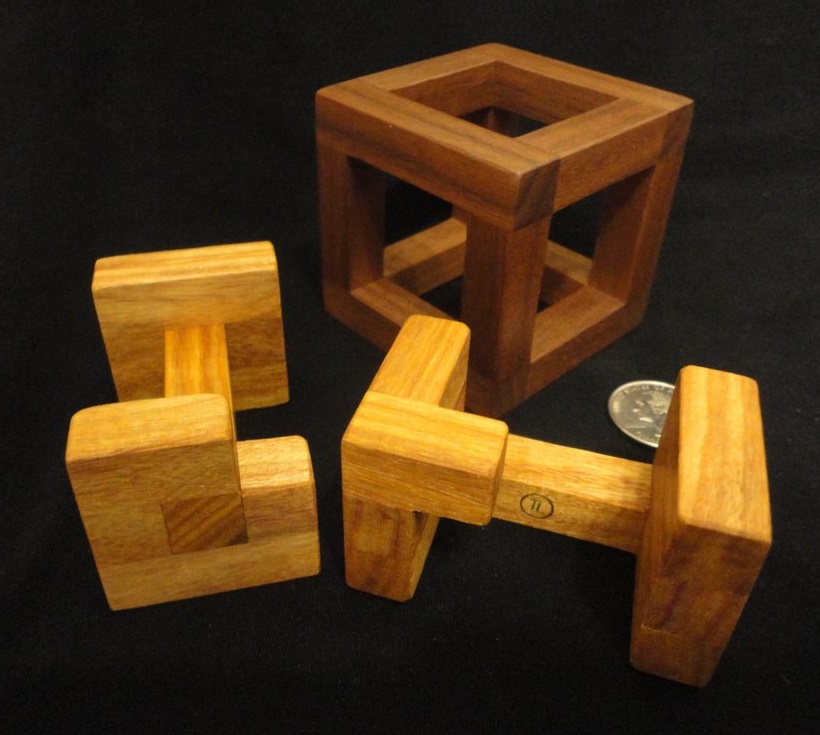
Lucida – designed by Osanori Yamamoto 2016 and made by Tom Lensch
from Walnut and Canarywood
PWBP 10.3 w/ rotation
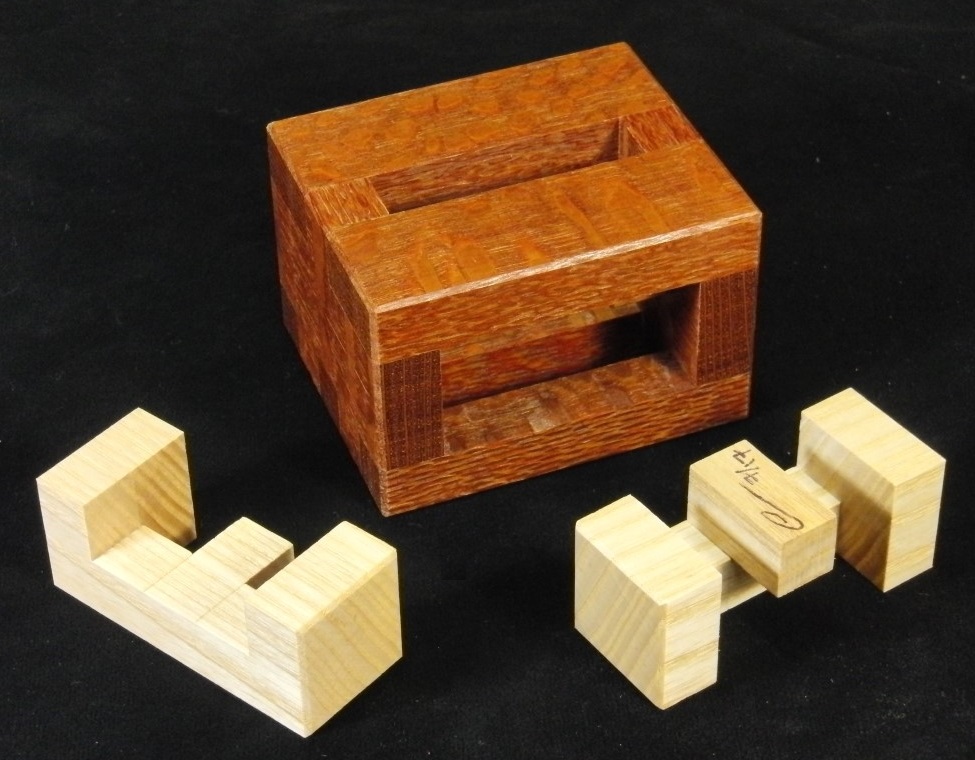
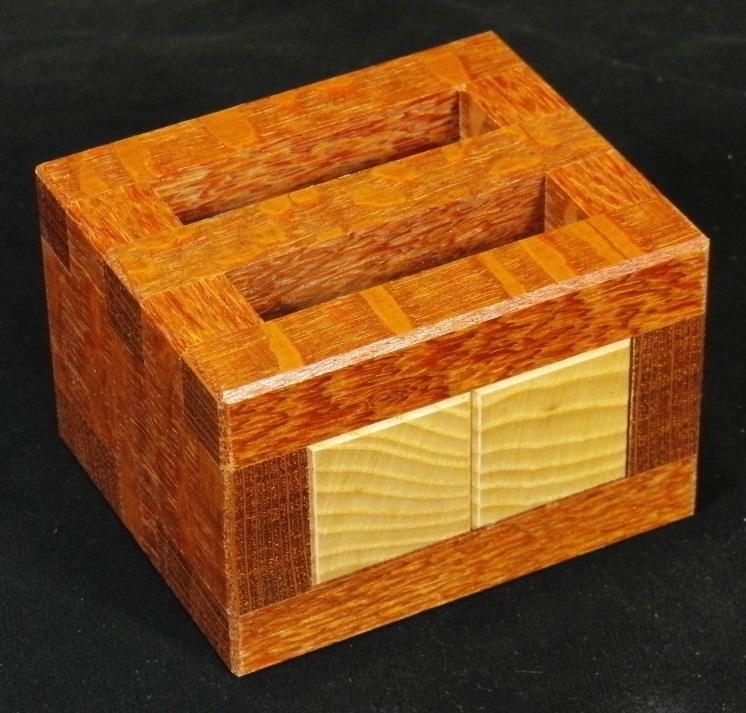
Slot Machine – designed by Andrey Ustjuzhanin 2017 and made by Eric Fuller
from Leopardwood and Ash
PWBP 18
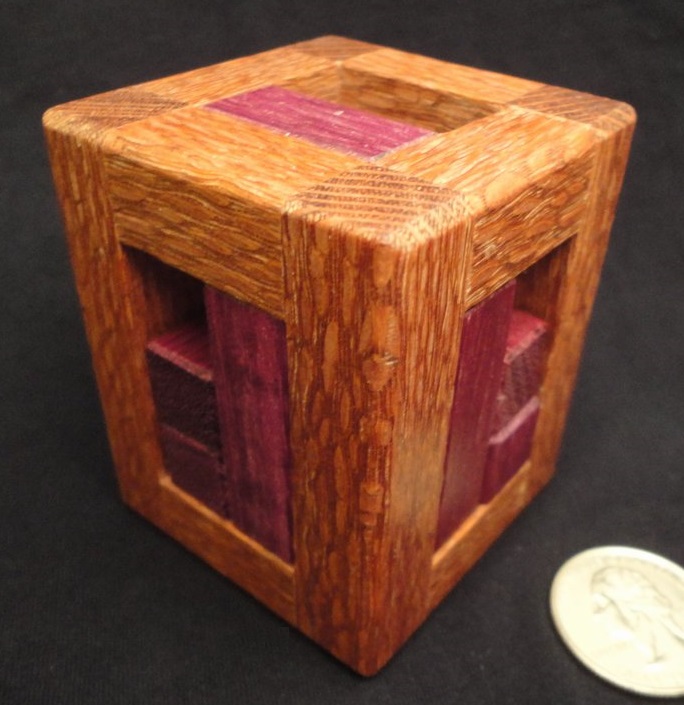
Liliput – designed by Christoph Lohe 2017
Made by Brian Menold, from lacewood, purpleheart
PWBP 21.3
[11]
This section contains a wide variety of interlocking puzzles in many different forms, but all composed of various notched sticks or plates. The pieces somehow fit together and must be slid to and fro relative to each other until they either come apart or are re-assembled into the intended shape.
Here are a few commonly available “classic” burr puzzles many folks will have seen, and have asked me about – usually because they have the pieces but don’t know what the intended assembled shape should be. These puzzles often do not have a formal name – they are re-named ad hoc by whoever is marketing the latest iteration – nor do I know who may have designed them.
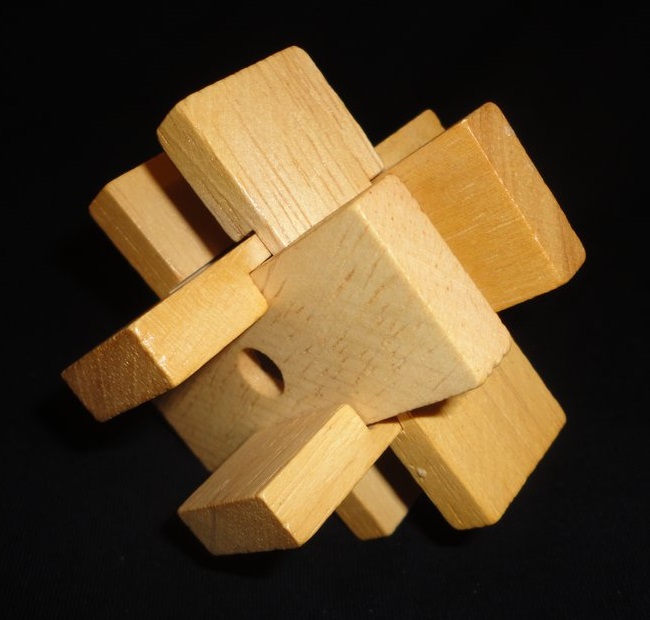
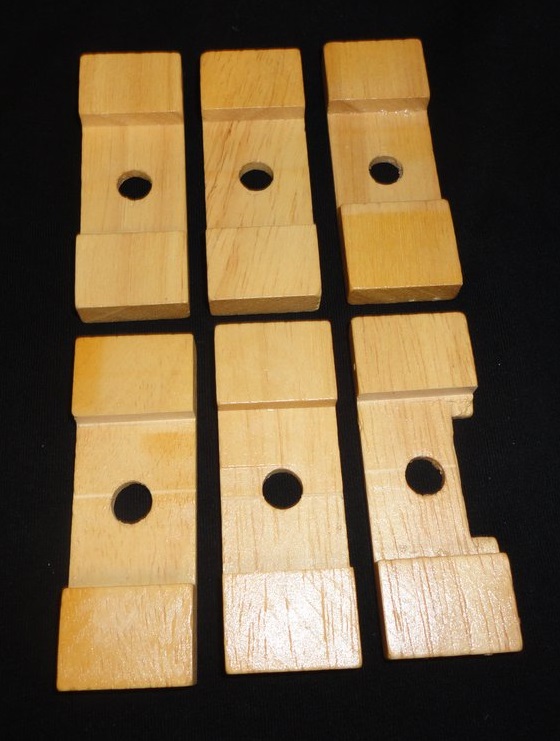
Classic Six Plank Burr
Four identical pieces, and two special –
note the notched piece, and the piece above it
which has a short “tray.”
The holes are optional decoration.
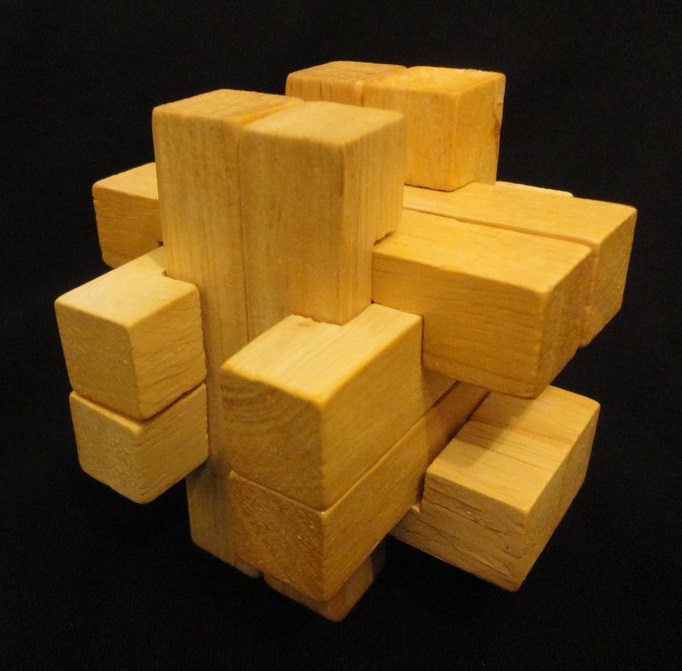
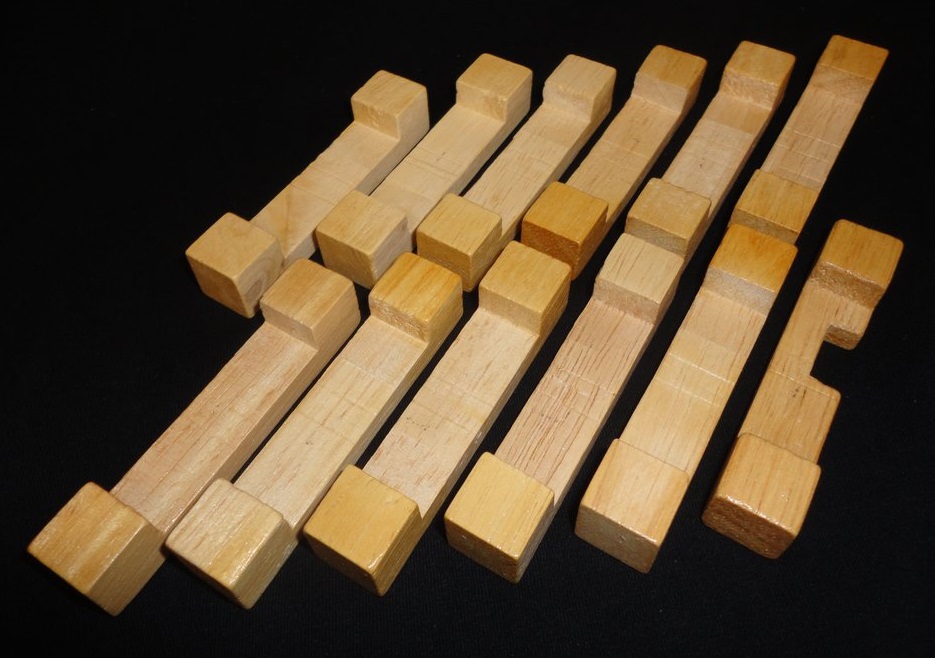
Classic Twelve Piece Burr
Eleven identical pieces and one with a notch.
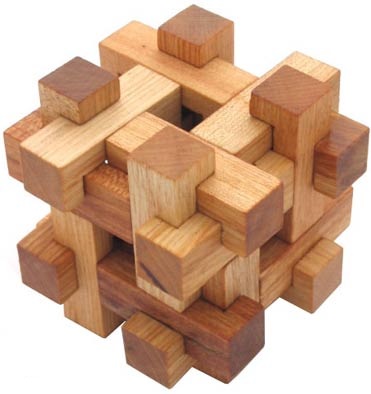
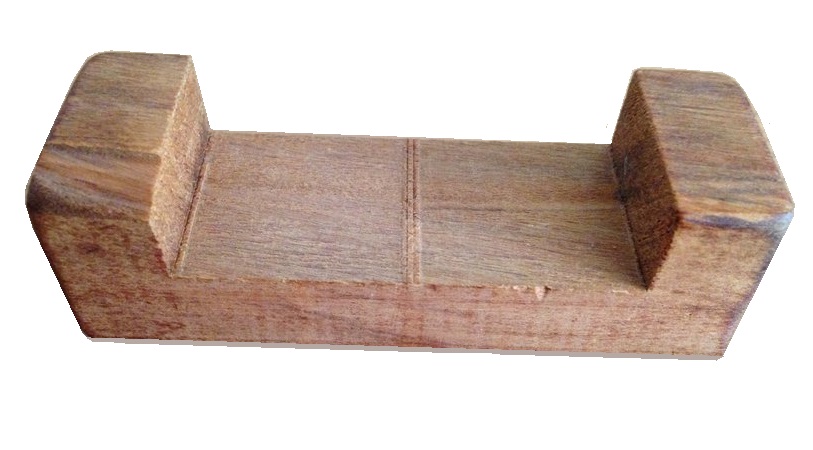
The Cell
I bought this in a department store in Japan.
It was made in New Zealand.
It is made from 24 identical pieces similar to the traditional burr piece 256 – but the notch is longer. A fellow puzzler reports that it has been sold with a mouse figure trapped inside.
You construct it in two 12-piece halves which are then “screwed” together.
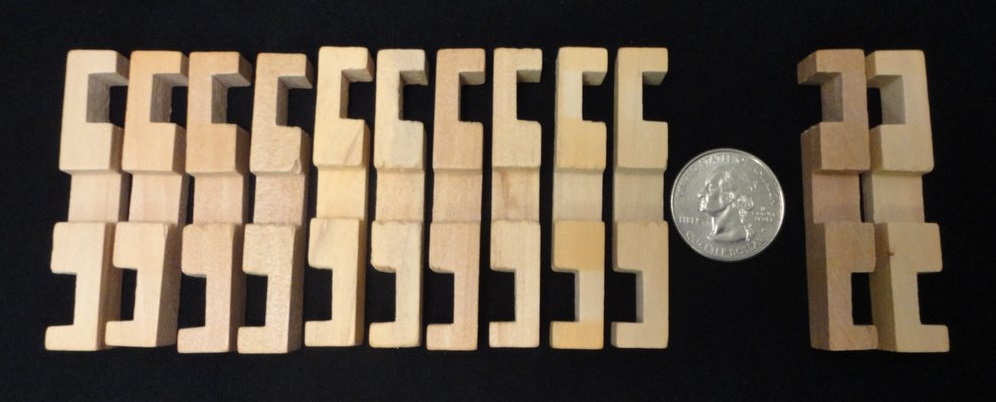
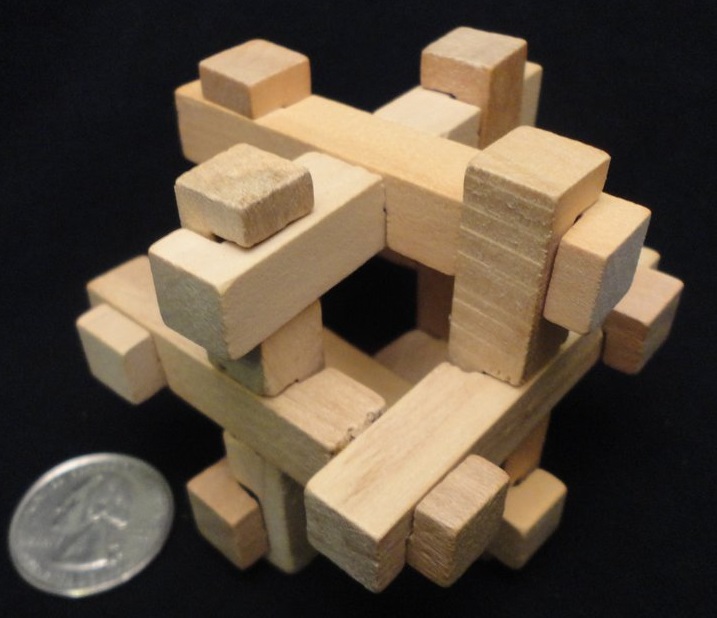
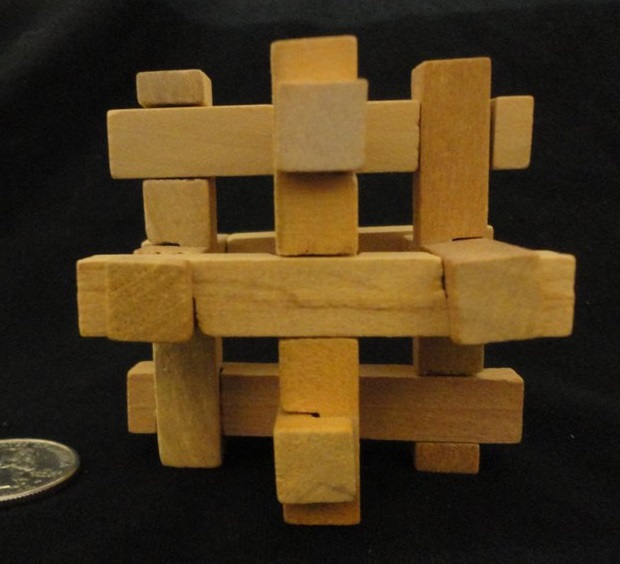
I have seen this called “Prison” or “Twice Six.”
Twelve pieces – ten identical and two mirror image.
The last four get “screwed” in.
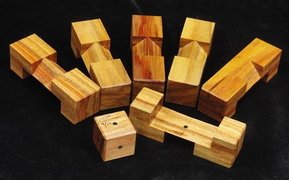
The Missing Notch burr by Stewart Coffin, made from Canarywood, by Eric Fuller.
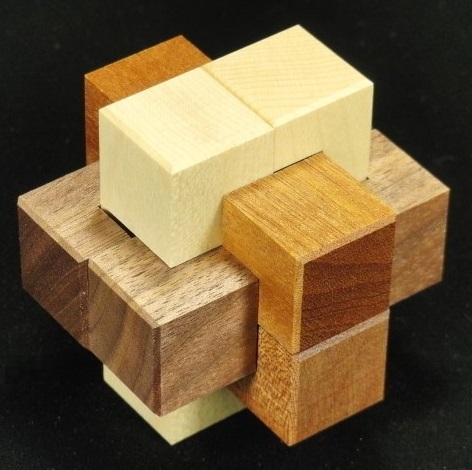
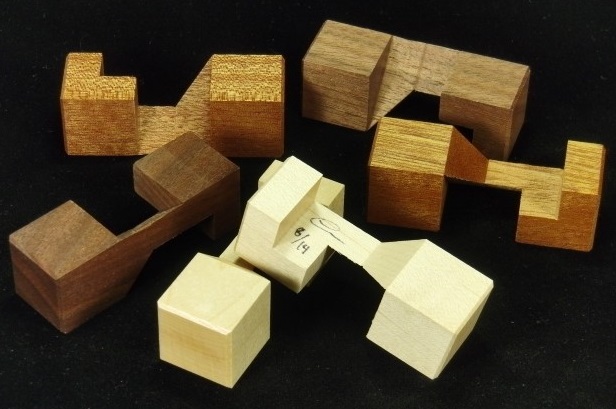
Double Slideways Burr – designed by Ray Stanton, made by Eric Fuller,
from Maple, Walnut, and Sapele.
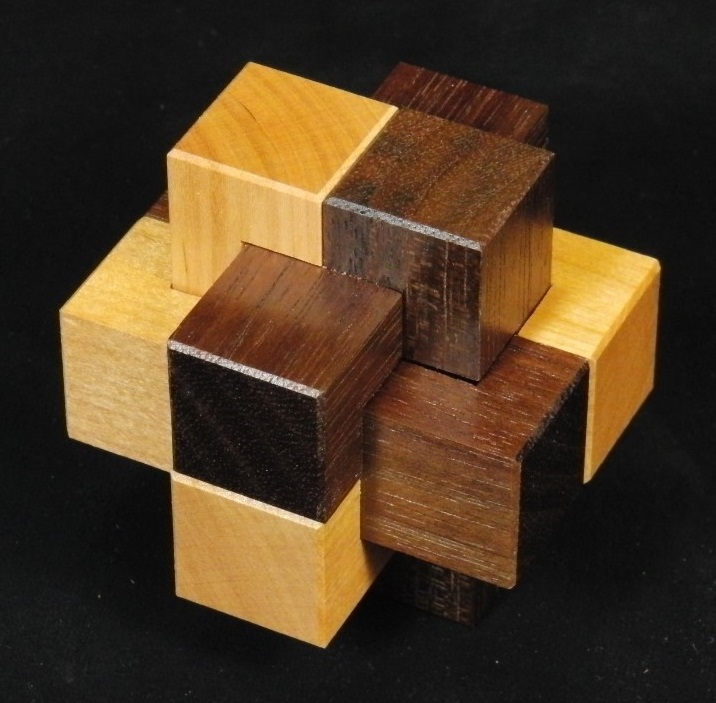
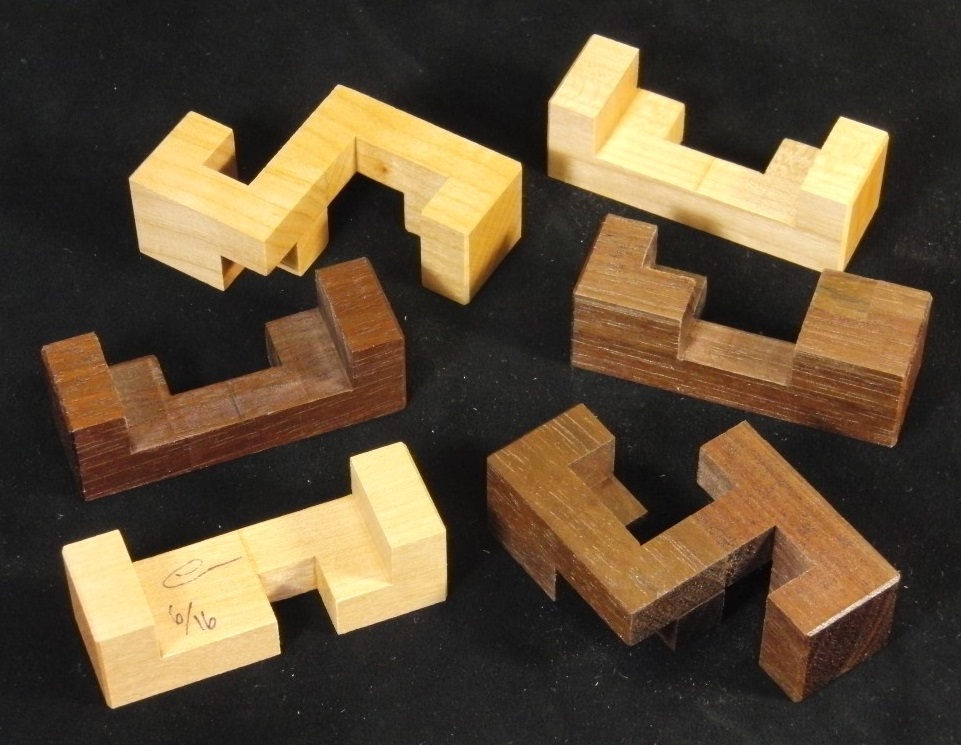
Camouflaged Burr – designed by Emil Askerli, made by Eric Fuller
from Cherry and Walnut woods. Level 4.7.
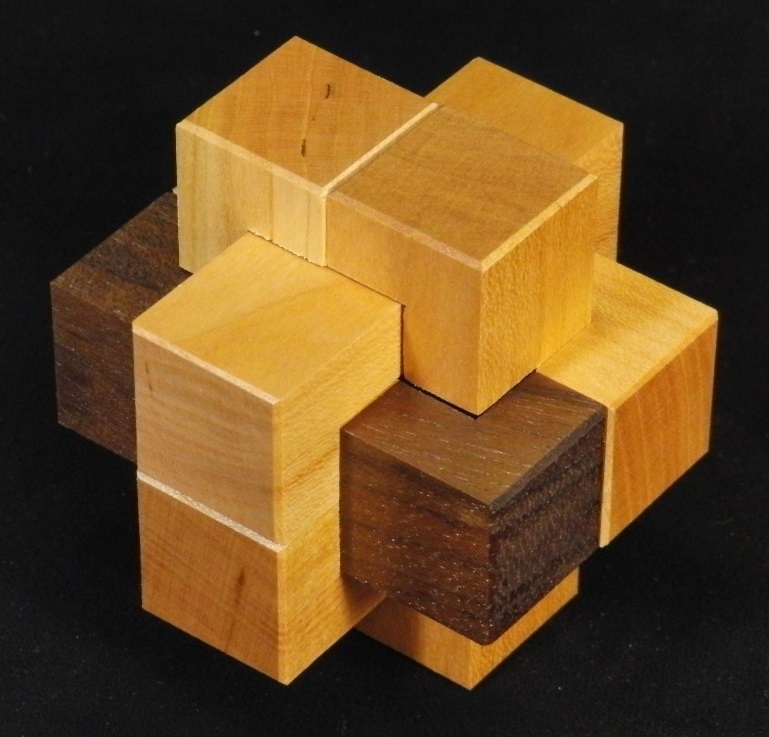
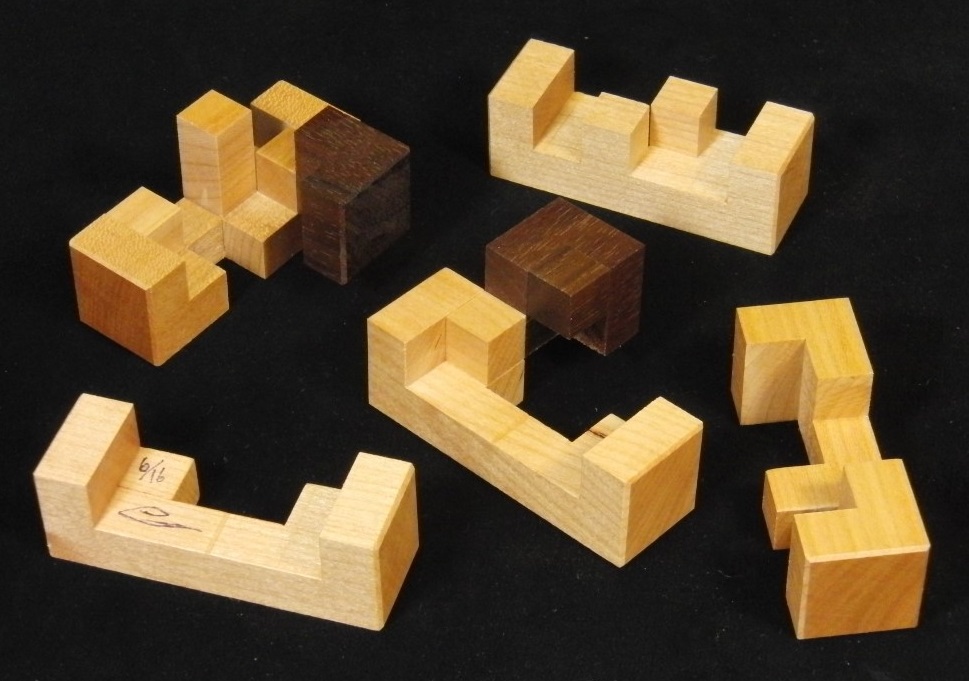
Disguised Burr – designed by Emil Askerli, made by Eric Fuller
from Cherry and Walnut woods. Level 7.2.2.
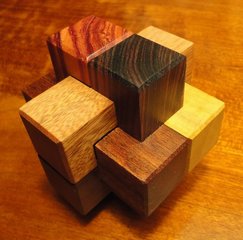
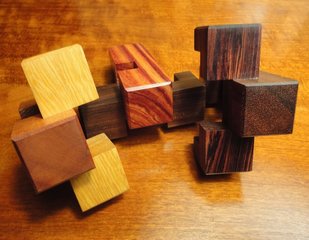
Glued, designed and made by Gregory Benedetti.
Resembling a six-piece burr, this puzzle is composed of six conventional burr pieces that
have been glued together in pairs. The puzzle is level 4.3 and [dis]assembly requires a rotation.
It is made from Bolivian Santos Rosewood, Kingwood, Tulipwood, Bloodwood, Difu, and “Wood of Jesuit”
and is very pretty.
It is a nice size
– the pieces are 25x25x75mm – and is quite heavy.
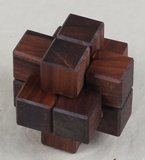
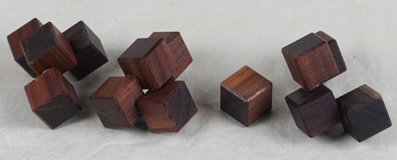
This is the Q Burr, designed by Jim Gooch, made by Steve Strickland, from Rosewood.
Four pieces, one of which is a cube.
Purchased from
Steve Strickland’s new website
(defunct).
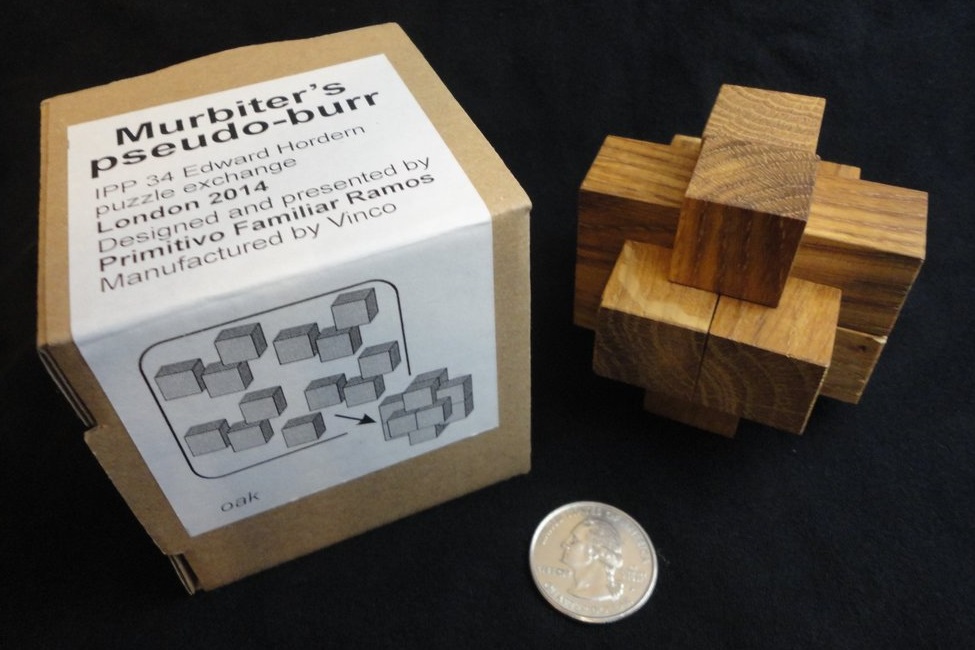
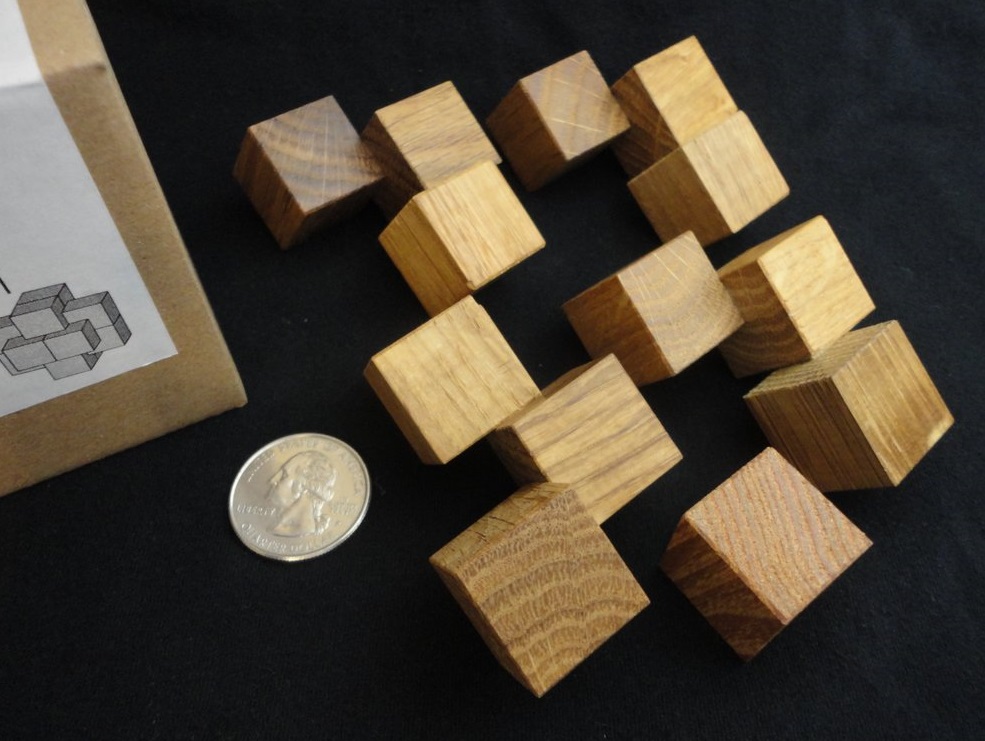
Murbiter’s Pseudo-Burr – by Primitivo Familiar Ramos, made by Vinco.
Four identical pieces and a unit cube combine to form the familiar 6-piece burr shape.
A kind gift – thanks, Primitivo!
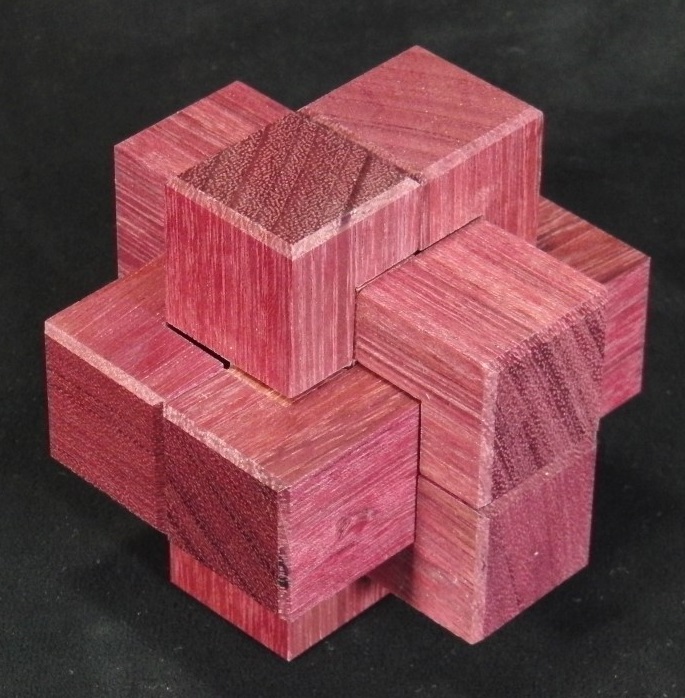
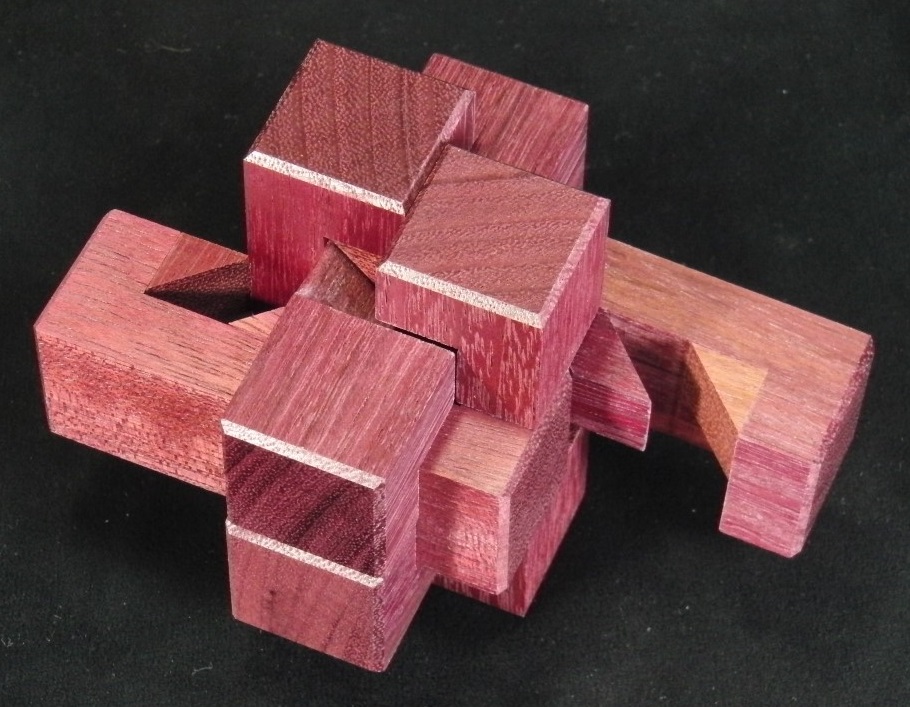
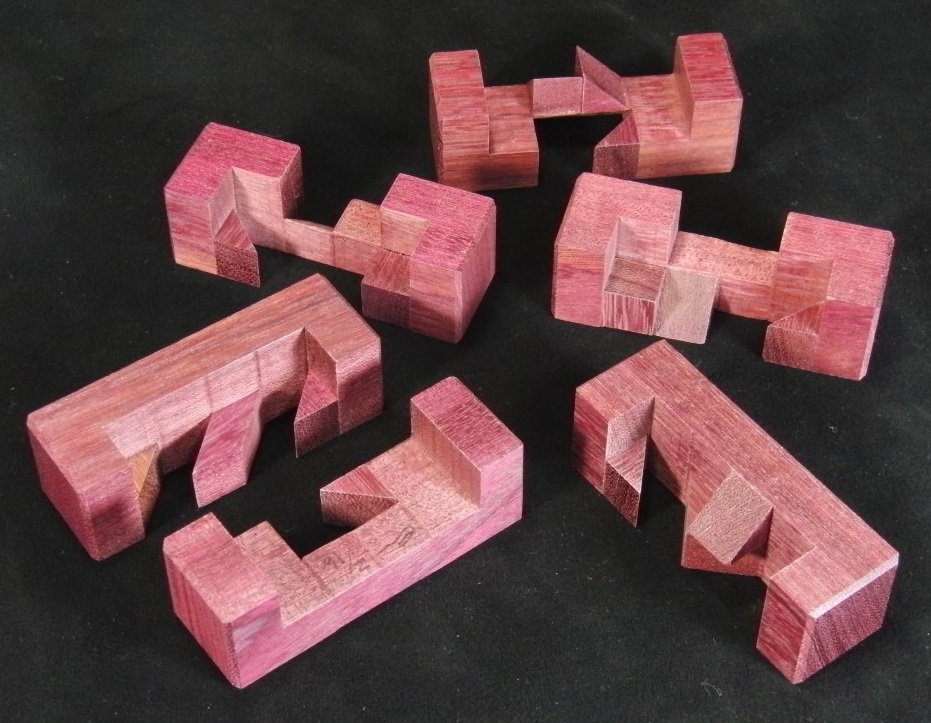
Crenal – one in a series of “New Old Style” burrs designed by Greg Benedetti,
made by, and purchased from Eric Fuller.
Made from Purpleheart.
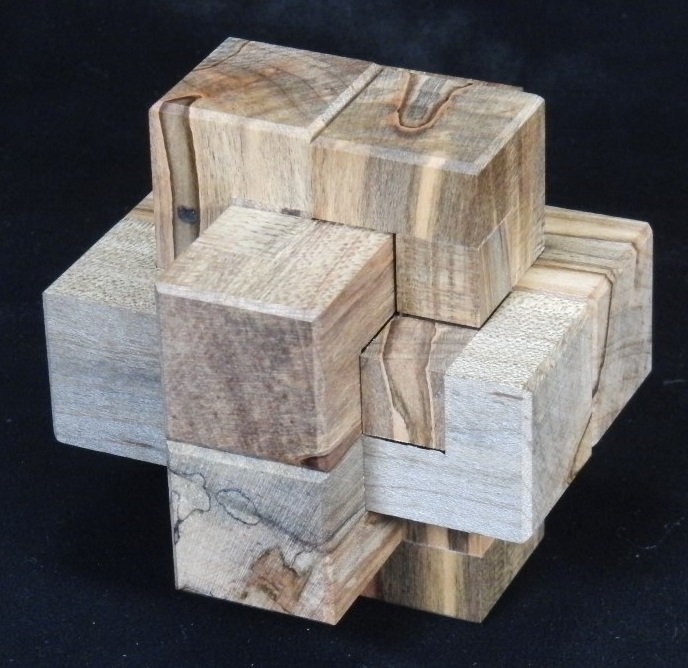
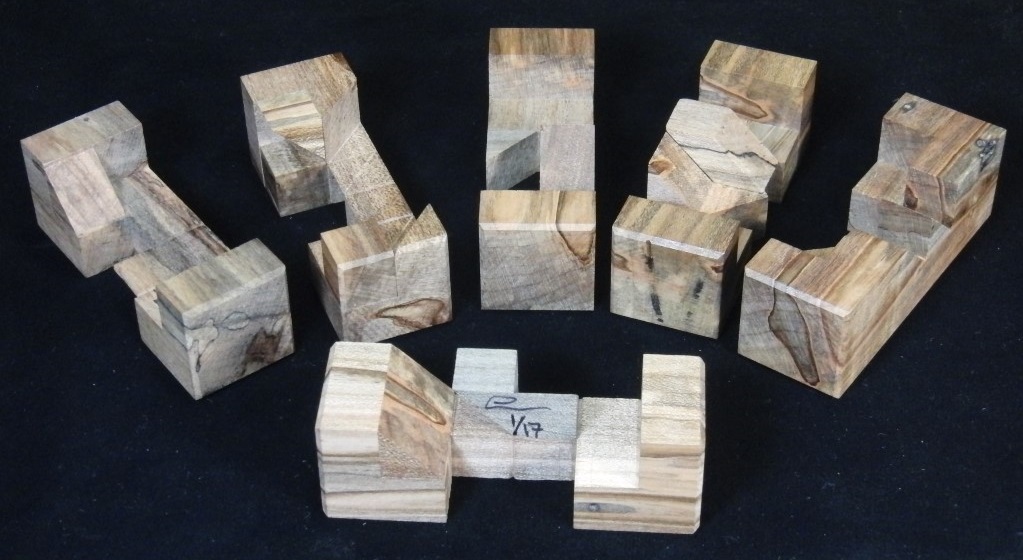
Seizaine – NOS #7 – designed by Gregory Benedetti
Made by Eric Fuller from Ambrosia Maple
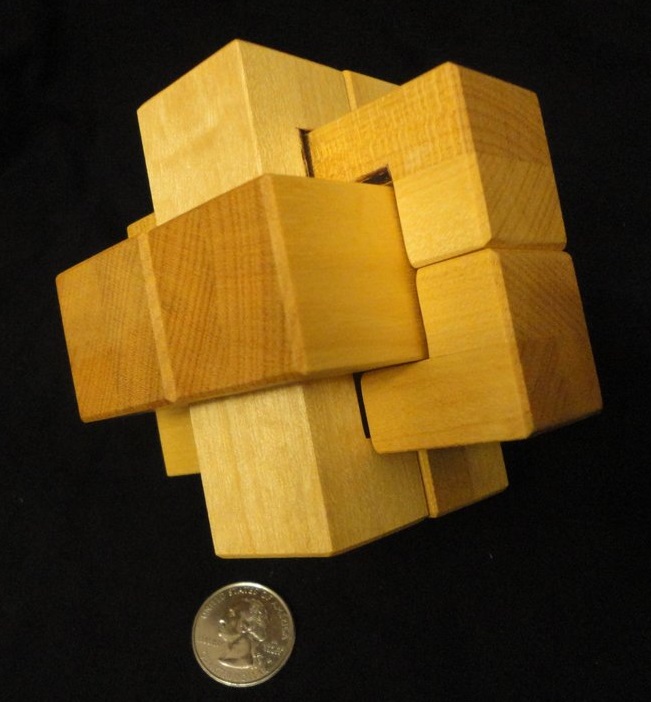
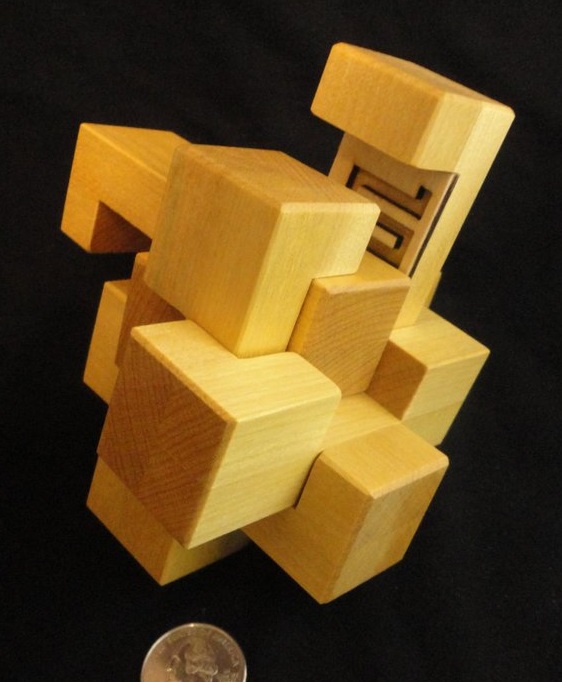
Ordinary Burr – designed by Goh Pit Khiam and made by Tom Lensch
from Yellowheart wood with Baltic Birch plywood mazes for strength.
Looks like a conventional six-piece burr, but inside contains maze-following pins.
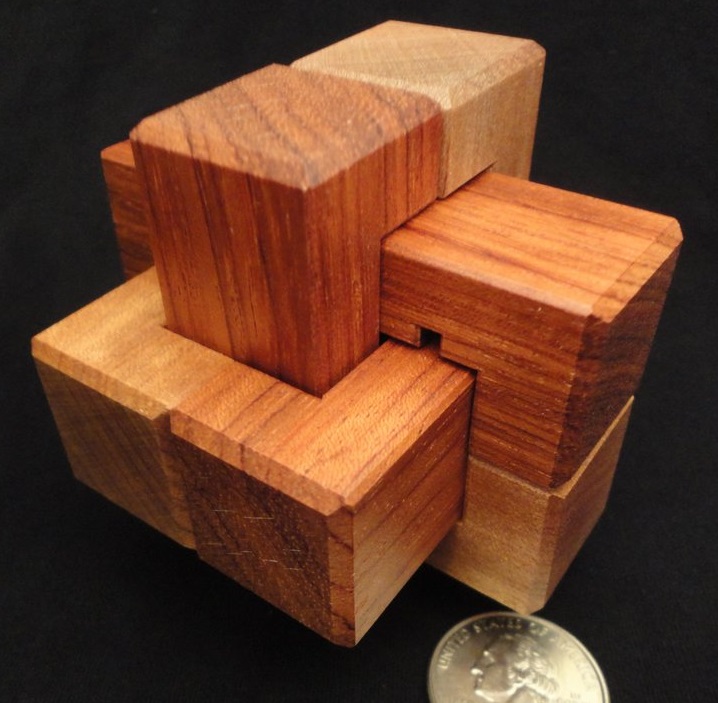
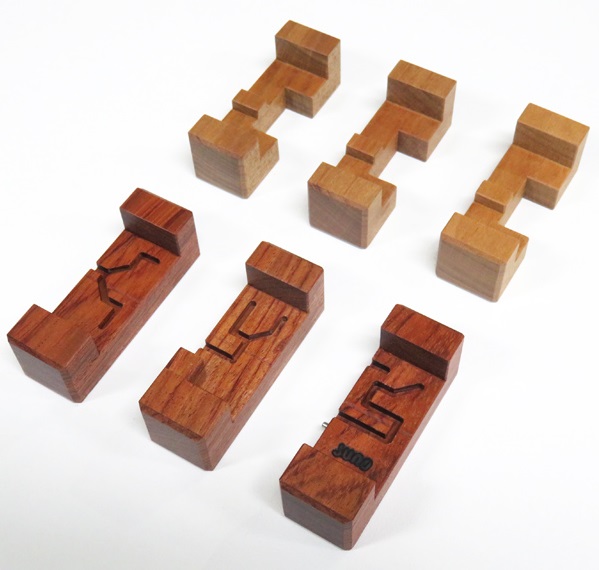
A Mazing Burr – designed by Junichi Yananose
Looks like a conventional six-piece burr, but inside contains maze-following pins.
Eight Piece Burr – made by Scott T. Peterson
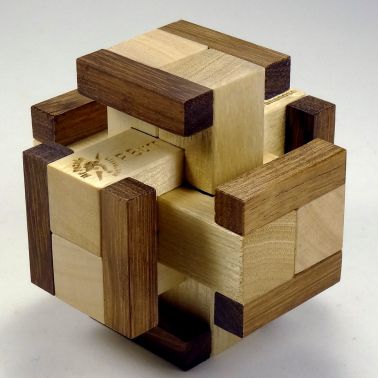
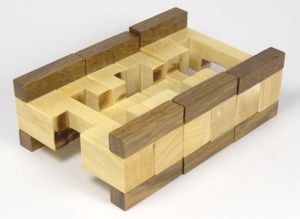
P-Burr – designed by Junichi Yananose, made by Brian Young from Queensland Silver Ash and Queensland Blackbean
6 pieces, level 18.2 with a unique solution.
The pieces { 856/943, 871, 960/992, 1024 } are length 8 and each has a bar attached to each end.
(If you omit the end bars and substitute 911 for 943, you get the pieces used in Bill Cutler’s Bin Cross.)
I am proud to say I solved this one from the unassembled state unaided!
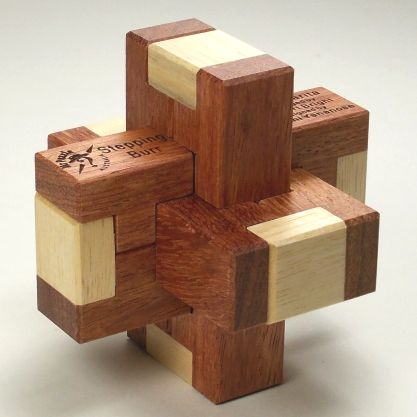
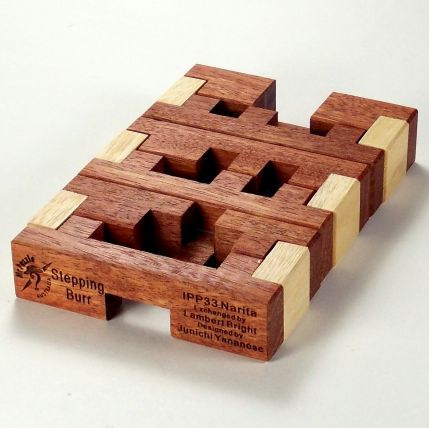
Stepping Burr – designed by Junichi Yananose, made by Brian Young at
Mr. Puzzle Australia.
Level 10.
Thanks, Chelsea!
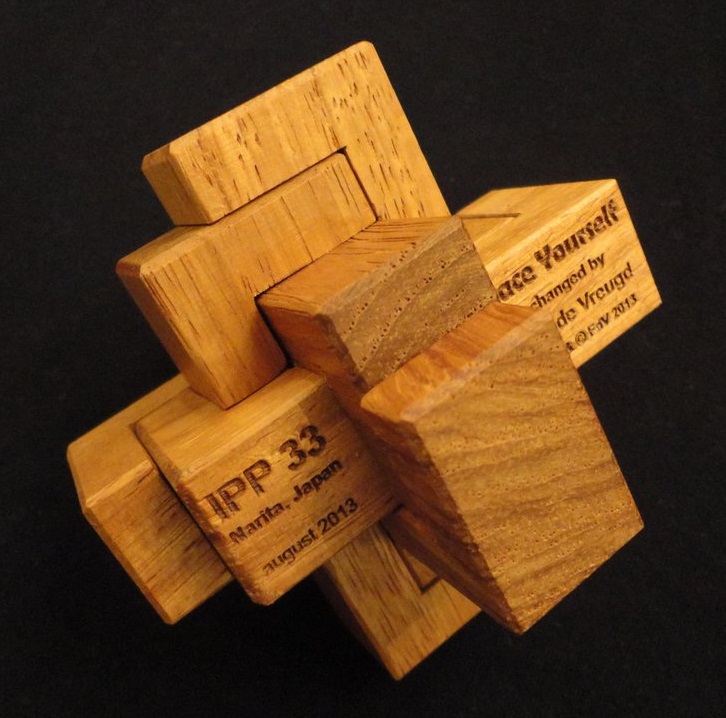
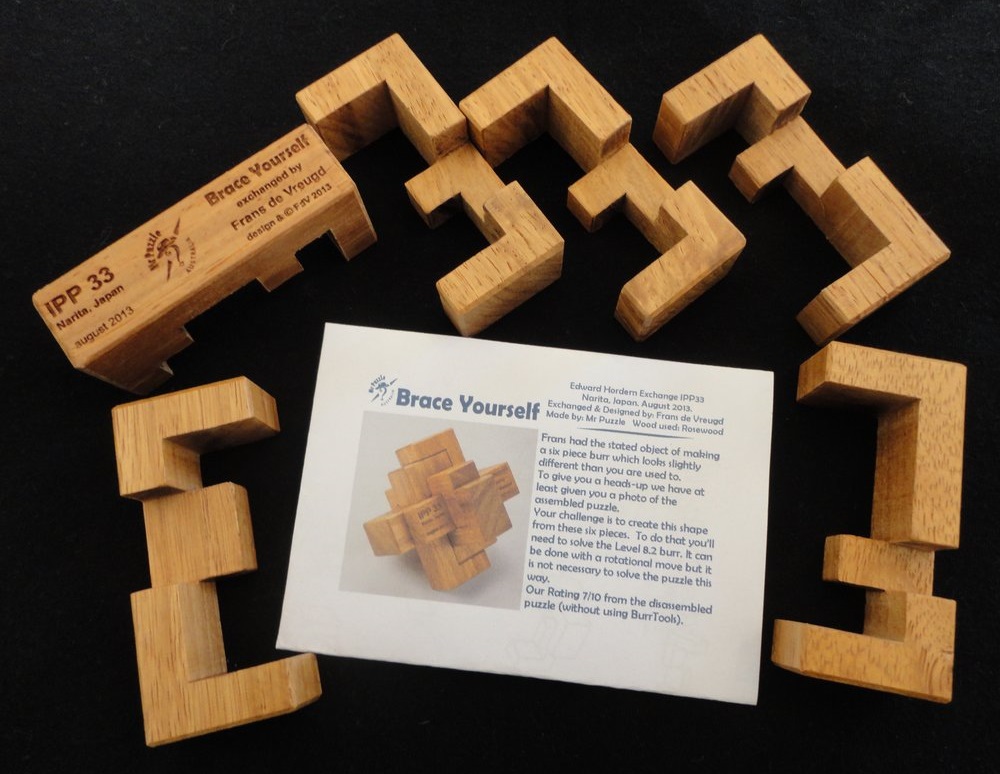
Brace Yourself – designed by Frans de Vreugd for IPP33, made by Brian Young
at Mr. Puzzle Australia,
from Papua New Guinean Rosewood.
6 pieces form an unconventionally-shaped burr.
Solved this one from the unassembled state!
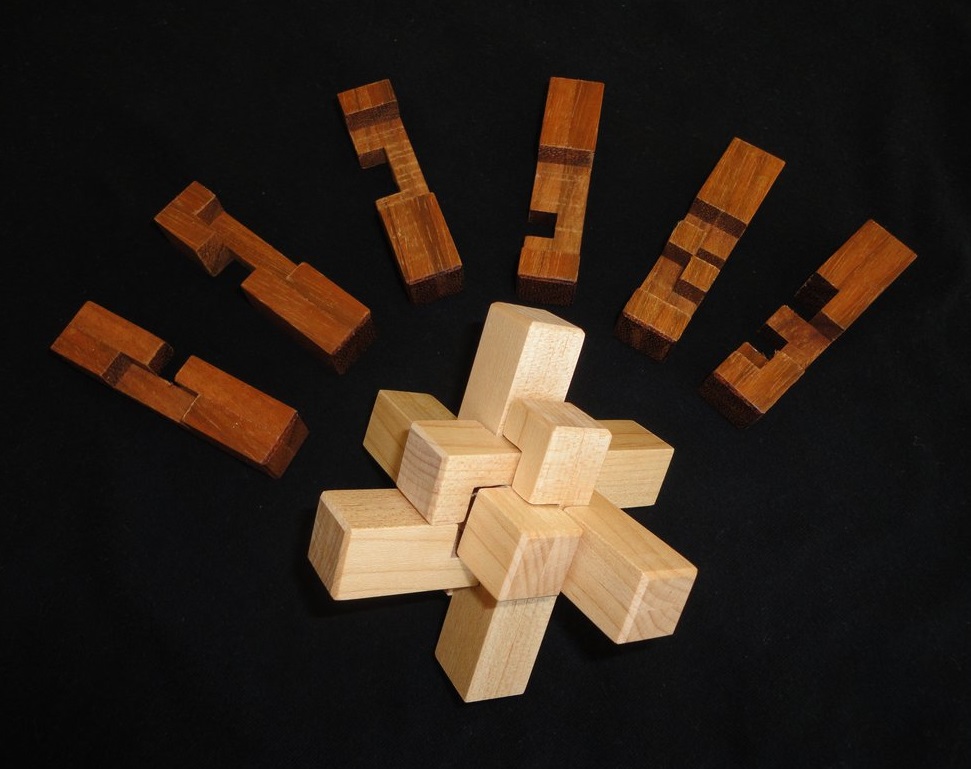
The Stellated Burr from Primitivo Familiar Ramos of Spain.
Two copies are shown.
The Switchboard Burr designed by Jim Gooch and made by Eric Fuller mixes pieces from 3 different styles of burr,
and its solution employs a move one does not often see.
The woods are: Pau Amerillo (the yellow), Wenge (the dark), and Bocote (the brown striped).
Mixed Pieces Burr #2
– designed by Frans de Vreugd.
Purchased from Frans at IPP28 in Prague.
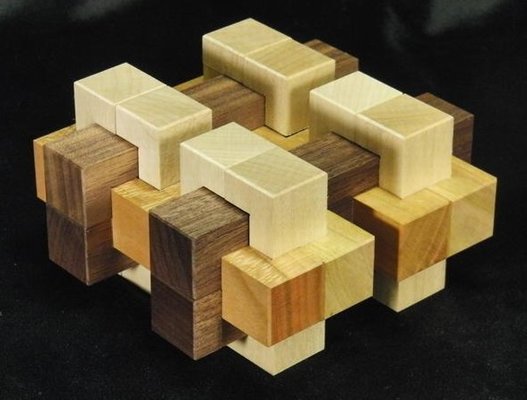
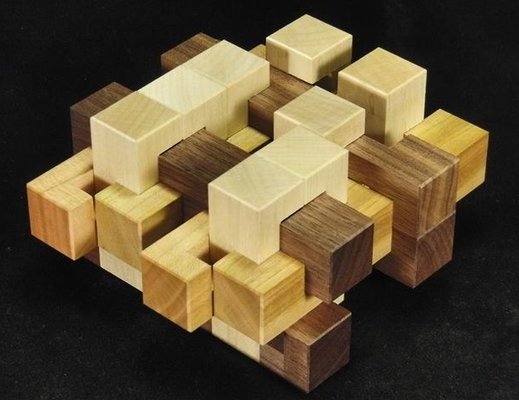
Cold Fusion – designed by Logan Kleinwaks, made by Eric Fuller, from
Walnut, Maple, and Cherry
Four interconnected burrs, level 18.6.8.
Double Kongming Lock
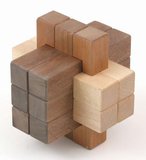
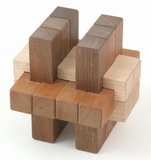
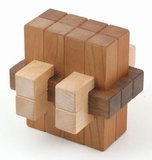
The four members of the Wausau burr series by
Bill Cutler –
’81, ’82, ’83, and ’84.
See Allard’s blog for a nice
review of the Wausau burrs.
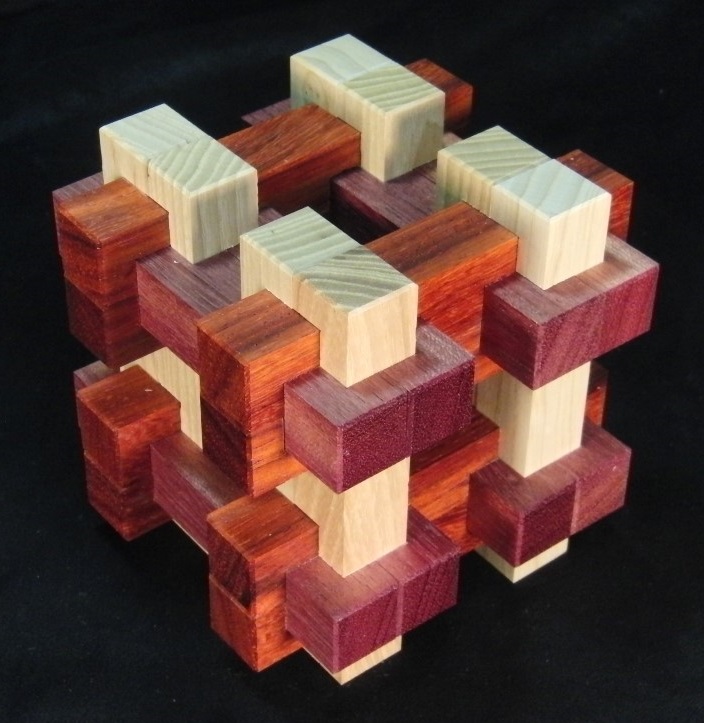
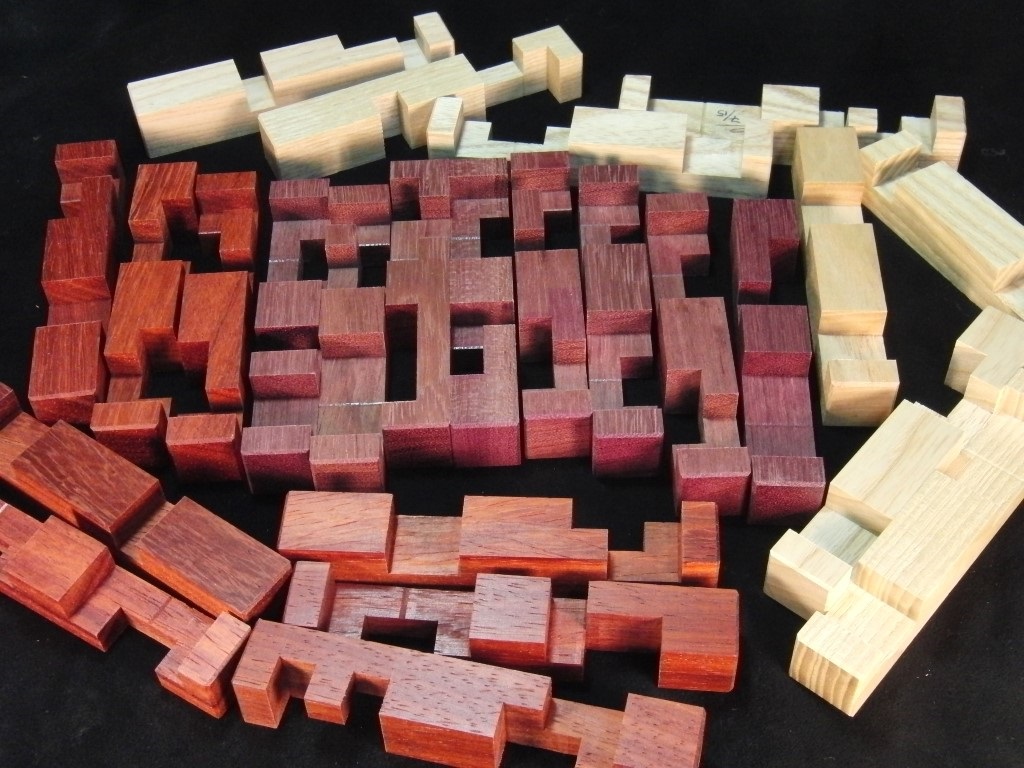
S/M24
designed by Bill Cutler,
purchased from and made by Eric Fuller
from Ash, Padauk, and Purpleheart.
7 moves to get the first piece out.
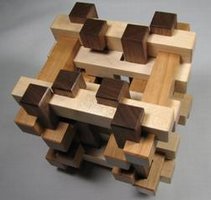
The Visible Burr, designed by
Bill Cutler,
made by Jerry McFarland, from Cherry, Maple, and Walnut woods.
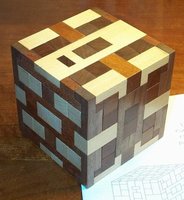
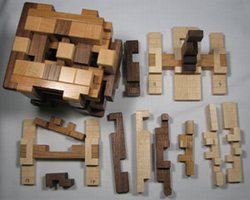
This is Bill Cutler’s
66-piece Cutler Cube.
It is a beauty, 100mm on a side, and difficult to disassemble/reassemble.
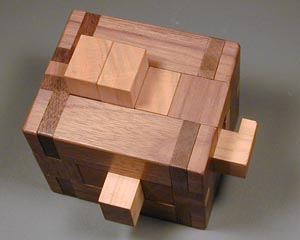
Binary Burr – Bill Cutler
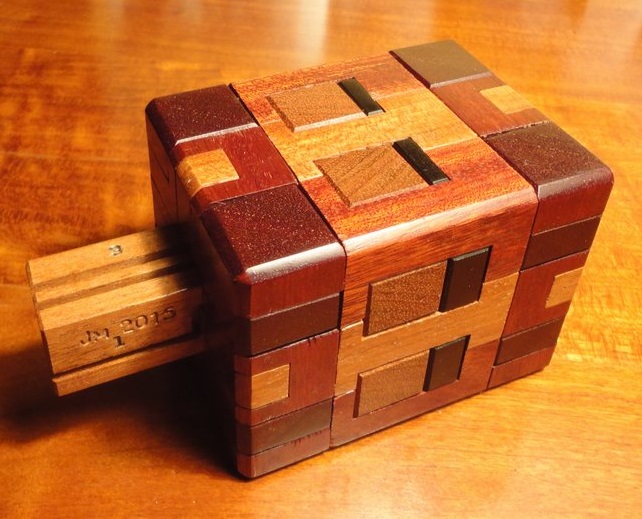
Binary Pin Burr – designed and made by Jerry McFarland
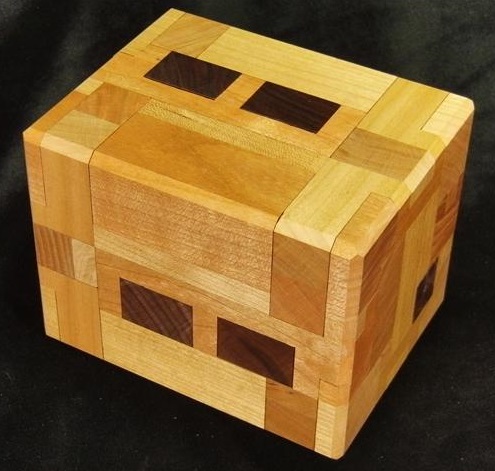
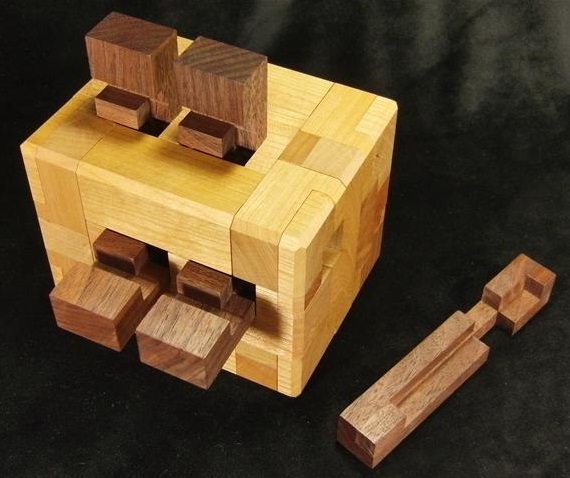
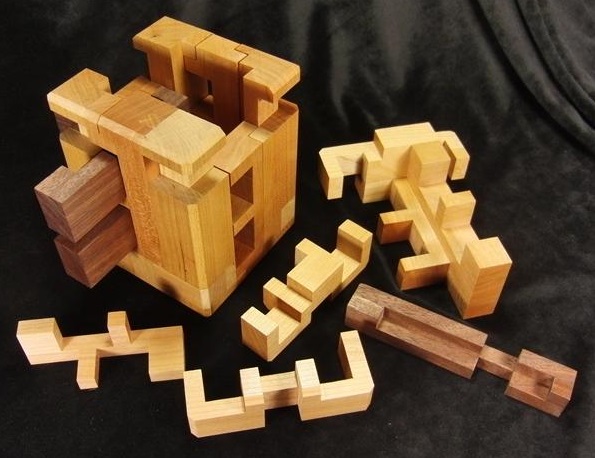
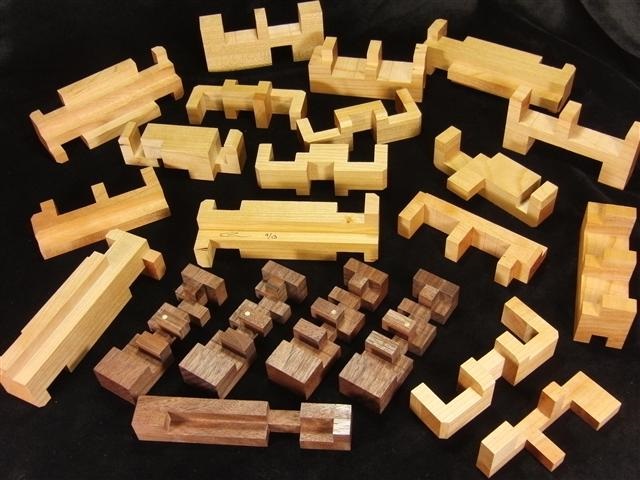
The Ternary Burr – designed by Goh Pit Khiam, made by Eric Fuller from Walnut and Cherry.
22 pieces, 75 moves to get the first piece out.
The Quadlock 1 is an interlocking burr cuboid puzzle made by
Jerry McFarland
from Mahogany, Walnut, and Maple,
and designed by him in 1992.
Purchased from Jerry.
It has 19 pieces and is difficult to take apart.
It is beautifully finished!
You can read reviews
here
and
here.
BurrBlock by
Jerry McFarland
One of Jerry’s first copies of his new design, which was entered in the 2012 Design Competition.
It’s beautiful, hefty, and quite puzzling!
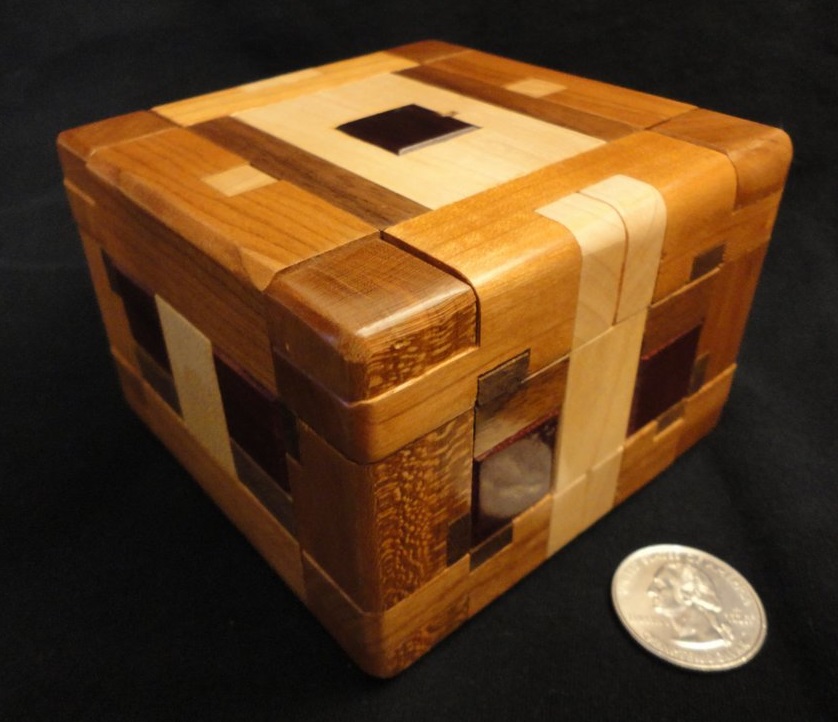
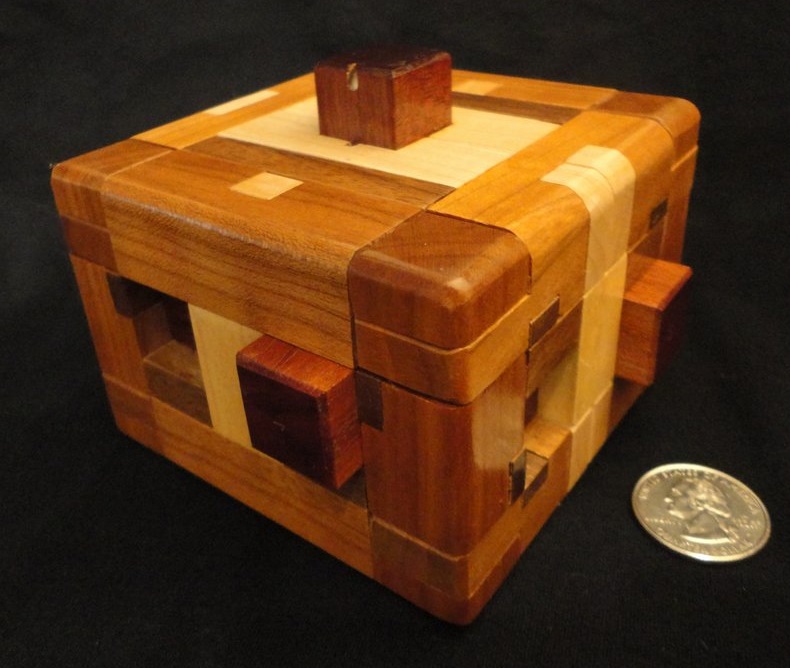
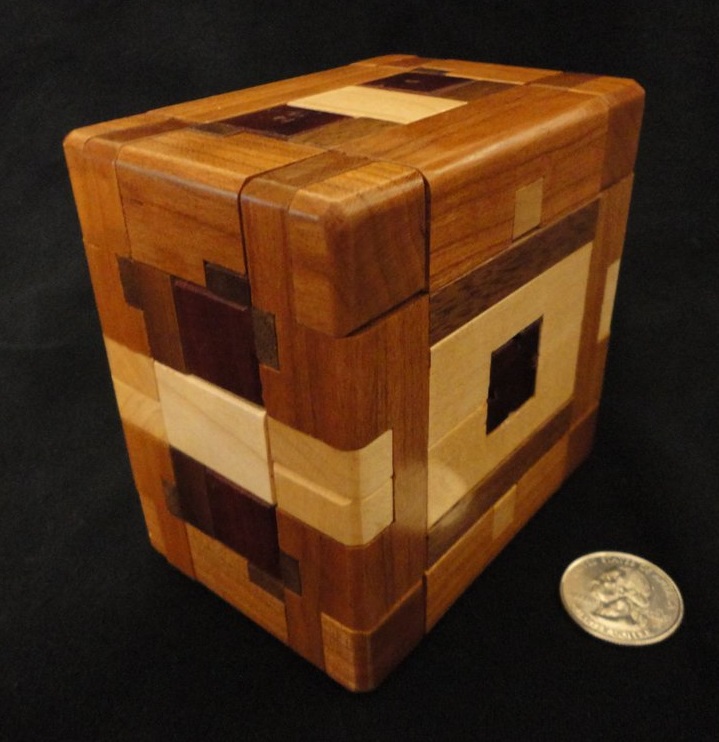
BurrNova – designed and made by Jerry McFarland.
“A puzzle that solves itself.” While not wholly true, Jerry’s novel design incorporates magnets such that at a certain point several pieces move themselves with a satisfying clacking.
BurrNova won an Honorable Mention in the
2017 IPP37 Paris Design Competition.
This version was since re-designated “BurrNova 2D” as Jerry has created a followup he calls
BurrNova 3D (aka Magnetic Madness), wherein hides a mermaid awaiting rescue.
Magnetic Madness was among the Top Ten Vote-getters in the
2018 IPP38 San Diego Design Competition.
Jerry posted a
short video of its action.
Kevin Sadler has a very detailed
September 2017 post about BurrNova (2D) on his blog,
as well as an
August 2018 post about the BurrNova 3D (aka Magnetic Madness).
Yavuz Demirhan of Turkey has designed many interesting puzzles of various types, including assembly, sequential assembly, and interlocking varieties. Yavuz has hand-made many beautiful puzzles himself, and his designs have been produced by noted craftsmen. There are examples of Yavuz’ puzzles in various subsections of this site – I created this subsection to have a place for Yavuz’ general interlocking puzzles I have not categorized elsewhere.
Yavuz has an Etsy shop
Cubozone.
A comprehensive listing of most of Demirhan’s designs can be found at
Puzzle Will Be Played, where as of this writing in July 2020, there are 572 designs described.
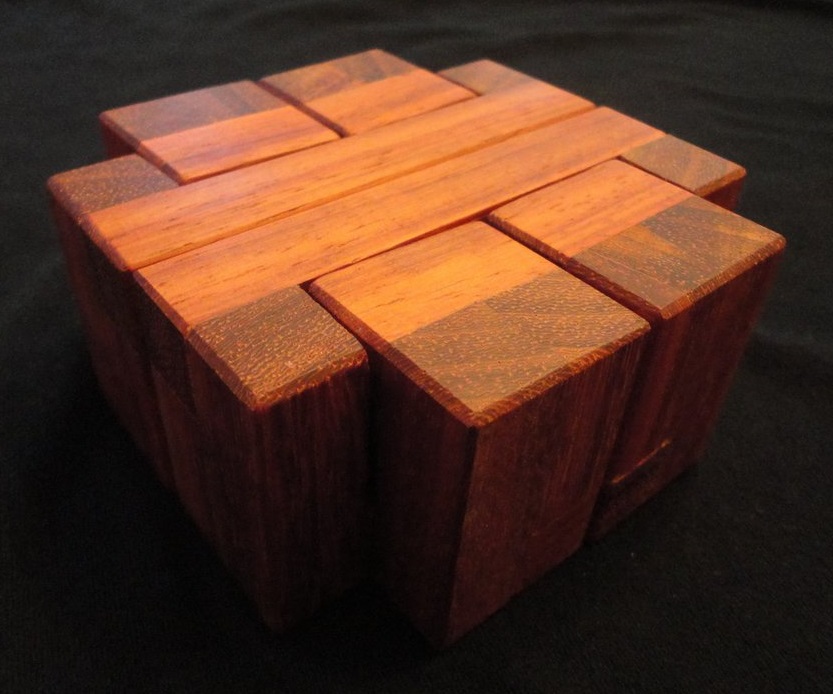
Lion’s Claw – designed by Yavuz Demirhan,
made by Brian Menold,
from Bloodwood.
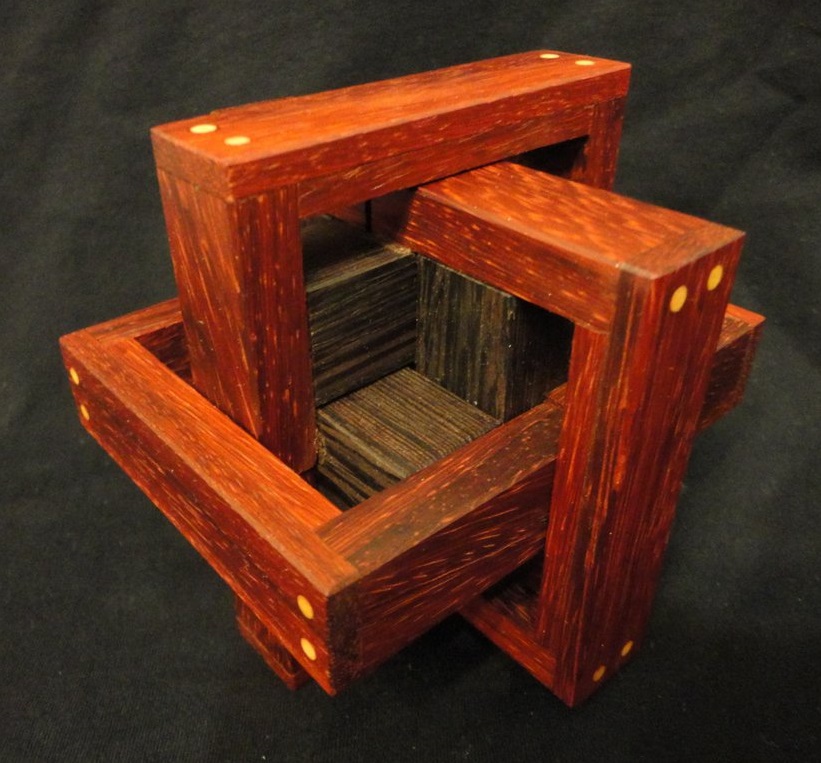
Forma – designed, made by, and purchased from Yavuz Demirhan of Turkey.
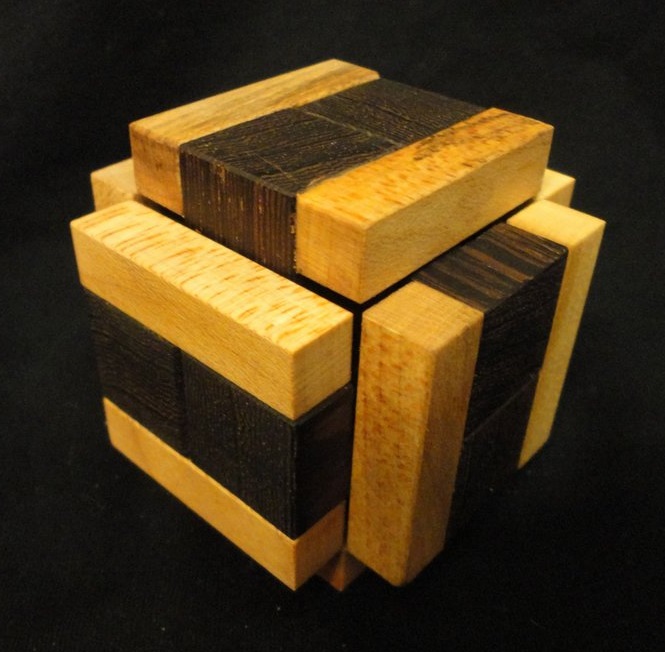
Queen Sixteen – designed, made by, and purchased from Yavuz Demirhan of Turkey.
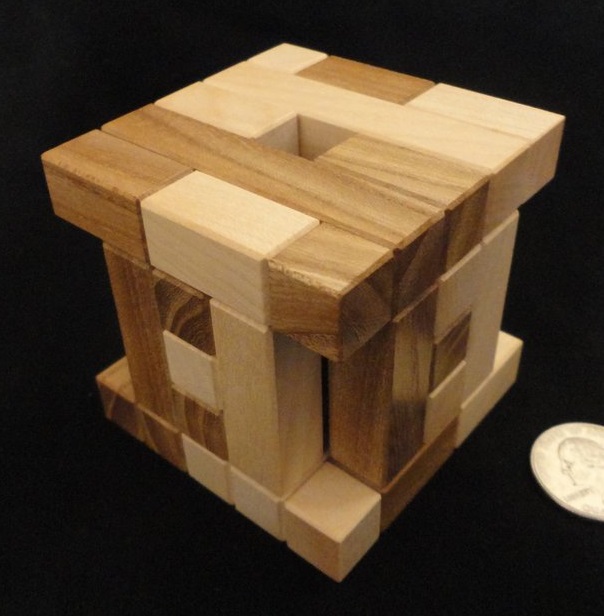
Tetradyma 5×5 – designed by Yavuz Demirhan
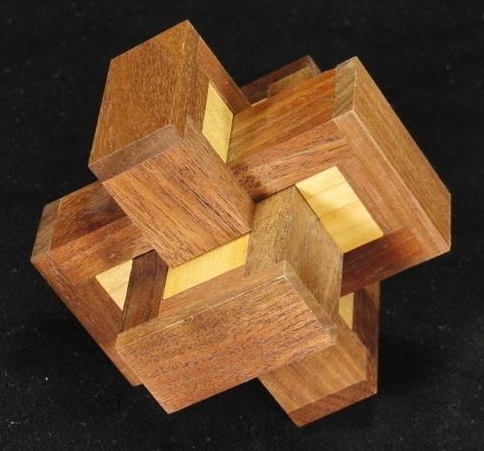
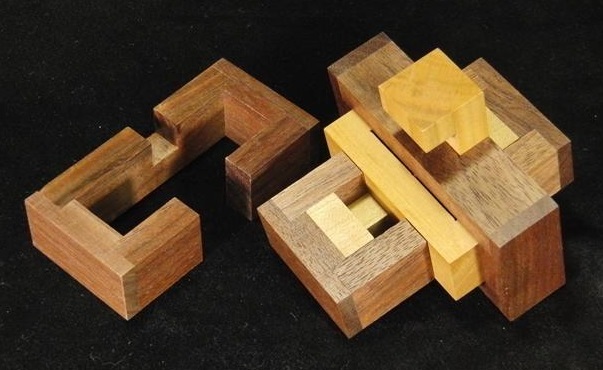
Capsula Burr – designed by Yavuz Demirhan,
made by Eric Fuller from Walnut and Maple
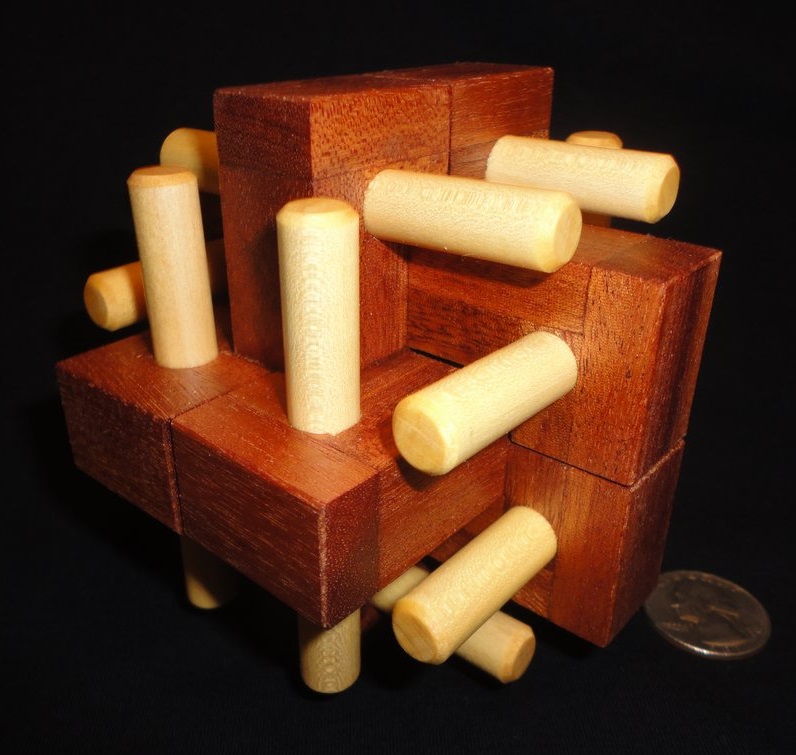
Hedgehog Burr – designed and made by Yavuz Demirhan
from Sapelli and Maple woods. Level 16.4.
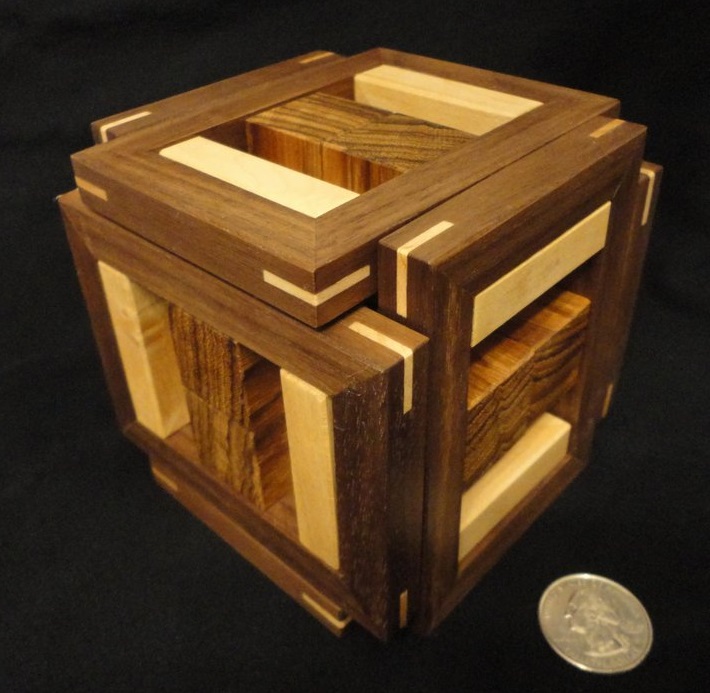
Susie Qube – designed and made by Yavuz Demirhan at
Cubozone
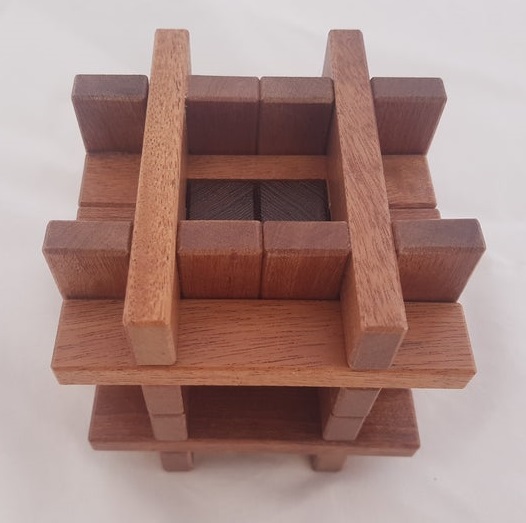
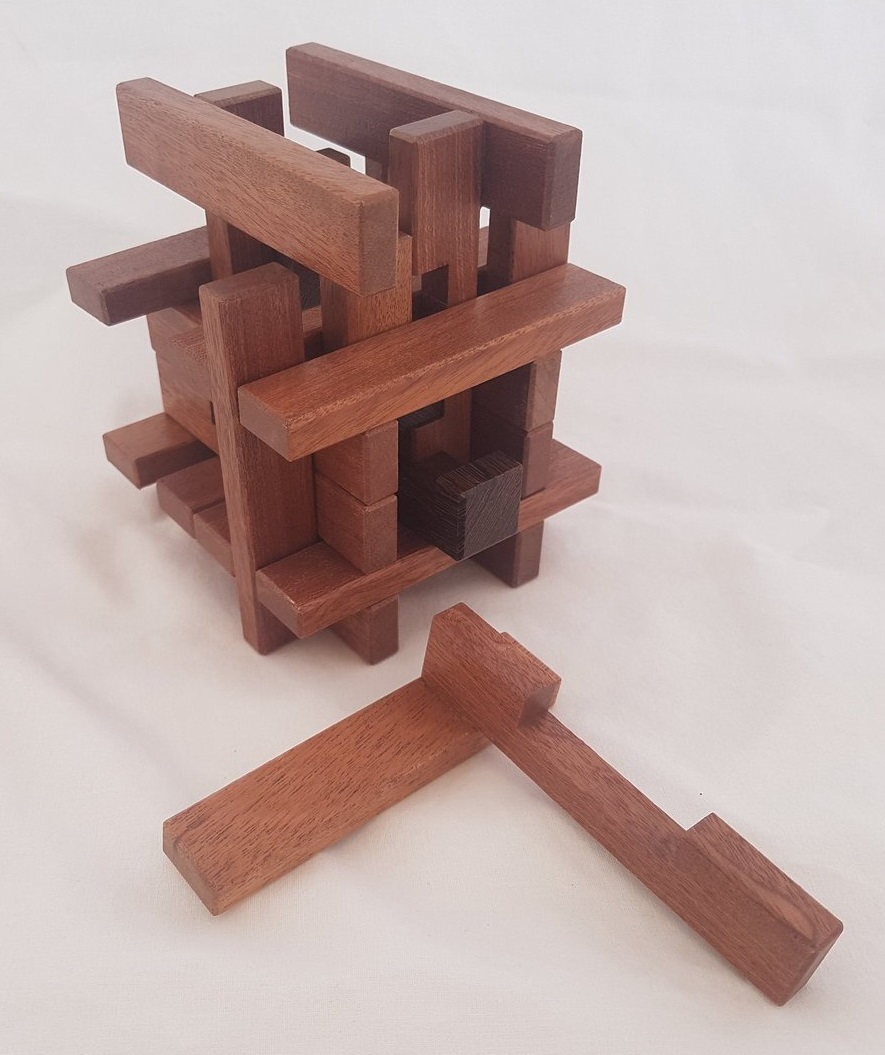
Burrcell – designed and made by
Yavuz Demirhan
from Sapelle and Wenge
Six burr pieces and 12 identical exterior pieces.
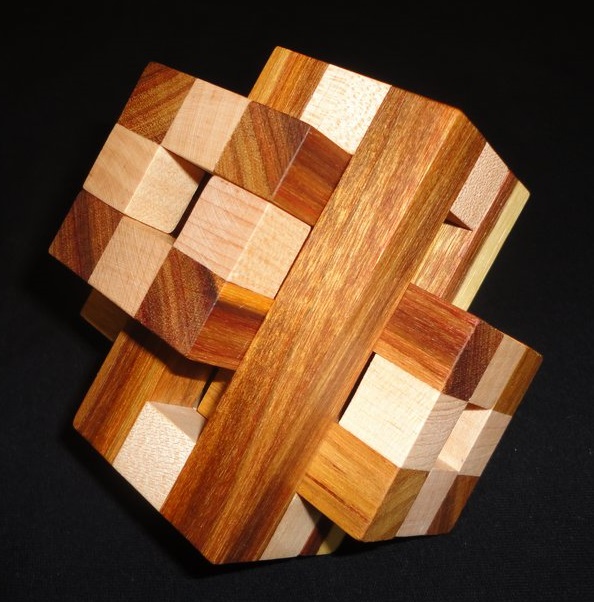
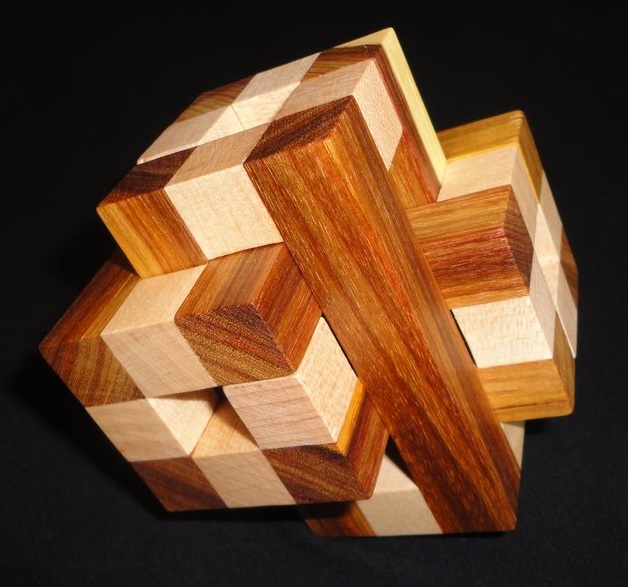
Nembus #2 – designed by Yavuz Demirhan, made by Brian Menold
from Canarywood and Maple.
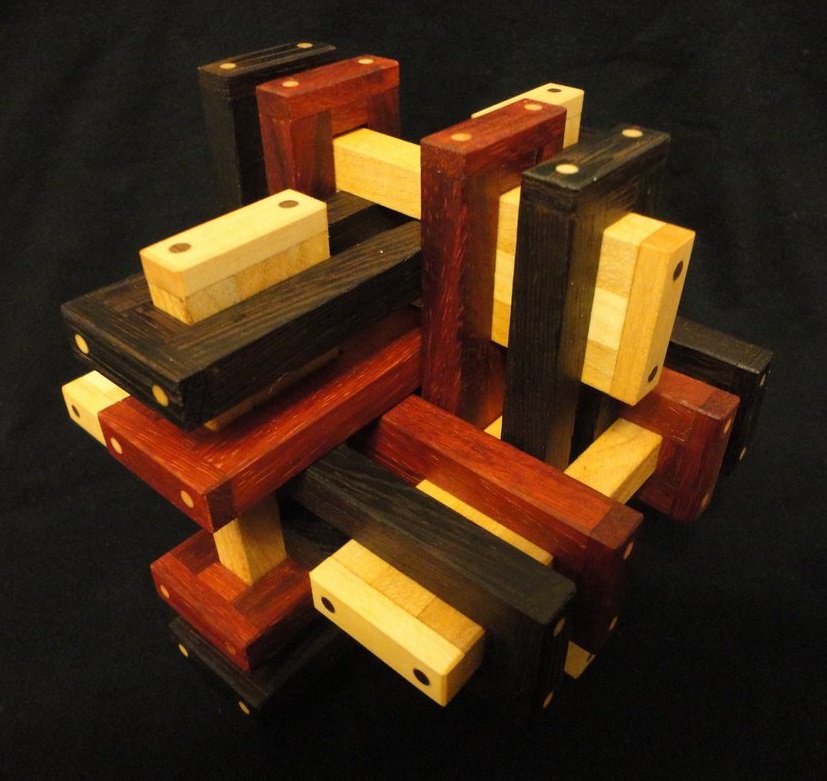
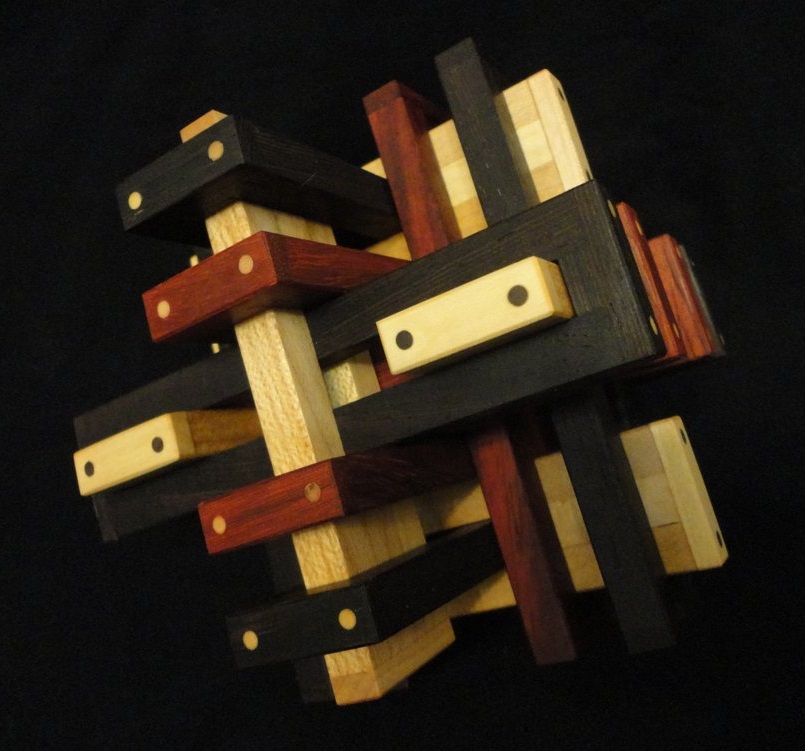
Volantis – designed, made by, and purchased from Yavuz Demirhan of Turkey.
Check out what’s available at
Yavuz’ Etsy shop Creacubes.
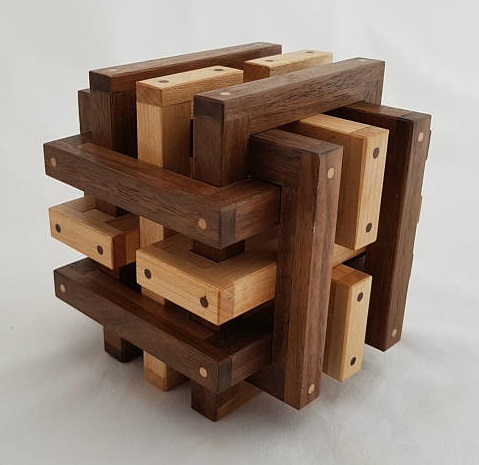
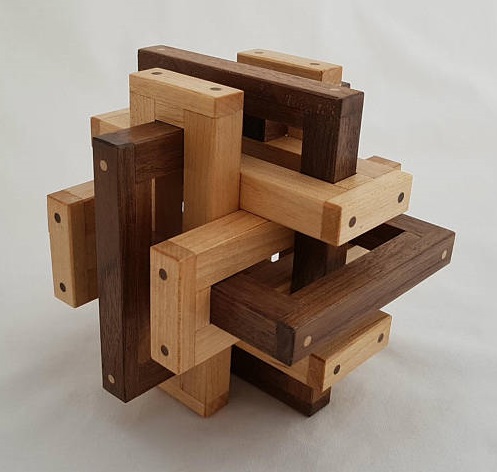
Transenna (improved) – designed and made by Yavuz Demirhan
Allows an alternate assembly, also shown.
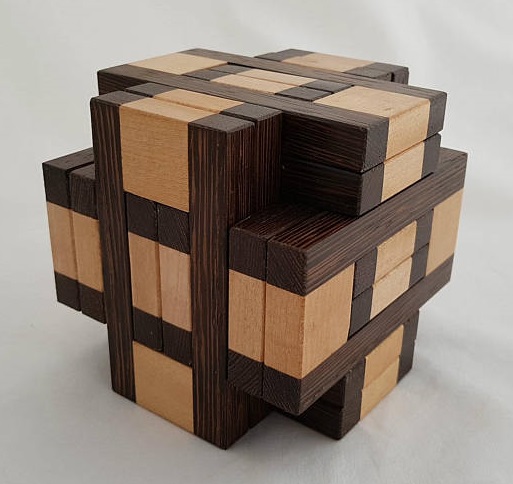
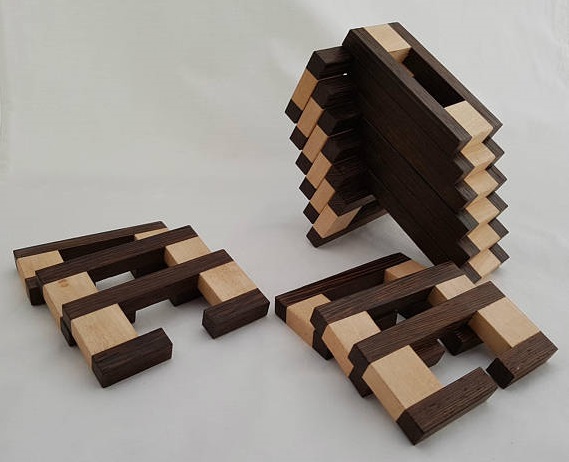
Oramagomaburamago – designed and made by Yavuz Demirhan
See Ishino’s site for a list of six-board burrs.
Chen’s Six Board Burr
Designed by Chi-Ren Chen
Level 2.14.12
Made by Eric Fuller, in Walnut, Ash, and African Mahogany
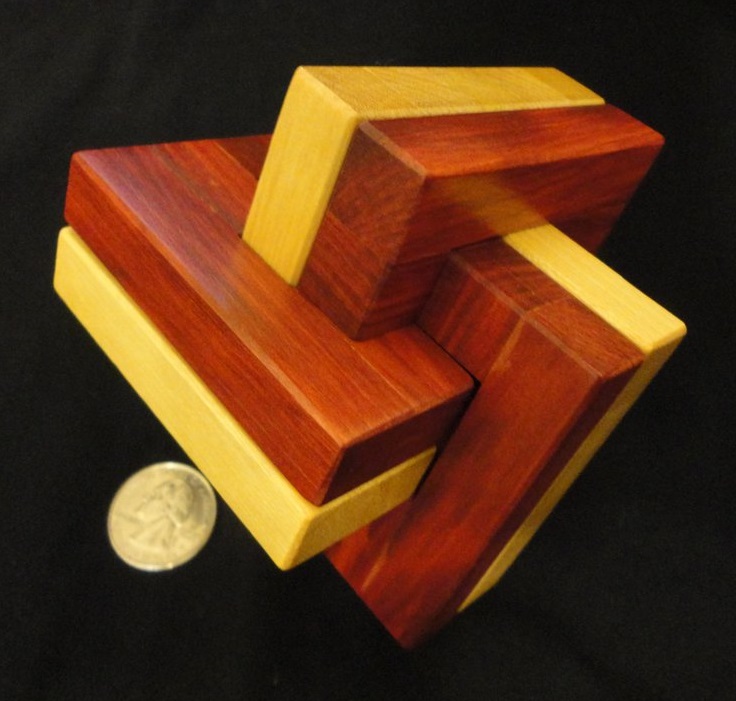
Tropical Fish
designed by Chi-ren Chen, made by Brian Menold
from Redheart and Yellowheart
A six-board burr.
Level 19.5.1.1.2
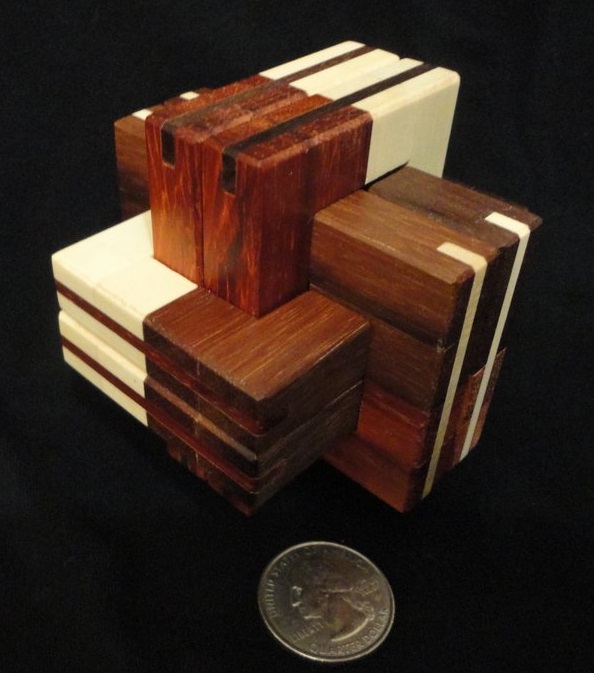
Tricolore – designed by Frans de Vreugd
made by Brian Menold from Padauk, Holly, and Katalox
Level 3.15.11.2
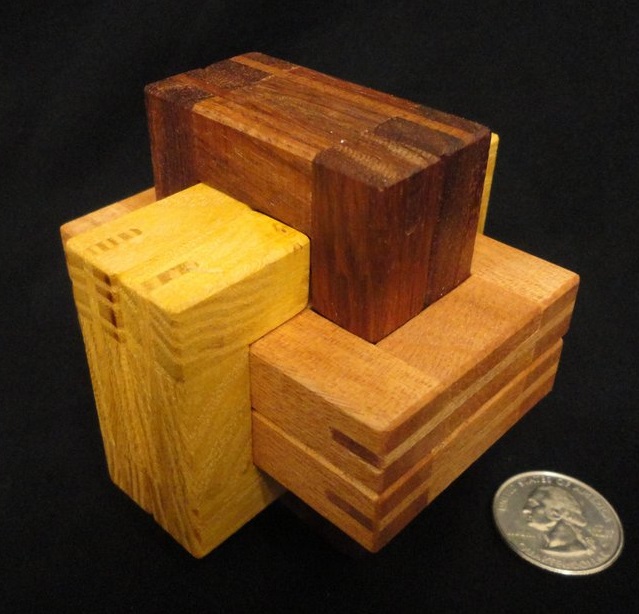
Y6BB1 – designed by Yavuz Demirhan, made by Brian Menold
from Tzalam, Okoume, and Mulberry
Level 3.11.2.3.4
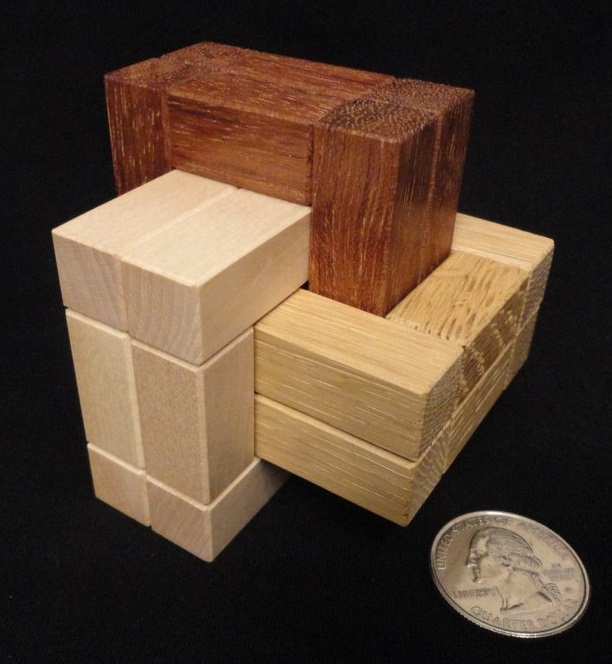
Knotty 6 – designed by Yavuz Demirhan
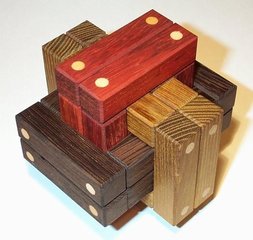
The Ambigram Burr, designed by Gregory Benedetti.
Available from
Puzzlewood.de.
Made from Wenge, Padauk, and Robinia.
Thanks to Bernhard Schweitzer and John Devost!
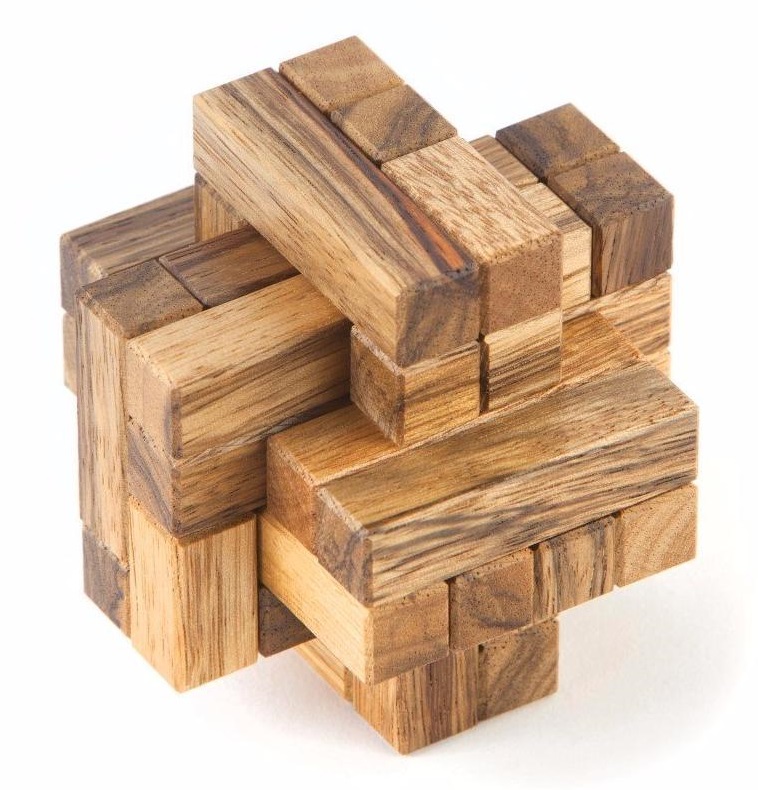
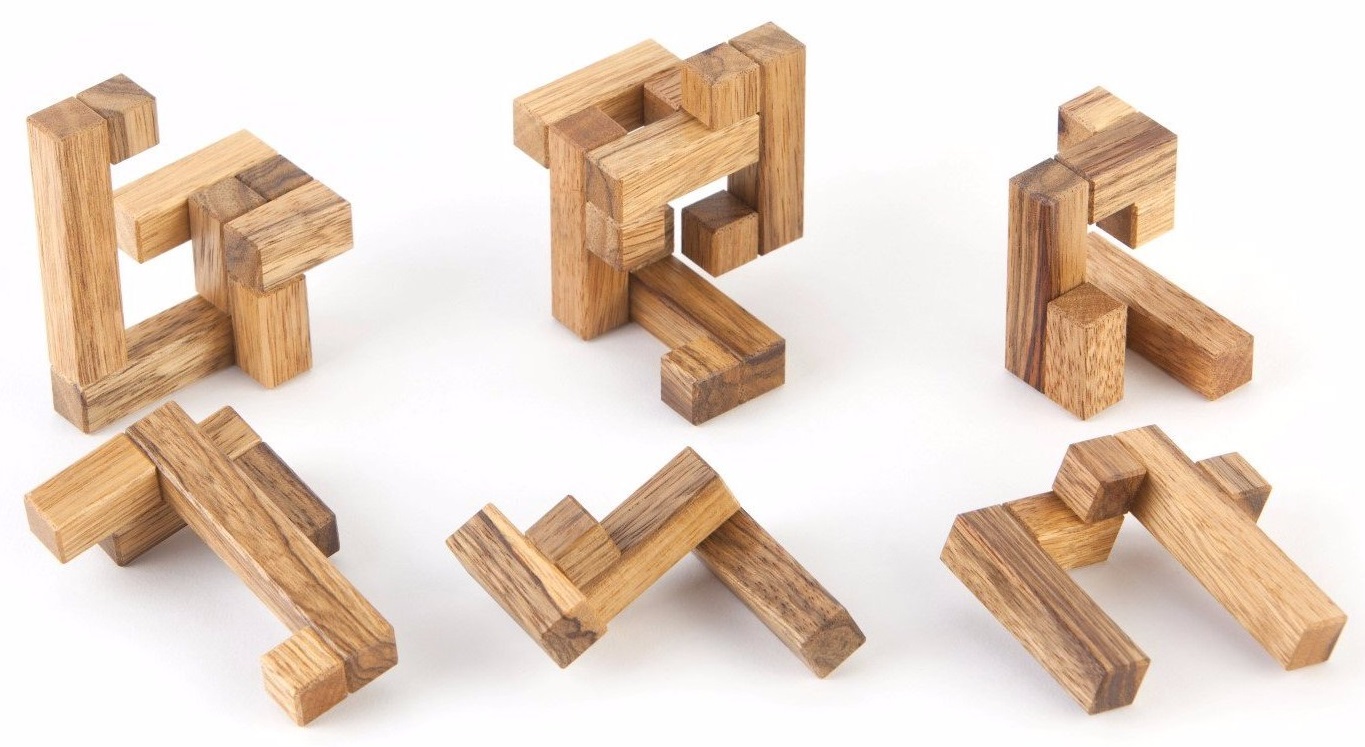
Knotted Burr – designed by Noah Prettyman
Made by Eric Fuller, from Black Limba
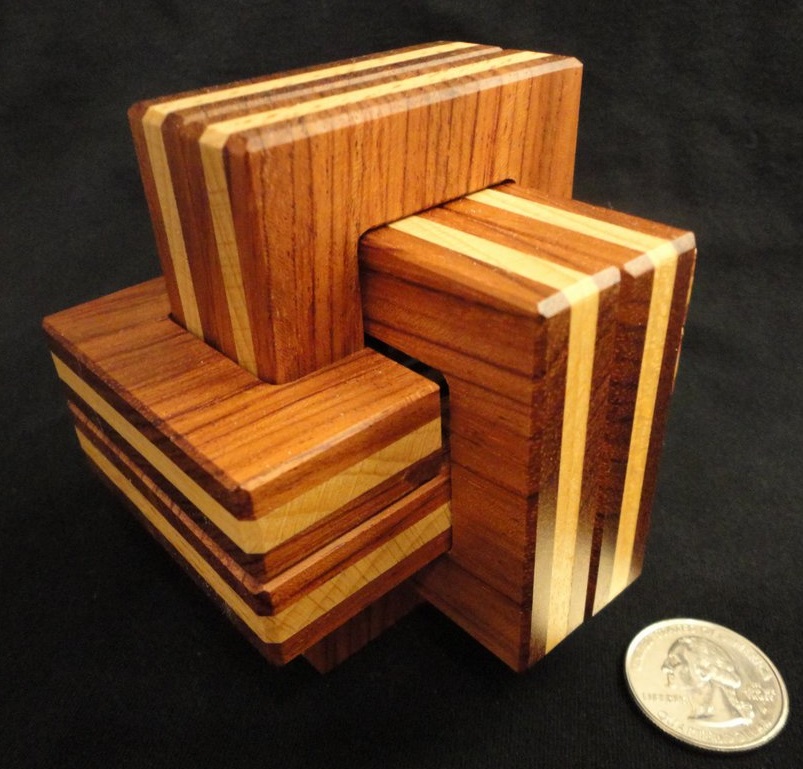
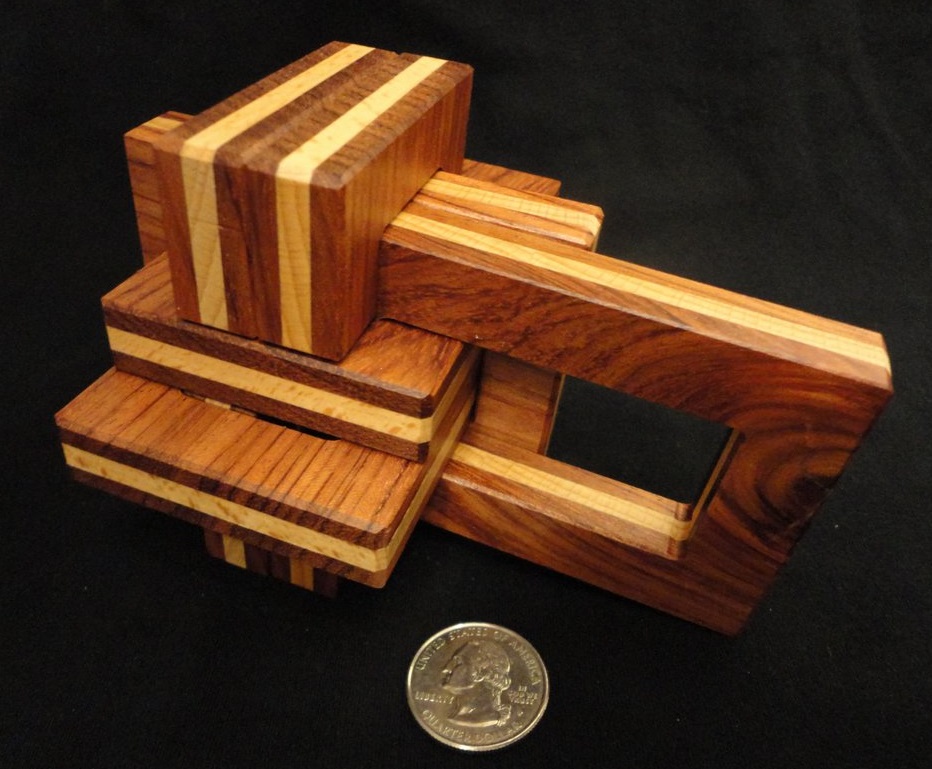
Grooved 6 Board Burr No. 2 –
Pluredro.
Made from Bubinga and Beech woods. Level 25.2.3.3.
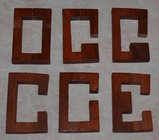
An inexpensive (and imprecisely made) 6-piece board burr.
This is the same design that appeared in the French
Fabbri series.
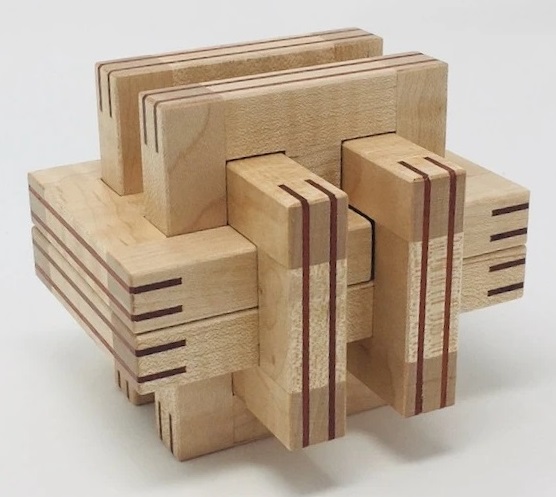
Made by Brian Menold from curly maple with paduak splines.
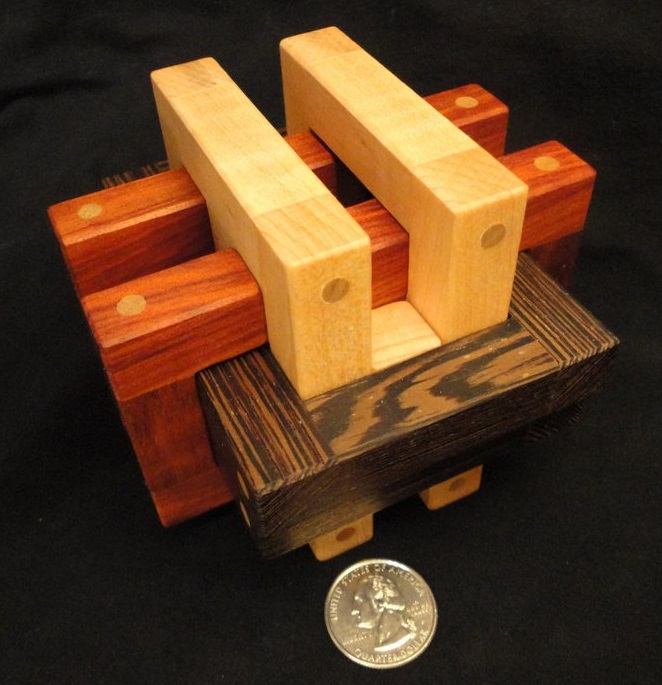
RIPtide – a 6-plate burr requiring rotations
designed by Andrew Crowell,
made by Brian Menold
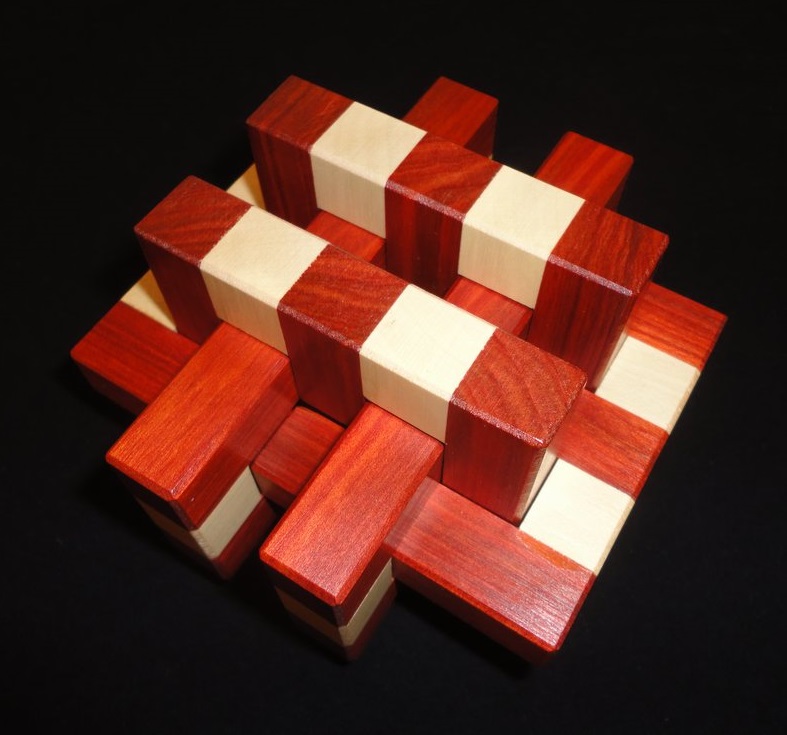
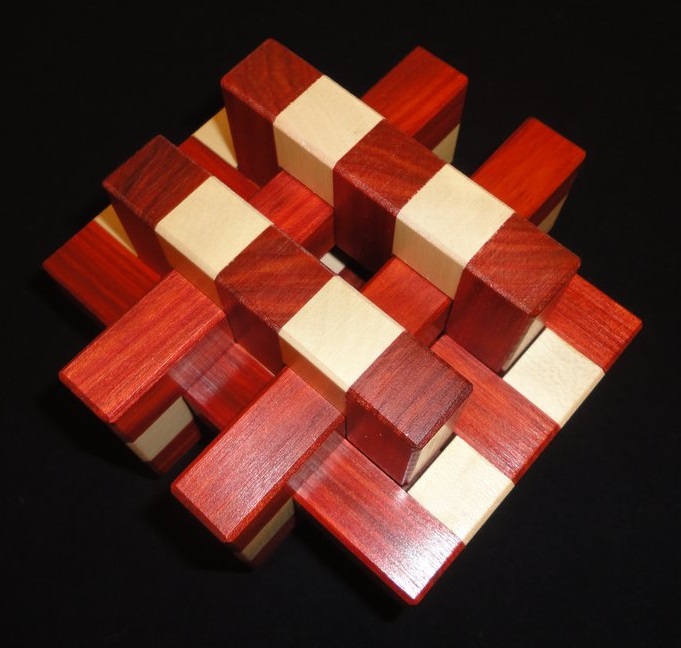
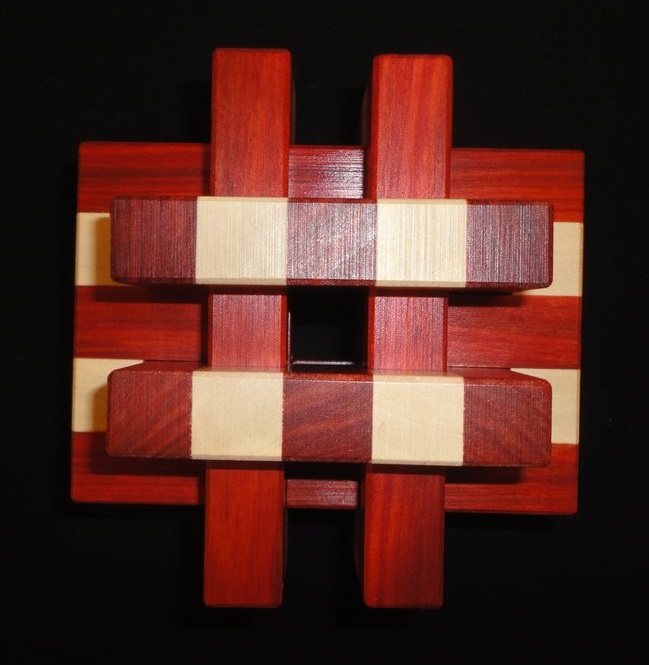
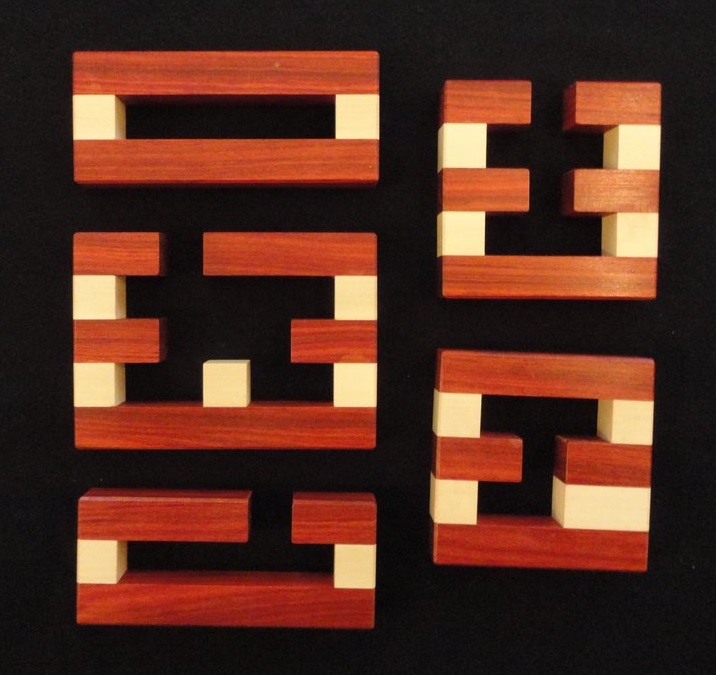
Bedevil designed by Yavuz Demirhan, made by Brian Menold
from Redheart and Holly
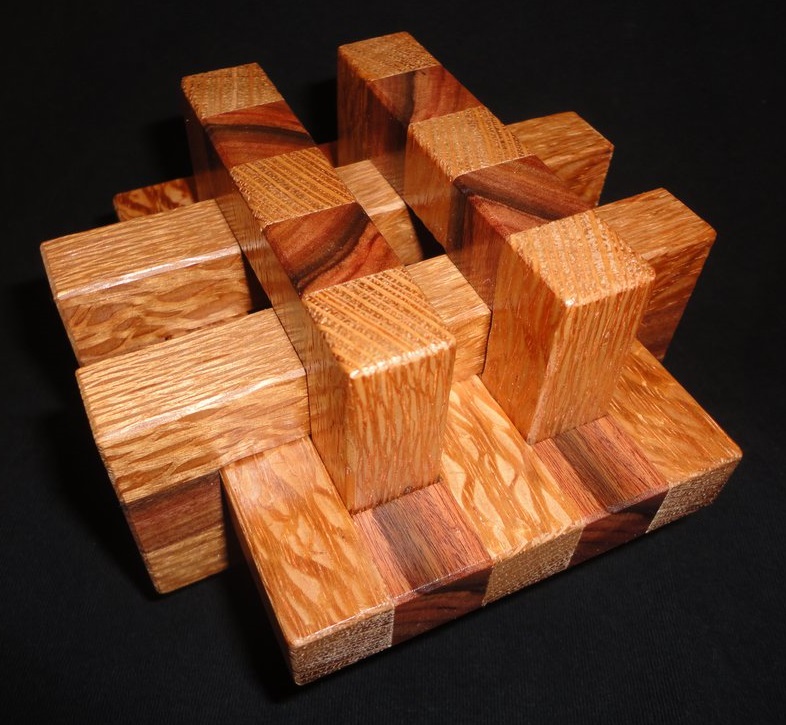
Delight – designed by Stephane Chomine and made by Brian Menold
from Lacewood and Bolivian Rosewood.
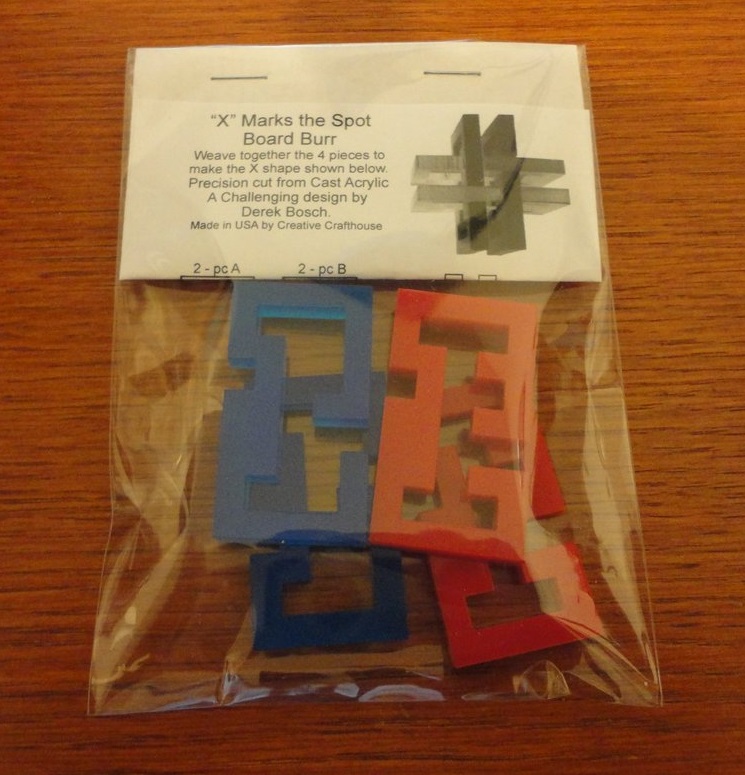
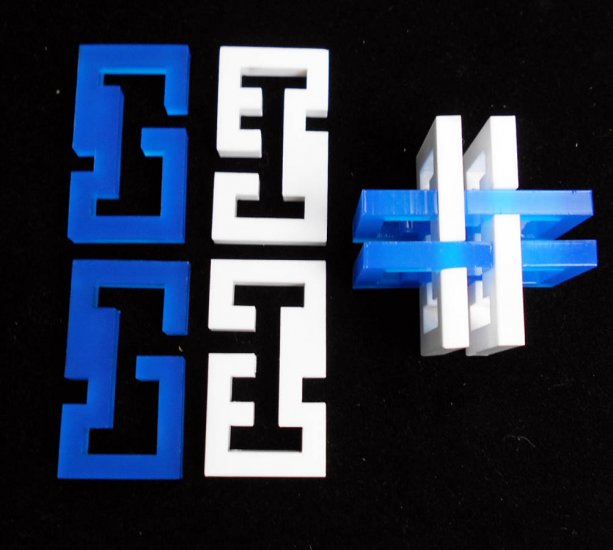
X Marks the Spot
designed by Derek Bosch
Sequentially interlace the four acrylic pieces
and form the hash shape.
Purchased from Creative Crafthouse.
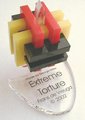
George Miller
made this version of Frans de Vreugd’s “Extreme Torture” separated board burr.
It takes 28 moves to free the first piece and then 21 more to free the second piece!
Here is a link to the solution on George Miller’s site.
Here is an article at woodcentral.com by Steve Strickland about making 6-board burrs.
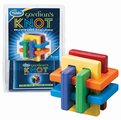
Thinkfun now offers an inexpensive and colorful version of the Extreme Torture puzzle.
They call it “Gordian’s Knot” and it includes a step-by-step reversible solution booklet.
You can see a solution on
Richard Whiting’s site.
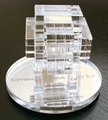
Sonneveld 9-piece Board Burr – made by George Miller.
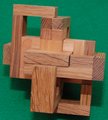
This is Ozone
designed by Ronald Kint-Bruynseels.
It is a six-board burr, with a “hook” attached to each piece.
It requires 13 moves to remove the first piece, then 11 for the second.
Ronald has designed several unusual burr-type puzzles, and you can see many of them at
Bernhard Schweitzer’s Puzzlewood site.
Richard Whiting has put together a
nice page at his site
where you can read about several other high-level burrs.
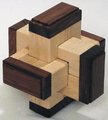
This is Frans de Vreugd’s design he used for his exchange at IPP25.
Frans calls it a Plated Six-Piece Burr.
Mr. Puzzle Australia called it Around the Bend.
Frans says he developed it while working on Bent Board Burrs.
It uses pieces 120, 154, 256, 412, 960, and 1024.
Each has a 2×4 unit plate attached to its right end.
It is the highest level burr of this type with notchable pieces.
It is made from Queensland Silver Ash (the light wood) and Queensland Blackbean.
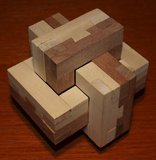
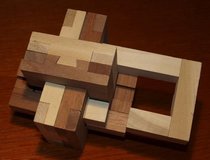
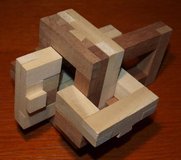
Dovetail Burr – designed by Frans de Vreugd
Issued by Bits & Pieces
A single solution, at level 6. Based on Yananose’s 6-board burr.
The Zig Zag Knot, from
Thinkfun.
This is a nice plastic mass-produced version of Ronald Kint-Bruynseels’ 2003 design he called
“ZeeZee ZedZed” –
see it on Ishino’s site.
Thanks to
Tanya Thompson!
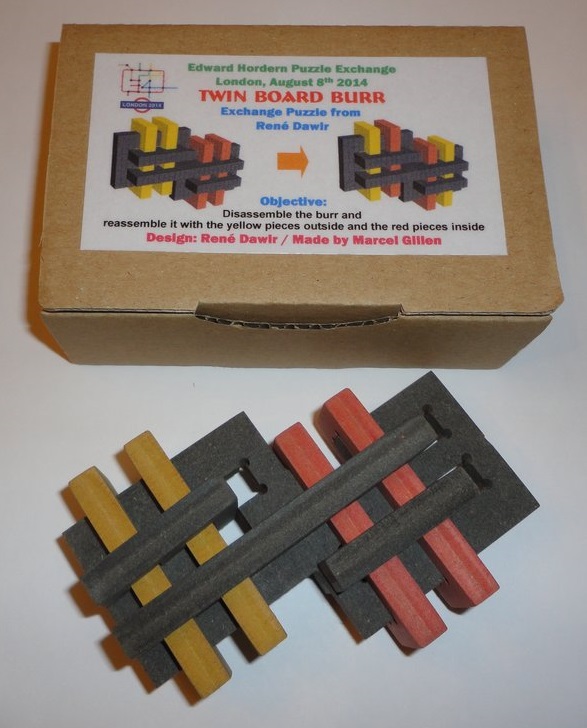
Twin Board Burr – Dawir
Here is a link to a
stop-motion video of several of Mr. Puzzle Australia’s puzzles assembling themselves, on YouTube.
I learned about five inexpensive wooden puzzles produced under the label “Confusion Contemporary Puzzles”
by
The Lagoon Group.
I purchased mine at
Mind Games in the UK.
Trilogy
aka “Three Open Windows”
(made by
Eric Fuller)
Designed by Tom Jolly
Squarrel
Designed by Ronald Kint-Bruynseels
See it on
Ishino’s site
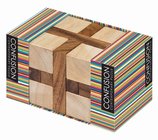
Mental Block
Designed by Rick Eason
aka the
Twenty Cube
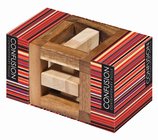
Caged Knot
Designed by Tom Jolly
See it on
Ishino’s site
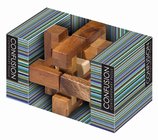
Alcatraz
Designed by Ronald Kint-Bruynseels
aka Die in Prison #2
See it on
Ishino’s site
Here is a set of burr-type plastic puzzles I bought in Japan – they are members of a “Family:”
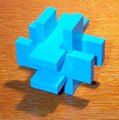
Boy
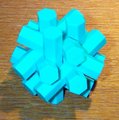
Papa
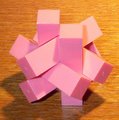
Lady
Brother
The Dollar Tree store offered several puzzles in a series called “3 Dimension” including:
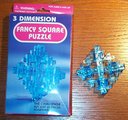
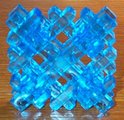
Fancy Square
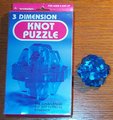
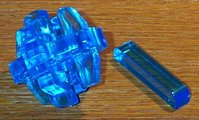
Knot
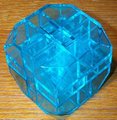
“Stack Cubes” (A Kumiki Cube)
This small group contains polycube puzzles where the pieces contain cubies joined diagonally, via some sort of “spars” – these spars can be metal, nylon, or 3D printed. The cubies must be beveled so that the spars can travel through the interstices between cubies.
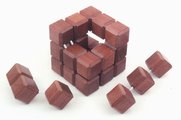
The Edge Corner Cube II by
Markus Goetz.
Winner of an Honorable Mention in the
2005 IPP Design Competition.
For the longest time, my example sat in an unsolved state. During a recent inventory, I picked it up again and solved it.
I took photos along the way and show them here for your edification.
There are seven pieces, two of which are identical, and one of which is a unit cubie.
This distinguishes the Edge Corner Cube II from the Liberal Cube, which has no unit cubie piece.
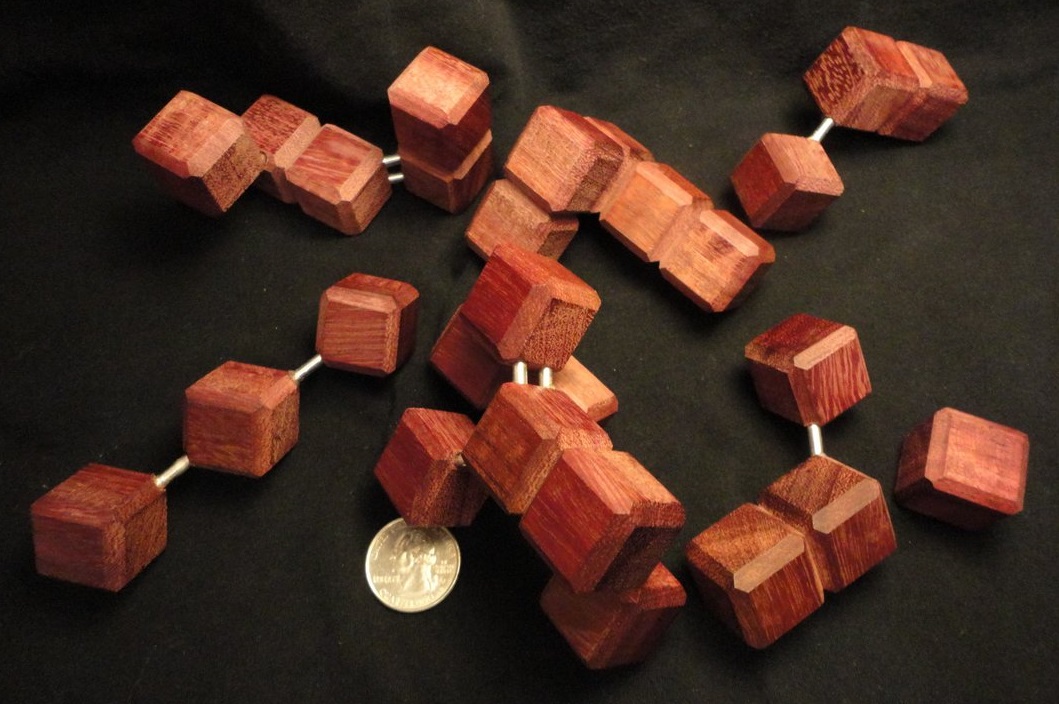
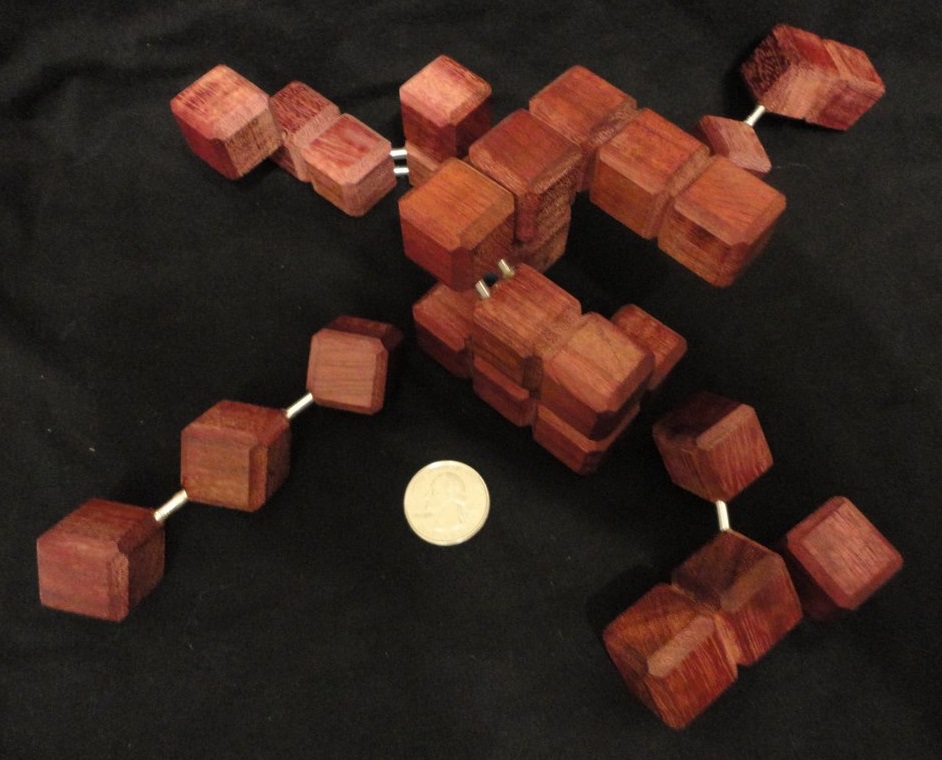
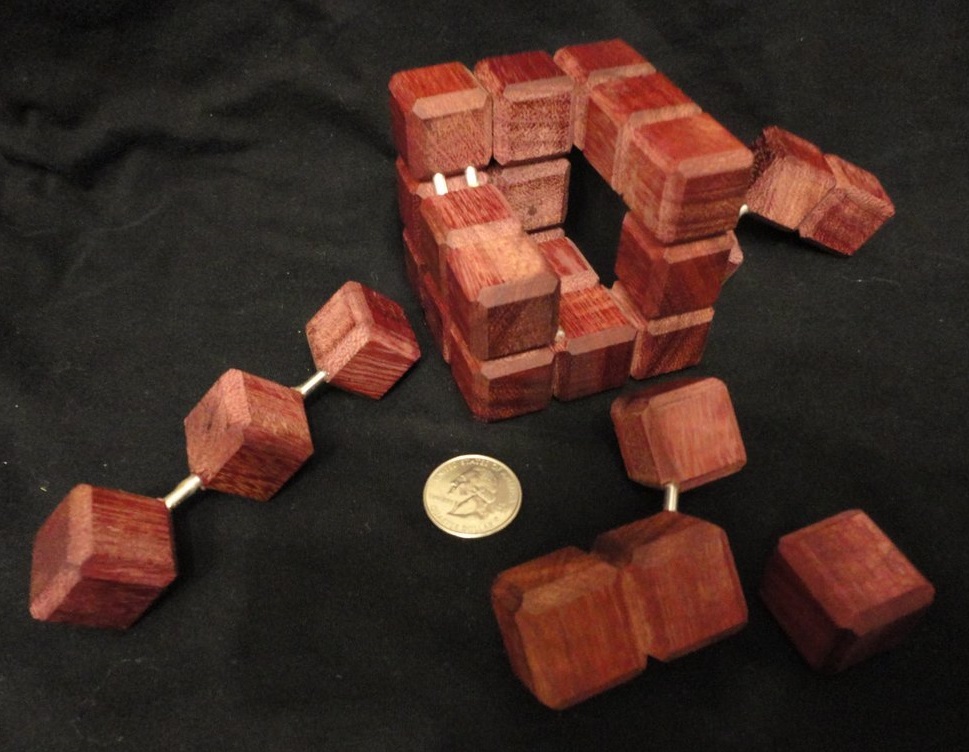
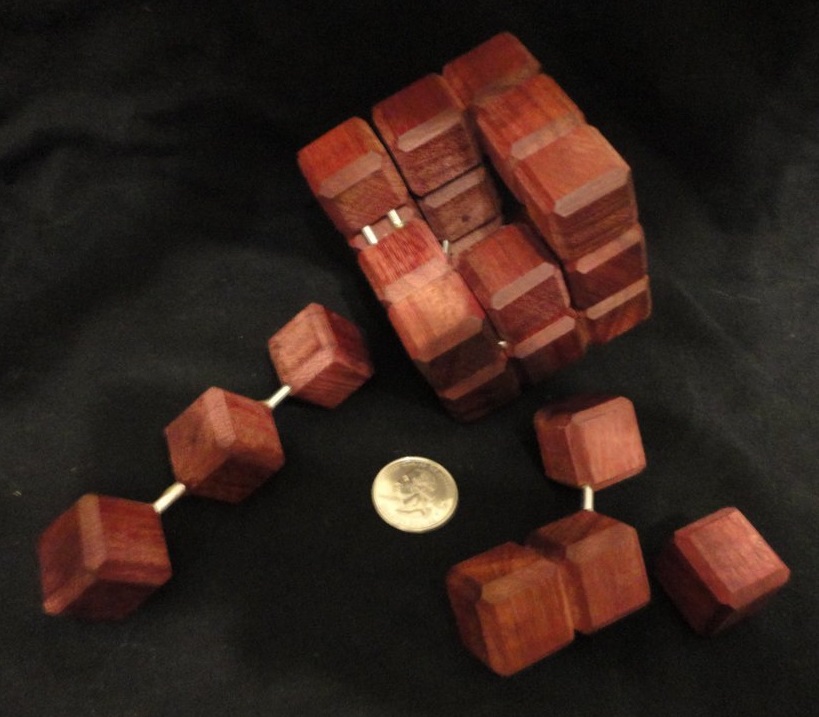
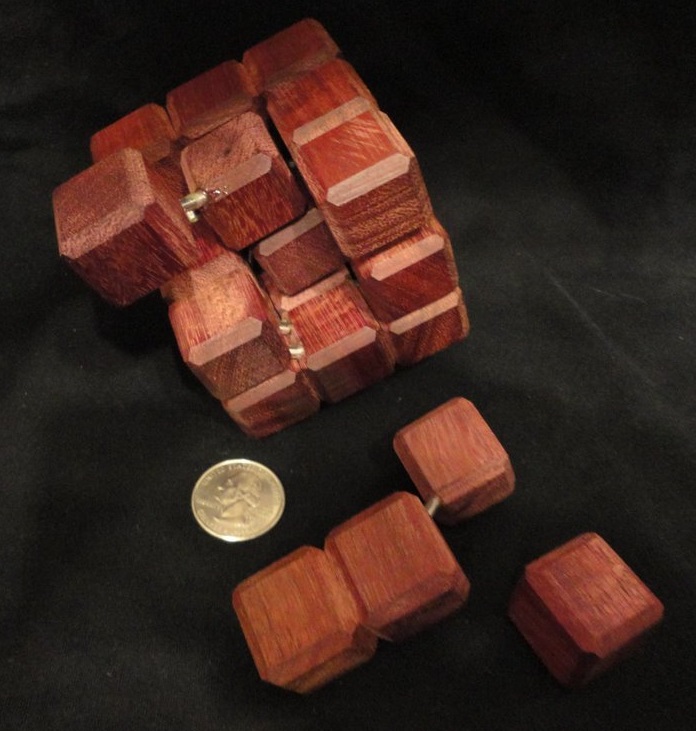
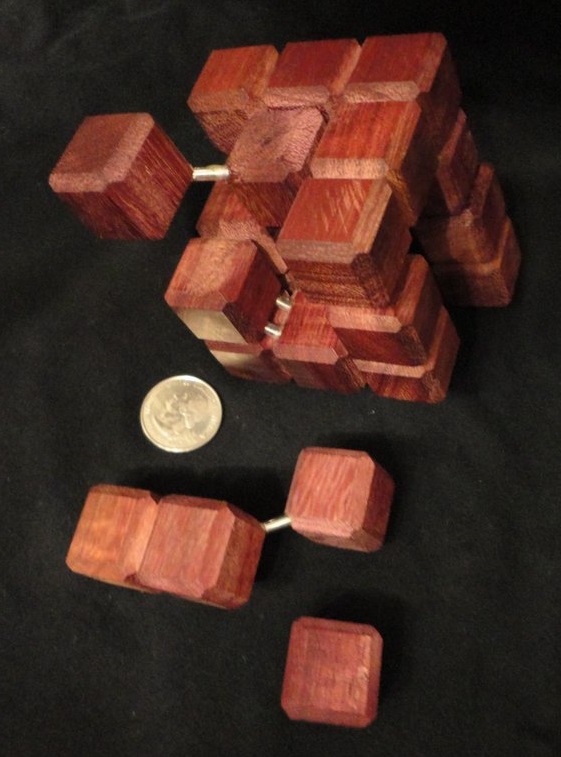
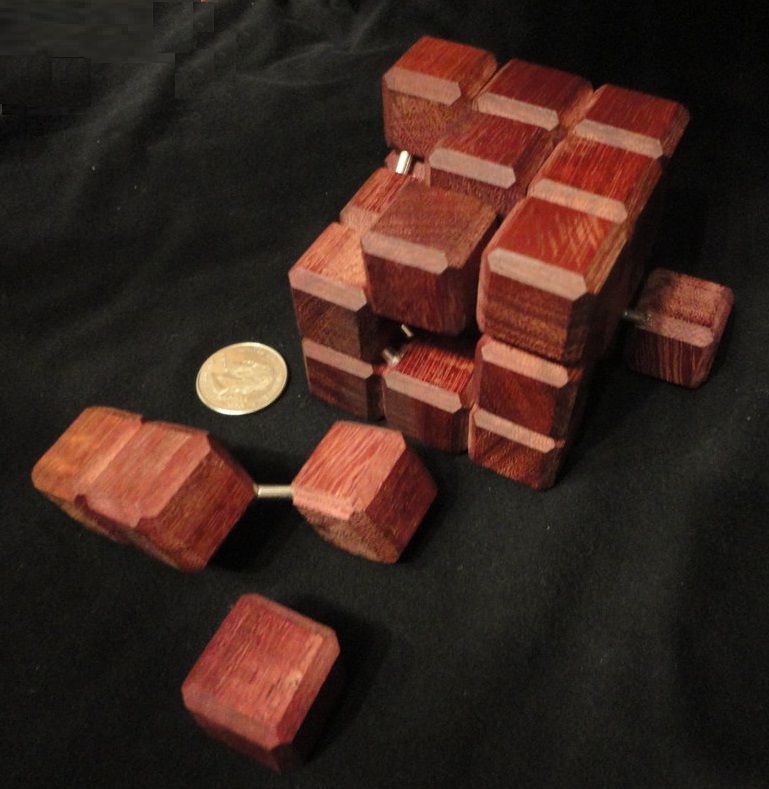
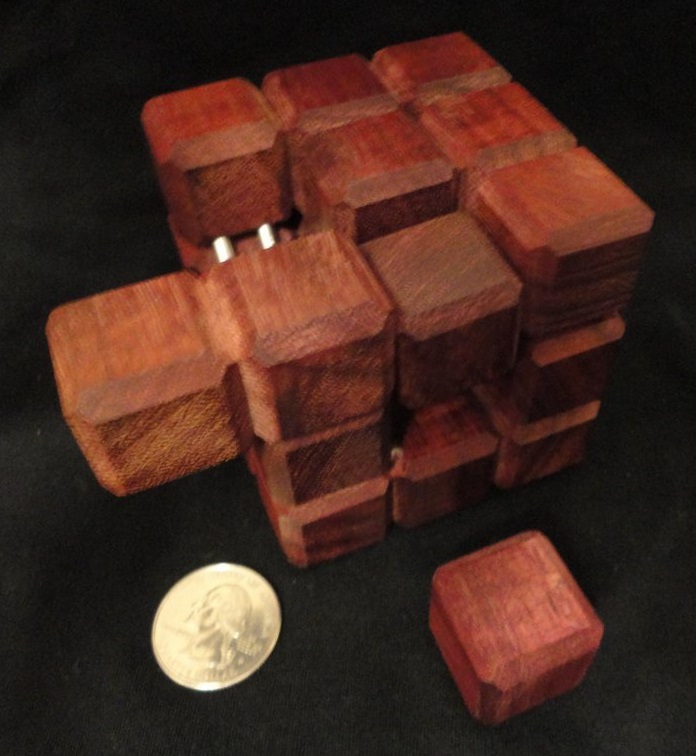
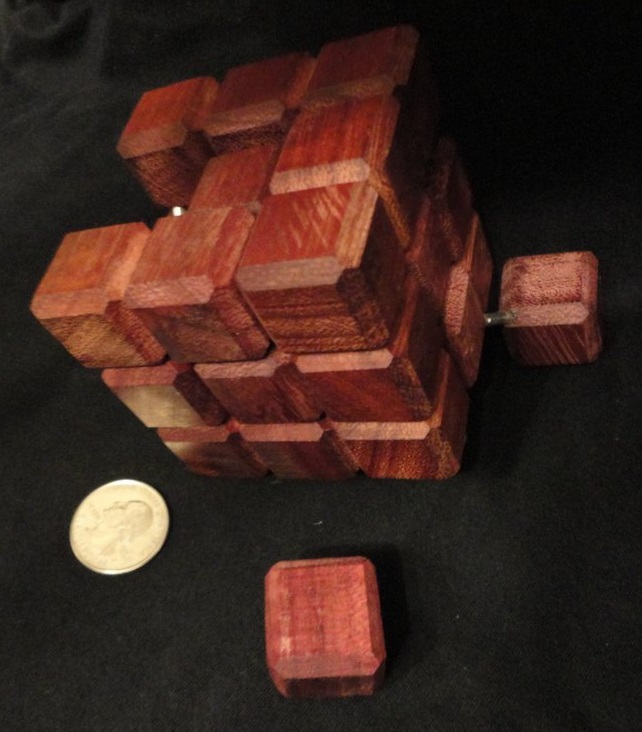
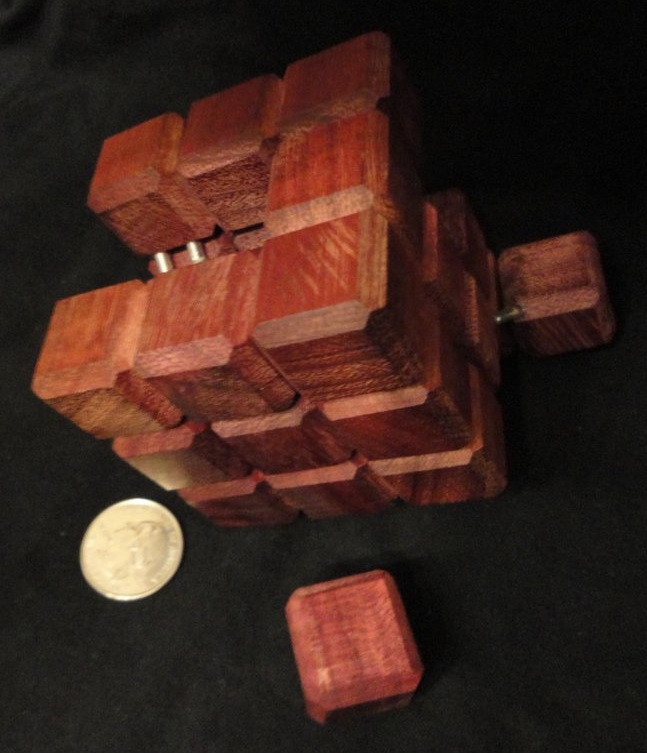
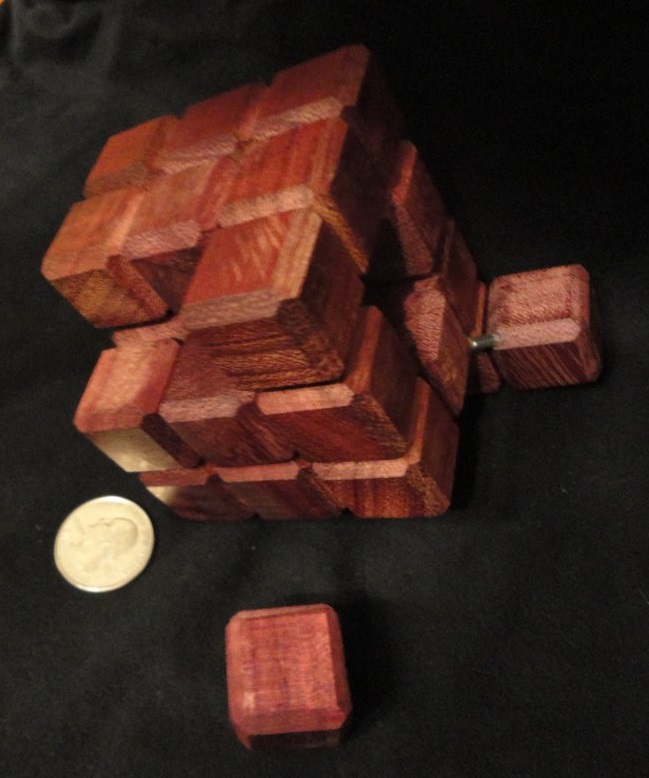
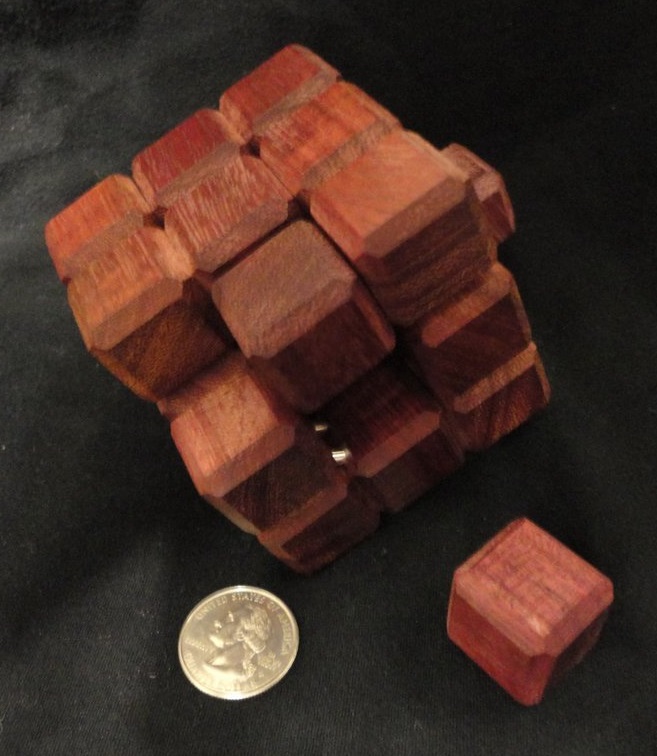
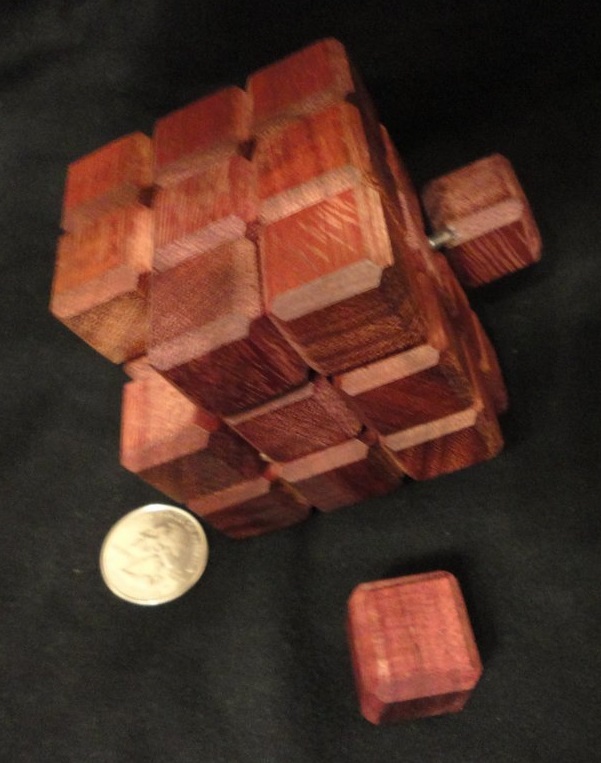
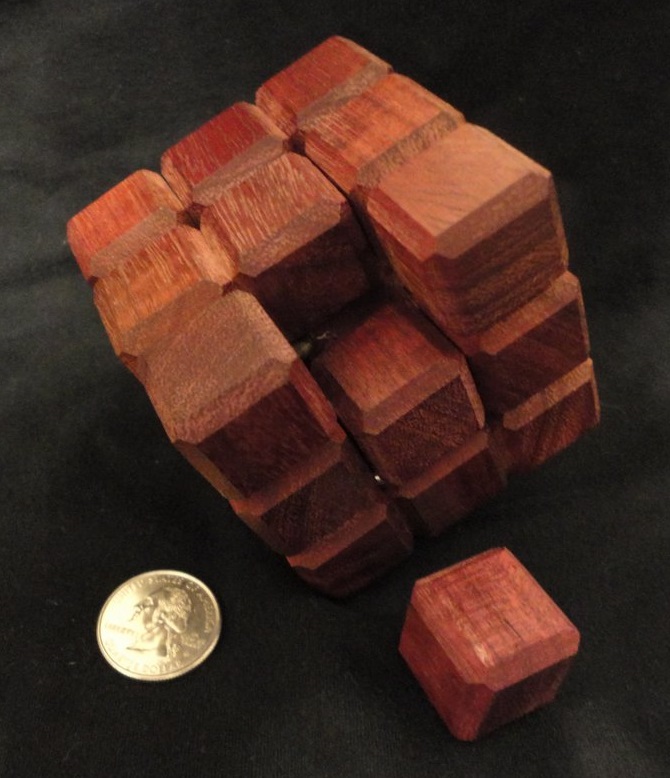
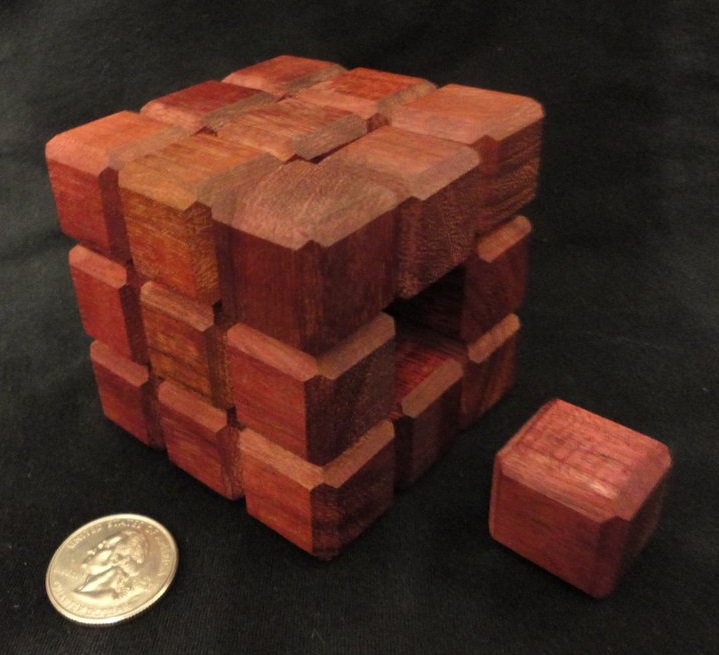
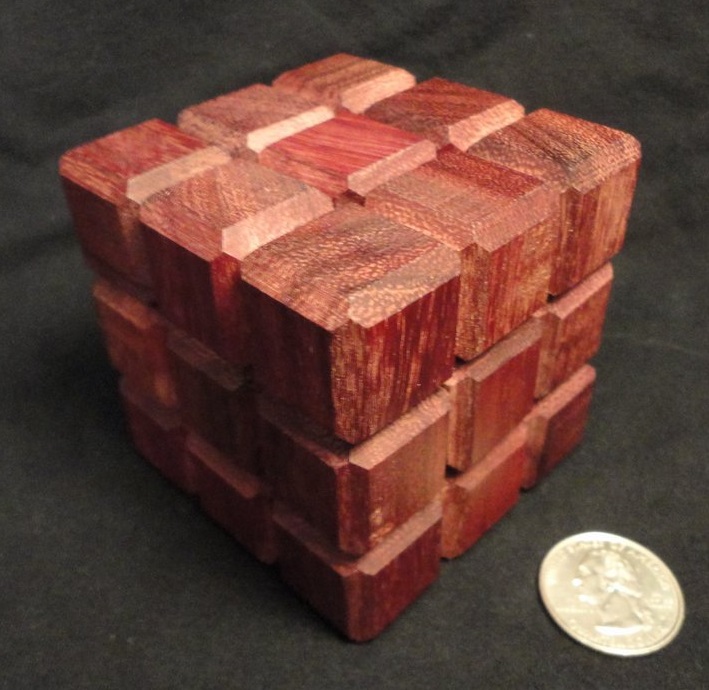
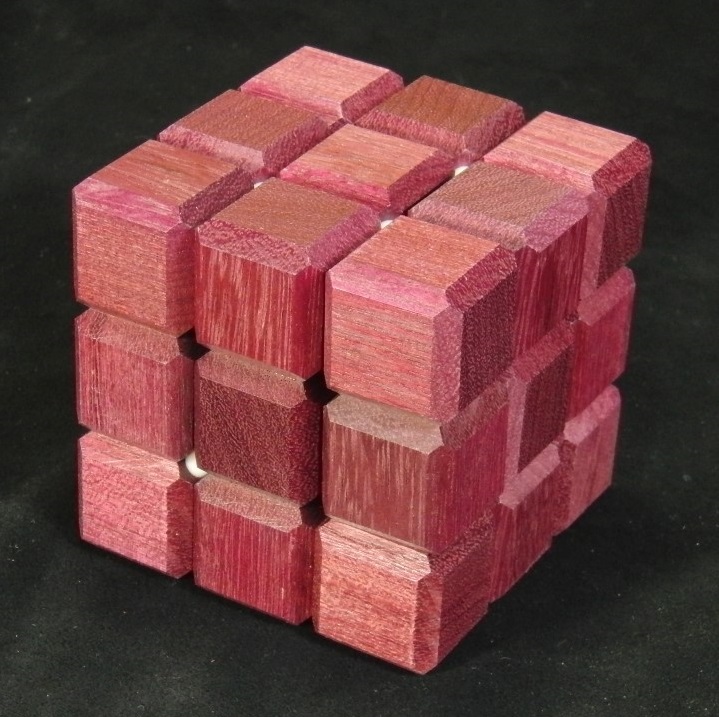
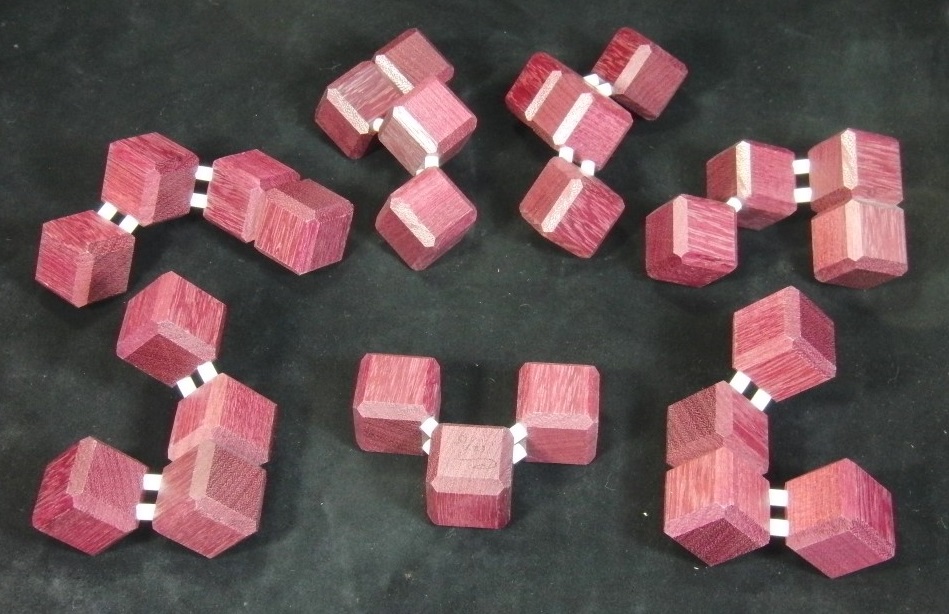
Liberal Cube
designed by Markku Vesala,
purchased from and made by Eric Fuller
from Purpleheart and Nylon.
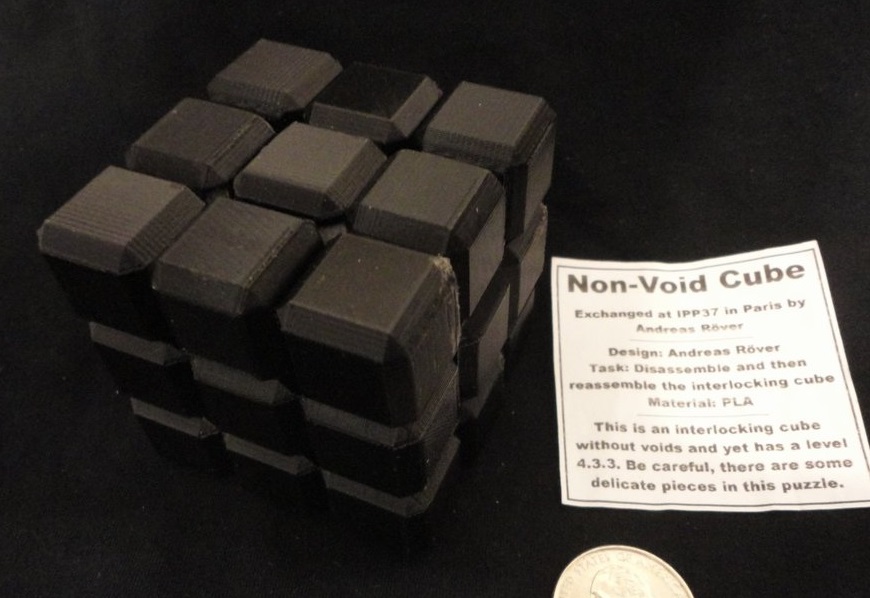
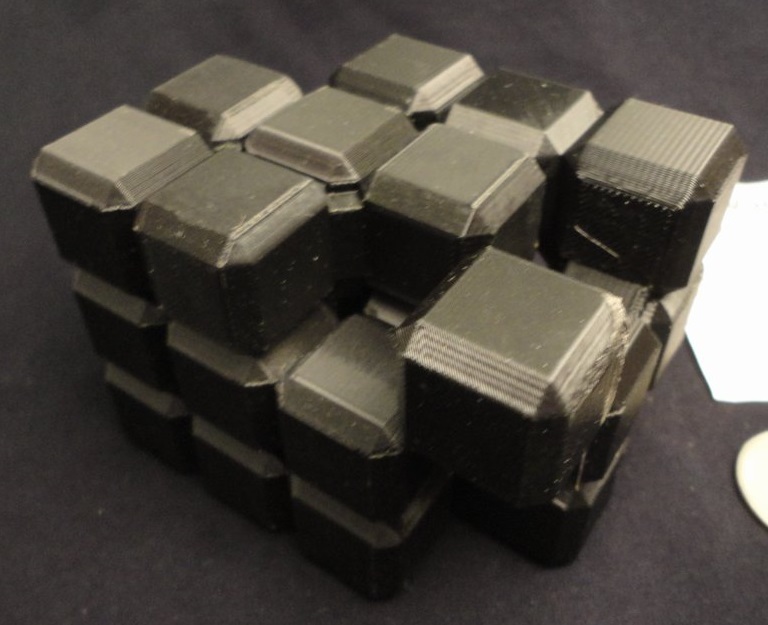
Non-Void Cube – designed by
Andreas Röver
Four pieces.
No internal voids, yet still manages to achieve level 4.3.3!
Purchased at IPP37 in Paris.
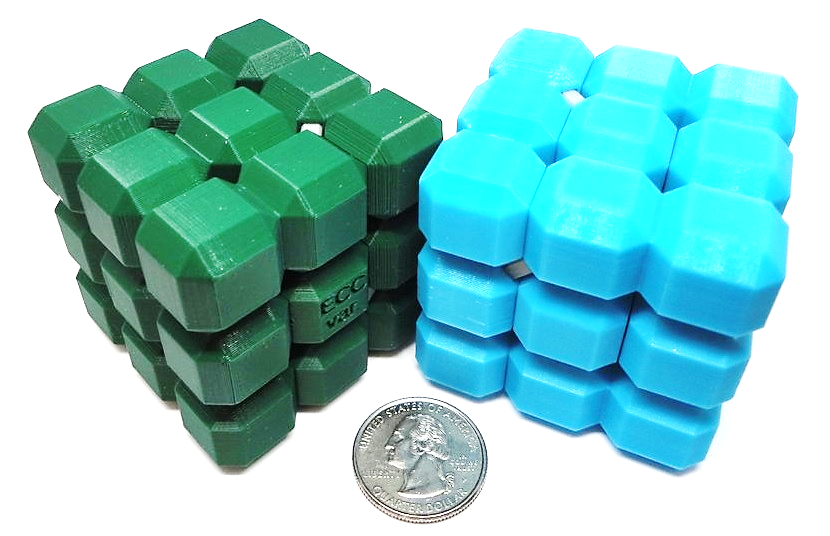
Edge Corner Cube Variation (green) and Non-Void Cube Variation (blue) –
both designed by Christoph Lohe,
3D printed by and purchased from Andrew Crowell
See Andrew’s Etsy shop
arcWood Puzzles.
Quoting Lohe from Andrew’s page:
ECC Var –
I was always fascinated by Markus Goetz’ Edge-Corner Cube.
It looks like a simple 3x3x3 cube but the pieces connect cubies
not only side by side, but also through some edge and corner connections.
My take on Markus’ idea has a slightly higher level 1.13
for the removal of the second piece than Markus’ original (level 1.9).
NVC Var –
Markus Goetz’ ECC had motivated Andreas Roever to [create] his Non-Void Cube.
It requires more than one move for the first piece. How is a level higher than 1 possible,
if the 3x3x3 volume is completely filled?
The magic is in the cubies’ bevels!
The bevels create channels which are partly empty, so it is not just a simple 3x3x3 puzzle.
My take on Andreas’ idea has a slightly higher level 5.2.6.1.2 than Andreas’ original.
Triple Trouble
Purchased from Potty Puzzles.
Black and White by Kubi Games
Purchased from GPP.
Double Trouble
Purchased from Pentangle.
I really like this one – six different pieces loosely interlock.
Each consists of a plank and two or more half-cubes attached in various orientations.
They can be assembled using logical deduction.
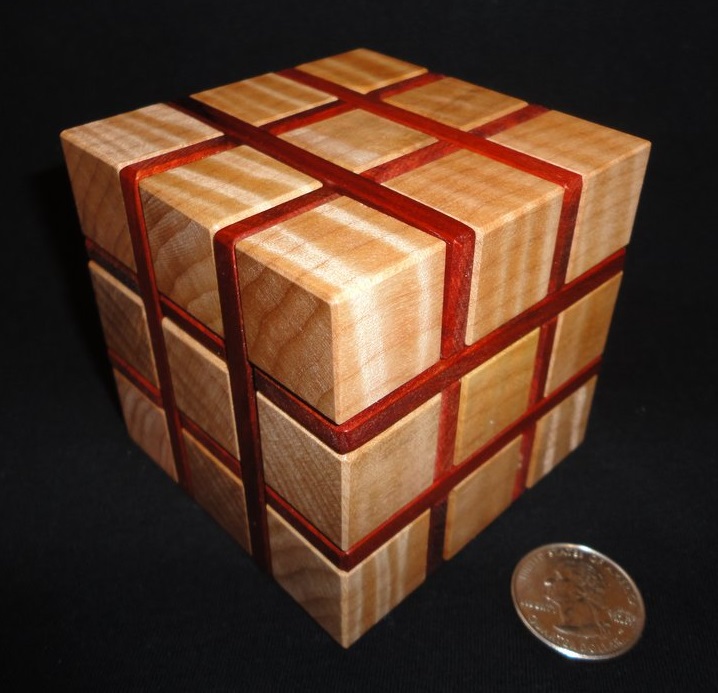
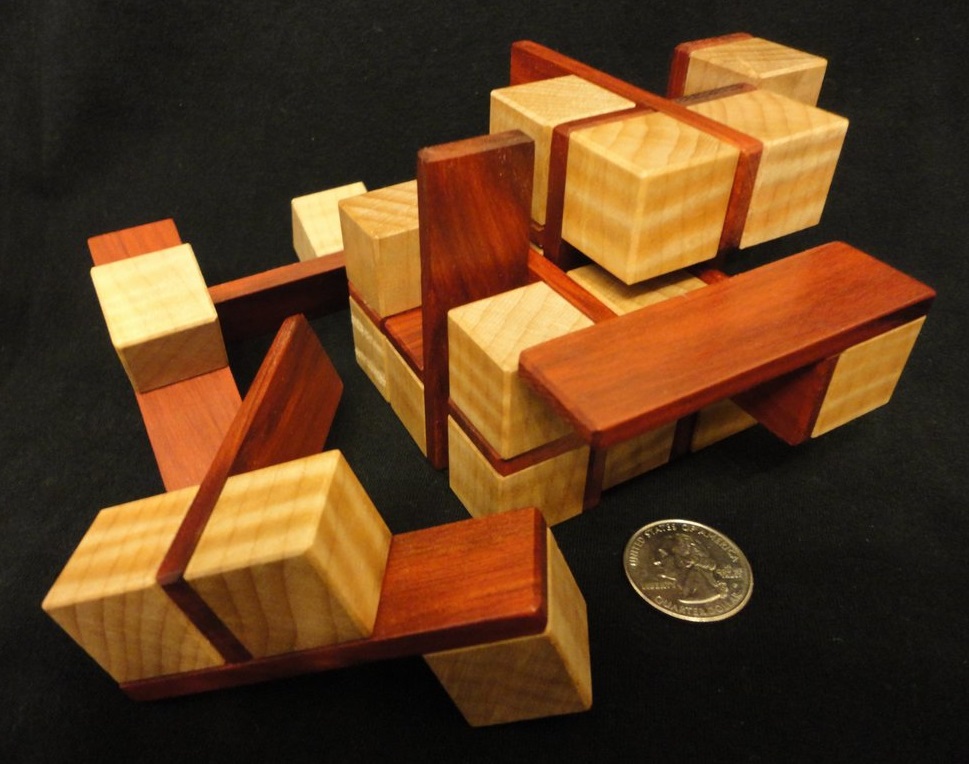
Red Planks designed by Jos Bergmans.
Nine pieces, made by Brian Menold from Redheart and Maple.
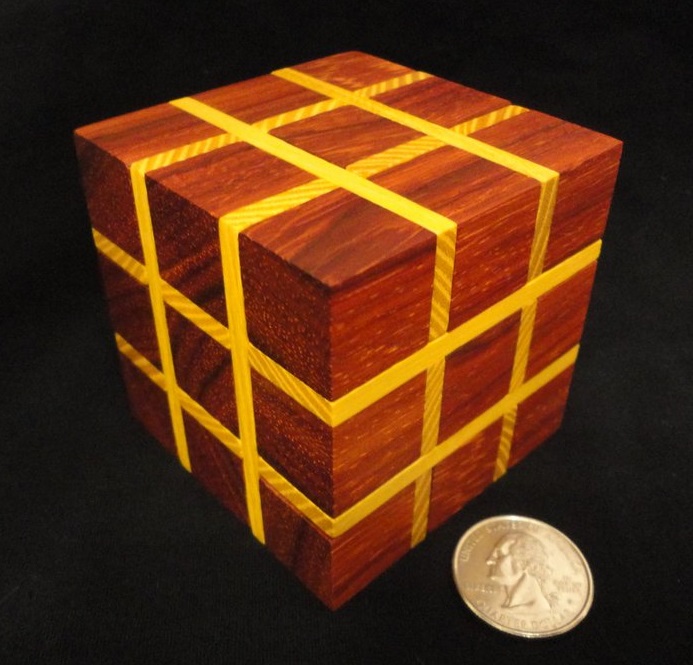
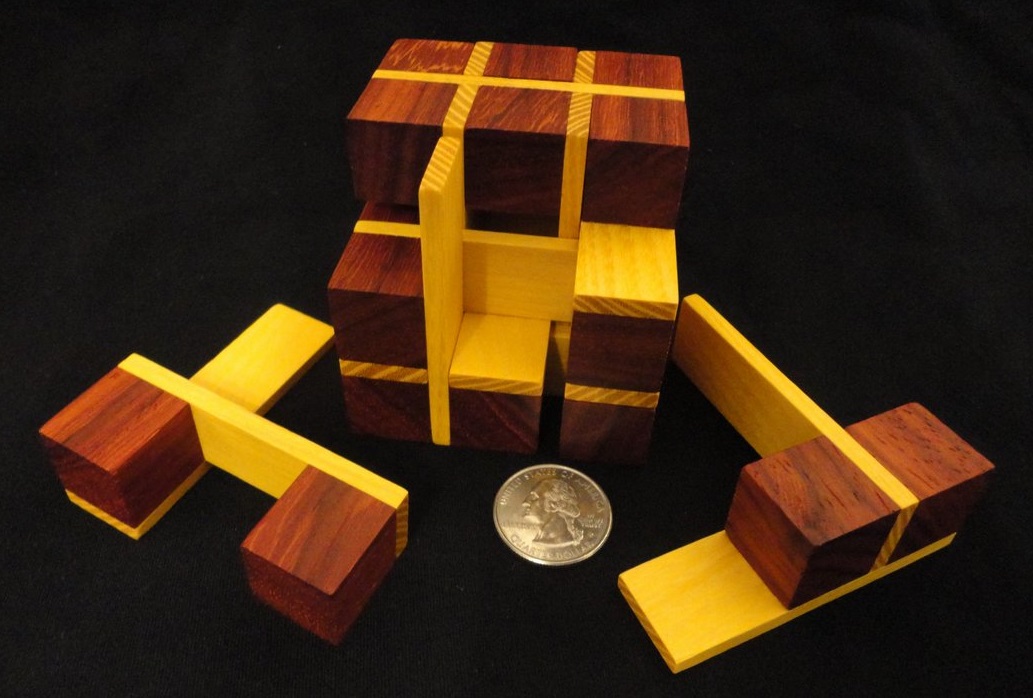
Blue Planks – designed by Jos Bergmans,
made by Brian Menold
from Padauk and Osage Orange
I am the proud owner of
Corner Cube #28 by
Lee Krasnow.
It has six dissimilar pieces which assemble only one way.It is not easy to find the sliding axis to disassemble the puzzle!
My instance is made from beautifully figured Tulipwood, Brazilian Kingwood, Cocobolo, and Bocote.
I bought this directly from Lee in 2003.
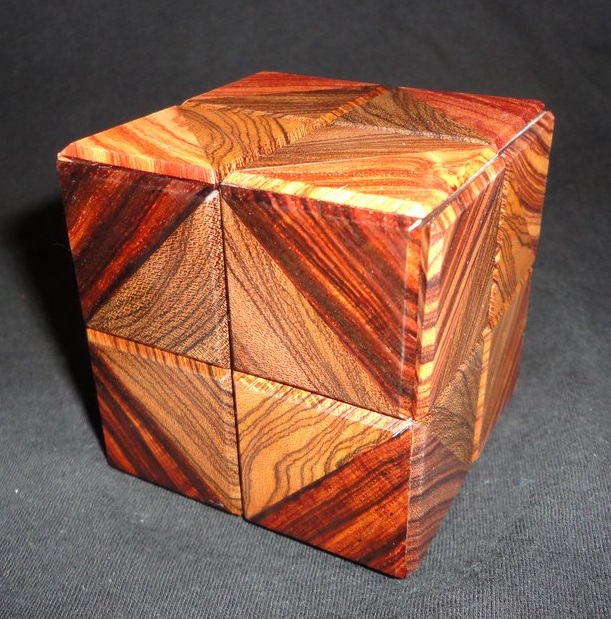
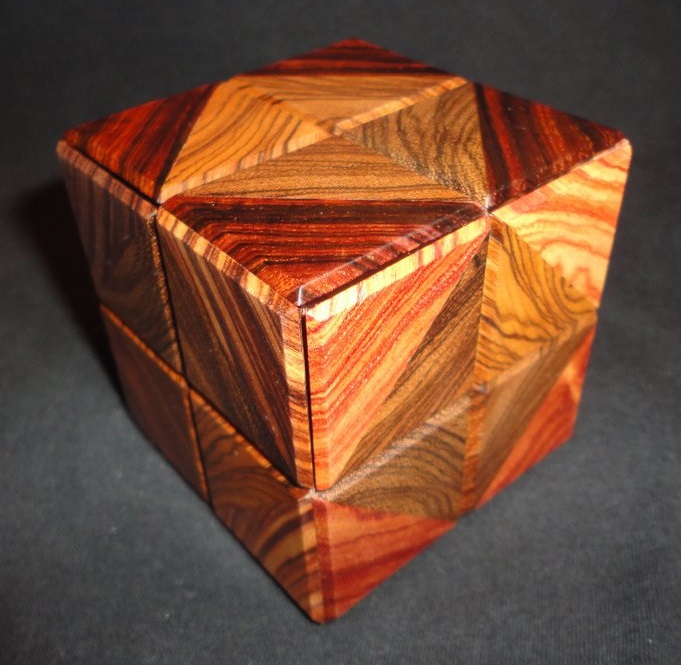
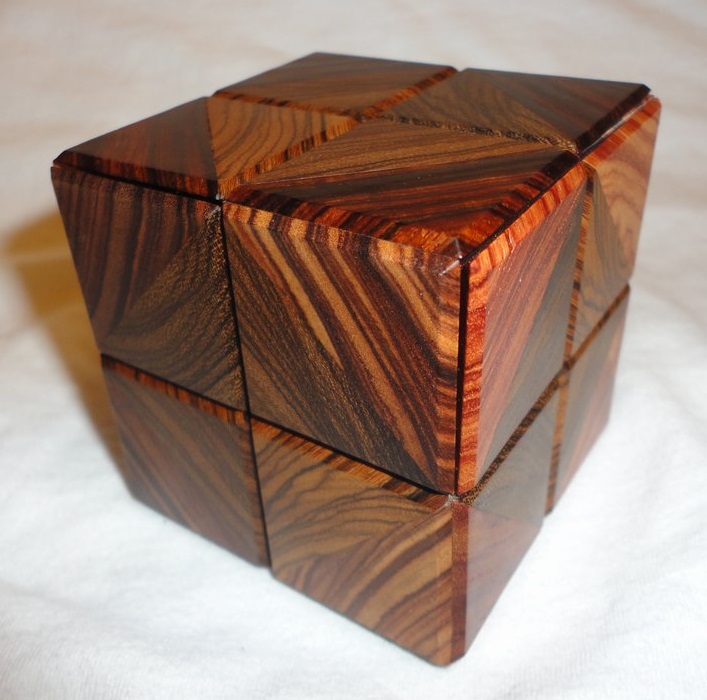
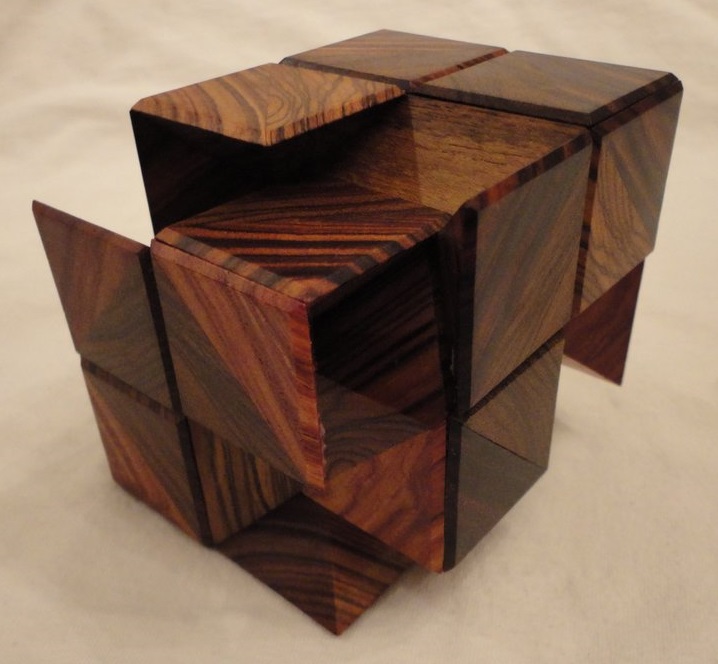
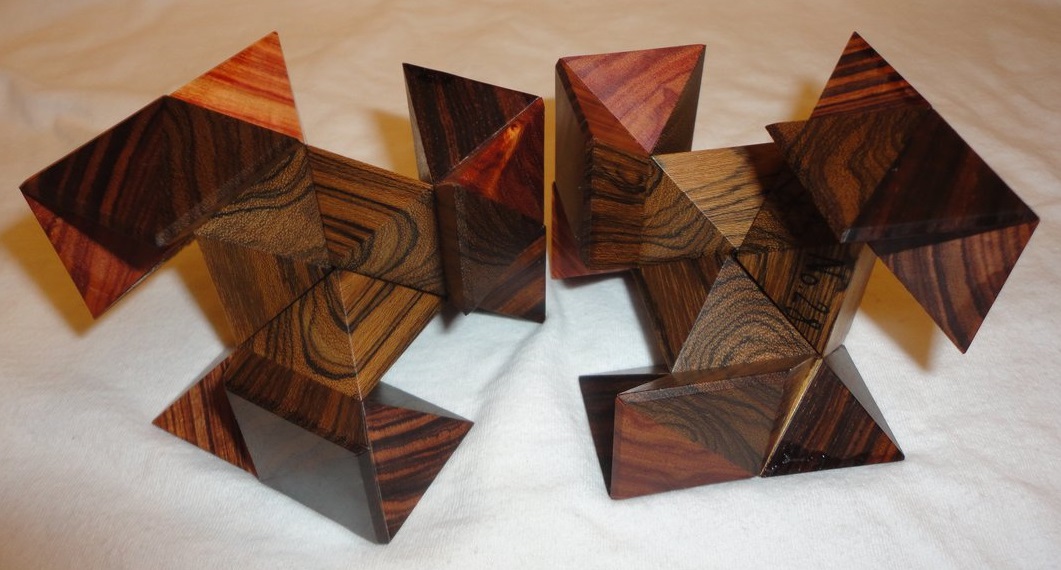
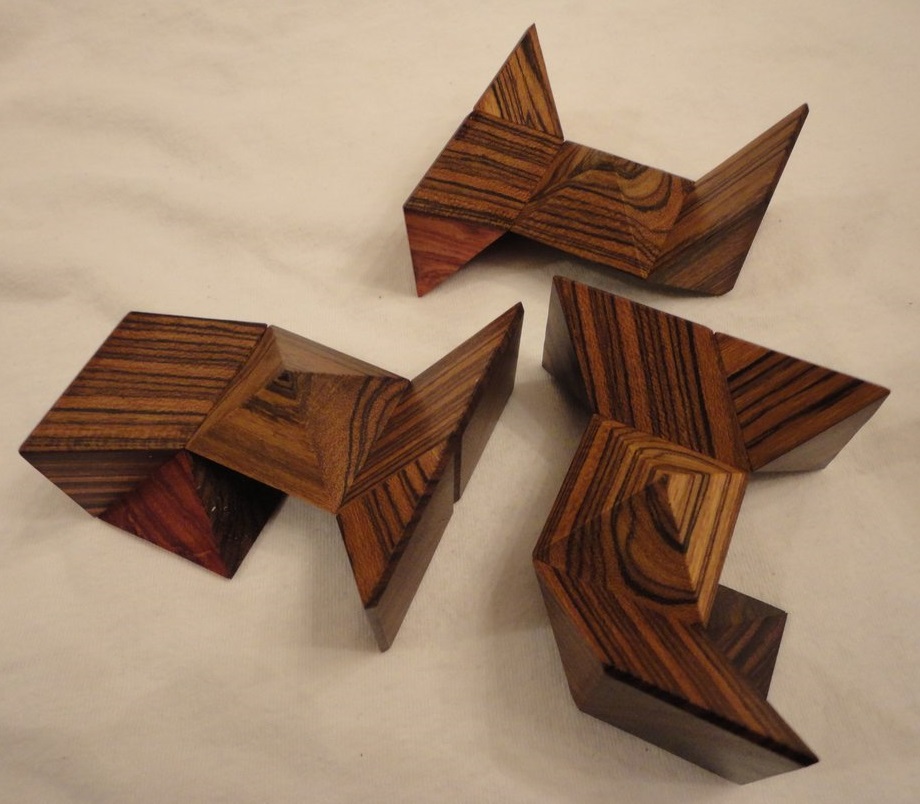
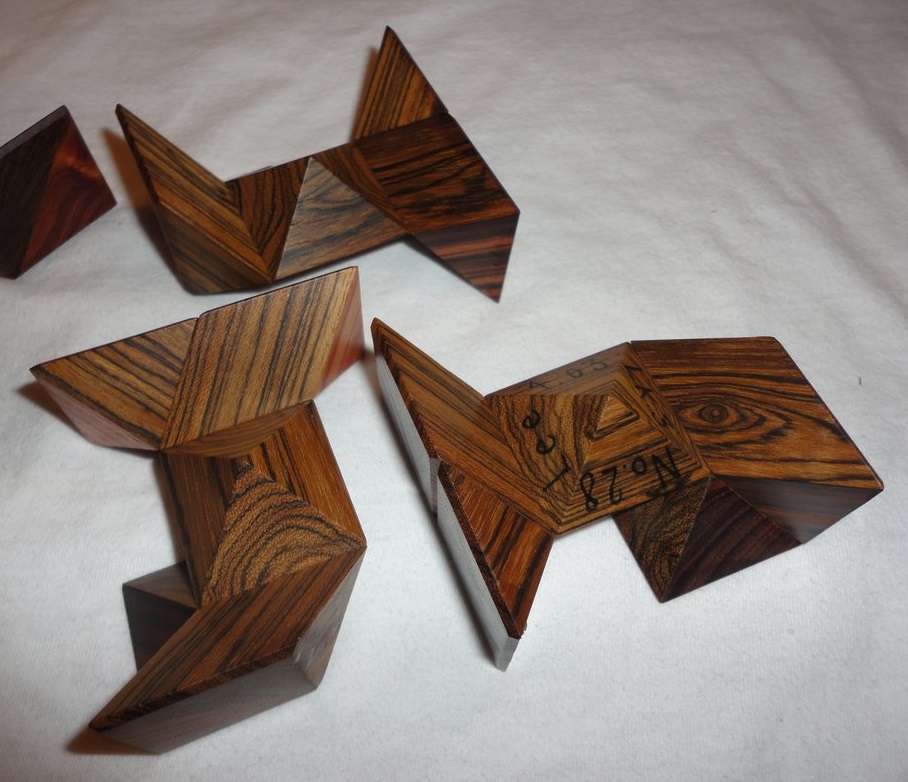
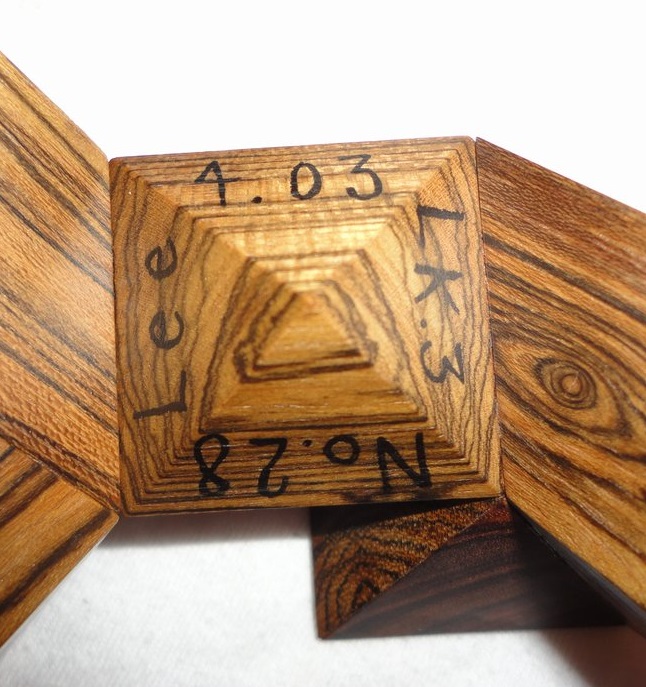
One of my favorites is this “Ribbon Keyvos” made for me by
Michael Toulouzas of Greece:
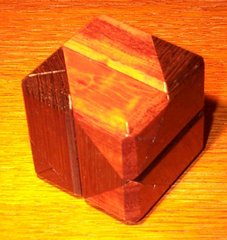
My Keyvos is made of
Bois de Rose, Wenge, and Mahogany
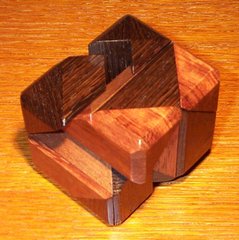
It’s not easy to find the right slide…
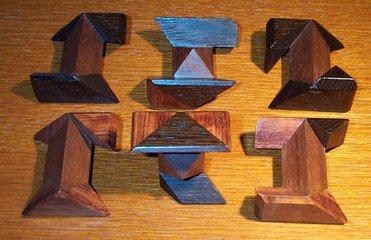
There are six distinct pieces
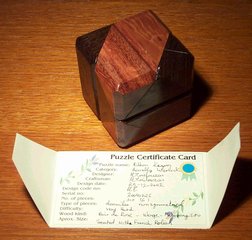
It comes with a certificate
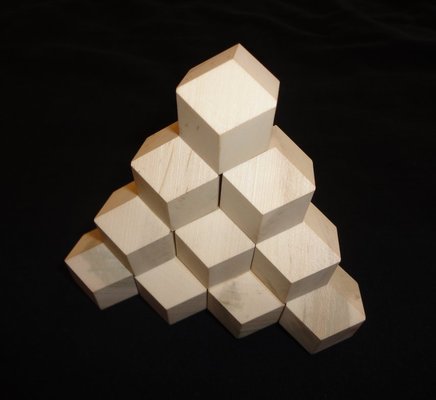
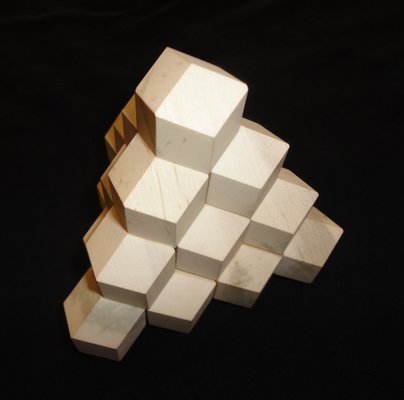
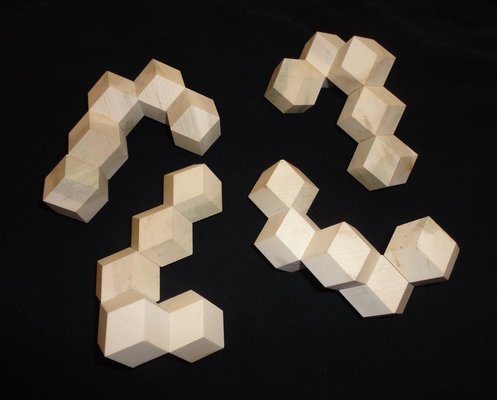
The Four Piece Pyramid designed by Stewart Coffin, made by Brian from Holly.
The units are rhombic dodecahedra.
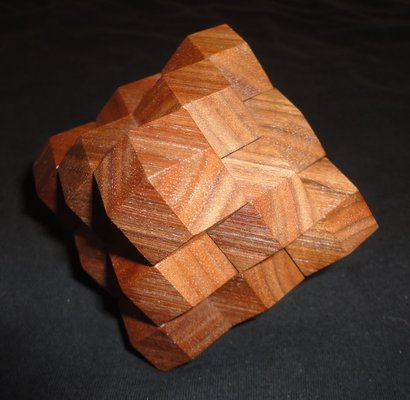
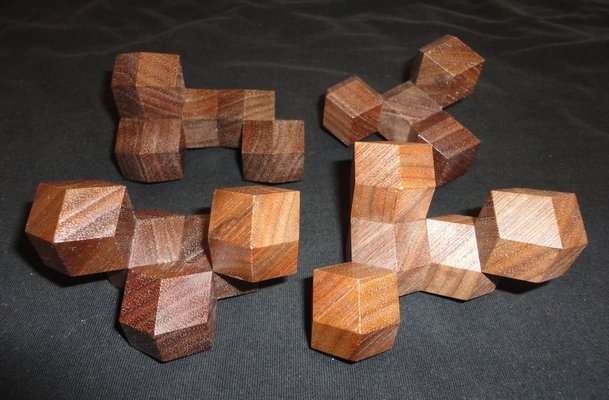
The Octahedral Cluster designed by Stewart Coffin, made by Brian from Walnut.
The units are rhombic dodecahdra.
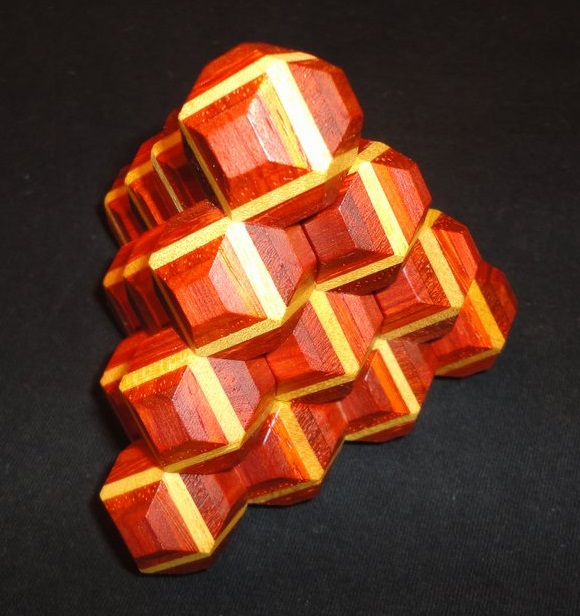
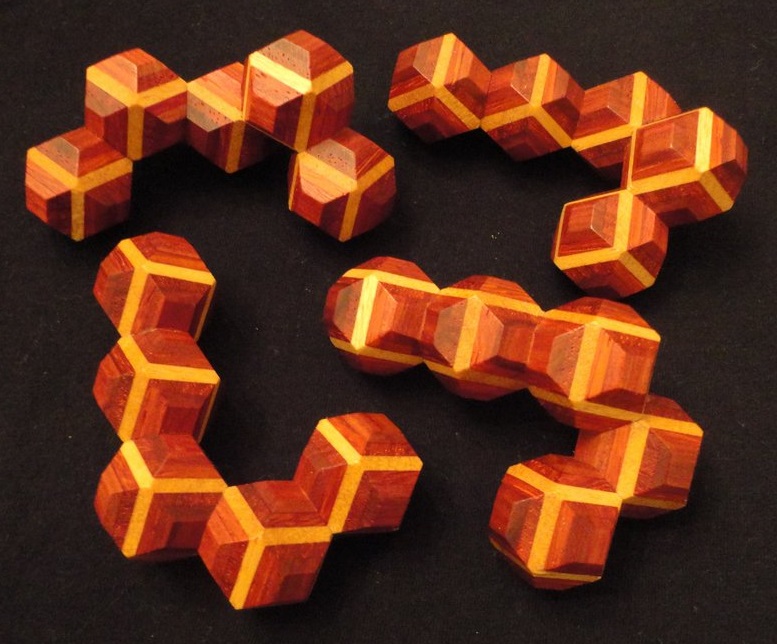
Four Piece Pyramid designed by Stewart Coffin
beautifully made by Brian Menold
from Redheart, Padauk, and Yellowheart
A very tricky assembly of four pieces!
These are from Interlocking Puzzles.
Some were designed and/or made by
Wayne Daniel.
All of these puzzles are very well made and attractive.
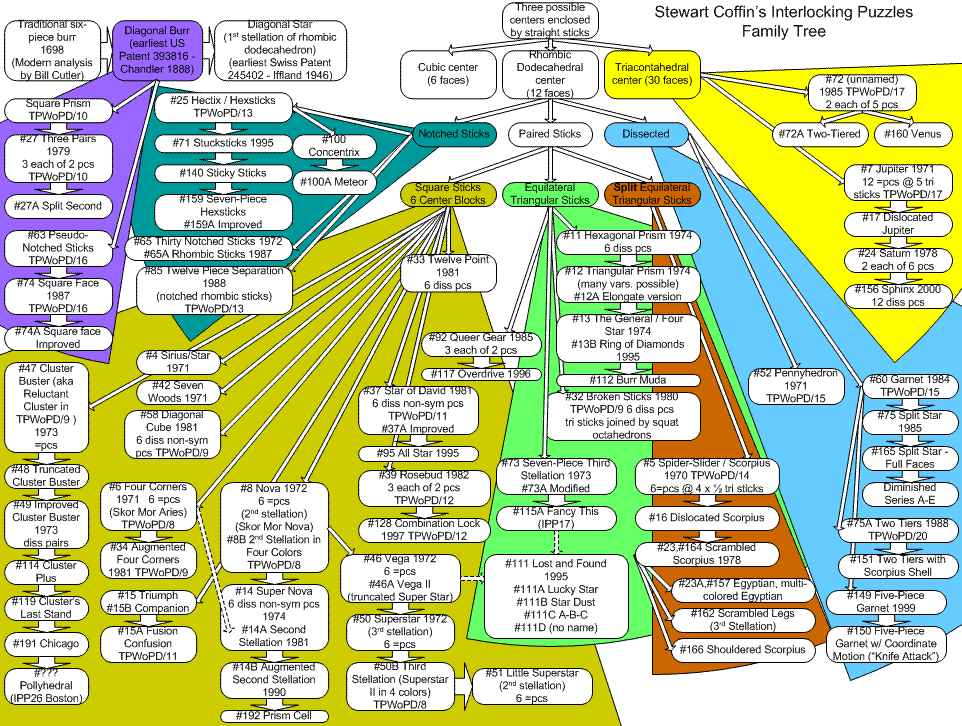
[47]
Stewart Coffin licensed several of his polyhedral designs to various companies which produced them in plastic.
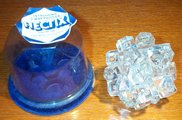
Stewart Coffin
and
Bill Cutler
both independently came up with the design of 12 interlocking notched hexagonal sticks
(copied by Tenyo’s “Papa” puzzle shown elsewhere).
Stewart’s version
was produced commercially by 3M, who called it “Hectix.”
I’ve obtained the red/white/blue, white, and clear versions of Hectix.
See U.S. Patent
3721448 – Coffin 1973.
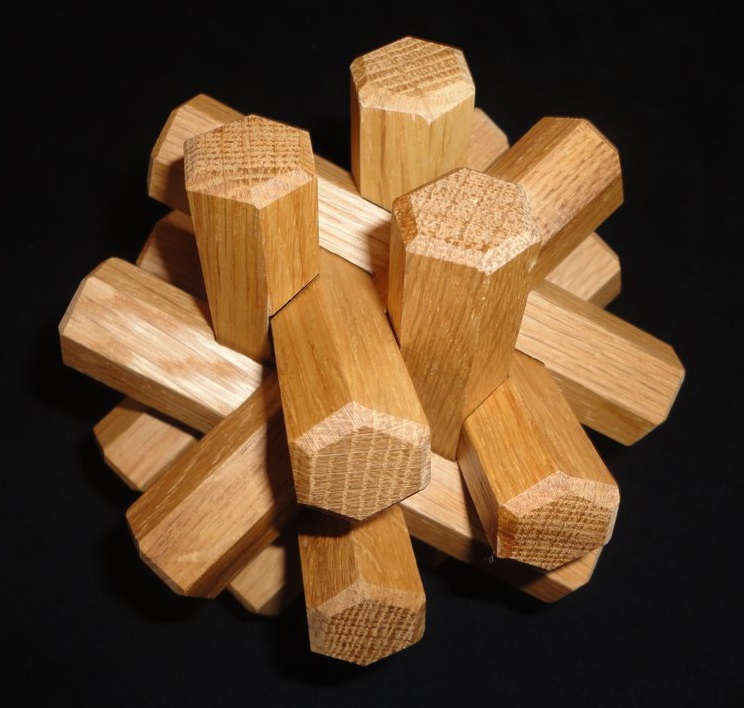
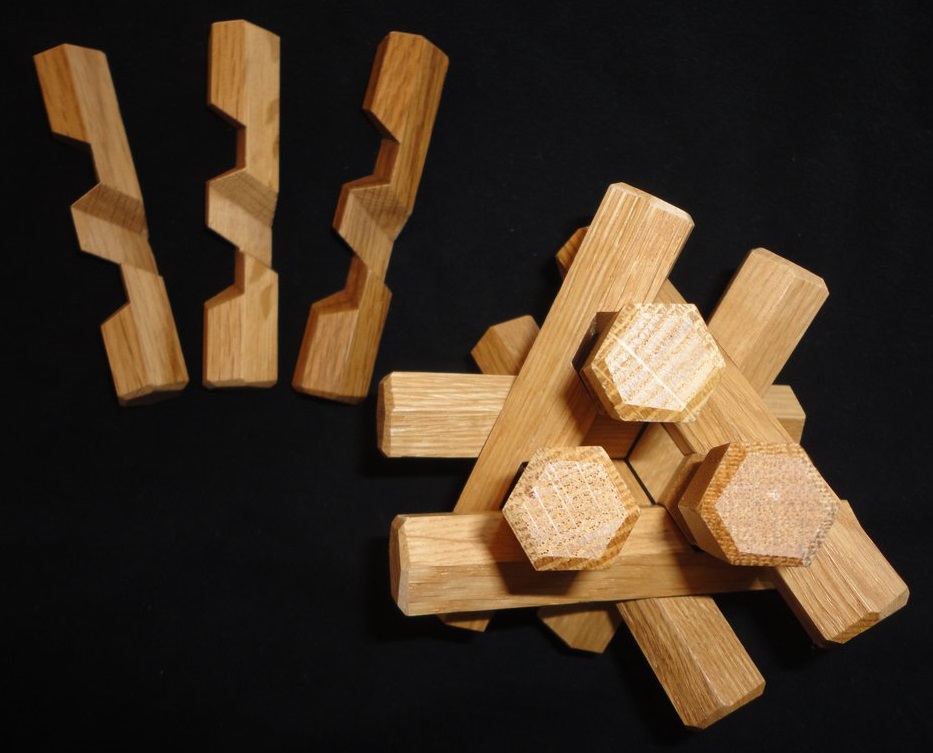
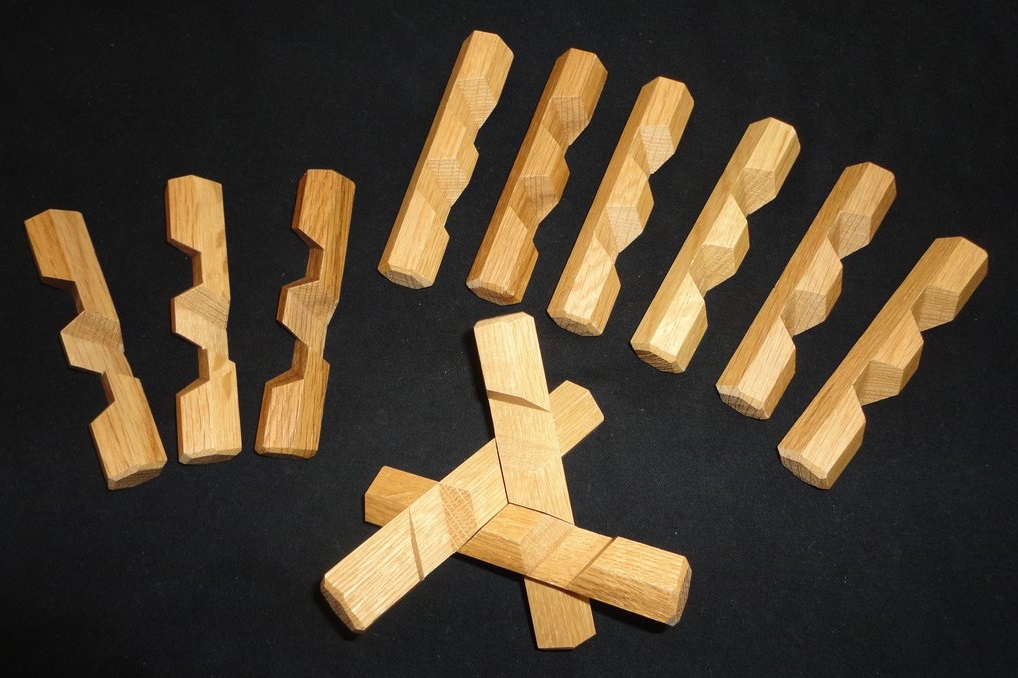
Woody Craft Hexsticks
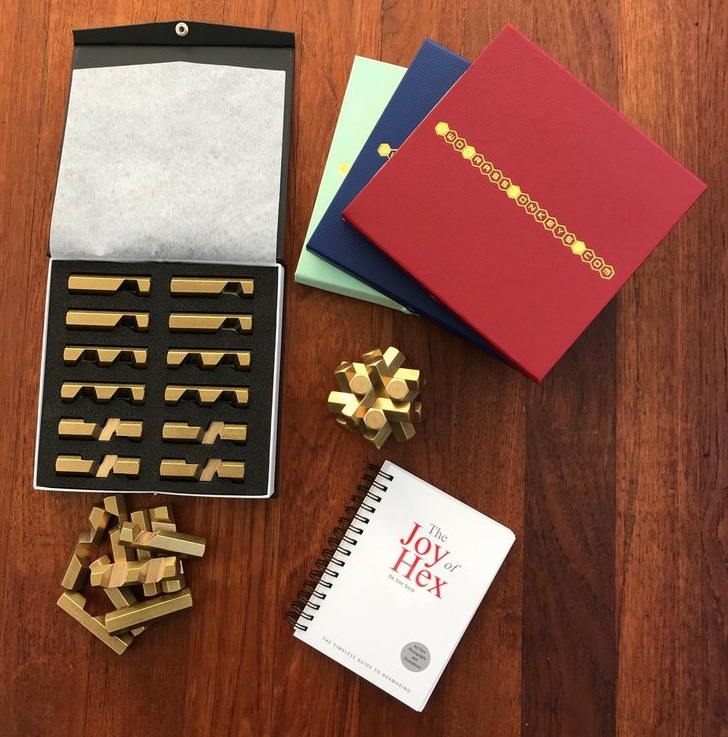
Joy of Hex – by
Two Brass Monkeys
in collaboration with Derek Bosch
This great product extends the original idea of a burr comprising 12 interlocking notched hexagonal sticks into a family…
Borrowing heavily from their website description:
They’ve done an analysis of all solid, twelve-piece burrs, with no solid key piece, and
selected and released three designs:
MISSIONARY (easiest);
BISH, BASH, BOSCH – requiring coordinate motion;
and GROUP HEX –
incorporates the maximum number of different piece types (8 of 9 possible types of notched hexagonal piece) that has a single unique solution.
Included with the three sets are:
Five bonus milled brass hex pieces,
a “Joy of Hex” manual of 30 hexual positions and solutions written by consultant hexologist Dr Eric Shun, and
a hex aid (jig/stand) to help with the most challenging positions.
These items turn the three puzzles into a burr set, with 30 published challenges and over 97,000 other possible assemblies.
Each hex piece is milled from solid brass and is 6cm / 2.36 inches long.
An assembled puzzle weighs about 1.8lbs or 840g.
I got the complete set.
The entire set weighs in at 8.5lbs.
I have accomplished the Missionary position:
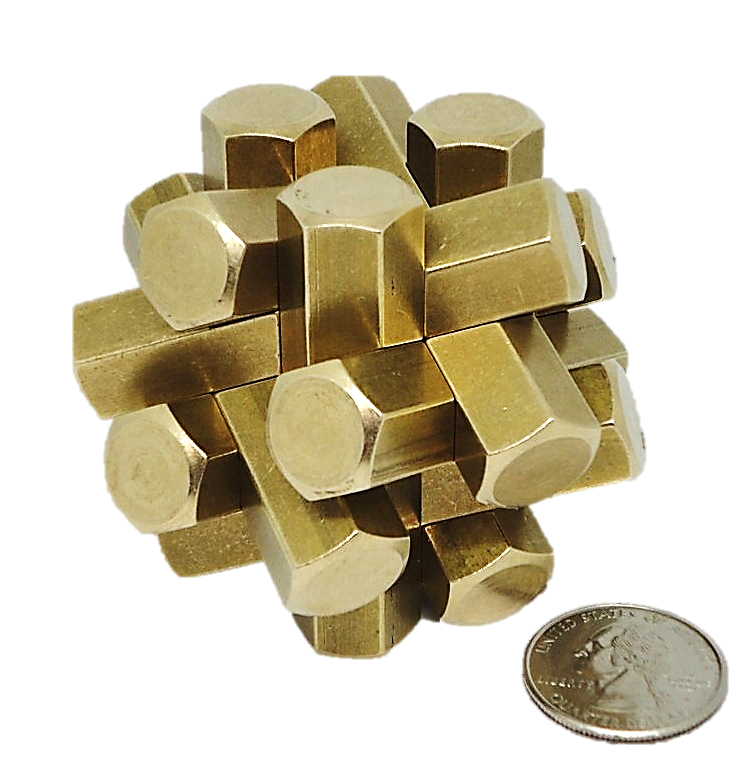
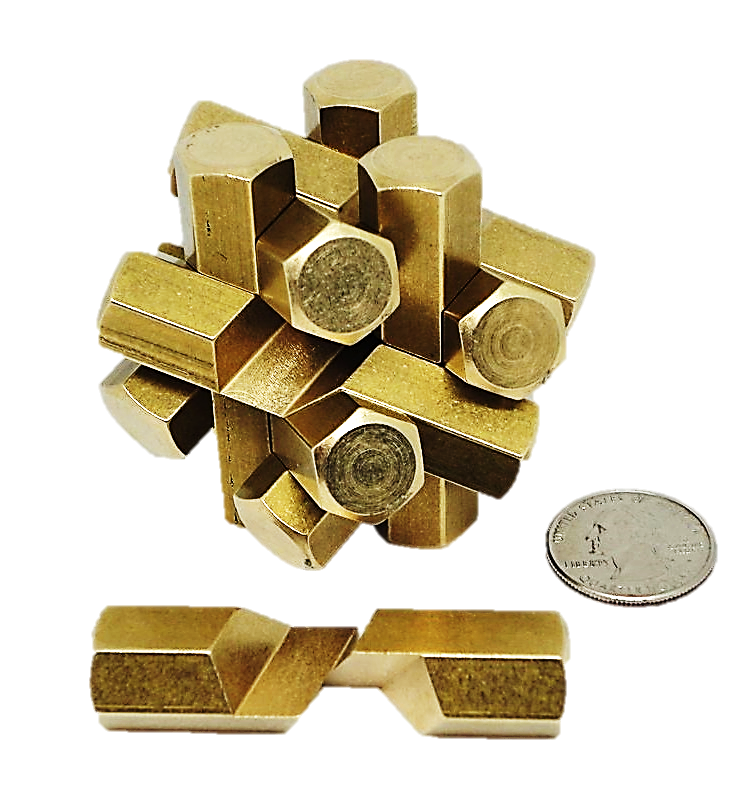
When I received my example of “Group Hex” it mistakenly included an extra BC rod instead of the required ABC rod.
Brass Monkey Steve very kindly and promptly sent me the missing part, and then named an assembly that would utilize the extra BC rod after me – I am honored, probably…
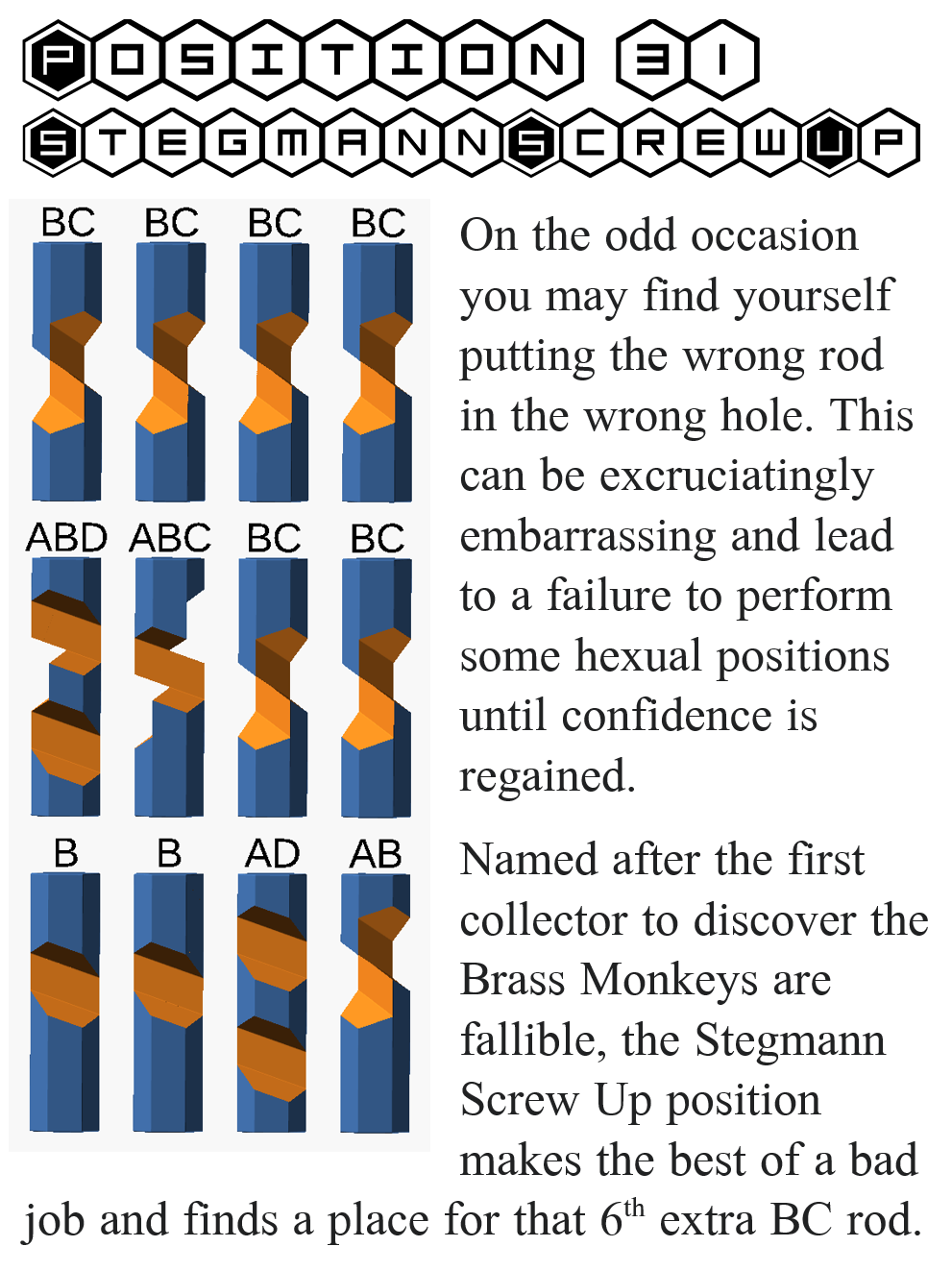
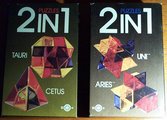
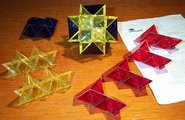
Some of Stewart’s other designs were produced commercially in plastic as part of the Skor-Mor “Geo-Logic” and “Penta-Logics” lines.
I obtained Tauri, Cetus, Aries, and Uni in 2-in-1 packs, and a Nova separately.
The Penta-Logics included Spirus and another Nova.
Luckily, all of the pieces are intact.
Each puzzle is composed of a set of six particular identically-shaped pieces (a different piece type for each puzzle), which fit together either in two halves or using coordinate motion.
The Tauri is described in Stewart Coffin’s book
The Puzzling World of Polyhedral Dissections (see fig. 97).
The Penta-Logics set allows you to make a “Galaxy 1” (shown, with leftover pieces) and a “Galaxy 2” (not shown).
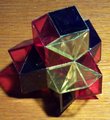
Aries
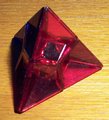
Cetus
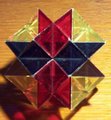
Nova
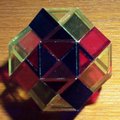
Tauri
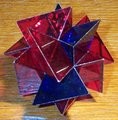
Spirus
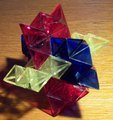
Uni (A real pain to assemble!)
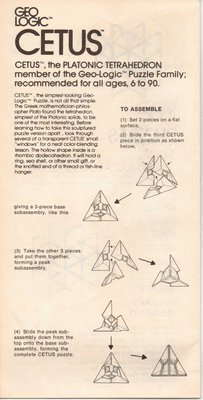
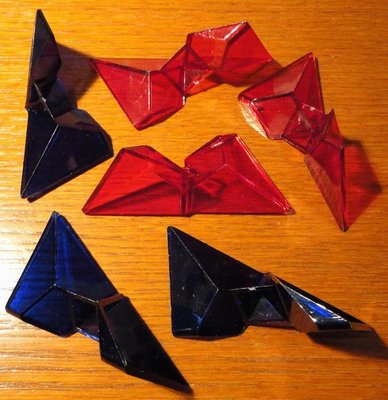
Cetus instructions and six identically shaped pieces.
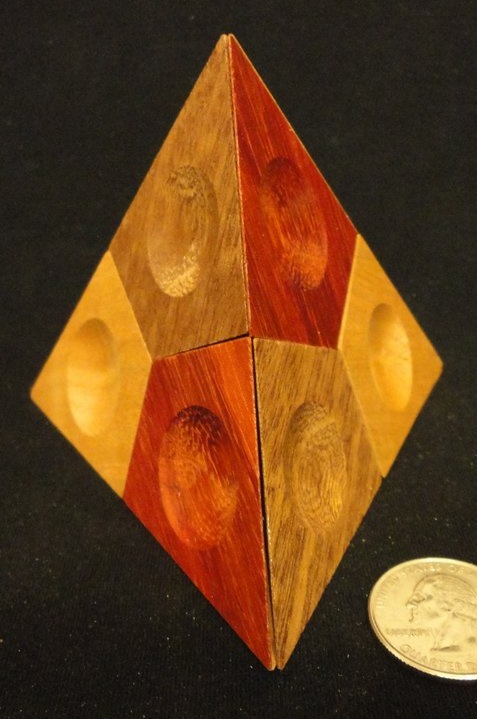
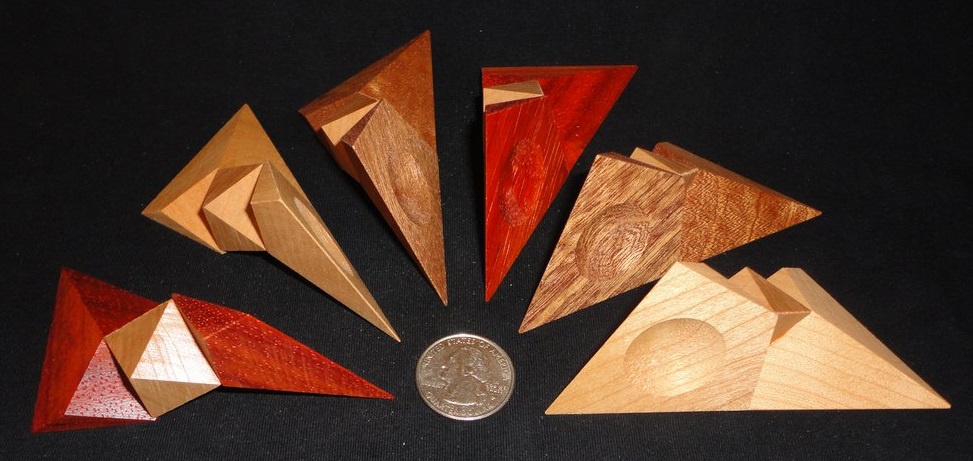
Tetrahexed – designed by Stewart Coffin,
made by Wayne Daniel, exchanged at IPP35 by Stan Isaacs
A nice wooden version of Coffin’s 1971 Cetus issued by Skor-Mor
Nova
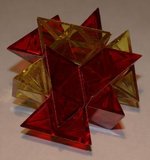
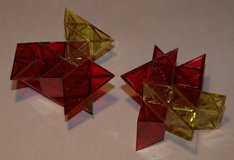
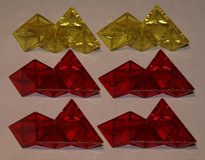
Spirus
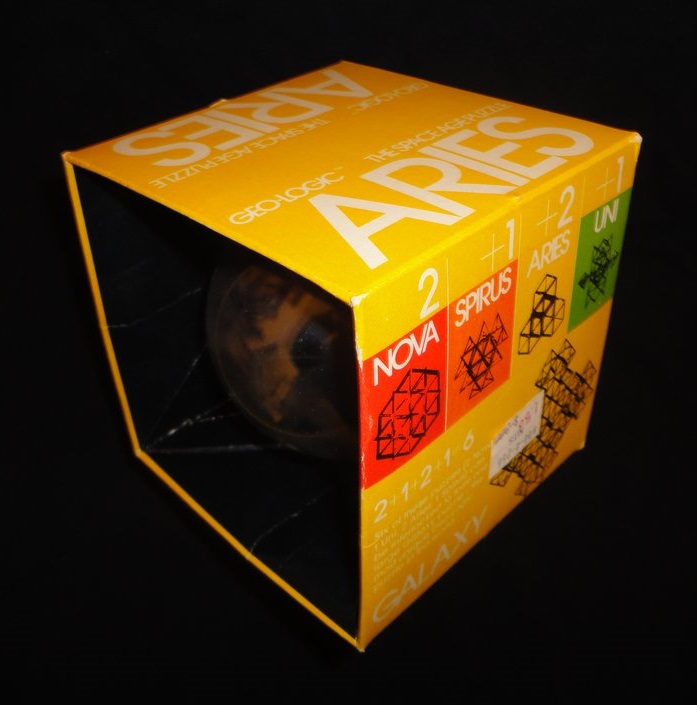
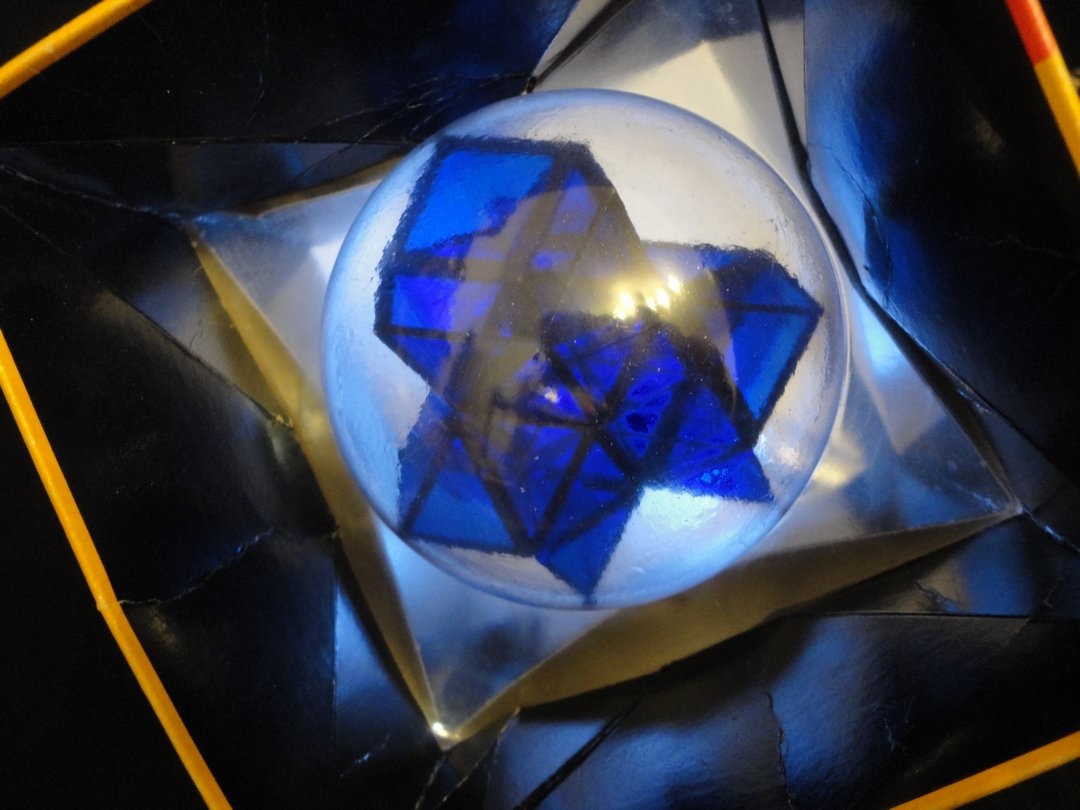
Geologic Aries – designed by Stewart Coffin,
issued 1972 by Nylon Products Corp. MA
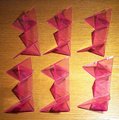
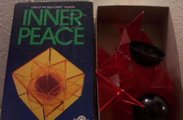
The Geo-Logic line also included an “exploding cube” called “Inner Peace.”
It has six identical pieces.
I obtained one but with no box – I did not know what it was until I found a box shot on the web.
The six pieces can be built into a cube or a stellated rhombic dodecahedron.
The latter is a very tight fit.
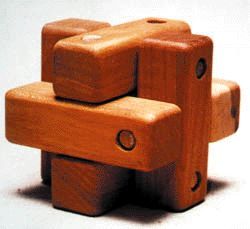
This is a puzzle called “Rube’s Cubic” purchased from
IQ Puzzles.
It is also described in Coffin’s book, as the
Pin-hole Puzzle.
As Stewart says, it is fairly easy to assemble.
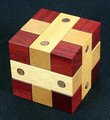
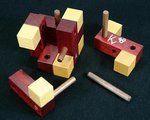
This is Coffin’s Corner Block puzzle, made by Kerry Verne from Yellowheart, Bloodwood, and Walnut (pins).
Purchased from CubicDissection.
Stewart describes this type of puzzle in his book, showing a set of possible pieces.
Coffin’s Corner Block uses pieces numbers 1, 2, 3, 7, 8, and 12, and one pin.
Stewart says he has been unable to find a selection of pieces that can be assembled one way only.
This set has two solutions.
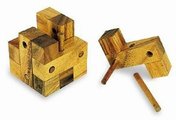
This is the “Ancient Key” puzzle, from the
Mandalay Box Company.
This is a variant of the Corner Block.
The Ancient Key uses pieces numbers 1, 2, 3, 7, 11, and 12, and one pin.
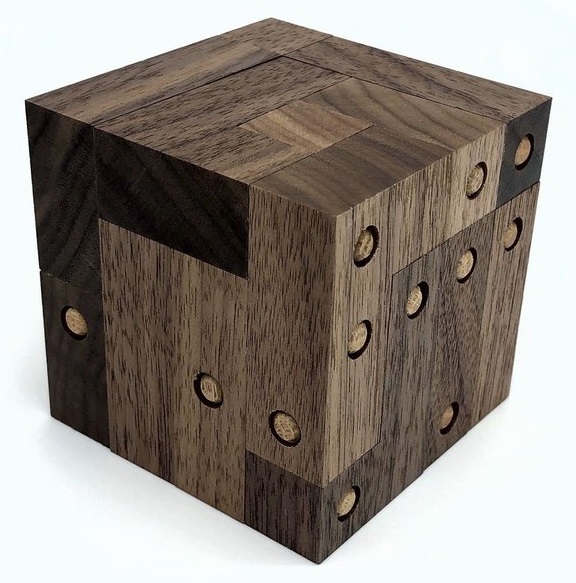
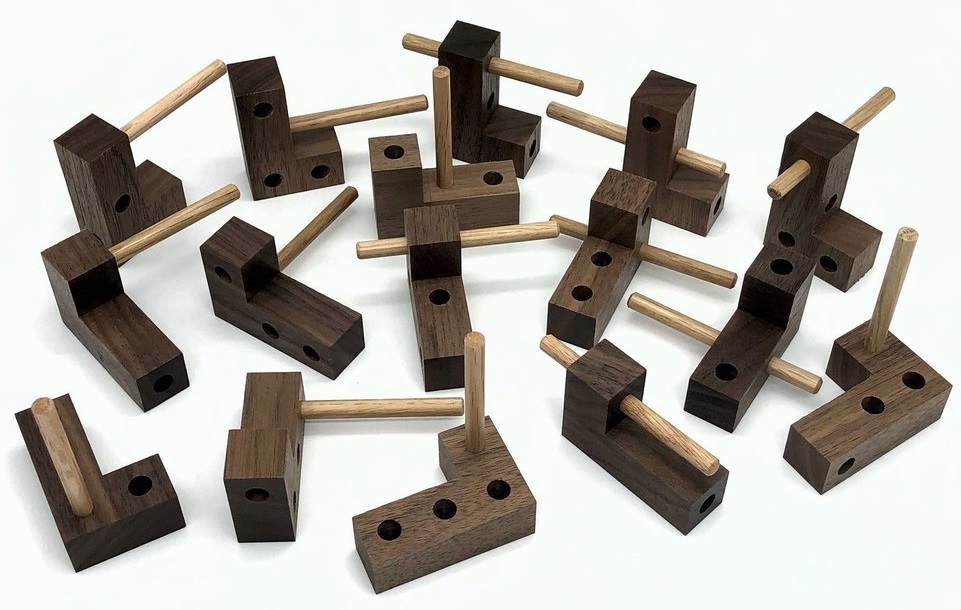
Logical Progression Interlocking Cube – designed by Rick Eason, made by Rick, and Eric Fuller
from Walnut and Oak. Lots of holes and dowels.
A single sequential-assembly solution.
The puzzle is supposedly solvable by analysis rather than guesswork.
Rick describes the puzzle
at his website and gives a link to a page with detailed logical analysis.
Arjeu CT442 (Colorado)
purchased from Ishi
Also known as Electrons, by Janod.
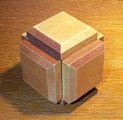
Arjeu CT210
purchased from Ishi
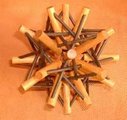
Arjeu CT795 (Cactus)
gift from Jeff Taylor
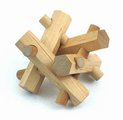
This is Arjeu’s Quadro (CT755), purchased from Ishi.
It is a simple version of Coffin’s Locked Nest puzzle and
is
described in Coffin’s book in Chapter 13 (see figure 130b).
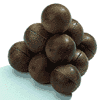
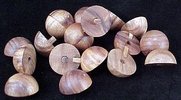
Tetralott by Markus Goetz (Philos)
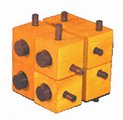
Arjeu CT5152
aka Achille
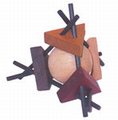
Tipi – Bits and Pieces
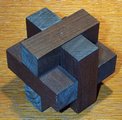
Woodn’t Cross by Mag-Nif 1974
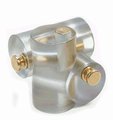
Charles O. Perry’s
The Double (my favorite).
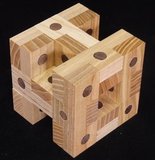
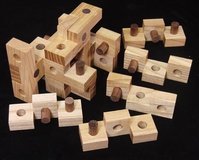
Alchemy, designed by Brian Young, made by Eric Fuller, from Ash wood.
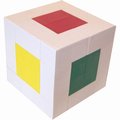
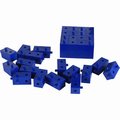
The Aqube, purchased from Puzzlemaster.
(I got the Psychodelic version – blue pieces shown for example.)
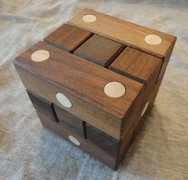
Spotted Cube,
designed, made, and exchanged by Ken Ewers at IPP32
Rosemary Howbrigg sent me one of her IPP33 exchange puzzles,
Spare Parts, designed and made by Stewart Coffin.
Thanks so much, Rosemary!
geometrically easily described.
Some are figural representations of various animals or objects, while many are abstract geometric fantasies.
Sometimes the pieces of the puzzle are similar, sometimes dissimilar.
They can be made from wood, or plastic, or metal.
Vaclav Obsivac (aka “Vinco”),
makes wonderful wooden puzzles.
I have acquired several,
some purchased
from puzzlemaster.ca,
others from Cleverwood or directly from Vaclav.
Cross in Ball
Prismastar
Twister 1
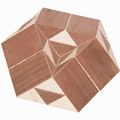
UFO
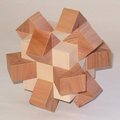
The Hedgehog
purchased from Cleverwood
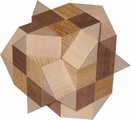
The Trick Box is also a coordinate motion puzzle – darned hard to assemble.
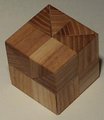
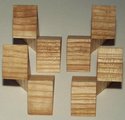
This small 4-piece
“Cube Vinco”
was a gift from Vaclav at IPP26.
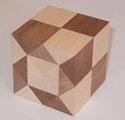
Cubetresor
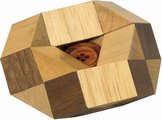
This is the Button Prison from B & P.
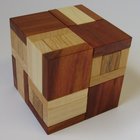
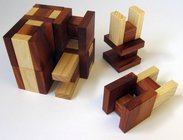
This is Two U.
See Vinco’s website for a nice
chart of various types of “half-cube” puzzles.
This puzzle reminds me of Coffin’s Pieces of Eight.
Purchased from Vaclav at IPP28 in Prague.
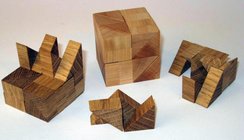
This is Vinco’s Vidly Half-Cubes.
Although technically this isn’t an Interlocking puzzle, I show it here since it is another of Vinco’s series of
half-cube designs.
A gift from Vaclav at IPP28 in Prague. Thanks!
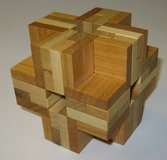
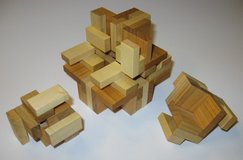
Xcruci8 – designed and made by Vaclav Obsivac
Exchanged at IPP28 by Laurie Brokenshire
Purchased from Laurie at NYPP2011
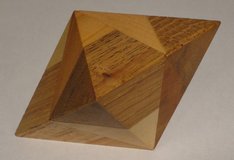
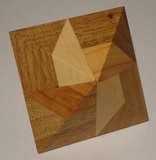
IPP 31 – octahedron – Vinco
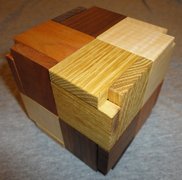
Try-Cycle
designed and made by Vaclav Obsivac, exchanged by Laurie Brokenshire
Helical puzzles use a twisting motion.
Tensegrity puzzles interlock under tension and compression and can often be more of a dexterity challenge.
George invented and 3D printed with white nylon.
I got prototype number 1 from him at one of Brett’s Manhattan puzzle dinners.
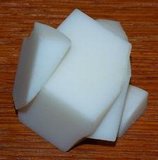
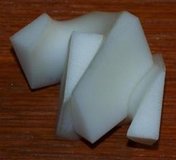
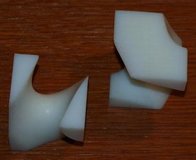 It’s not too difficult, but everyone who plays with it likes it and is a little stumped at first.
I think it’s a classic. Thanks again, George!
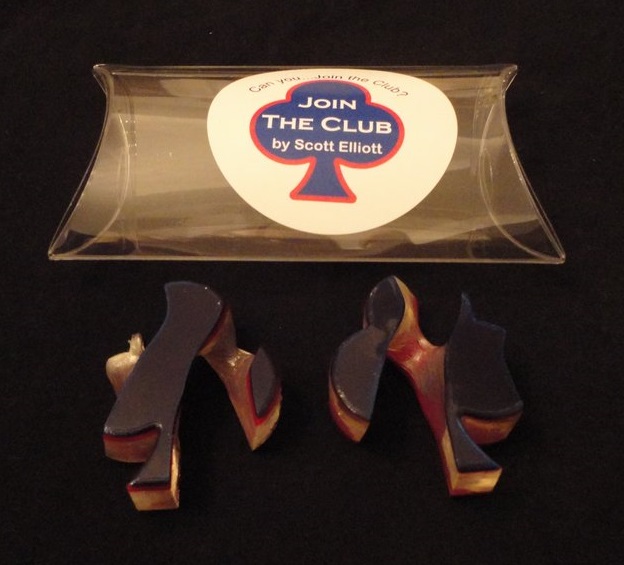
Join the Club – Scott Elliott
Diamond Engagement – designed,
3D printed, and exchanged at IPP35 by Scott Elliott
Halve a Heart – designed and made by Scott Elliott
S’Paid in Full – designed and made by Scott Elliott
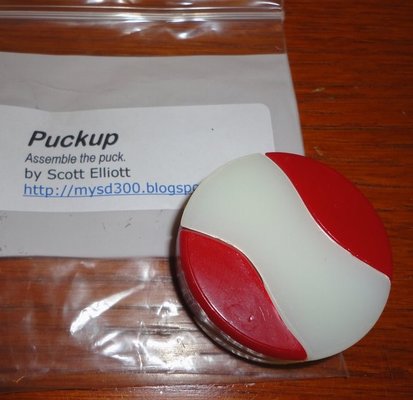
Puckup – designed by Scott Elliott
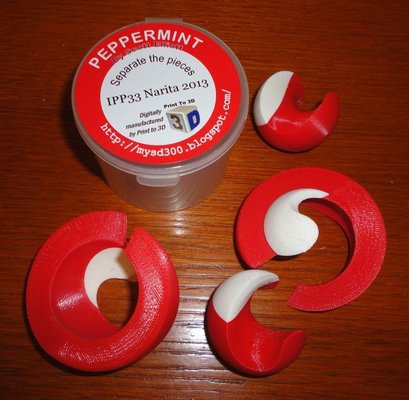
Peppermint – designed by Scott Elliott
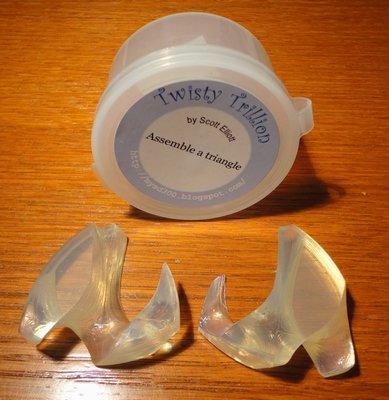
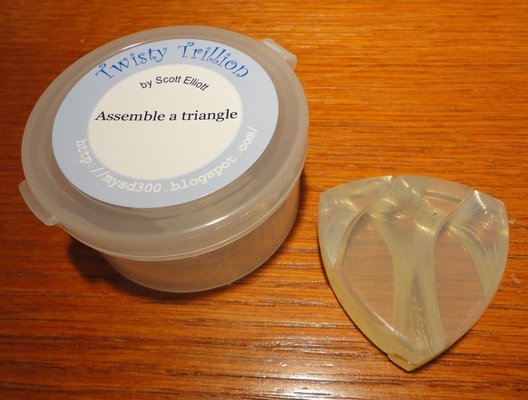
Twisty Trillion – designed by Scott Elliott
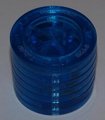
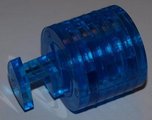
The Tubular Burr by Derek Bosch.
Purchased from Derek at IPP 29 (2009) in SF.
Derek went on to elaborate his ideas on helical structures in burrs…
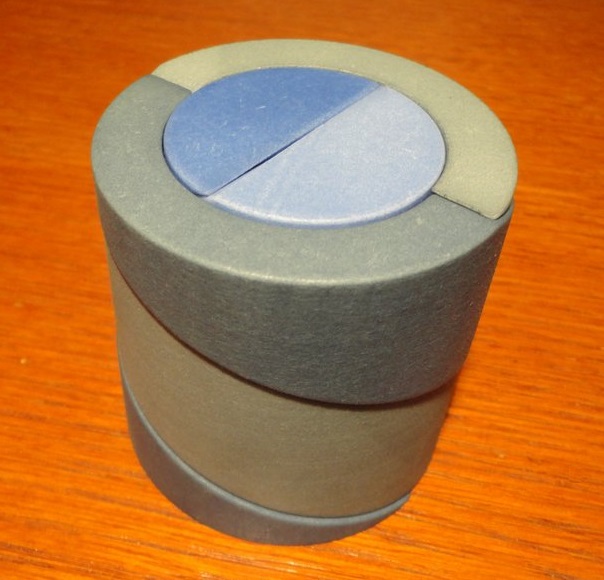
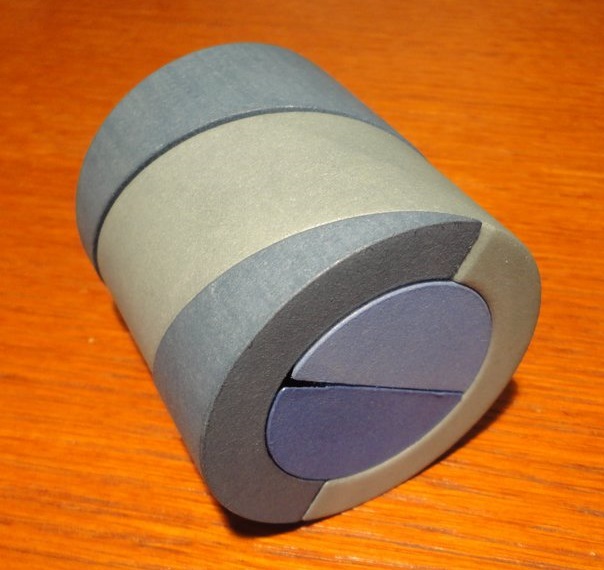
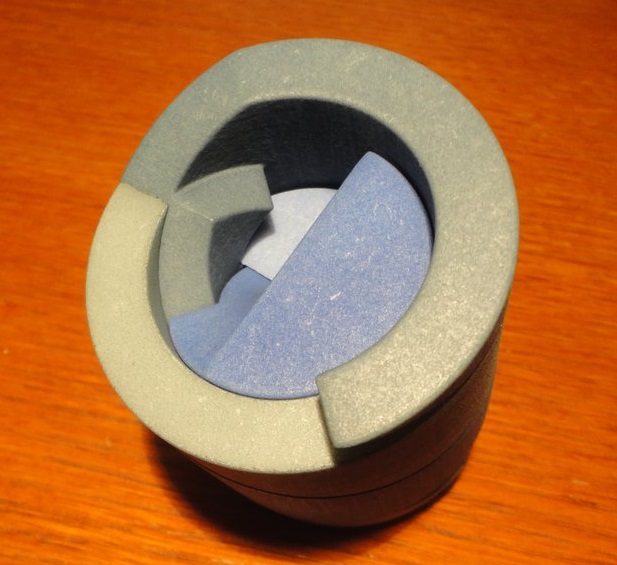
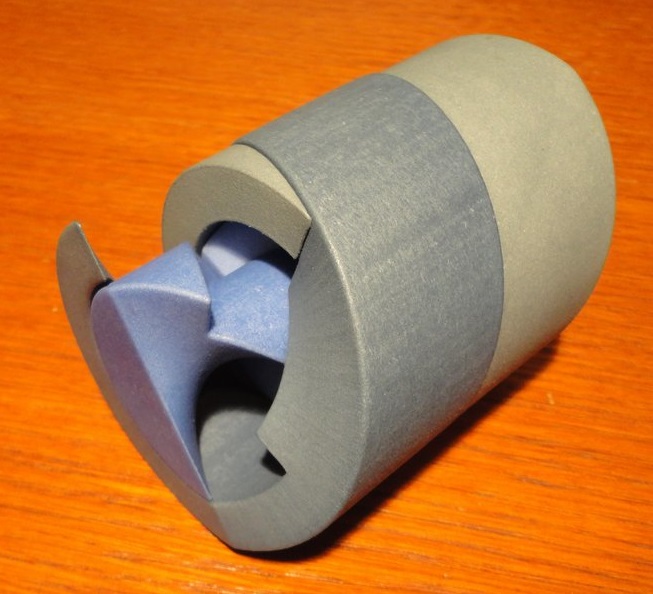
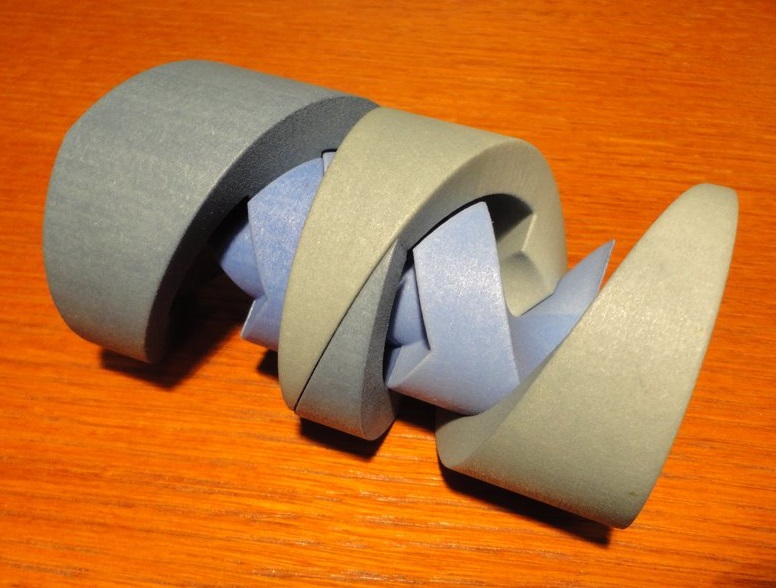
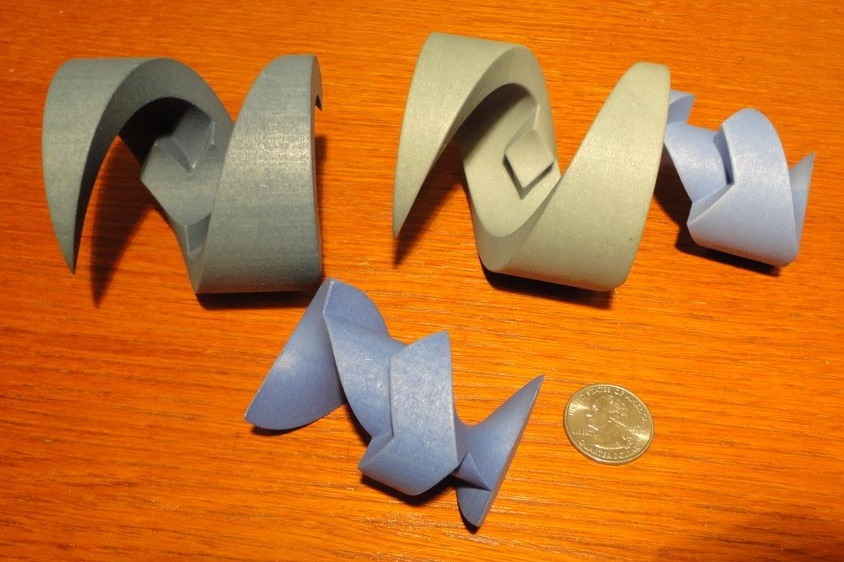
Helical Burr – Derek Bosch – dyed Shapeways 3D print
Derek’s clever Helical Burr won the Jury Grand Prize
in the
2013 Nob Yoshigahara Puzzle Design Competition.
Four pieces – two assemblies – one is level 11.
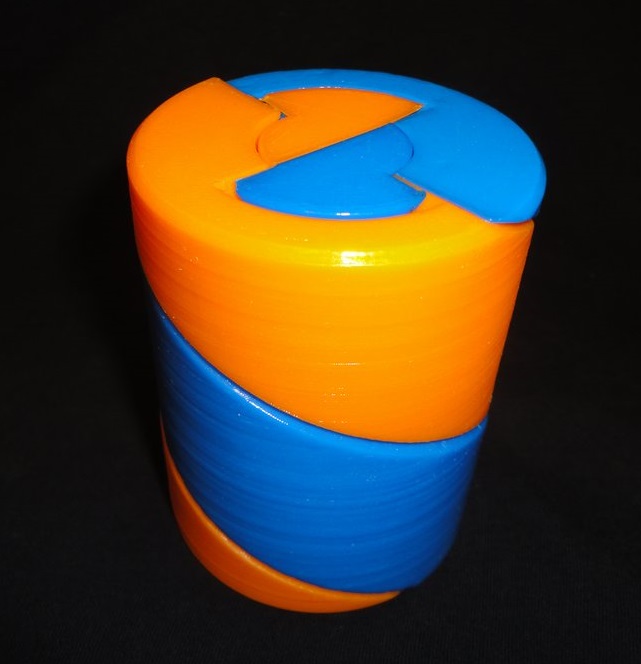
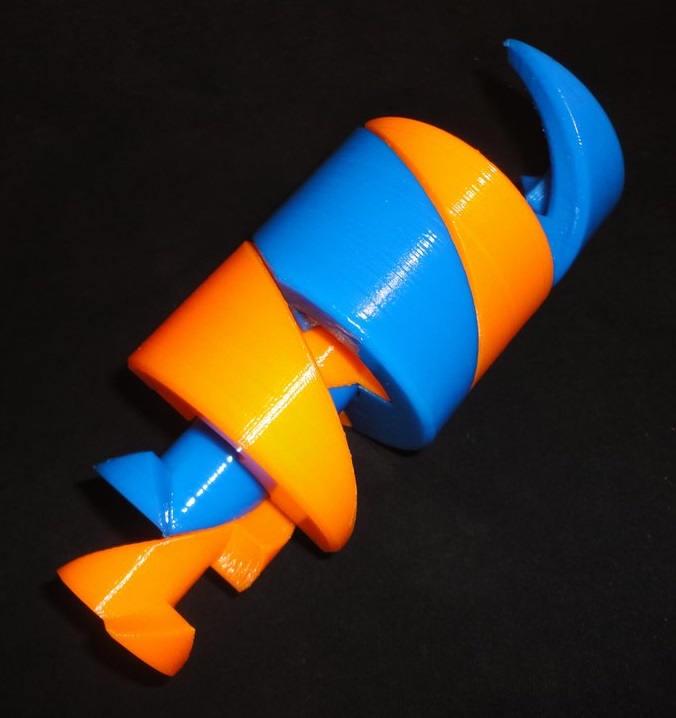
HELLical Burr designed by Derek Bosch
as a more fiendish follow-up to his 2013 prize-winning Helical Burr.
Four pieces. Printed by and purchased from Steve Nicholls.
Kevin Sadler posted a YouTube video of the disassembly
here.
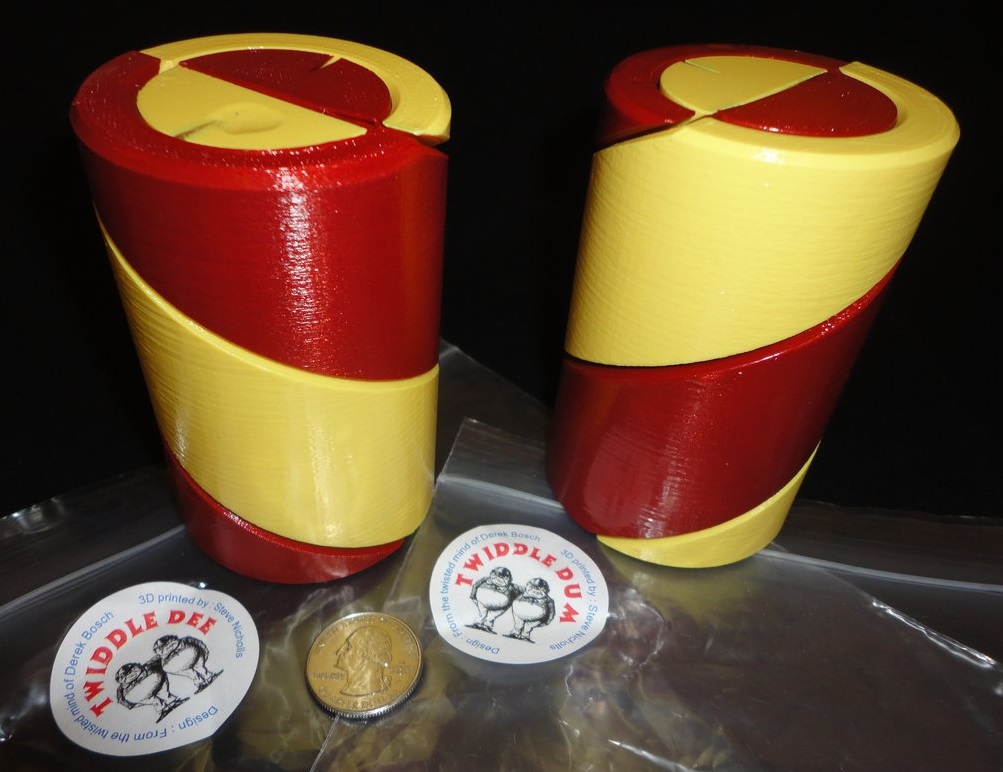
Twiddle Dee and Twiddle Dum
A new pair in a continuing series of fiendish helical burrs
designed by Derek Bosch
3D printed for me by Steve Nicholls
I asked Steve to make them “opposite” each other.
(Also, Dee has two slots in the end, Dum only one.)
Dee is rated the more difficult of the pair, with 10 more moves and many extra dead ends.
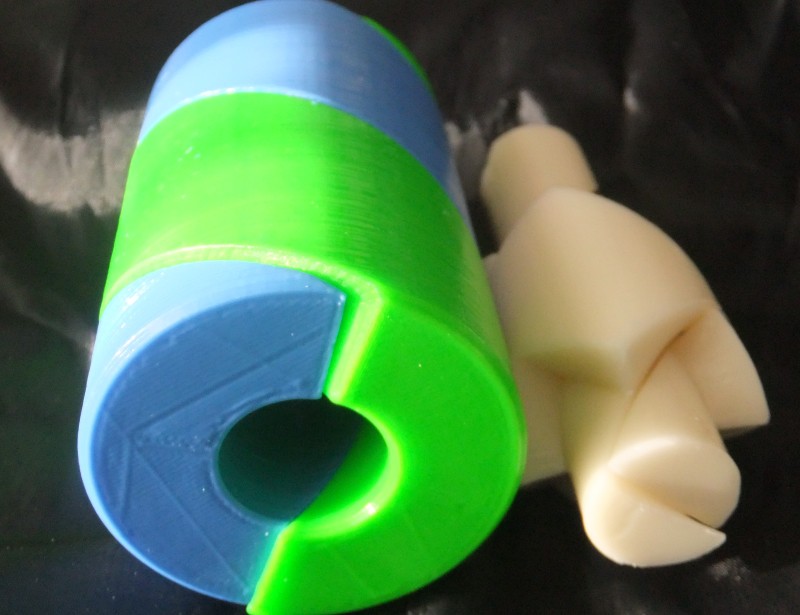
W(h)orl(e)d Burr designed by Derek Bosch
3D printed by Steve Nicholls
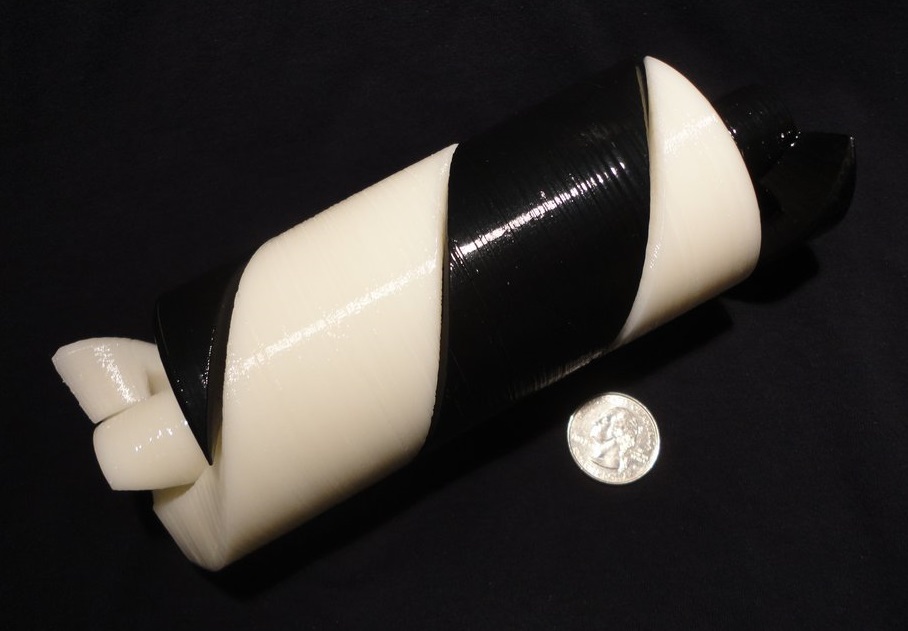
Oliver – Derek Bosch’s latest helical burr puzzle, printed by Steve Nicholls.
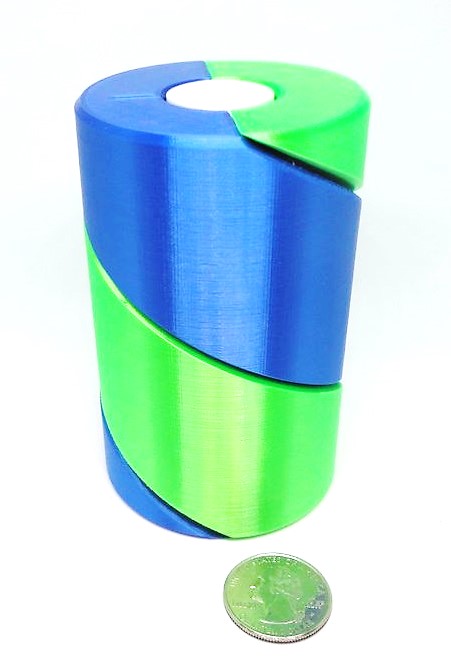
Polar Burr – another helical burr designed by Derek Bosch.
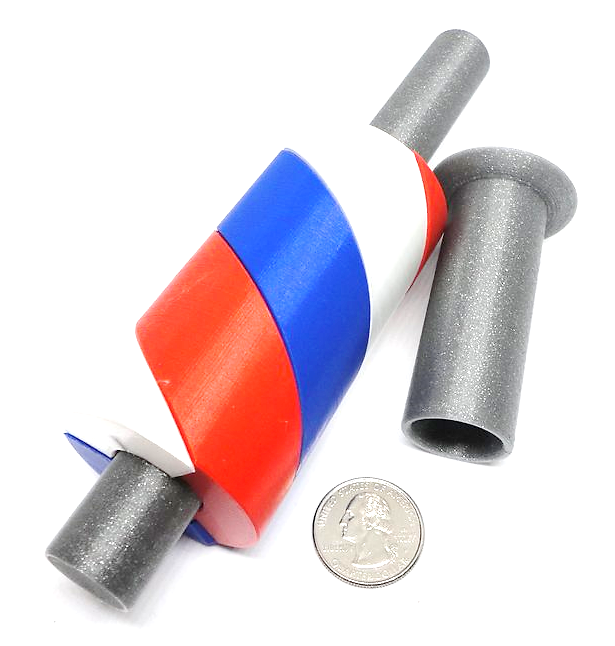
Sweeney Todd – a 4-piece helical burr by Derek Bosch
43 moves to remove the first piece.
Printed in PLA by The Two Brass Monkeys.


Plato’s Secret
See U.S. Patent
3695617 – Mogilner and Johnson 1972.
See also D0224974 – Mogilner 1972.
A puzzle based on tensegrity –
“tensional integrity” – a balance between tension and compression.
(For another example, see Bathsheba Grossman’s “Moon Pi.”)
A number of sticks with slots at each end, a cord, and a ball for the center.
The first challenge is to remove the orb without disconnecting anything.
The second challenge is to (re)build the structure –
lash the sticks together in the proper pattern to create a polyhedron around the ball.
The patent describes a structure with 12 sticks, and mentions 9 and 15-stick versions, claiming that
tensegrity structures can be made from any number of sticks.
The puzzle has appeared with
10 sticks, forming a dodecahedron (12 pentagonal faces, 20 vertices).
I’ve also seen this called
the “Philosopher’s Knot” (1975 by whom?), “Plato’s Plight” (Mag-Nif 1971), “Cobweb” (Reiss), “Knit Wit” (Romany 1974),
and “Merlin’s Stone” (Skor-mor).
Supposedly it has also been called the “Philosopher’s Stone” though I have not seen that version.
Richard Whiting has a solution to a version he calls
Whiting’s Woe on his website.
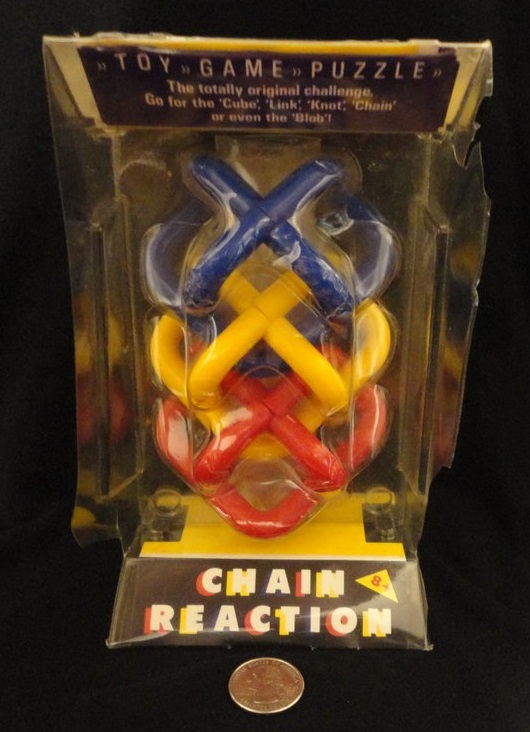
Chain Reaction – a vintage interlocking puzzle/toy, invented by David Brown.
Invenmark Ltd. 1987
I found the relevant patent
WO1988008320 A1
by searching for Invenmark 1987.
For some reason Google Patents does not show the diagrams, but
Espacenet does.
(Although that link may get you into a weird “prove you’re a human” loop…)
Kind of a tensegrity/dexterity hybrid.
I use the term “tensegrity” but it’s not really correct to apply to this construction –
I’m getting at the “push-pull” going on – the patent describes it like this:
“A first pair of limbs of the first frame holds captive therebetween a second pair of limbs of the second frame;
a first pair of limbs of the second frame holds captive therebetween the second pair of limbs of the third frame;
and a first pair of limbs of the third frame hold captive therebetween the second pair of limbs of the first frame.”
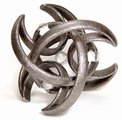
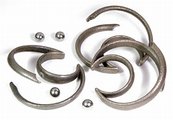
This is a sculpture puzzle called “Moon Pi” made by the artist
Bathsheba Grossman,
using a
direct-metal 3-D printing process
driven by a CAD design.
I learned about it via James Dalgety’s
Hordern-Dalgety Puzzle Museum site.
The Peppermint Twist puzzle was introduced at IPP17 by John Ergatoudis.
It consists of five twisted metal rods that, surprisingly, interlock.
If one rod is slid out of the bundle, it collapses, and is a challenge to reconstruct.
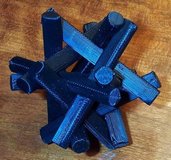
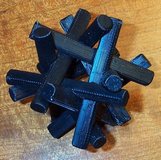
A
12 Sticks puzzle by George Hart, 3-D printed on
his Makerbot.
This is the 1st of his series of
stick puzzles!
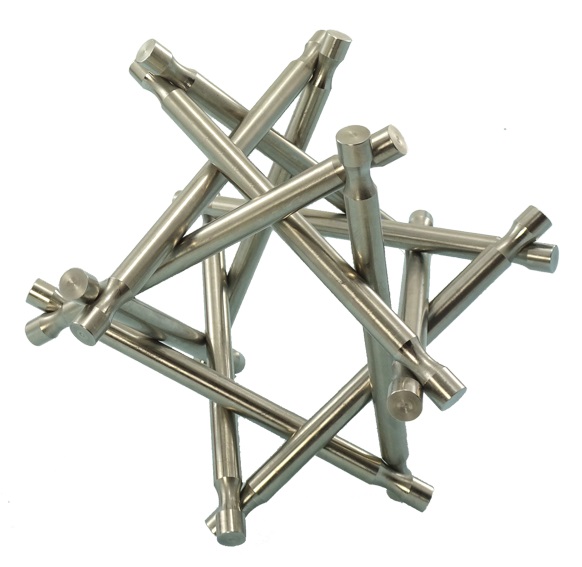
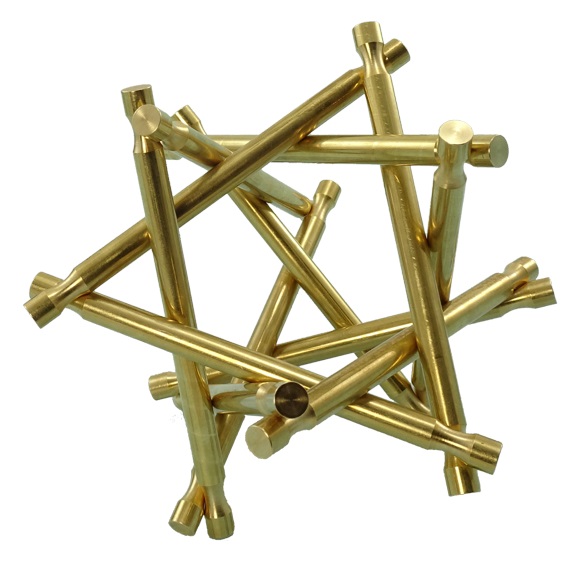
Nova Plexus – designed by
Geoff Wyvill, made by and purchased from
TwoBrassMonkeys
I had been after a Nova Plexus puzzle ever since reading about it in Slocum’s 1994
The Book of Ingenious and Diabolical Puzzles –
but they were only produced in very limited quantity and had been impossible to find until now.
Check Steve and Ali’s Etsy shop
TwoBrassMonkeys to snag one of the remaining limited edition versions.
Wyvill’s site has a
page giving the history of the Nova Plexus puzzle.
Additional interesting interlocking designs…
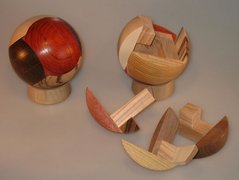
This beautiful spherical puzzle is called the O. S. M. Ball,
designed by Jakub Dvorak of the Czech Republic.
I purchased this from
Bernhard Schweitzer at IPP28 in Prague.
Eight pieces. The first and second moves are tricky to discover.
Made from beautiful hardwoods.
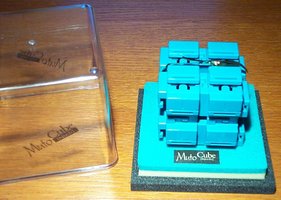
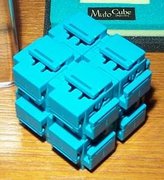
This is a Muto Cube from Japan.
I’ve seen it on only one other collector’s (
Martin Watson’s
) site.
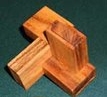
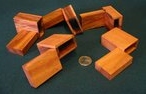
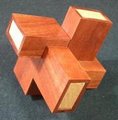
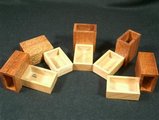
These are Oskar’s Matchboxes.
The first set I got from gemanigames.com.
They’re not really matchboxes – the “interior” pieces are solid, not hollow boxes. Also, not all interiors fit easily into all containers and the ends have obvious saw marks with overall finish being mediocre.
Still, I am happy to have them and the puzzle is fairly challenging.
The solution configuration does fit together nicely.
I have wanted this puzzle since first reading about it on page 81 of Slocum and Boterman’s Puzzles Old and New
way back when,
and I was glad to find a vendor selling it.
Eric Fuller made the second set, from Madrone and Aformosa woods.
These are beautiful – the boxes actually have walls and interiors and the fit is great.
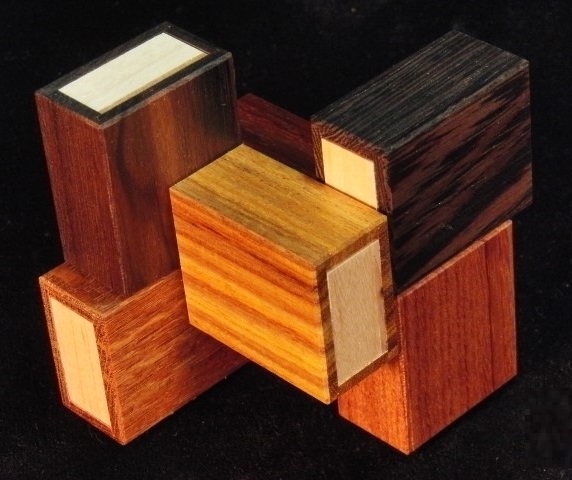
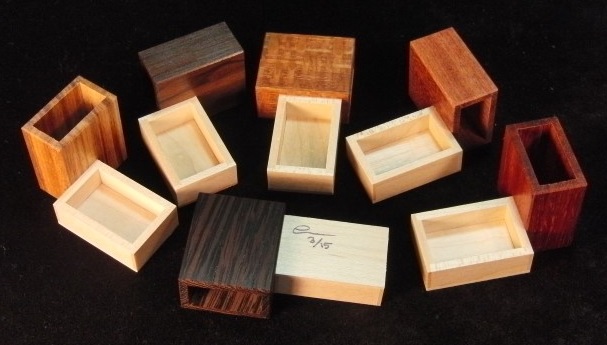
Matchbox Play Six designed by Olexandre Kapkan
made by Eric Fuller
Eric has this to say about this puzzle:
“Oskar’s Matchboxes is one of my favorite puzzles, and as soon as I saw that Olexandre had expanded on that concept I was eager to make the Matchbox Play Six. With three sets of mirrored pieces, there are several symmetrical solutions and even a couple non- symmetrical solutions. This puzzle is a lot of fun to play with and is a bit easier to solve than the five piece version by Deventer. It displays beautifully and is one you can hand to a trusted guest to experience the feel of a high end puzzle without the frustration of an extraordinarily high level burr.
The construction of this puzzle is robust and detailed. Detailed and intricate shoulder joinery on the drawers and sheaths makes it much stronger than the .125″ thick wood would indicate. Each puzzle was individually sanded to fit, and the feel is excellent overall.”
These are Oskar’s Cubes.
The large wooden version is from Tom Lensch.
The small aluminum version is from B and P.
You can see the pieces
at Ishino’s site.
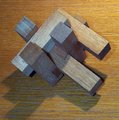
The Devil’s Half Dove-n and
the Devil’s Other Half Dove-n.
Designed by
Pavel Curtis.
From Puzzlecraft, gifts from LuAnn.
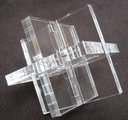
This puzzle is called Six Tabbed Planks.
It is made from acrylic.
I really like it – the proper configuration can be logically deduced with a little effort,
and the assembly is sequential.
Unknown designer.
Purchased from
Pavel Curtis.
Pieces shown here.
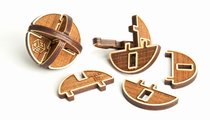
Six-piece ball
(aka Faberge Knot)
Made by Lee Krasnow – mechanism is identical to the Six Tabbed Planks from Pavel Curtis.
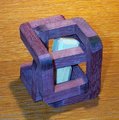
Caged Spheres (in purpleheart wood)
Also purchased from Puzzlecraft.
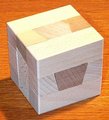
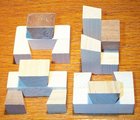
A 4-piece cube with dovetailed pieces.
Designer unknown to me.
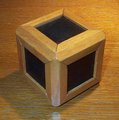
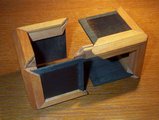
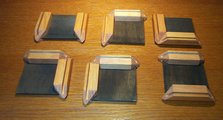
This is Arjeu’s CT87.
This was designed by Oskar van Deventer.
Evidently Arjeu never compensated Oskar!
Tom Lensch is selling a
really nice version.
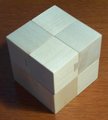
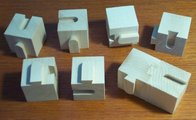
Myopic Doves
by Rick Eason.
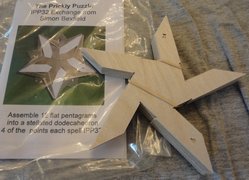
Prickly Puzzle,
designed, made, and exchanged by Simon Bexfield
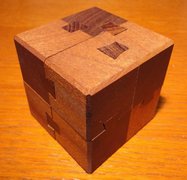
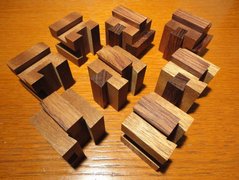
The Slump Cube, designed by Ronald Kint-Bruynseels,
made from Mahogany and Rosewood by Eric Fuller
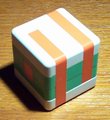
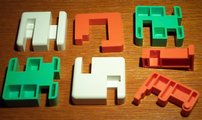
This cube was included in an auction lot.
I didn’t recognize it at the time, but after I received the lot I realized
this was a copy of the Frankfort Cube I had wanted after I saw it on
Casse-Tete et Solution
(scroll down to item #33).
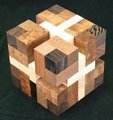
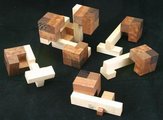
The Tease puzzle cube designed by Sam Cornwell and made from Quilted Sapelle, Wenge, and Carolina White Ash
by Eric Fuller.
Five pieces, and five moves to get the first piece out.
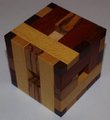
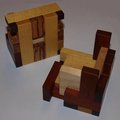
This is Oskar’s Patchwork Box, designed by Oskar van Deventer and made by Tom Lensch.
Purchased from Tom at IPP 29 in SF.
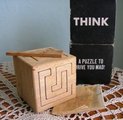
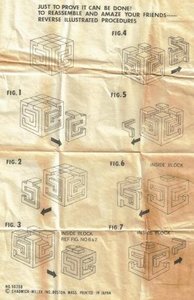
A vintage Think puzzle by Chadwick Miller of Massachussetts.
Made in Japan.
Copyright 1968.
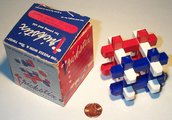
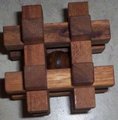
This is Trickstix, by Harris.
See U.S. Patent
2473369 – Harris 1947.
The similar cage with rotating sticks and a ball inside is a common design.
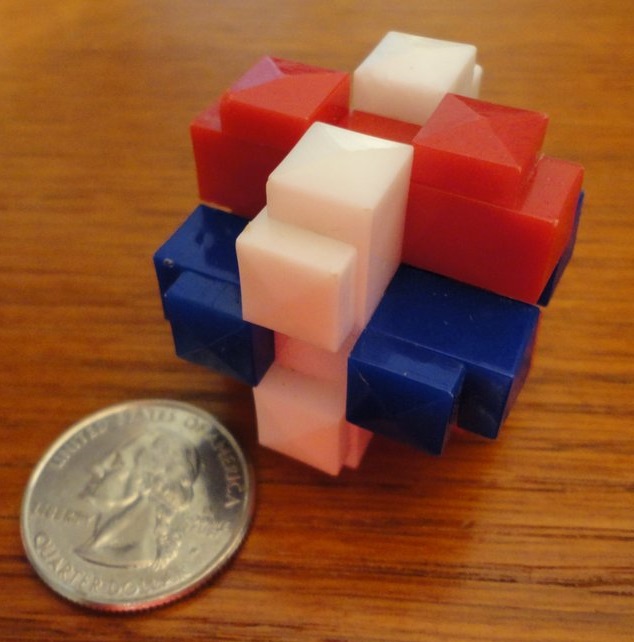
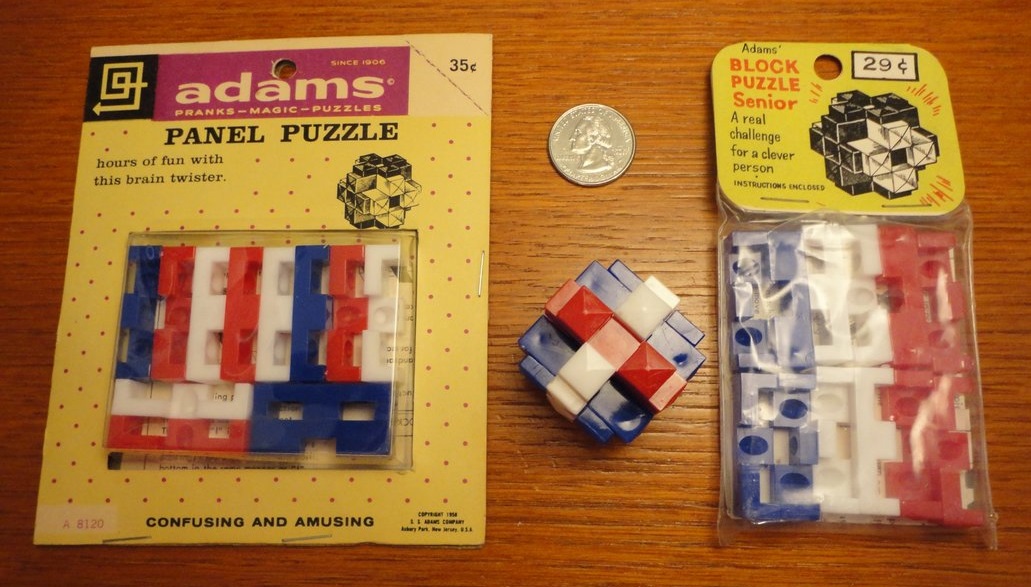
Adam’s Block Puzzle Senior and Panel Puzzle
I finally obtained instances of these two in their original packaging.
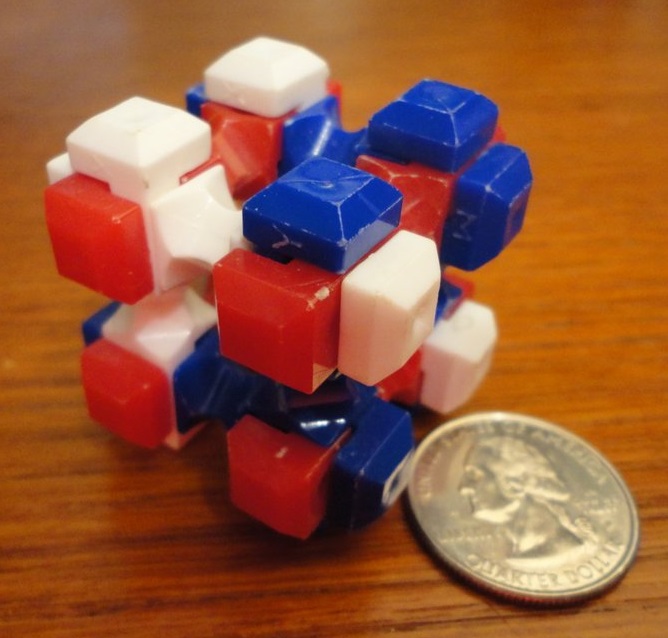
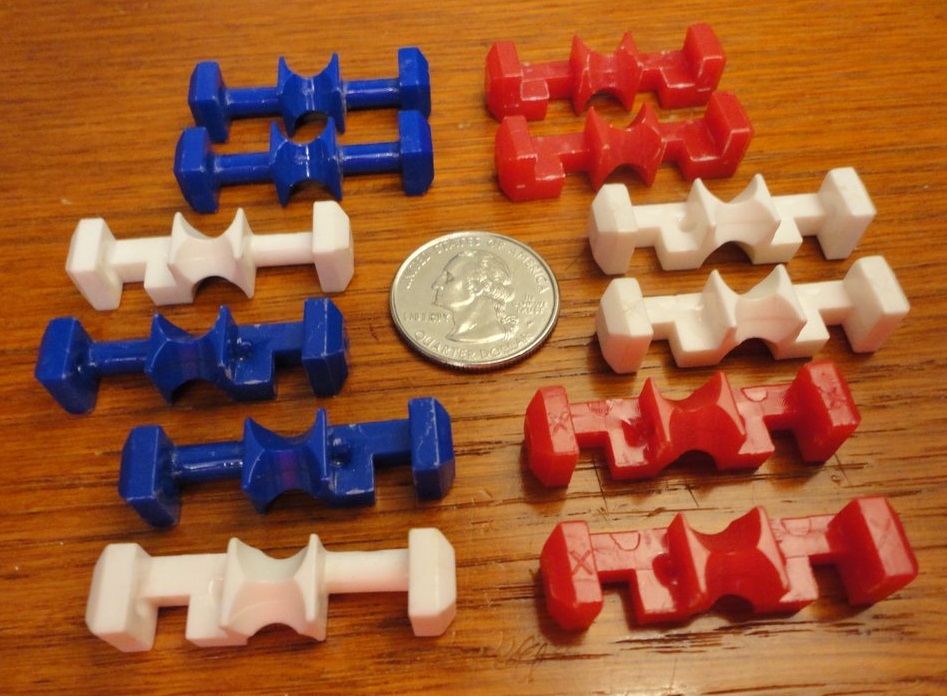
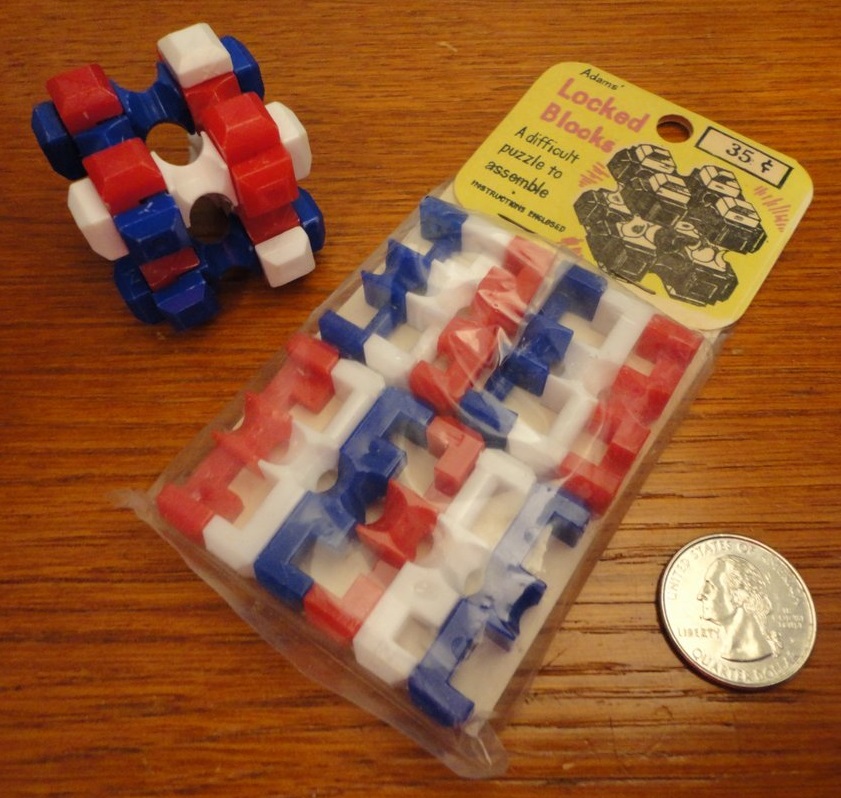
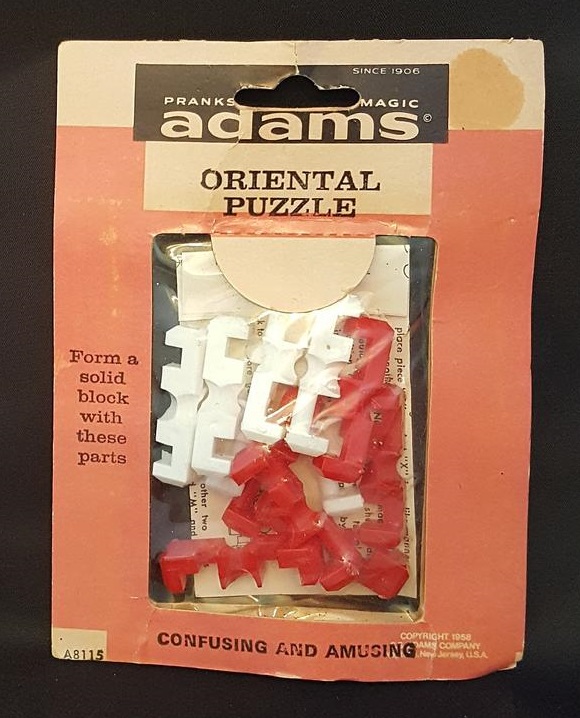
I have had this small plastic red, white, and blue puzzle cage since I was a kid.
Its pieces are more decorated than the Trickstix.
This is Adams’ Locked Blocks.
Adams’ Oriental Puzzle seems to be the same design (shown for reference – I don’t have that).
The Molecule by Joe Miller.
See U.S. Patent
5762336 – Miller 1998.
Entered in the
IPP 2001 Design Competition.
The Dragon Cube, designed by Doug Engel.
Issued by Philos.
Purchased in Montreal.
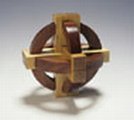
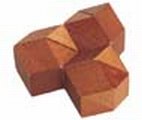
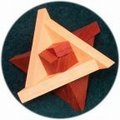
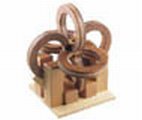
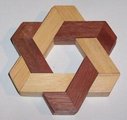
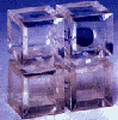
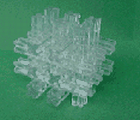
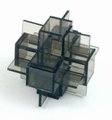
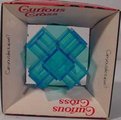
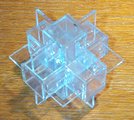
Several classic puzzles by Mag-Nif and Reiss that I have had since I was a kid.
From Mag-Nif: Four Square, Third Dimension, and the Curious Cross in smokey plastic and blue plastic.
Some 1974 Reiss puzzles: Equilibrium, Star,
and Reiss’ version of Curious Cross, which they call Torment.
Meiji Cheese Curls, and the “Light” version.
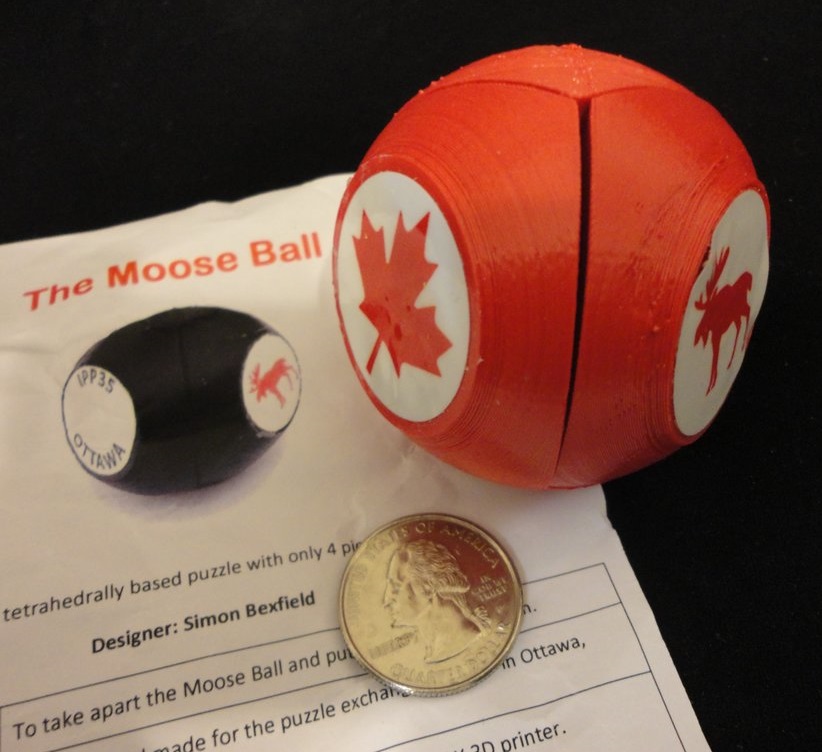
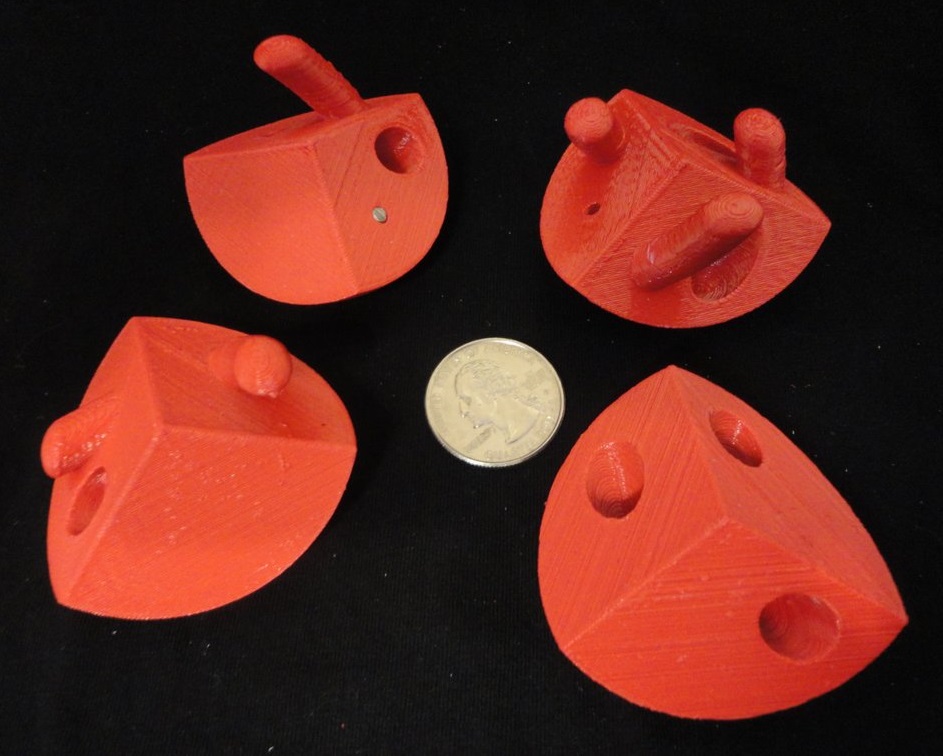
Moose Ball – designed and
exchanged at IPP35 by Simon Bexfield
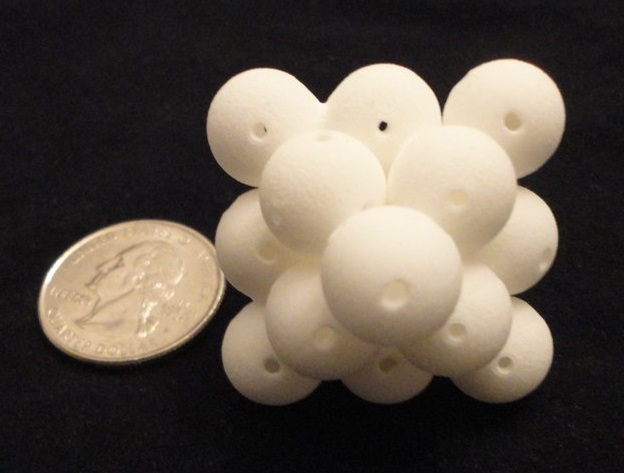
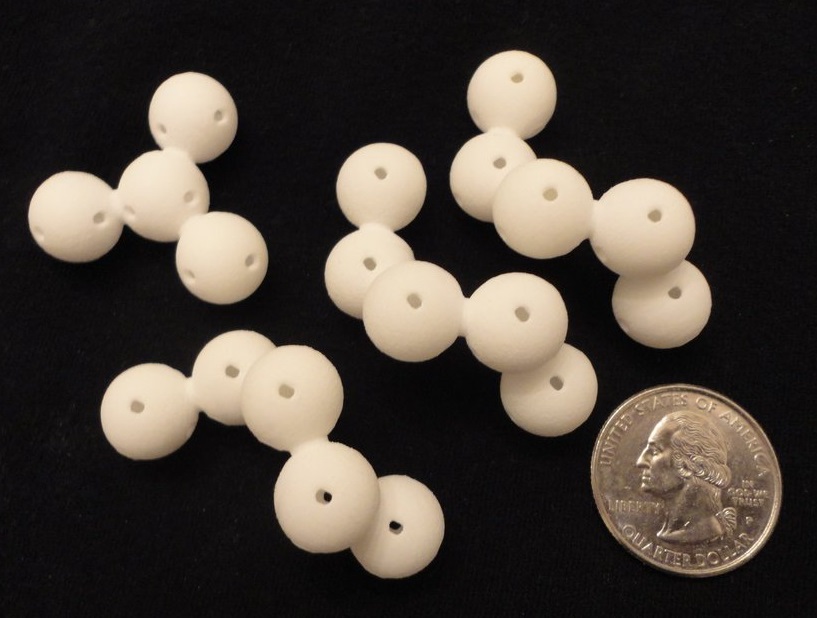
Screwy Octahedron
a 3D print designed by George Bell
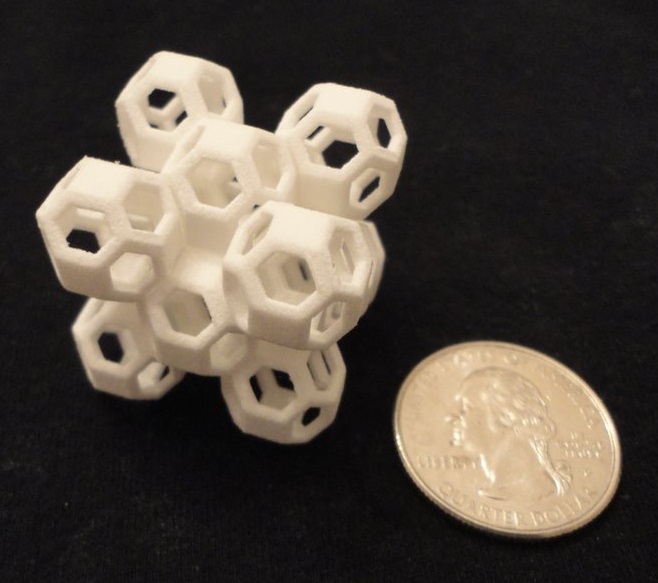
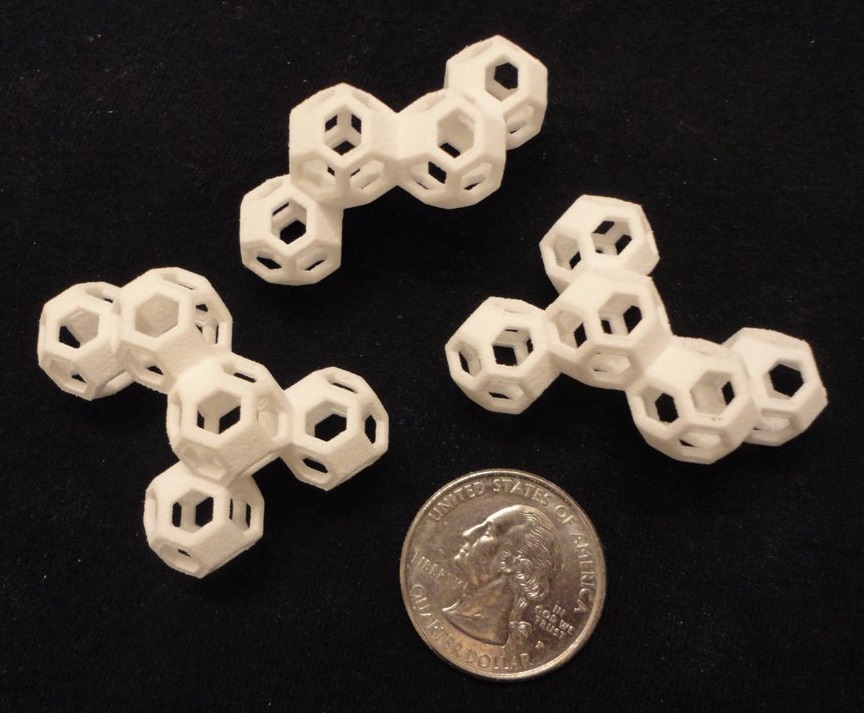
Nuclear Fusion
a 3D print designed by George Bell
He created a beautiful apple-shaped wooden interlocking / coordinate motion puzzle he calls 1 Pinko Ringo,
inspired by
Wayne Daniel’s 10-piece icosahedron.
Stephen’s puzzle was among the top 10 vote-getters in the
2010 IPP Design Competition.
A similar puzzle by Stephen called the Bomb won the first Rochester Puzzle Picnic Puzzle Competition.
Stephen has also created his own version of the icosahedron, known as the “Spinico.”
Brian Pletcher
blogged about it.
George Bell
did some CAD modeling and after several prototypes to get the angles just right, offers
spherical versions of Stephen’s design in two sizes
at
his Shapeways shop.
He calls this the Exploding Ball.
The puzzle comprises 10 identical very interesting pieces.
The dissection using 10 identical pieces was at first thought to be impossible to assemble, but it can be managed.
Disassembly can be challenging if you cannot think of a convenient method.
I bought the larger version.
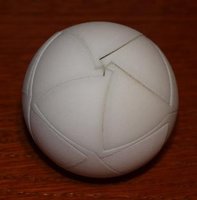
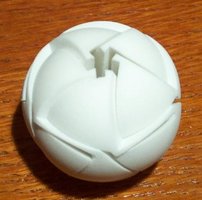
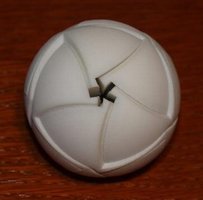
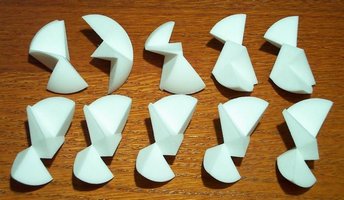
At IPP35, I was able to purchase a hand-turned wooden version from Stephen:
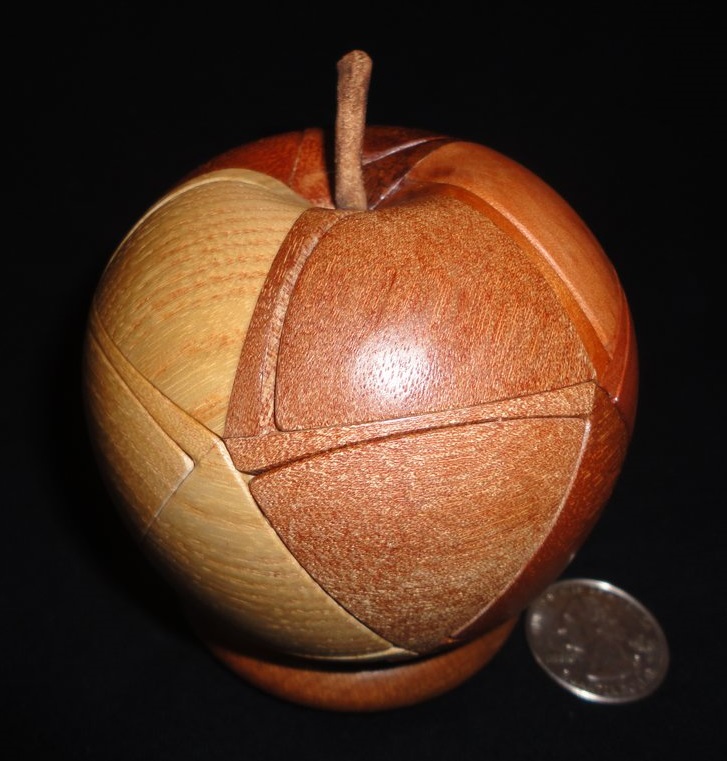
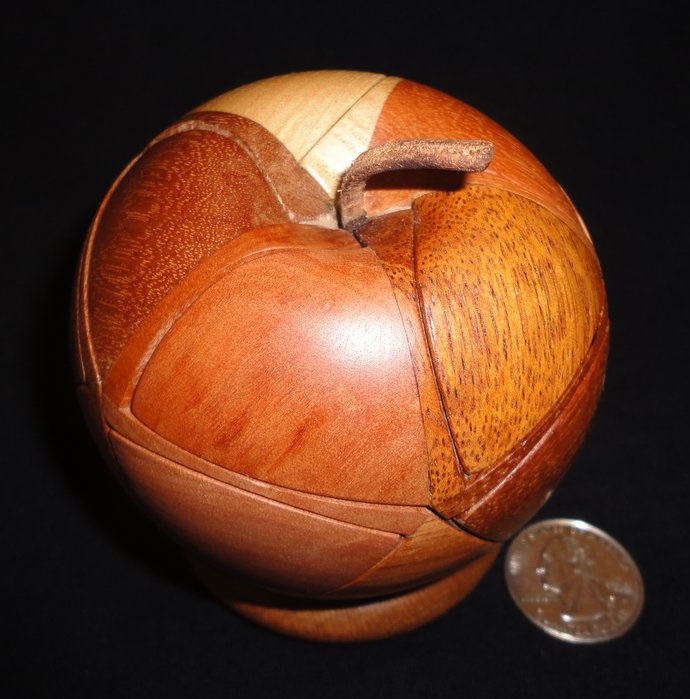
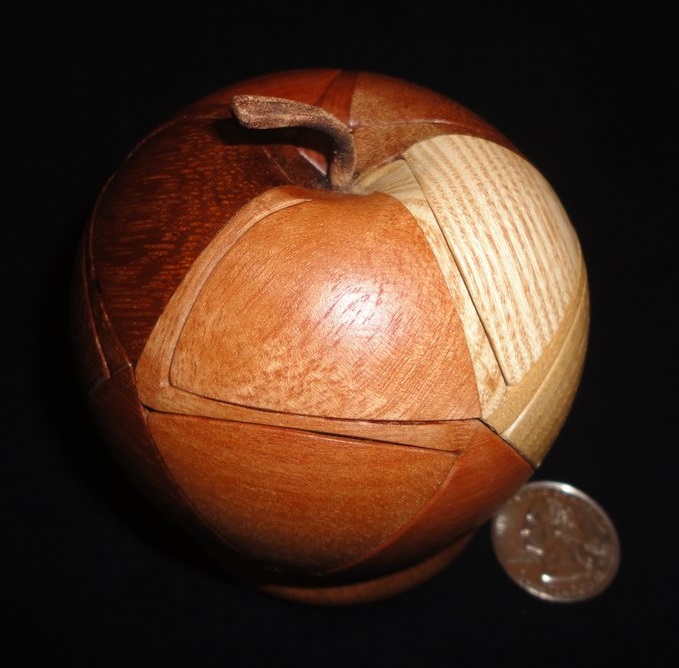
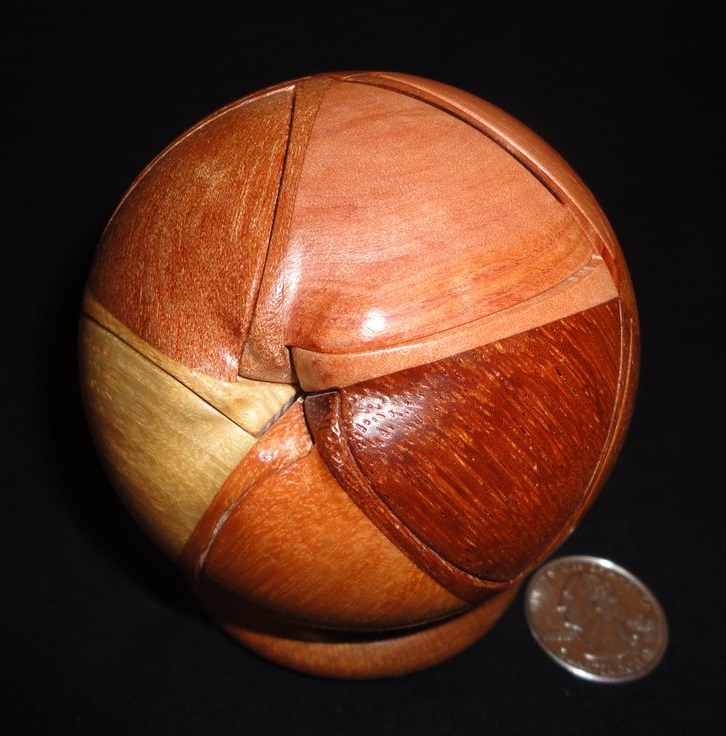
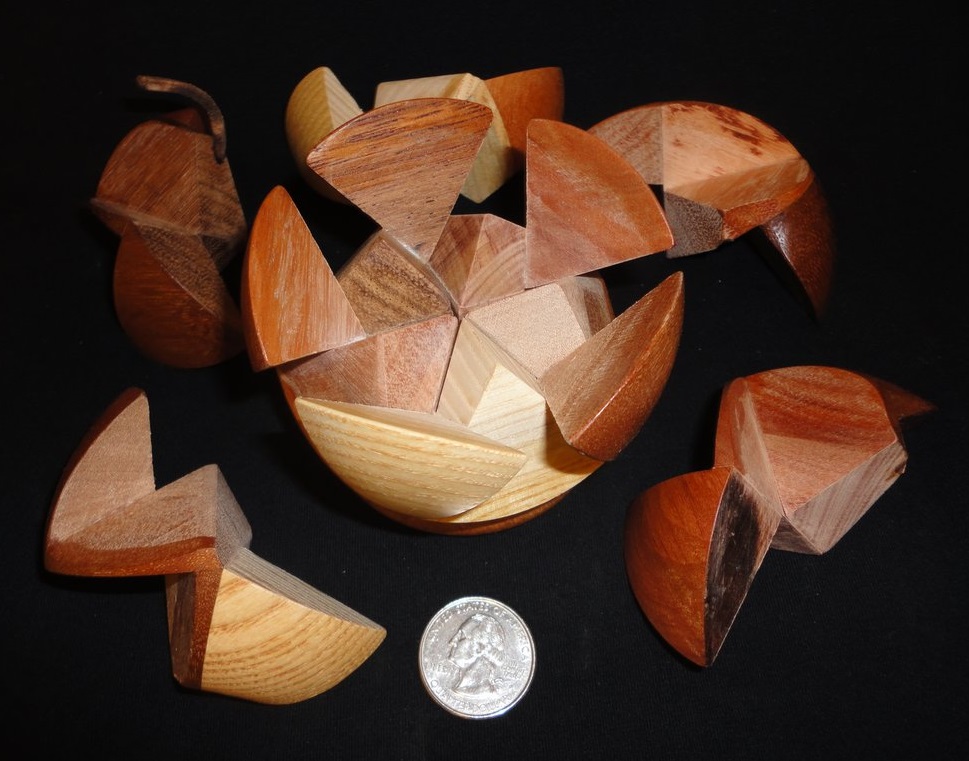
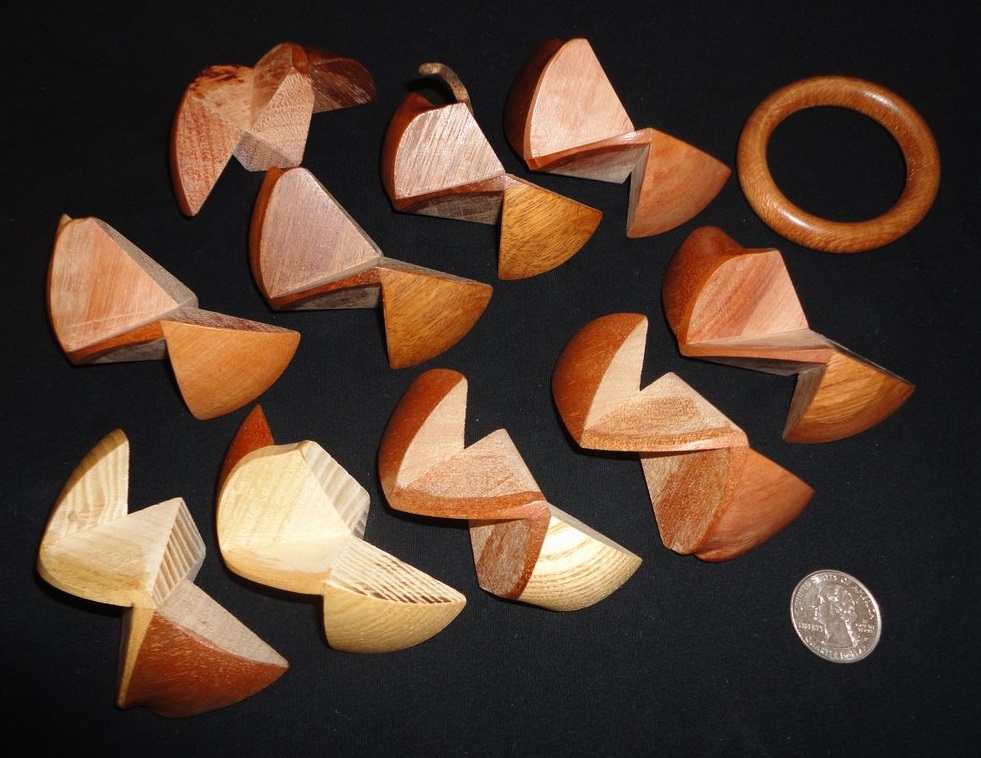
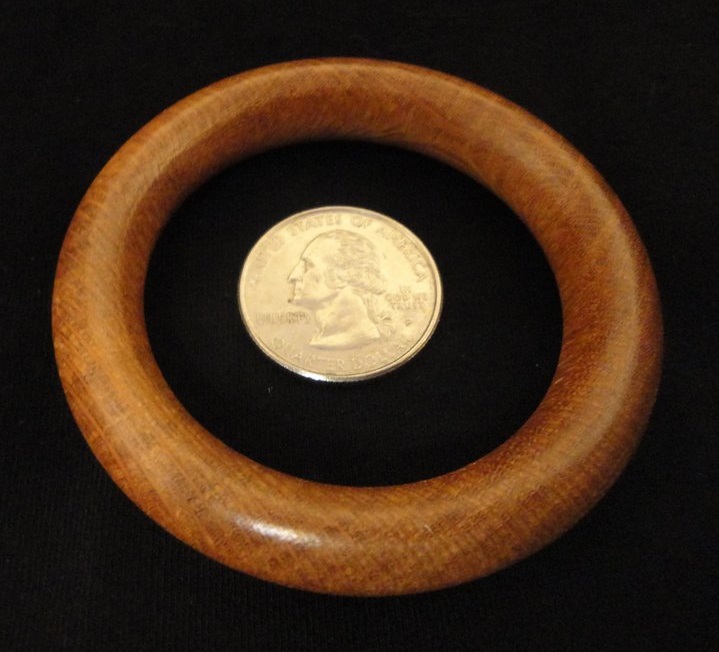
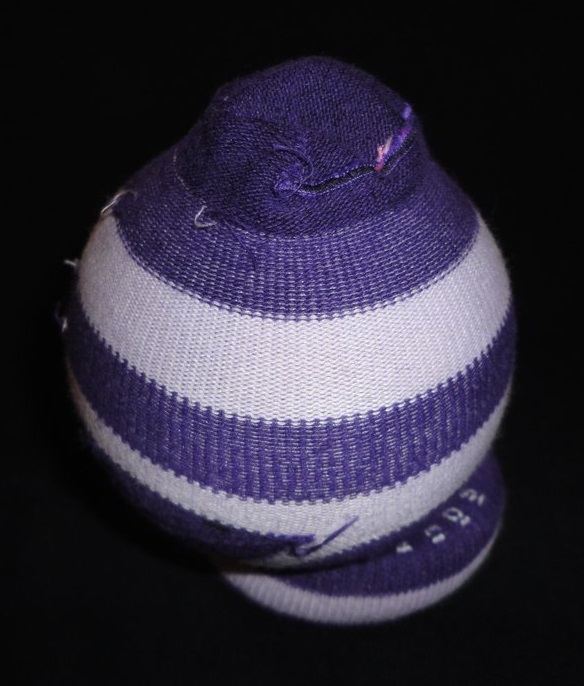
Exploding Apple (aka 1 Pinko Ringo) – made by and purchased from Stephen Chin
One of Chinny’s signature pieces. He packs it in a sock 🙂
This was one of the top ten vote getters in the
2010 Nob Yoshigahara Puzzle Design Competition
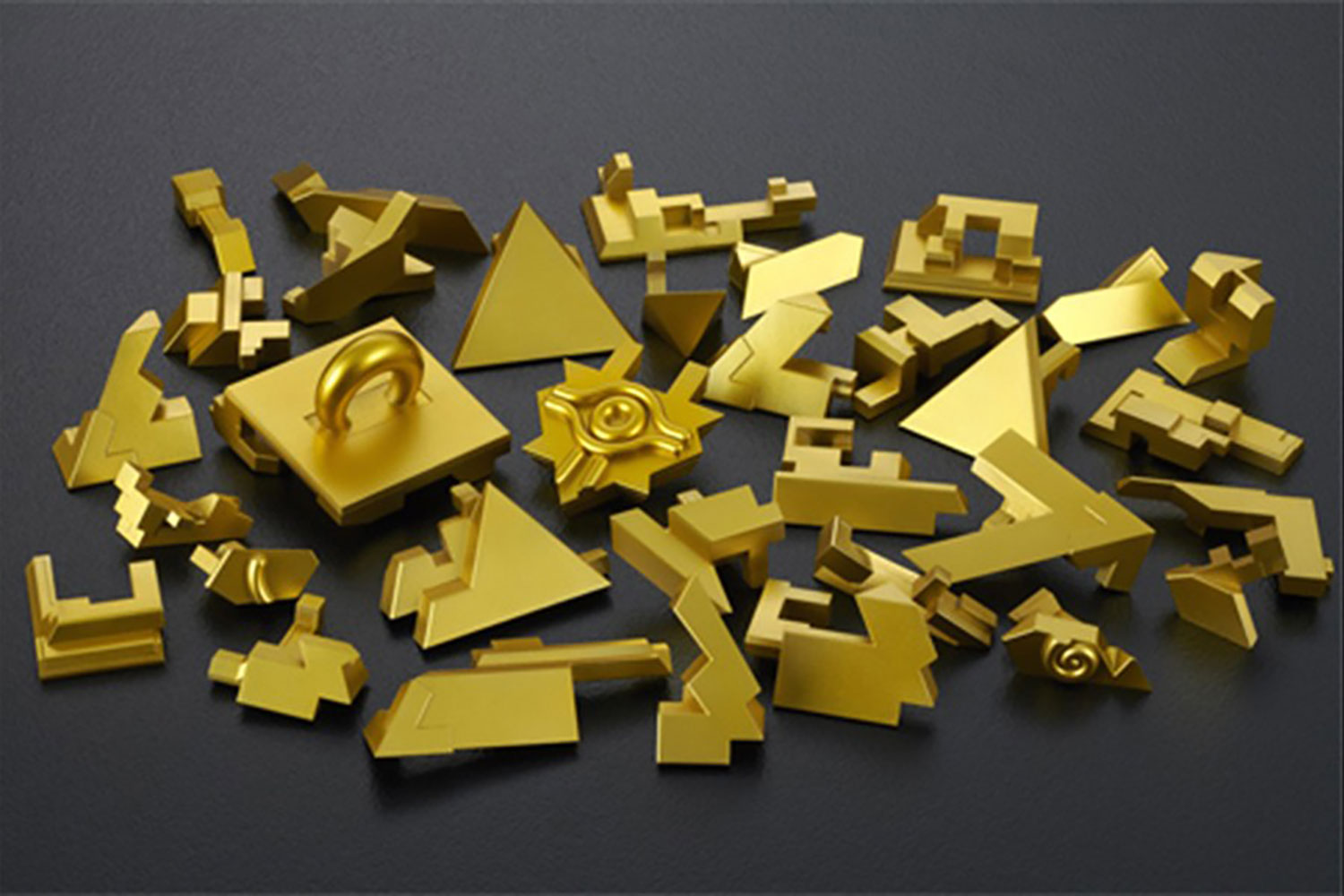
The
Bandai Ultimagear Yu-Gi-Oh Millennium Puzzle
I had
purchased
arrives in its largish box packed like a model – its ABS parts are on a set of sprues.
The parts must all be cut free from the sprues, carefully trimmed, and then each puzzle piece can be assembled from its constituents according to included instructions.
Each of the puzzle’s pieces comprises two or more parts.
Fortunately no glue is required – the parts press together, albeit with some firmness needed, and I found all the fits to be satisfyingly precise and snug – the parts are very unlikely to ever be unintentionally (or even intentionally) separated.
The resulting puzzle pieces are all robust and none seem prone to break during normal play while respecting the typical mechanical puzzling prohibition against use of undue force.
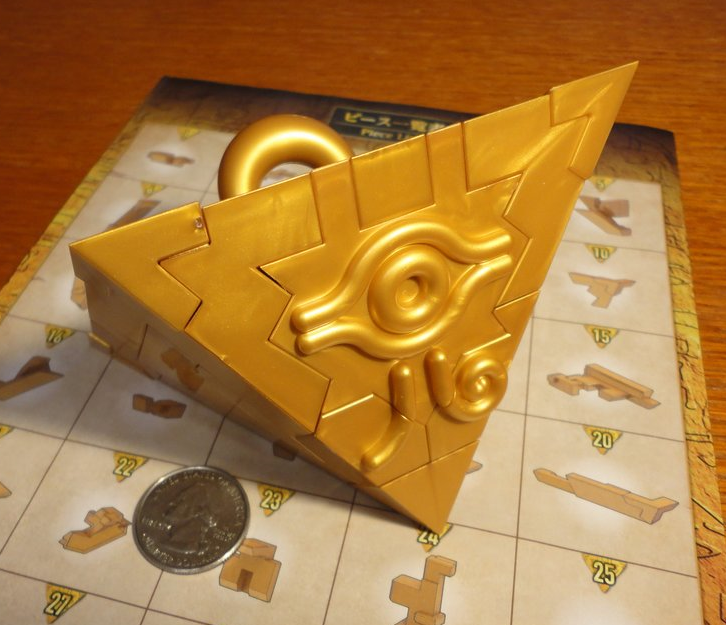
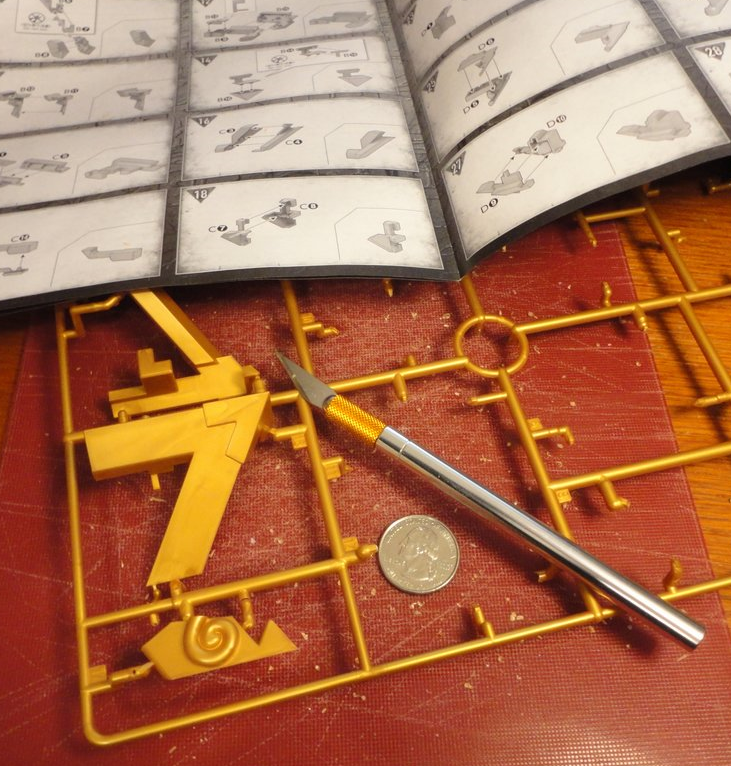
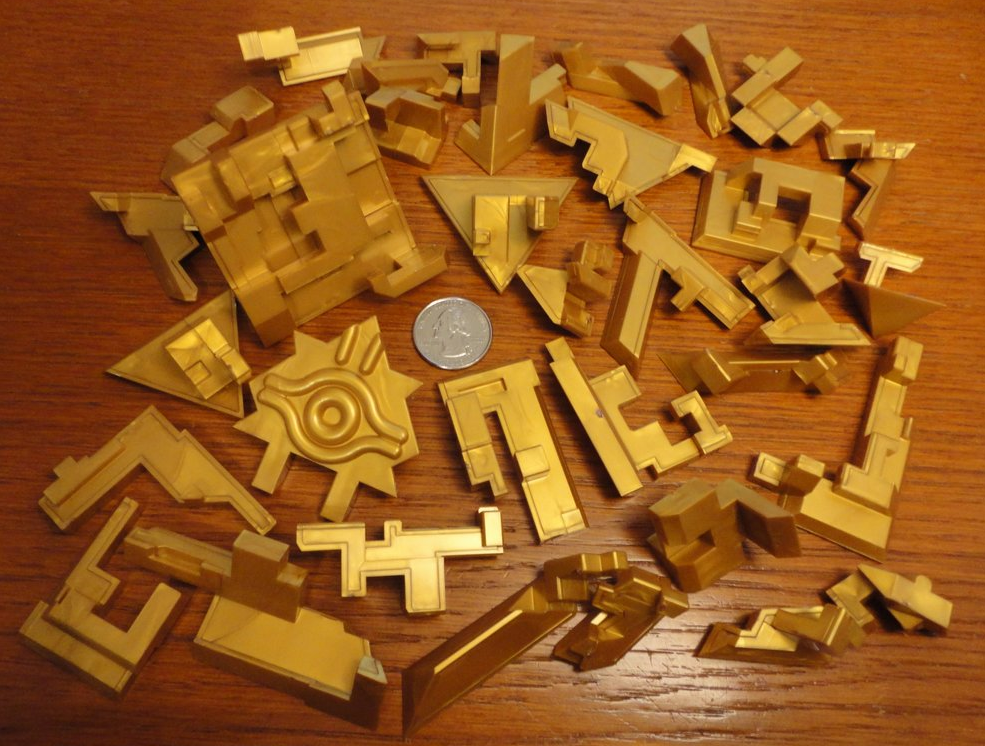
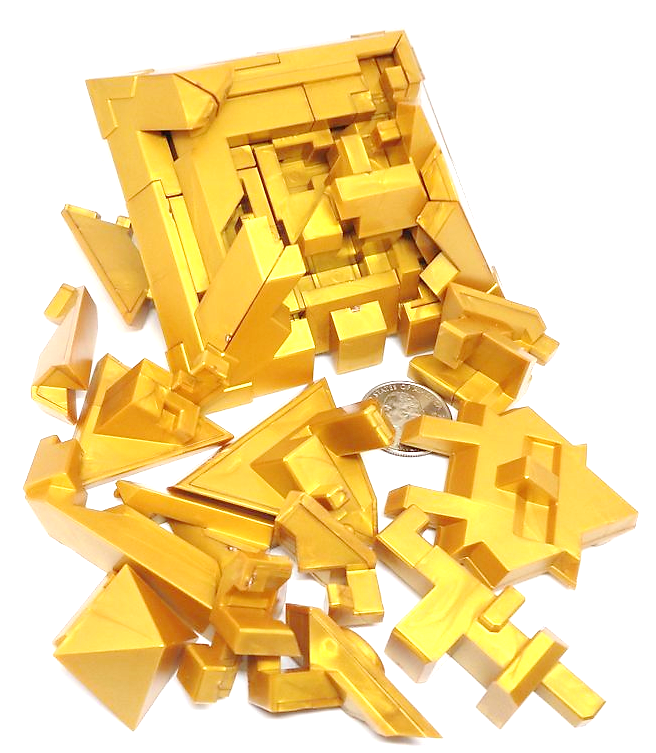
Only 13 pieces left to fit in!
No instructions are included for how to assemble the puzzle from its pieces.
I attempted assembly guided only by images of the finished puzzle – many times I had made some headway when I realized that I had to unwind several steps to insert a new piece, and furthermore that rotations were required!
This is most definitely a sequential interlocking puzzle with rotations along the way, and I am very pleased with its overall quality.
It is a bit like a plastic Berrocal – the pieces are not simply polycubes – their shapes are intricate and the placement of each is not necessarily obvious, but with patience can be deduced.
Tricky and non-orthogonal movements are needed to sequentially interlock and unlock the pieces during the solve.
Cutting free the parts and construction of the pieces took me about three hours, and solving (assembling the puzzle) about a further two hours – there were a couple of moments where three hands would have been helpful during the solve, and
I only required one hint.
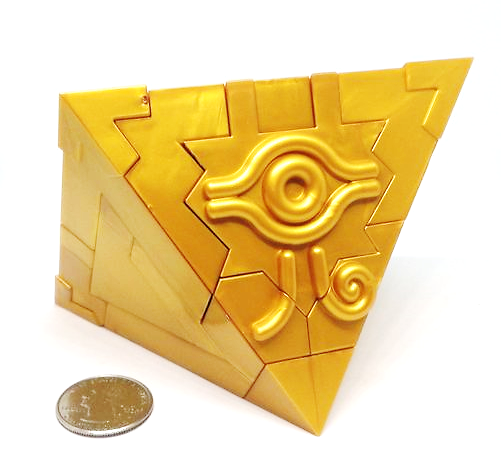
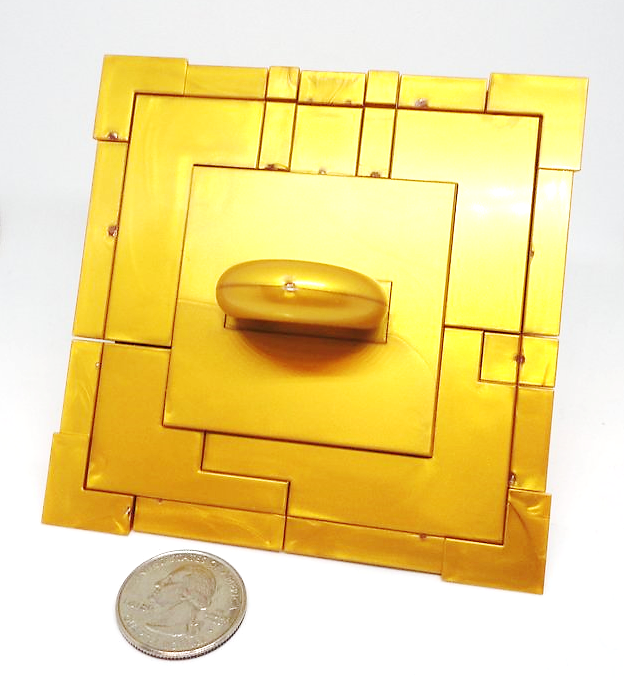
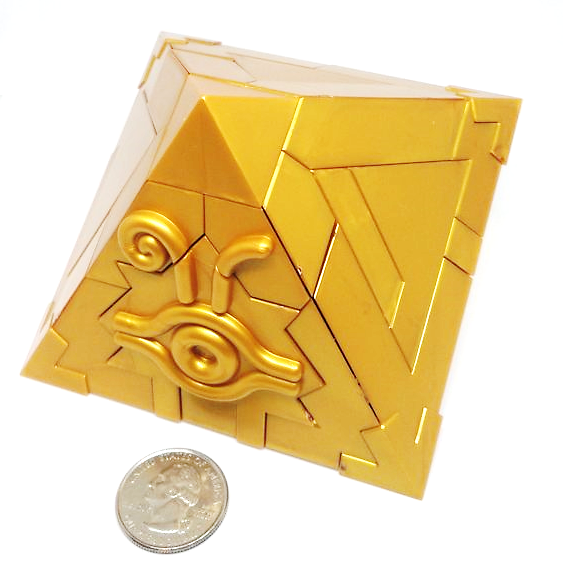
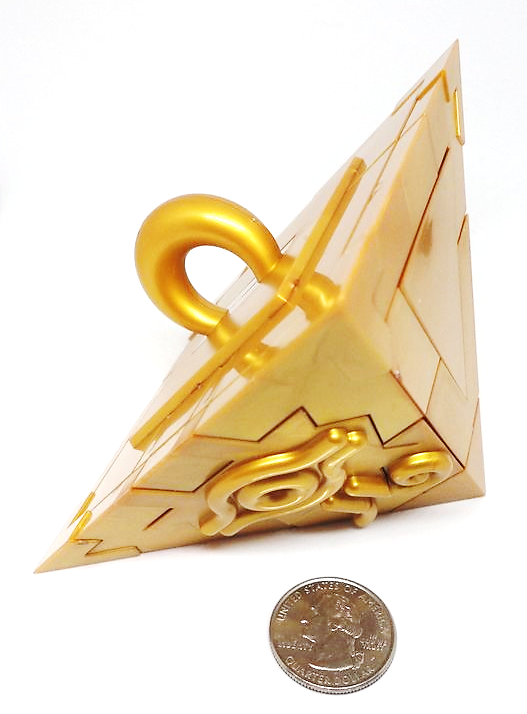
More, in wood:
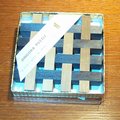
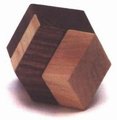
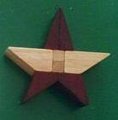 Jingora, Dovetail (Hoi Polloi / Reiss), Cylinder (Wingstoys), Dodeca (Tensegrity Systems 1991), Simple Star (B&P?)
These two sets of “Brain Benders” from Cardinal (blue box and red box, 3 puzzles each)
include a six-piece Diagonal Star,
a Chuck similar to Pentangle’s Woodchuck, above, a traditional 6-piece burr, a wooden version of
an 18-piece puzzle similar to Mag-Nif’s Third Dimension, a rods-and-pins “Nest” puzzle similar to the Arjeu Quadro,
and another 12-piece chuck called “Double Cross.”
They are cheaply made from softer wood, and I’ve seen them at toy stores for $3.99 a box.
Similar sets are branded by Pavillion.
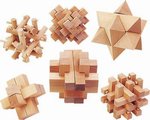
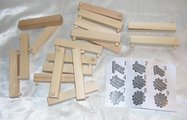
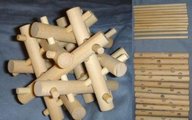
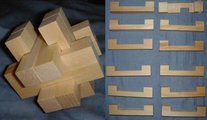
More, in plastic:
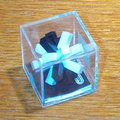
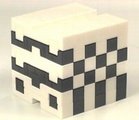
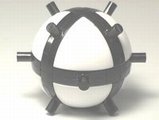
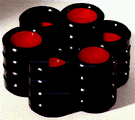
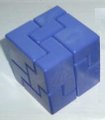
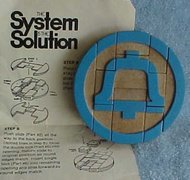
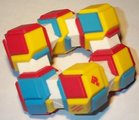
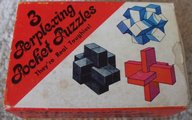
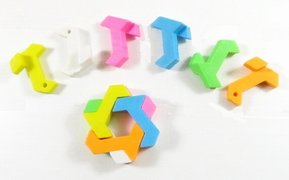
This is the
TenGeo
Great Circle Challenge.
This is a selection of “Mighty Midget” puzzles from Mag-Nif:
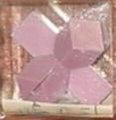
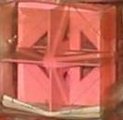
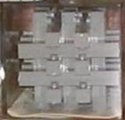
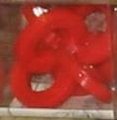
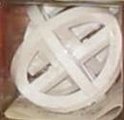
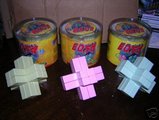
I got this lot of 3 of the same “Chinese Burr” in different colors, from a French auction.
I gave away two and kept the green one.
Normally the #1 mechanical puzzle rule is “No Force Required!” but this puzzle really
requires some force for the first and later moves. These 4 “Travel Puzzles” are from Game Kingdom: ball in cage, 6x6x6 sticks, star burr, depth charge:
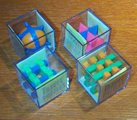
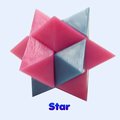
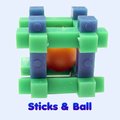
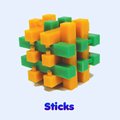
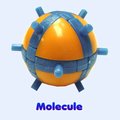
Last year I loaned a bunch of puzzles to her for her students to try,
and she was very kind to send me a
Cyclone puzzle as a thank-you. Much appreciated!
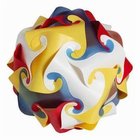
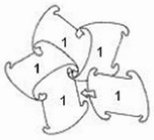
 The Cyclone is offered by
The Lagoon Group. Interestingly, this design seems to have first appeared as a lamp!
The product
IQ Light won the 2001
Danish Design Award for its packaging.
IQ Light was designed by Holger Strøm of Denmark in 1973.
It is based on a single piece or tile,
various numbers of copies of which
can be interlocked to form more than 21 different shapes.
30 tiles form a triacontahedron.
In the assembly, there are 12 vertices where 5 tiles hook together, and 20 vertices where 3 tiles hook together. You can find a template for the piece at
www.craftster.org.
William Chow has a
website explaining the geometry
of what he calls the Celtic Tile.
Here are some interlocking irregular geometric designs made in metal.
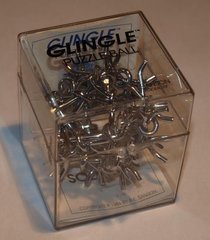
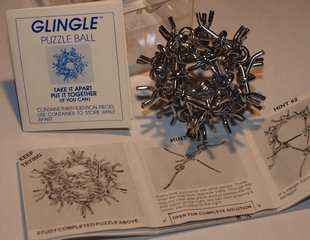
This is a Glingle Ball
Copyright 1984 R. E. Sanson
I’ve had it a looong time, and NEVER took it apart!
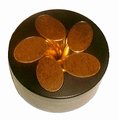
Charles O. Perry’s Zen
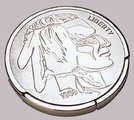
The Buffalo Nickel is clever – it is a two-piece (plus “case”) interlocking.
It made by George Miller, based on a design by Oskar van Deventer.
Bits and Pieces marketed this nice metal version.
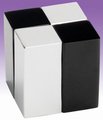
Impossicube – Markus Goetz (B & P)

The Lucky Clover from B and P was designed by Oskar van Deventer.
It has only 4 pieces but requires many steps to assemble properly.
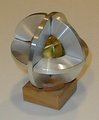
Gravity Well – Bits and Pieces
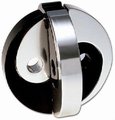
Double Monad (Yin-Yang) – Bits and Pieces
Butterfly – Bits & Pieces
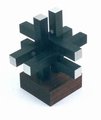
The Ego Sculptural Puzzle is a 6-piece version of the Third Dimension style above.
It was offered in a “Good Design” box by Austin Enterprises and Something Else Inc. of Akron Ohio and Ossining NY.
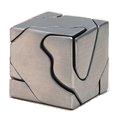
From Bits & Pieces, a
Curly Cube,
designed by
Vladimir Krasnoukhov.
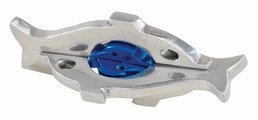
Entangled Fish – B & P
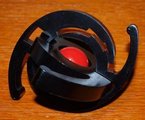
Great Collision, designed by Doug Engel.
Purchased at IPP 29 in SF.
While most of the Irregular Assemblies are geometric shapes, some are in the form of various figures.
This is Mr. Puzzle from Bits and Pieces,
which contains several different kinds of puzzles including interlocking (his feet).
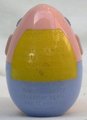
A Hartley’s Humpty Dumpty Egg puzzle
U.S. Patent
D160283 – Irving Hartley Steinhardt 1950.
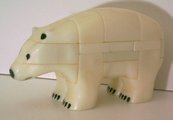
This is Nanook the Polar Bear.
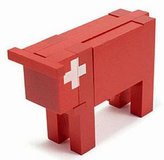
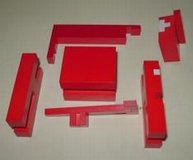
This is Naef’s Swiss Cow or Vache Rouge.
It was designed by Gerard Petremand in 1978.
This version has six pieces.
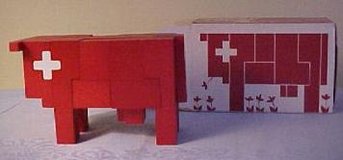
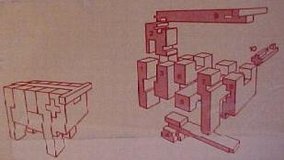
This version of Vache Rouge has more pieces.
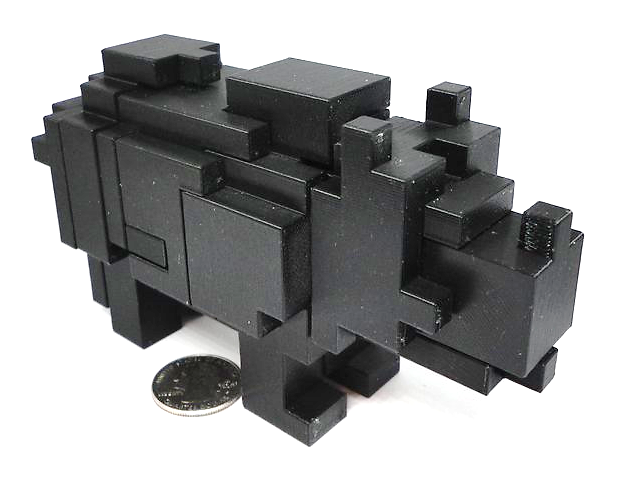
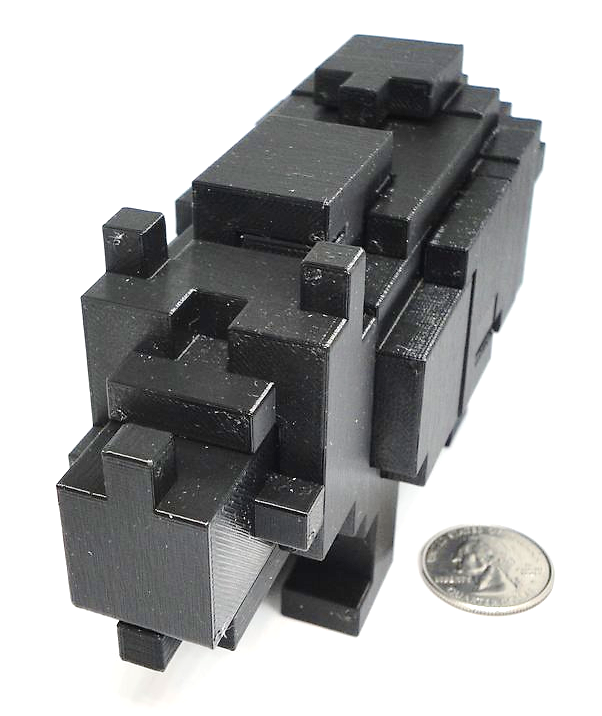
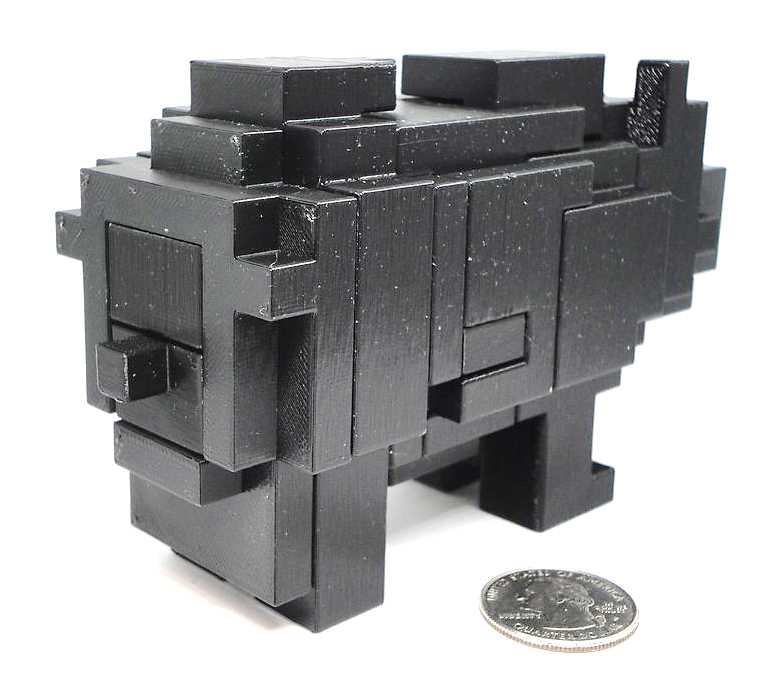
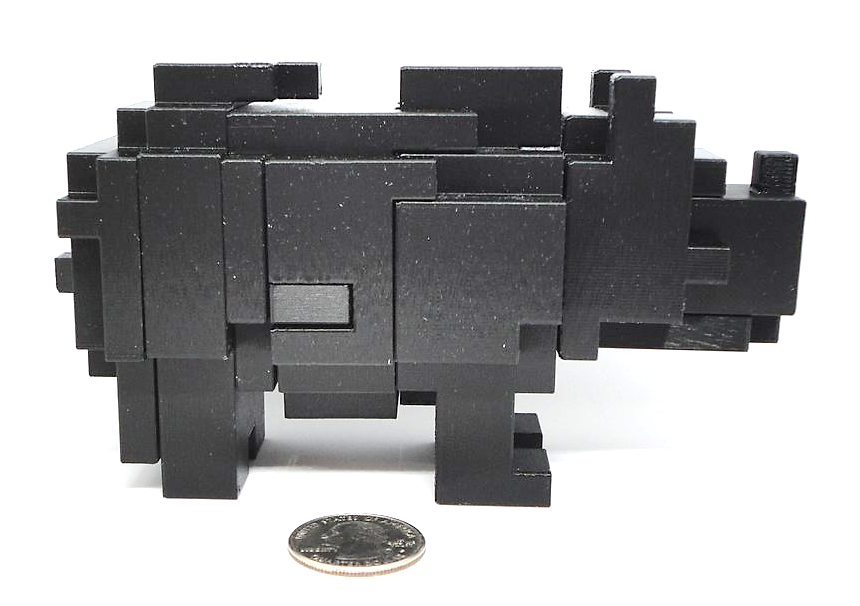
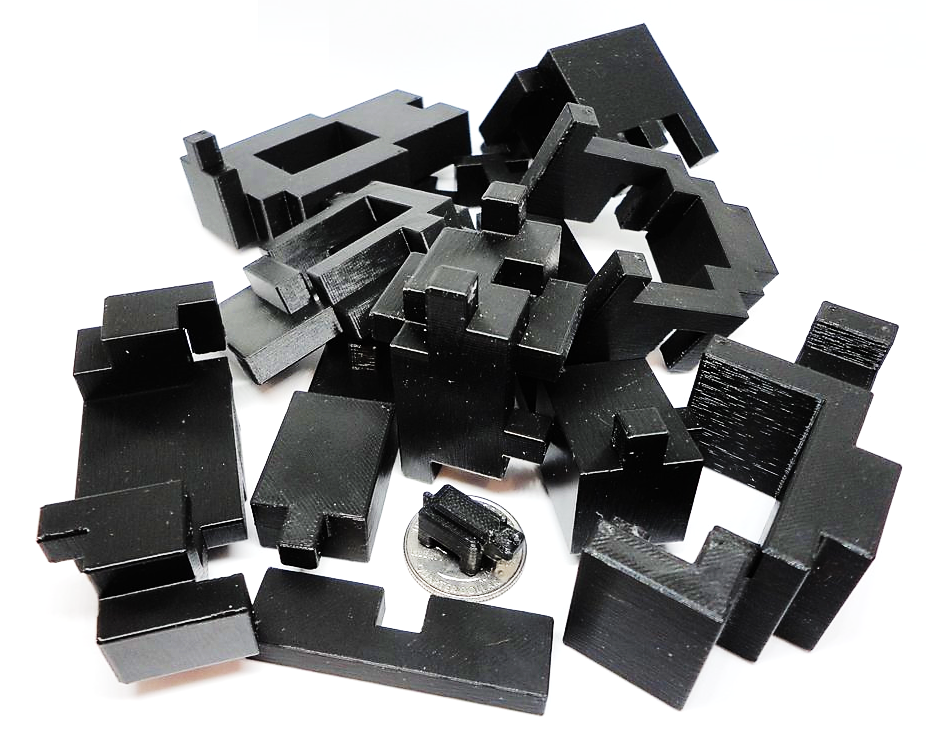
The Rhino puzzle by Theo Geerinck and Symen Hovinga at
No Problem Puzzle Shop.
They were inspired by Kumiki, but to me this belongs here. Note the tiny baby rhino hidden inside!
I got this printed by
SEA Manufacturing on Treatstock.
I chose to get a black rhino.
A hand-carved wood Dragon puzzle from Thailand or Mongolia, I’m not sure.
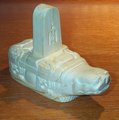
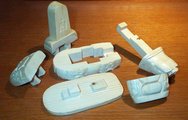
The Sphinx (or Turtle).
Getting it apart was somewhat of an ordeal, as some pieces were fused by the sloppy shellac on them –
but fortunately I separated them without damaging anything.
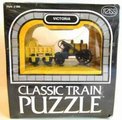
A vintage locomotive puzzle by Reiss.
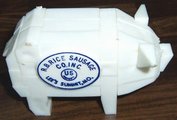
The R. B. Rice Sausage Company Pig puzzle (Lee’s Summit, MO).
Virtually the same pieces as Nanook, but smaller and less dense.
Cicada by Kathy Bass
Available from
Mr. Puzzle Australia (Brian Young).
Obtained at NYPP 2008.
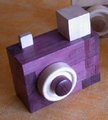
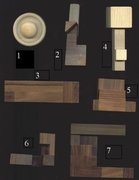
From
William Waite, the Camera Conundrum.
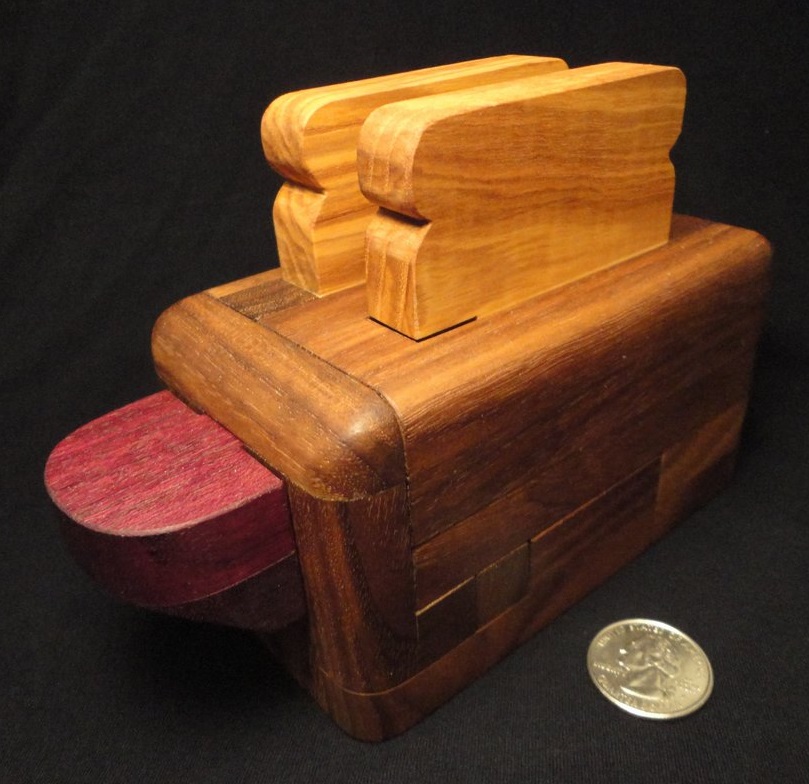
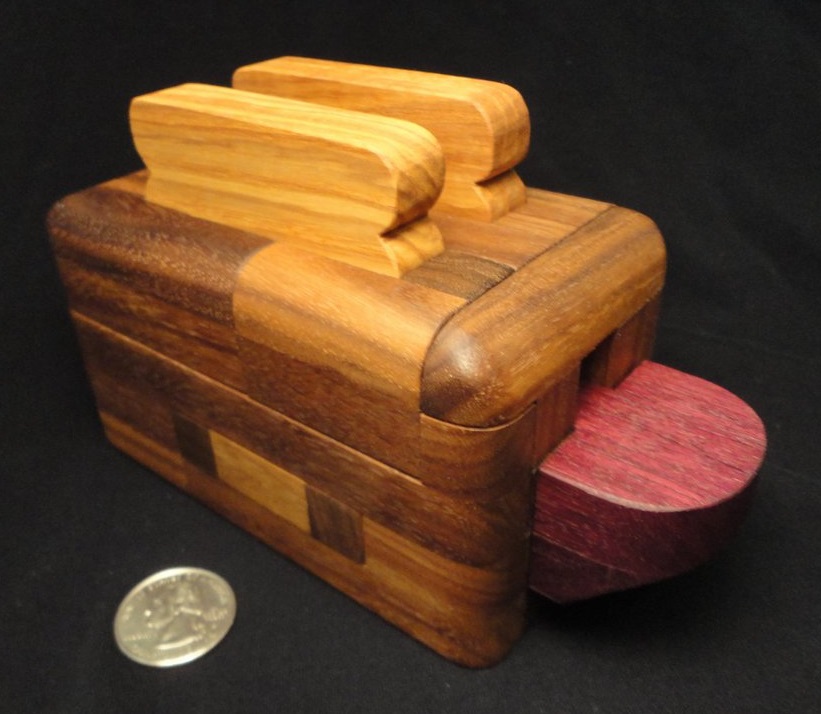
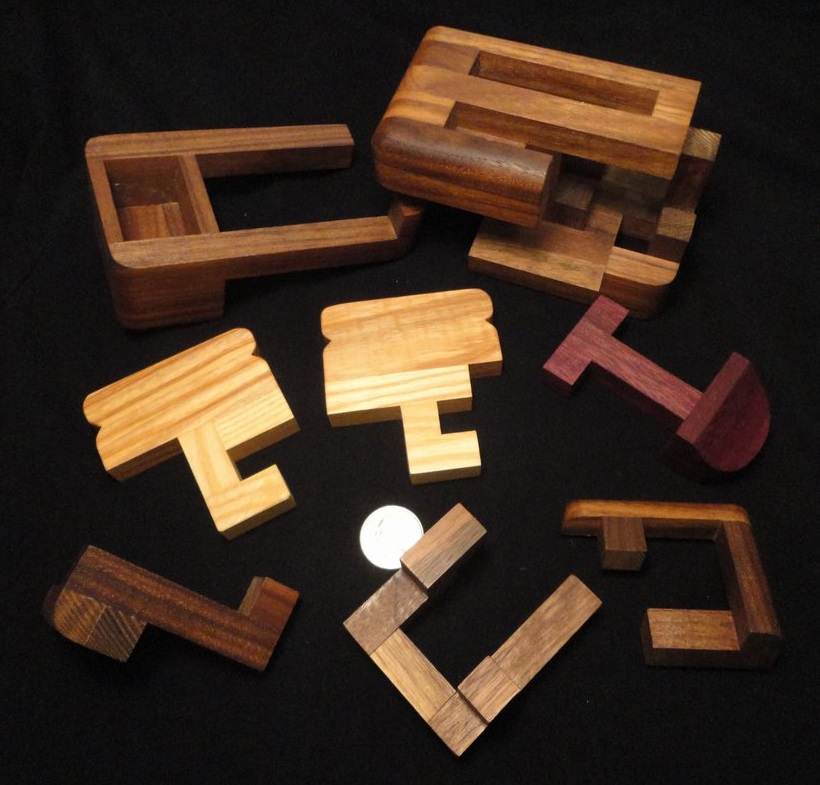
Toaster – by William Waite – one of his original run, not a Pelikan remake
An interlocking Stegosaur
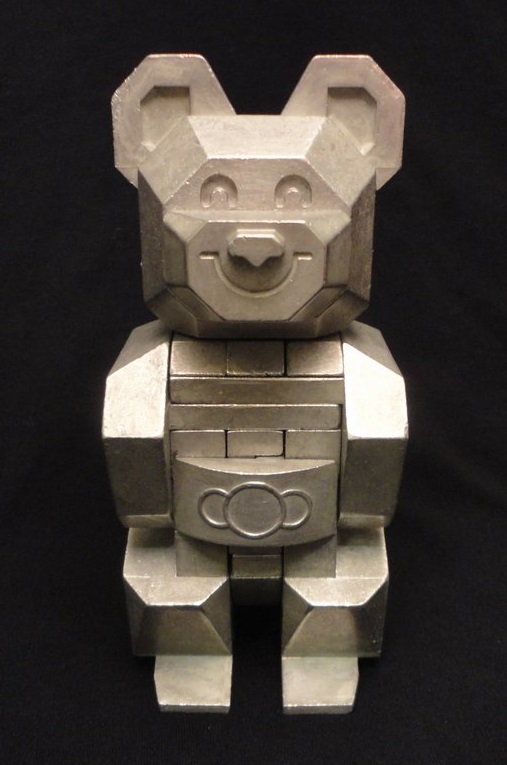
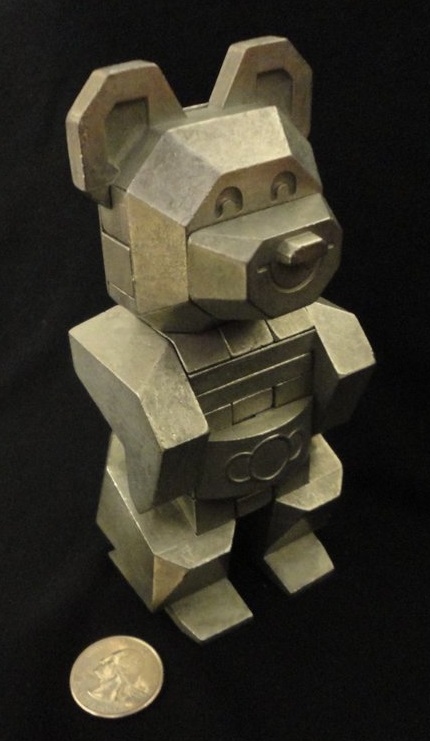
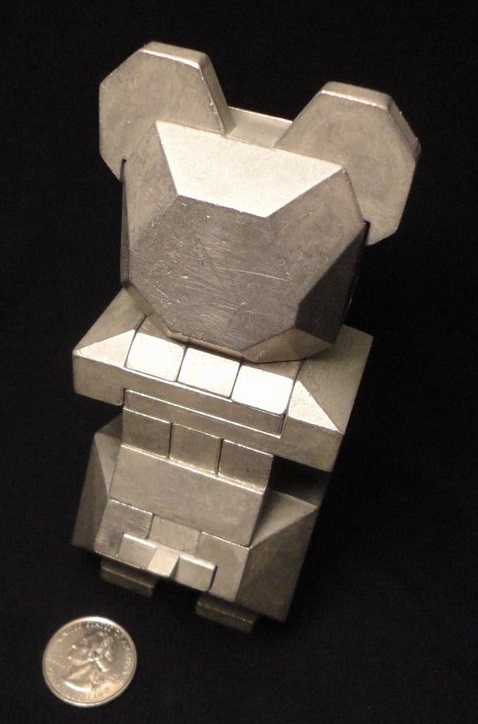
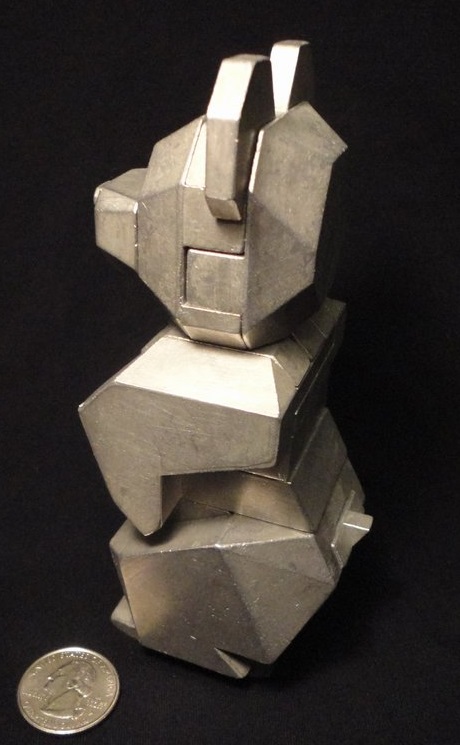
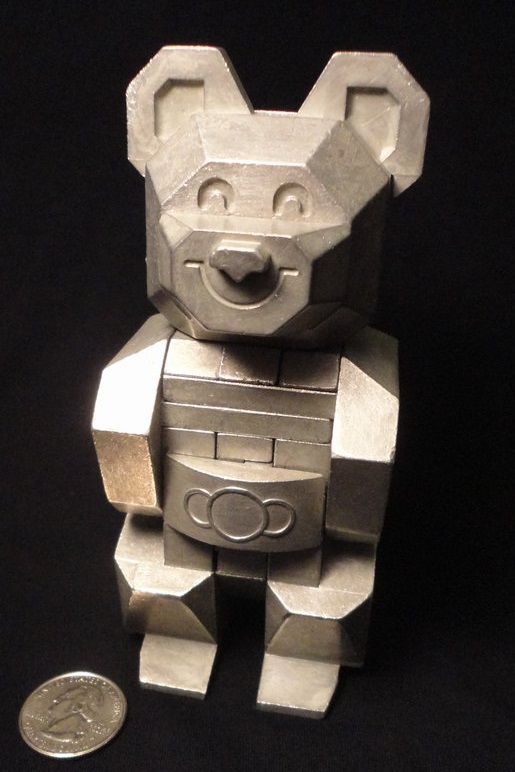
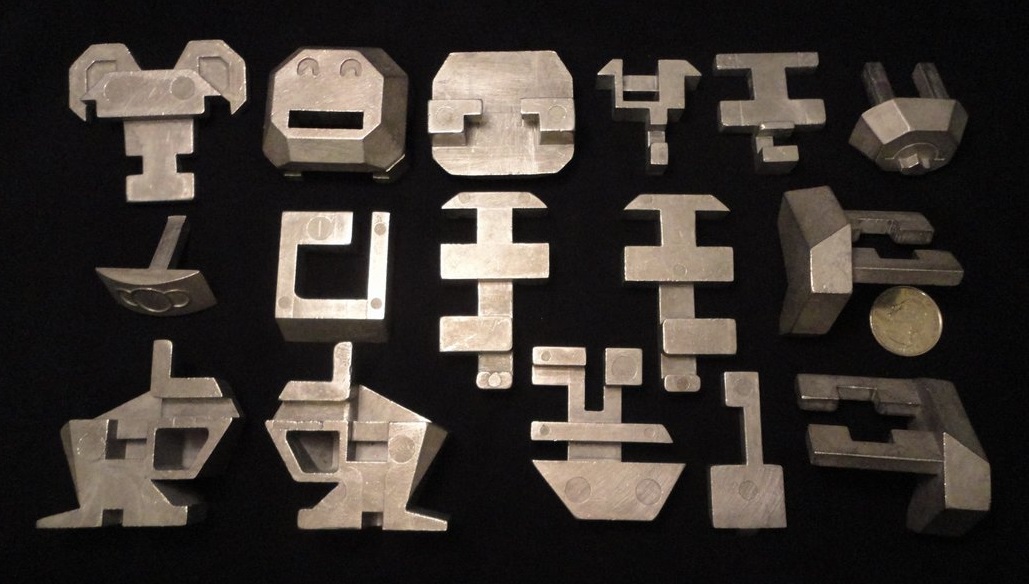
I bought this aluminum Russian 1980 Olympics Bear Puzzle from a seller located in Belarus.
I do not know who made it.
It stands about 14cm tall and is an interlocking sculpture of 16 pieces.
Like much Soviet architecture, it is blocky and brutalist – but I like it a lot!
I call it a “Russian Bear-o-cal.” Ha, ha! I crack myself up.
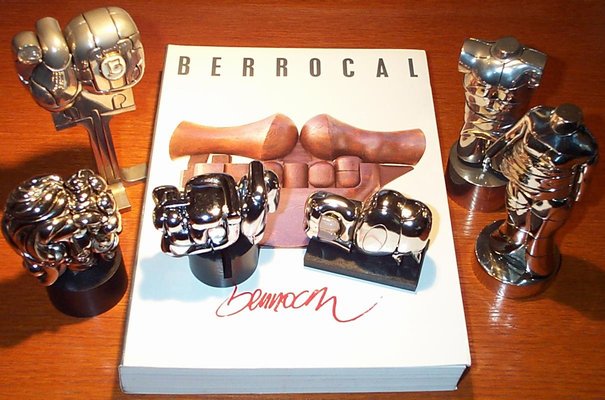
(My favorite…)
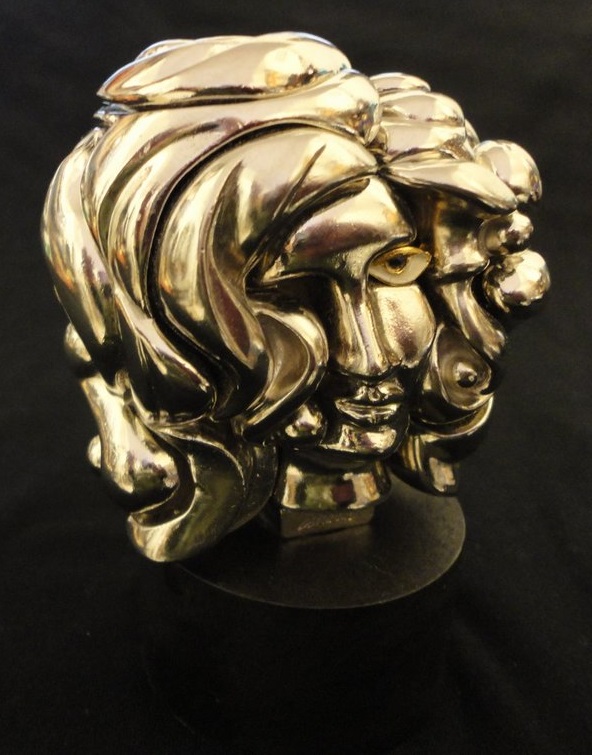
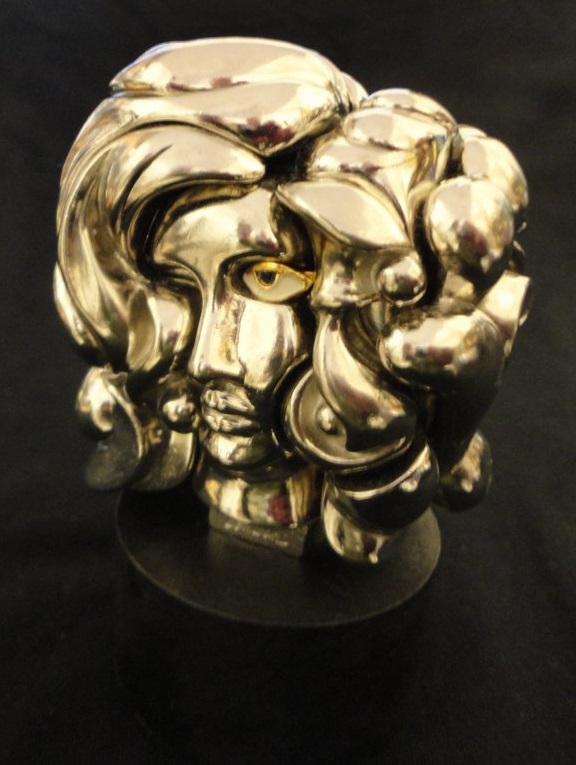
Mini Maria
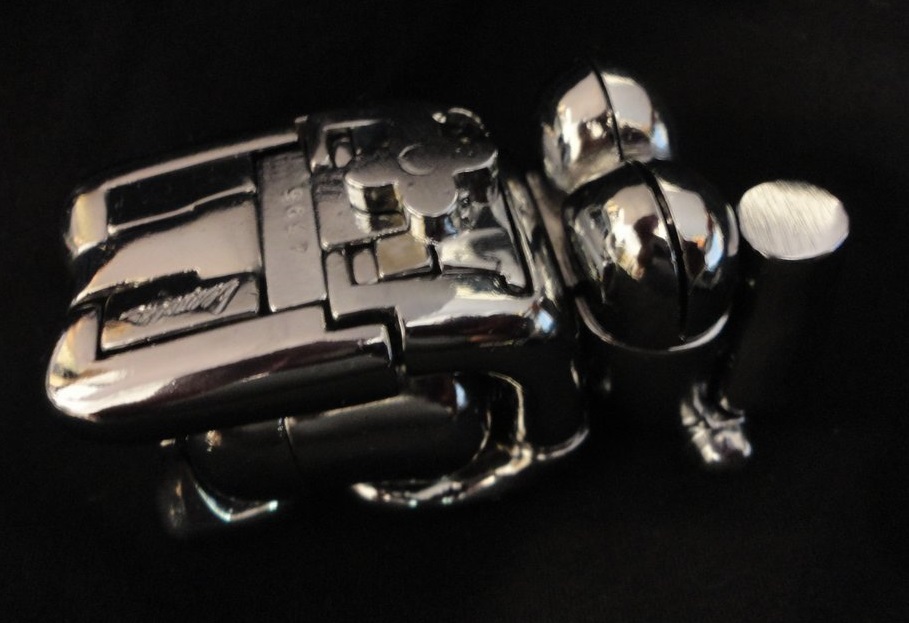
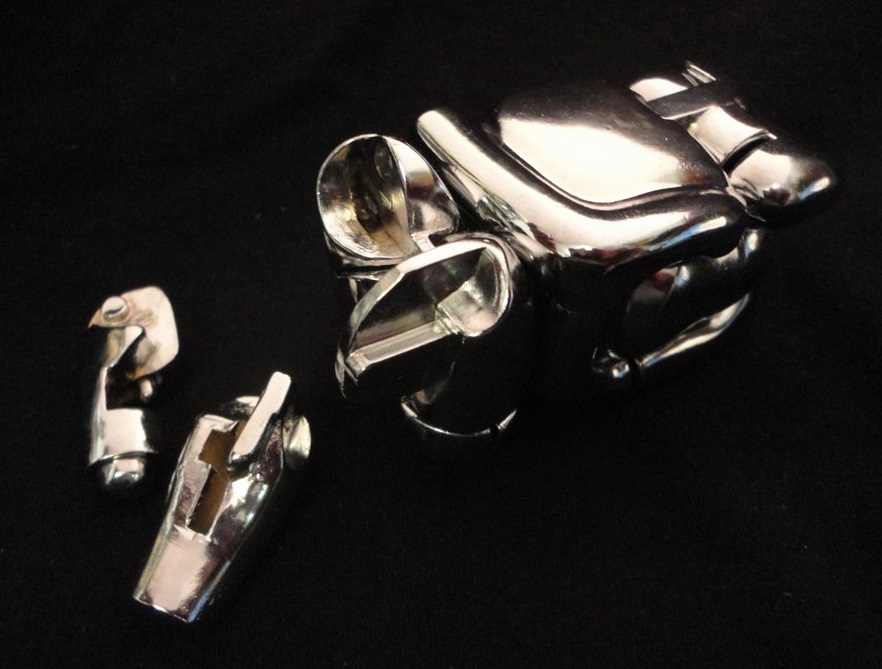
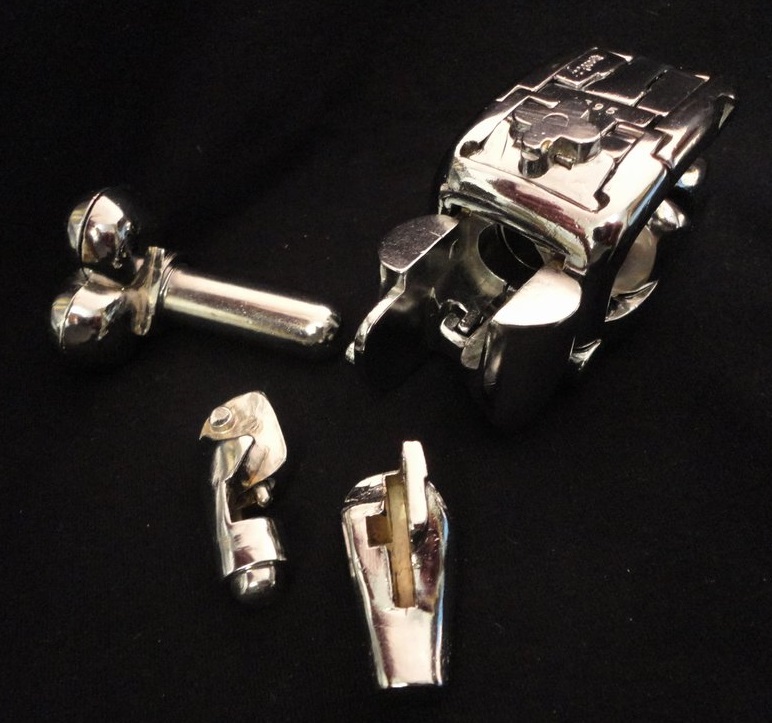
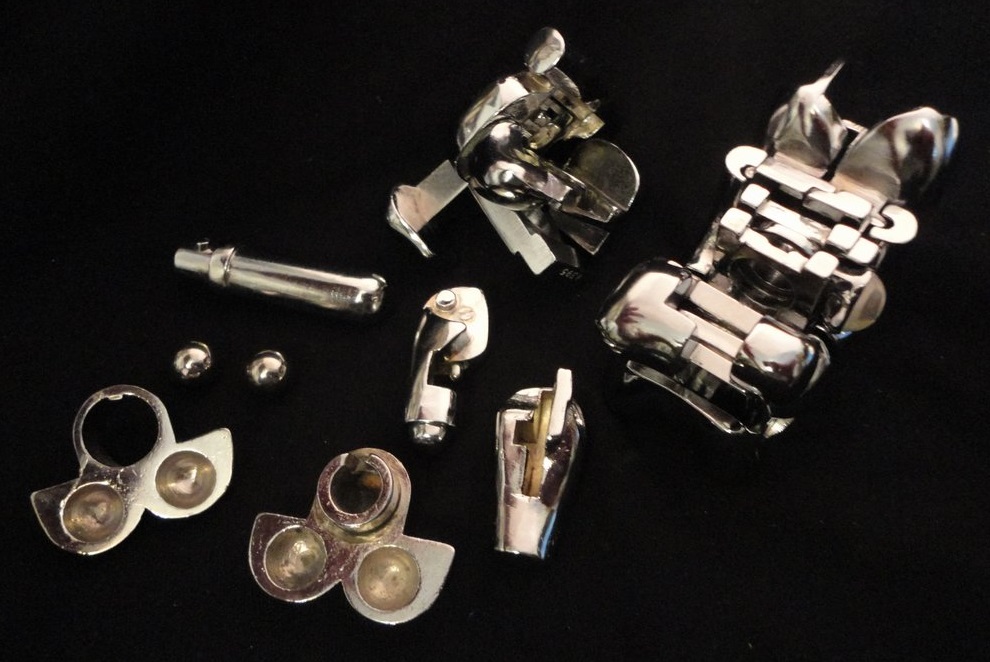
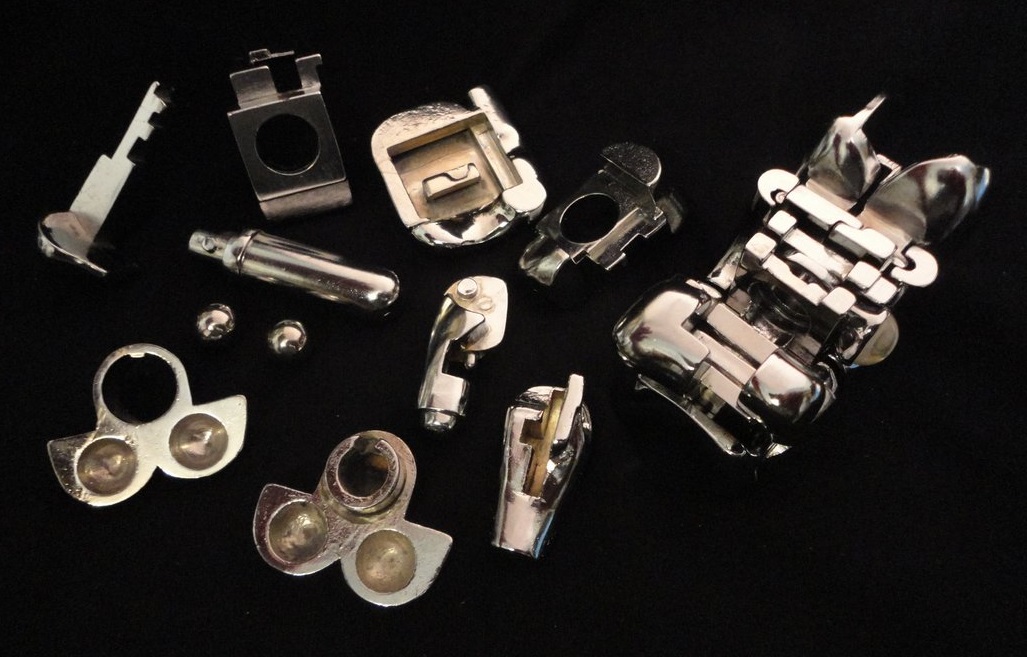
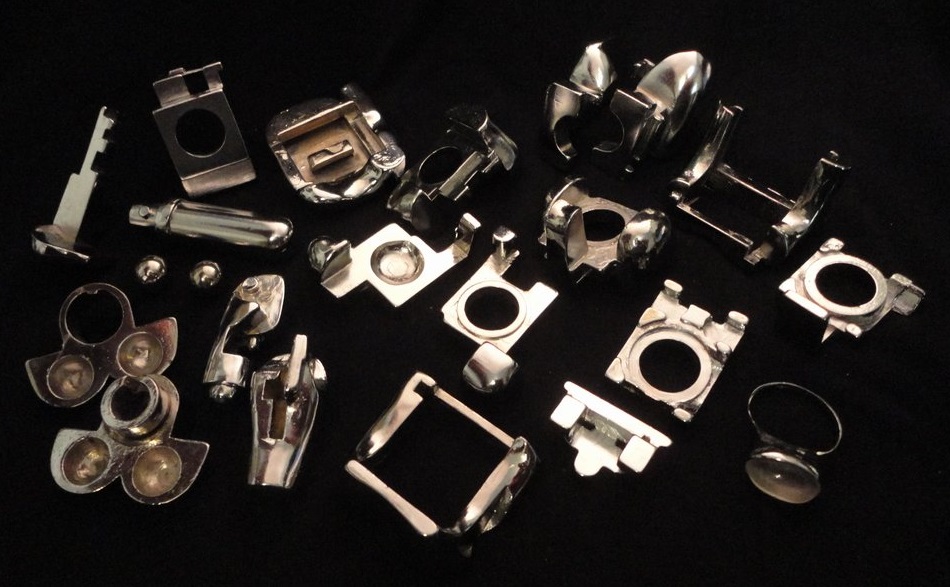
Mini-Zoraida
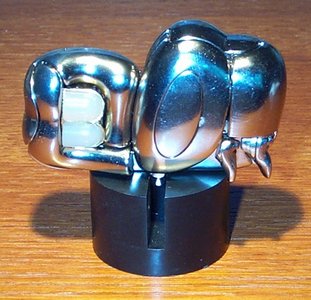
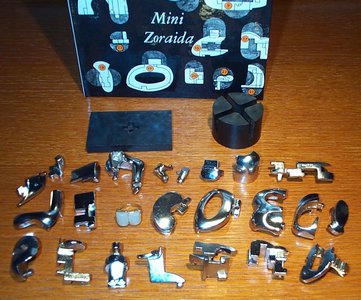
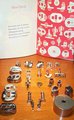
It is a wearable rendition of his Portrait de Michele mini multiple – my favorite of the minis. A fairly large number of these were made, a few in gold, silver, and stainless, and most (according to the accompanying booklet) – including mine – in nickel-plated base metal (in auction descriptions often said to be chromed brass). It is surprisingly small but also surprisingly detailed.
I have read that one sold for $750 back in the late 1970s – I have seen recent auction prices ranging from $350 to near $2000. I was lucky and won mine for just over $200!
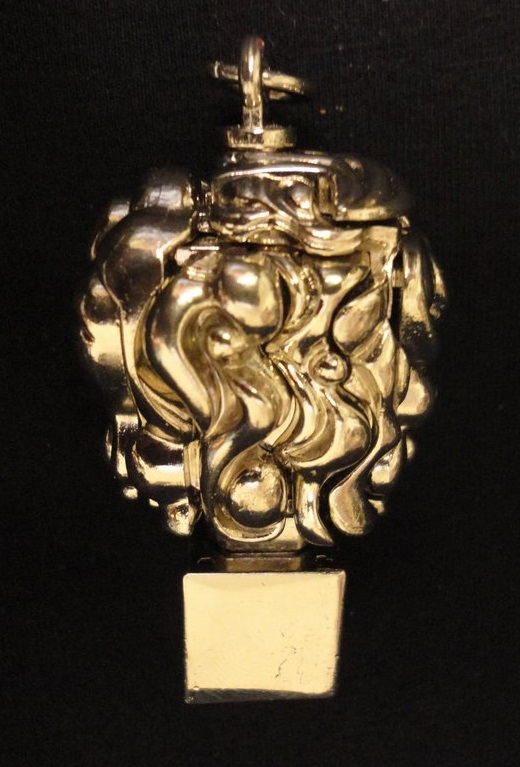
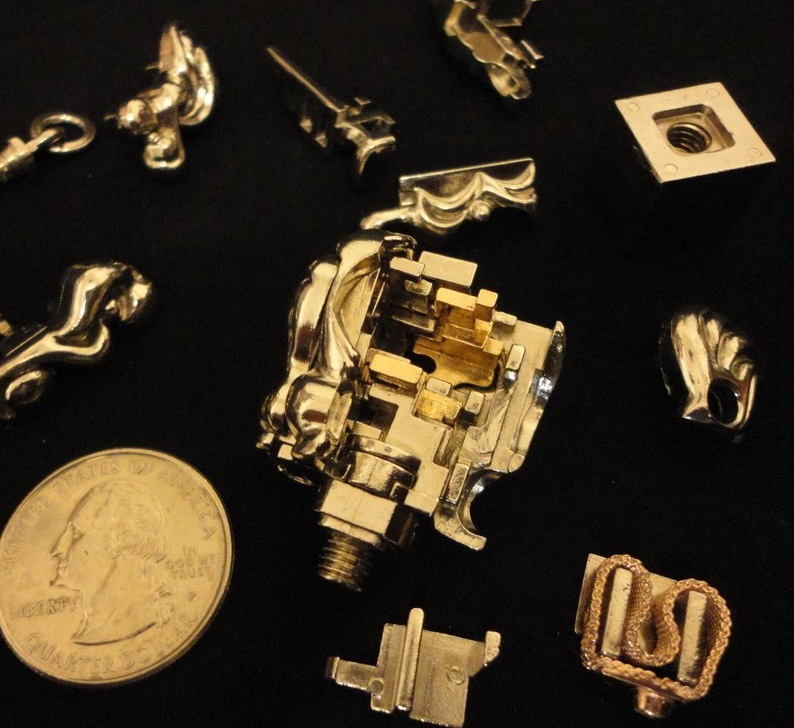
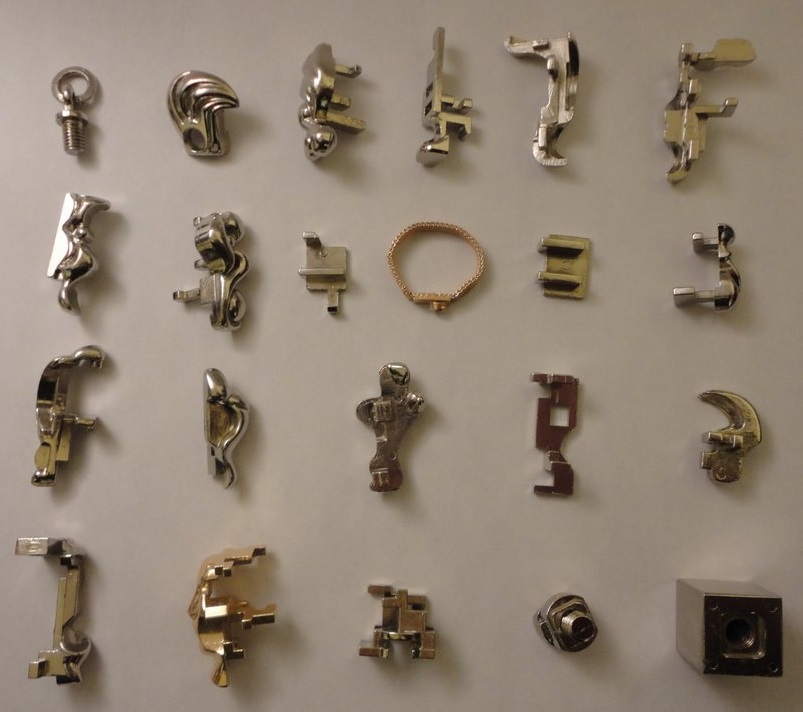
Chromed base metal.
23 pieces. (You see only 22 because the base screw shown in the last row, second from right, is composed of two inseparable parts.)
Came with two small booklets – an instruction book, and a compendium of Berrocal’s multiples.
Mine is missing its certificate.
Can you tell where I’d gone wrong in my reassembly photo?
Here is a comparison with Portrait de Michele – Micheline is sitting atop my one-kilogram cube of Tungsten:
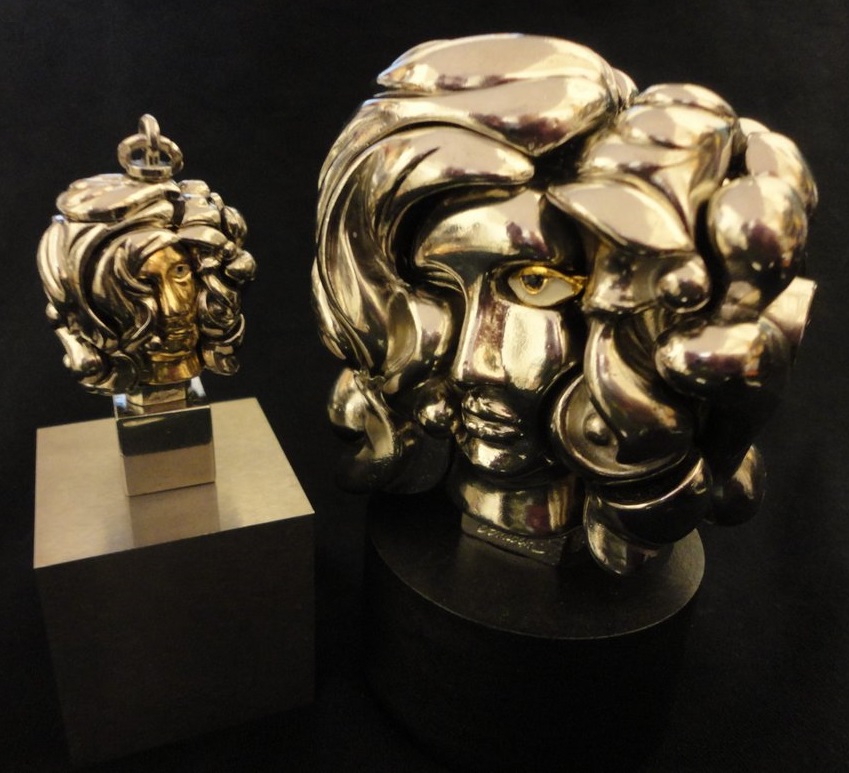
Brass version.
Shown: images of the front and back, pieces, and comparisons with Micheline-X and Mini David.
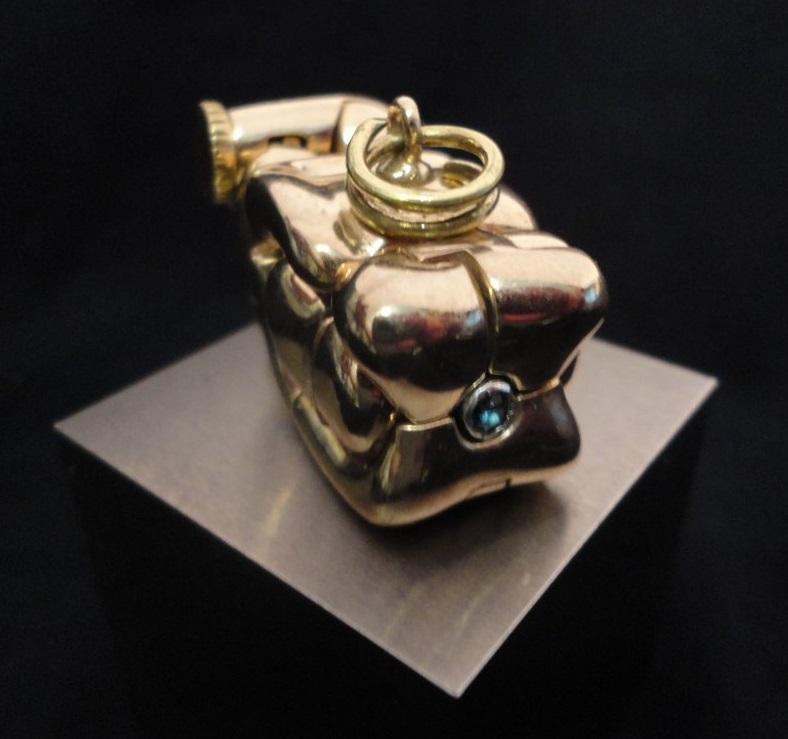
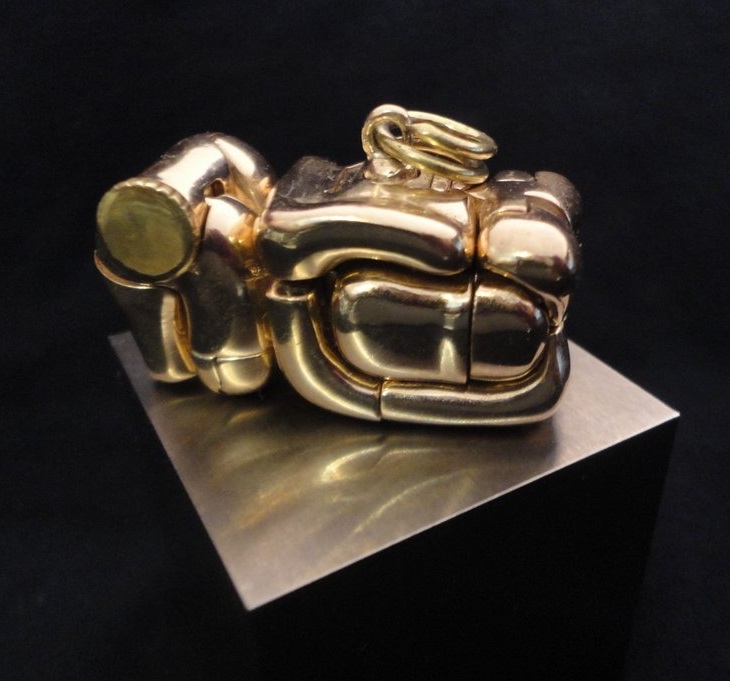
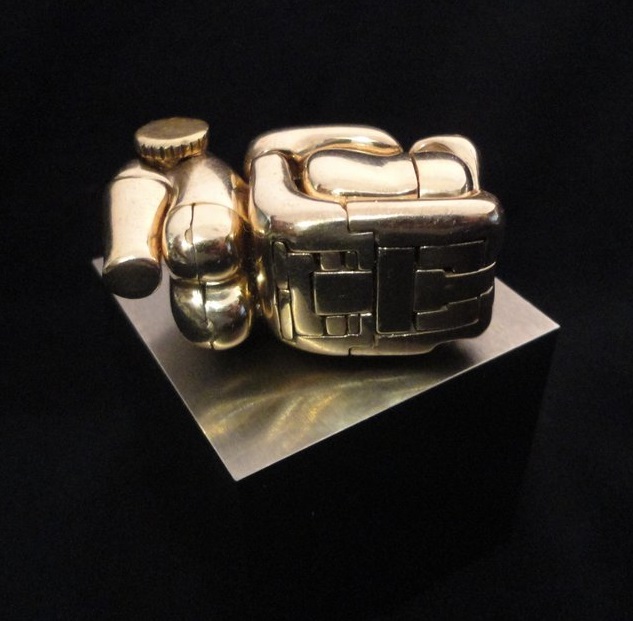
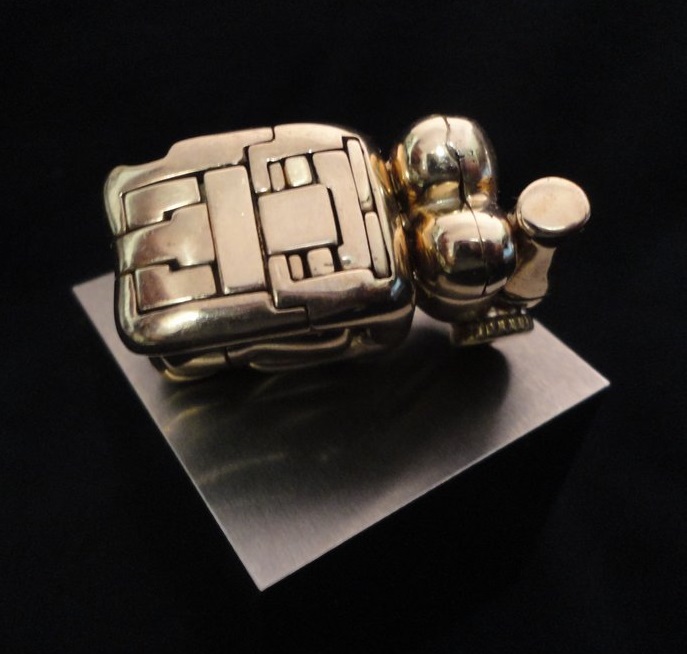
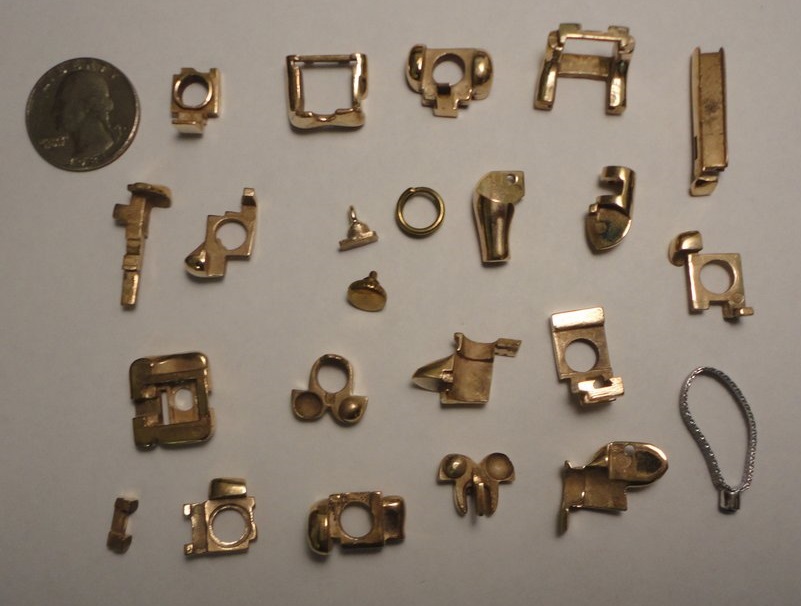
Micro Maria with Mini Maria: